

How Fast Do F1 Cars Go
If you’ve ever watched a Formula 1 race, you know it’s fast—almost unbelievably fast. But how fast do F1 cars really go? This question sounds simple, but the answer is more exciting and complex than most people think. I remember standing at the edge of a race track in Singapore, feeling the ground shake as the cars flashed by.
The speed was not just a number—it was an experience. In this article, you’ll learn just how fast these machines are, what affects their speed, and why there’s more to “fast” than the top number on the speedometer.
What Makes F1 Cars So Fast?
Let’s start with the basics. An F1 car is built for speed in every way. The engine, the aerodynamics, the tires, and even the driver’s body position are all designed to go as fast as possible on a race track.
- Engine power: F1 engines are some of the most advanced in the world. They can produce over 1,000 horsepower.
- Lightweight design: The cars are made from carbon fiber, so they weigh about 1,759 pounds (798 kg), including the driver.
- Aerodynamics: Wings, diffusers, and body shape help the car “stick” to the track.
- Tires: Special racing slicks give maximum grip.
Every detail is tested and improved to shave off fractions of a second. As someone who has followed F1 for over a decade, I can tell you: even small changes in design or technology can mean a huge difference in speed.
Top Speeds: The Real Numbers
So, what’s the fastest an F1 car can go? The answer depends on the track, the weather, and the year, but let’s look at the facts.
- Top speed in a race: The fastest recorded top speed in an official F1 race is 231.5 mph (372.6 km/h), set by Valtteri Bottas in 2016 at the Mexican Grand Prix.
- Straight-line speed in testing: In 2005, a special version of a BAR Honda F1 car reached 246.9 mph (397.4 km/h) on the Bonneville Salt Flats, but this was not during a race and the car was modified.
Here’s a quick look at some famous top speeds:
| Year | Driver | Team | Top Speed (mph) | Event |
|---|---|---|---|---|
| 2016 | Valtteri Bottas | Williams | 231.5 | Mexican GP |
| 2020 | Lewis Hamilton | Mercedes | 223.5 | Italian GP (Monza) |
| 2005 | Alan van der Merwe | BAR Honda (Test) | 246.9 | Bonneville (Not a race) |
But pure top speed isn’t everything. Most tracks have twists and turns, so cars can’t hit their highest speed everywhere. The average speed during a race is lower, but still extremely quick.
Acceleration: Not Just Top Speed
F1 cars are not just about how fast they go in a straight line. Their acceleration is a key reason they feel so fast, both for drivers and fans.
- 0 to 60 mph (0-100 km/h): About 2.6 seconds
- 0 to 124 mph (0-200 km/h): About 4.5 seconds
- 0 to 186 mph (0-300 km/h): Around 10 seconds
This kind of acceleration is possible because F1 cars have an amazing power-to-weight ratio and lots of grip. I once tried a professional F1 driving simulator, and the launch off the virtual grid almost made my head spin—even though I was just sitting in a chair.
Let’s compare F1 acceleration to other fast vehicles:
| Vehicle | 0-60 mph Time (seconds) |
|---|---|
| F1 Car | 2.6 |
| Bugatti Chiron (supercar) | 2.4 |
| Top Fuel Dragster | 0.8 |
| Commercial Airliner (Boeing 747) | ~20 |
While some dragsters are faster off the line, F1 cars can keep high speed through corners—something most cars can’t do.
Cornering Speed: The Real Secret
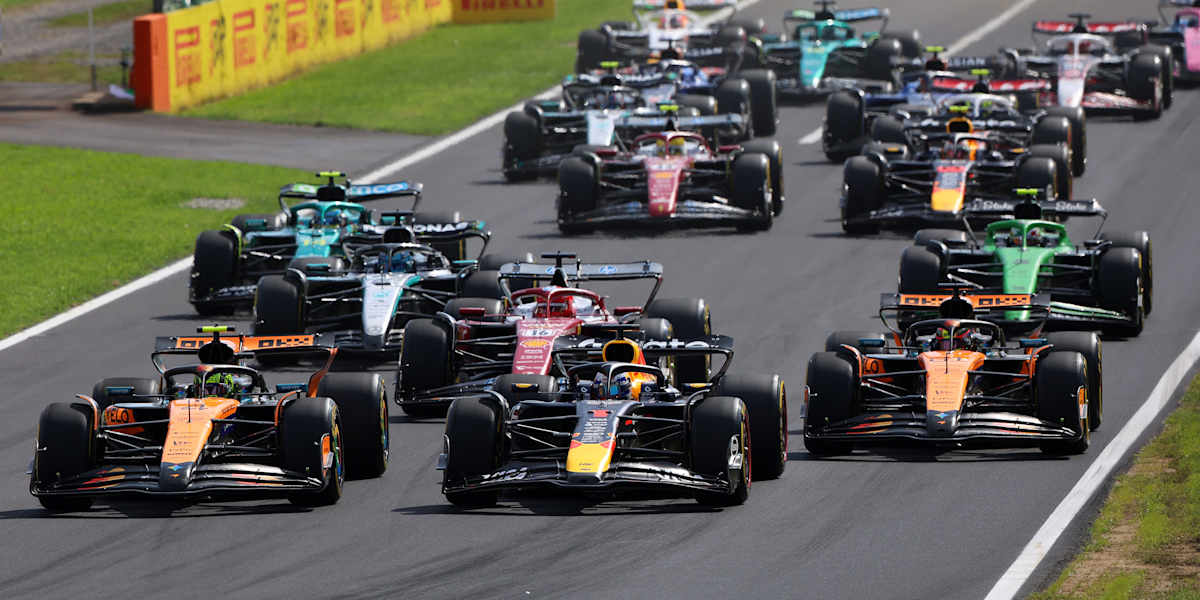
Here’s where F1 cars truly shine: cornering speed. Thanks to their aerodynamics and tires, they can take corners at speeds that would be impossible in a normal car.
- High-speed corners: In some corners, F1 cars can go over 180 mph (290 km/h).
- G-forces: Drivers feel up to 6 Gs in a corner, meaning their body feels six times heavier than normal.
For example, at the famous “Copse” corner at Silverstone, cars can take the bend at about 180 mph without lifting off the throttle. That’s faster than most cars can go in a straight line!
Most fans focus on top speed, but cornering speed is where you really see the magic of F1. The feeling is so intense that drivers have to train their neck muscles just to handle it.
Credit: www.redbull.com
Comparing F1 Speeds To Other Racing Series
F1 is not the only fast motorsport, but it’s unique in how it balances speed and agility. Let’s look at how F1 compares to other types of racing.
| Racing Series | Top Speed (mph) | 0-60 mph (sec) | Cornering Speed |
|---|---|---|---|
| Formula 1 | 231.5 | 2.6 | Very High |
| IndyCar | 240+ | 2.7 | High |
| Le Mans Prototype (LMP1) | 205 | 2.9 | High |
| NASCAR | 200 | ~3.5 | Medium |
IndyCars can sometimes go faster on ovals, but F1 cars are usually quicker around a full circuit because of their cornering.
Factors That Affect F1 Car Speed
Many things affect how fast an F1 car can go on race day. Here are the most important:
- Track layout: Some tracks have long straights, like Monza in Italy, where cars can reach their highest speeds. Others, like Monaco, are tight and slow.
- Weather: Rain, heat, or even the wind can change how much grip the tires have.
- Aerodynamic setup: Teams adjust the wings for more speed on straights or more grip in corners, depending on the track.
- Power unit mode: Teams can use special engine settings for more speed during qualifying or overtaking.
- Tires: Fresh, soft tires are fastest, but they wear out quickly.
When I attended the Italian Grand Prix, I noticed that even small changes in weather or tire choice made a big difference in lap times. Teams have to react quickly to keep their cars at the front.
How F1 Speed Has Changed Over Time
F1 cars have not always been this fast. The technology and rules change every few years, so top speeds go up and down.
- In the 1950s, F1 cars could reach about 180 mph (290 km/h), but with much less grip and safety.
- In the 1980s, turbo engines pushed speeds even higher, but some tracks became dangerous.
- In the 2000s, new safety and design rules made cars slower, but much safer.
- In recent years, with hybrid engines and better aerodynamics, speeds have climbed again.
Today, F1 cars are as fast as ever, but also much safer and more efficient. For example, the 2026 regulations focused on “ground effect” aerodynamics to allow more close racing, but the cars still hit over 215 mph on some straights.
The Role Of The Driver
F1 drivers are more than passengers. Their skill can make a big difference in how fast a car goes. Here’s why:
- Braking: Drivers brake as late as possible, often from over 200 mph to 50 mph in just 2 seconds.
- Throttle control: Smooth use of the accelerator helps the car grip and avoid sliding.
- Steering: Precise movements keep the car balanced at high speed.
- Mental focus: Drivers process information as fast as a fighter pilot.
I’ve spoken with amateur racers who tried an F1 simulator and were shocked at how hard it was to keep the car on track, even at half speed. The physical and mental demands are huge.

Credit: www.redbull.com
Safety And Speed
With such high speeds, safety is always a concern in F1. Over the years, the sport has made big changes to protect drivers:
- Stronger cockpits: Modern F1 cars use the “halo” device to shield the driver’s head.
- Better barriers: Tracks have special fences and barriers to absorb crashes.
- Strict rules: Maximum speeds are controlled in pit lanes and under yellow flags.
Because of these improvements, serious injuries are now rare, even at such high speeds. The balance between speed and safety is always a hot topic in the sport.
The Importance Of Technology
F1 is a test lab for high-speed technology. Many ideas from racing now help make road cars safer and faster.
- Hybrid engines: F1 cars use both gasoline and electric power for more speed and less pollution.
- Braking systems: Advanced brakes help drivers stop from high speeds quickly.
- Telemetry: Teams collect real-time data to adjust car settings for more speed.
Every year, teams spend millions to find small advantages. Sometimes, a new idea changes everything—like the “double diffuser” or “F-duct” in past seasons. If you follow the sport closely, you can see how technology shapes the battle for speed.

Credit: www.autosport.com
Speed Limits And Rules
F1 does not have a single “speed limit,” but there are rules that keep speeds in check:
- Pit lane speed: Usually limited to 50-80 km/h (31-50 mph) for safety.
- DRS zones: Drivers can open a special flap to go faster on certain straights.
- Fuel flow limits: Since 2014, teams must use no more than 100 kg of fuel per hour.
- Tire rules: Teams must use different tires during the race, which affects speed.
These rules keep racing safe and fair, but also mean that the fastest car in testing might not be the fastest in a real race.
The Future Of F1 Speed
What’s next for F1 speeds? The sport is always changing. Here’s what to watch for:
- 2026 power unit rules: New engines will use more electric power and less fuel, but should still be very fast.
- Sustainable fuels: F1 will use fuels with almost zero carbon emissions by 2030.
- Active aerodynamics: Future cars might adjust their wings on the move for even more speed and safety.
Some experts think cars will not go much faster because of safety limits. Others believe new technology will keep pushing the limits. One thing is certain: F1 will always be about going as fast as possible.
Non-obvious Insights About F1 Speed
Many people think F1 is just about top speed, but there are a few things that surprise even fans:
- Lap times matter more than top speed. The fastest car on a straight is not always the fastest around a whole track. Acceleration, braking, and cornering are just as important.
- Drivers manage their speed. They can’t go 100% all the time—fuel, tires, and battery power must be managed lap by lap. Sometimes, the fastest driver is the one who knows when to slow down.
When I first started watching F1, I was obsessed with top speed numbers. Over time, I realized the art is in how drivers control their speed, not just how fast they go in a straight line.
Frequently Asked Questions
What Is The Highest Speed Ever Recorded In An F1 Race?
The Highest Official Top Speed In An F1 Race Is 231.5 Mph (372.6 Km/h), Set By Valtteri Bottas During The 2016 Mexican Grand Prix. There Are Faster Speeds In Testing, But This Is The Fastest During A Race Event.
How Fast Does An F1 Car Go From 0 To 100 Mph?
An F1 Car Can Go From 0 To 100 Mph (0 To 160 Km/h) In About 4 Seconds. This Is Possible Because Of The Car’s Lightweight Design, Strong Grip, And Powerful Engine.
Why Don’t F1 Cars Reach Their Top Speed On Every Track?
F1 Cars Reach Their Highest Speeds On Tracks With Long Straights, Like Monza. On Tracks With Many Corners Or Short Straights, Cars Cannot Build Up As Much Speed. The Setup, Weather, And Safety Rules Also Play A Part.
Are F1 Cars Faster Than Indycars Or Nascar?
F1 Cars Are Usually Faster Around A Full Road Circuit Because Of Their Cornering Speed And Braking. Indycars Might Reach Higher Top Speeds On Oval Tracks, But F1 Cars Are More Agile And Advanced In Technology.
Is It Possible For A Normal Person To Drive An F1 Car At Top Speed?
It Is Very Difficult. Even Professional Drivers Need Special Training. The Speed, G-forces, And Controls Are Extreme. Most People Would Not Be Able To Keep The Car On The Track, Let Alone Reach Top Speed.
F1 speed is not just a number—it’s a mix of technology, skill, and bravery. Whether you’re watching from the stands or on TV, the thrill is real. If you ever get a chance to see a race in person, you’ll never forget the sound, the blur of color, and the feeling of pure speed. For more about F1 technology and history, check out this excellent Formula 1 car overview.
The world of F1 is always changing, but the search for speed never stops. Every lap, every turn, and every second counts. That’s what makes Formula 1 the fastest show on Earth.