

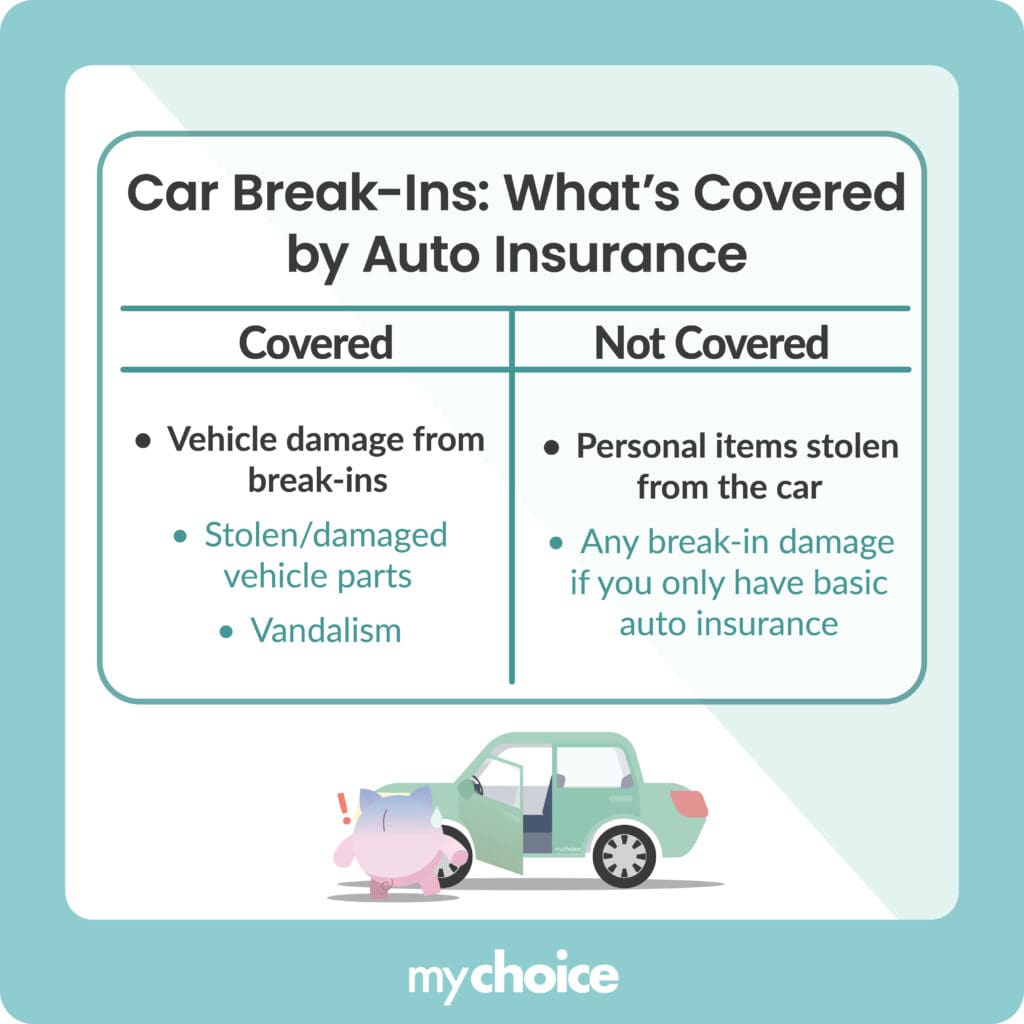
Renters insurance may cover stolen belongings from your car, but it usually will not cover damage to the car itself.
The answer to “does renters insurance cover car break ins” depends on what was damaged or stolen, your policy terms, and whether an exclusion applies. In most cases, auto insurance handles the vehicle, while renters insurance may cover personal items taken from inside it. This guide explains the coverage, limits, claim steps, and common mistakes that can affect payment.
Does renters insurance cover car break ins?
Usually, renters insurance covers your personal belongings stolen from a car, even when the car is parked away from your home. This coverage often comes from the personal property section of your policy, which may protect your items anywhere in the world.
However, renters insurance normally does not cover the car itself. It will not usually pay to repair a broken window, damaged lock, dented door, or damaged ignition. Those repairs may fall under comprehensive auto insurance.
The simplest way to remember the rule is this:
• Renters insurance may cover your belongings.
• Auto insurance may cover your vehicle.
• Neither policy may cover every loss.
So, does renters insurance cover car break ins? It can cover stolen personal property, but only after you meet the policy rules and deductible.
What does renters insurance cover when a car is broken into?
A renters policy may cover personal property stolen from your vehicle. The item must usually belong to you and fall within the policy’s covered causes of loss.
For example, coverage may apply if someone steals these items from your locked car:
• A laptop
• Clothing
• A backpack
• A camera
• Sports equipment
• Work tools used as an employee
• Prescription glasses
• A child’s car seat
• Small household electronics
Your policy may pay the actual cash value or replacement cost of the stolen item. Actual cash value considers depreciation. Replacement cost coverage may pay what it costs to buy a similar new item, but it often requires you to replace the item first.
A policy may also cover belongings stolen from a rental car, hotel room, or other temporary location. The exact rule varies by insurer and state. Read the “off-premises” section of your policy for the coverage limit.
A simple example
Imagine someone breaks your car window and takes a $900 laptop. Your renters policy has a $500 deductible and covers the laptop at replacement cost.
If the claim is approved, the insurer may pay about $400 after the deductible, subject to the policy’s limits and proof of ownership. The broken window would usually require a separate auto insurance claim.
This is why the question “does renters insurance cover car break ins” needs two answers. It may cover the property inside the car, but it usually does not cover the vehicle damage.

What insurance covers the damage to the car?
Comprehensive auto insurance usually covers damage caused by theft, vandalism, falling objects, fire, and other events that are not collisions. A broken window from a car break-in often falls under comprehensive coverage.
Collision insurance is different. It generally covers damage caused when your car hits another vehicle or object. It usually does not cover a smashed window or stolen items.
If you have comprehensive coverage, check these details:
• Your comprehensive deductible
• Whether glass damage has a special deductible
• Whether your policy covers theft-related damage
• Whether aftermarket parts have special limits
• Whether your insurer requires a police report
For example, if repairing the window costs $350 and your comprehensive deductible is $500, filing a claim may not help financially. If repairs cost $1,200, the policy may pay the covered amount above the deductible.
Renters insurance does not replace comprehensive auto insurance. If you want protection for the car itself, review your auto policy rather than relying on renters coverage.

What items are not covered by renters insurance?
Renters insurance has limits and exclusions. A stolen item is not automatically covered simply because it was inside your vehicle.
Common limitations may include:
• Items owned by a roommate who is not listed on the policy
• Property used for a business
• Cash and gift cards
• Jewelry above the policy’s special limit
• Collectibles
• Certain sports equipment
• Property left in an unattended vehicle for a long time
• Items stolen because of an excluded event
Some policies set lower limits for property kept away from the rental home. A policy might provide broad coverage at home but limit off-premises property to a percentage of the total personal property limit.
Business property can also be complicated. A personal laptop used for work may have coverage, but inventory, professional tools, or business equipment may need a business policy or endorsement.
A key lesson from common insurance claims is to avoid guessing. Policy language matters more than general advice. If an item is expensive, ask your insurer about scheduled personal property coverage before a loss occurs.
Does renters insurance cover car break ins if the car was unlocked?
It depends on the policy and the facts. Many renters policies do not automatically deny a claim just because a car was unlocked, but the insurer may ask questions about carelessness, proof of theft, and the circumstances of the loss.
Some policies may limit coverage when property is left in an unattended vehicle. Other policies may have special rules for theft from a vehicle. State law and the wording of the contract can also affect the decision.
Do not assume that an unlocked door guarantees a denial. Report the loss honestly and let the insurer review it. Never claim that the car was locked if you are not sure.
The same principle applies to a missing item. If you cannot prove that an item existed or was stolen, the insurer may request more evidence before paying the claim.
How to file a renters insurance claim after a car break-in
A careful claim report can make the process easier. Take these steps as soon as it is safe.
1. Contact the police
Report the break-in to the local police department. Ask for the report number and keep a copy if one is available.
The report should list the date, location, damage, and missing items. A police report does not guarantee payment, but many insurers request one for theft claims.
2. Photograph the scene
Take clear photos of:
• The broken window
• Damaged locks or doors
• The inside of the vehicle
• Glass on the ground
• The parking area
• Any signs of forced entry
Do not clean up or repair the car before documenting the damage unless leaving it exposed creates a safety risk.
3. Notify both insurers
Contact your auto insurer about vehicle damage. Contact your renters insurer about stolen personal items.
Explain that the loss involves both the car and property inside it. Each insurer can tell you which portion belongs under its policy.
4. Create an item list
Write down each missing item, its brand, model, age, and estimated value. Include serial numbers when possible.
Useful proof may include:
• Receipts
• Bank or credit card statements
• Product photos
• Warranty records
• Online order histories
• Device serial numbers
• Appraisal documents
5. Compare the loss with your deductible
If your stolen property is worth less than your renters deductible, a claim may not result in payment. Still, you may want to report the event if the insurer requires notice or if you need an official record.
Avoid filing small claims repeatedly without understanding the possible impact on future premiums or eligibility. Ask your agent how claims history works in your state.
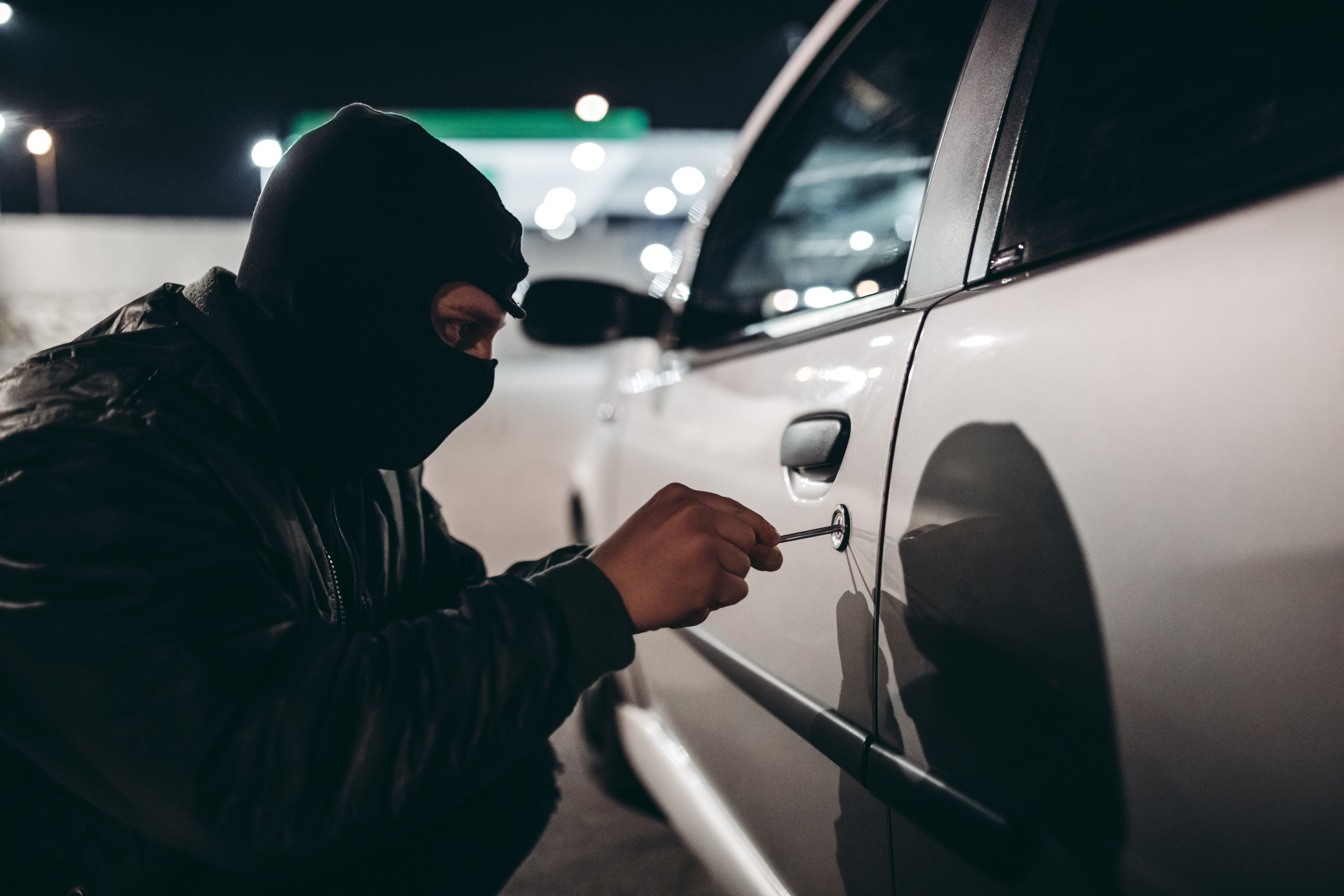
How deductibles and limits affect payment
A deductible is the amount you pay before insurance contributes. If your covered loss is $1,000 and your deductible is $500, the potential payment may be $500, before applying limits and depreciation.
The calculation can change under actual cash value coverage. Suppose a three-year-old laptop cost $1,000 when new but is now valued at $450 because of depreciation. With a $500 deductible, there may be no payment for that item.
Replacement cost coverage can offer more protection, but it usually has conditions. You may need to buy a replacement and submit the receipt within a set period.
Special limits matter too. Many policies place lower limits on categories such as:
• Jewelry
• Watches
• Cash
• Collectibles
• Firearms
• Silverware
• Business property
For high-value belongings, ask about scheduling the item. Scheduled coverage may offer broader protection and a lower deductible, though it can increase the premium.
When people ask, “does renters insurance cover car break ins,” they often focus on whether coverage exists. The more useful question is whether the coverage is high enough to make a difference after the deductible.
Common mistakes to avoid after a car break-in
A few mistakes can create delays or reduce the value of a claim.
• Waiting too long to report the theft
• Throwing away damaged parts before taking photos
• Guessing the value of missing items
• Filing only an auto claim
• Filing only a renters claim
• Forgetting about items in the trunk
• Claiming ownership without proof
• Repairing the car before the insurer documents the damage
• Failing to mention an item was used for business
Keep a home inventory before a loss happens. A short video of each room can help prove ownership. Store receipts, photos, and serial numbers in cloud storage rather than only on a laptop that could be stolen.
A practical claim habit is to separate the loss into two lists. Put vehicle damage on one list and stolen belongings on the other. This makes it easier to speak with the correct insurer.
How to prevent theft from your car
Insurance helps after a loss, but prevention can save time and stress.
Use these simple habits:
• Lock the doors every time
• Close all windows fully
• Remove bags and electronics from view
• Do not leave spare keys inside the vehicle
• Park in a bright, busy area
• Use a garage when possible
• Keep the vehicle registration out of sight
• Turn on the car’s alarm or tracking system
• Avoid leaving shopping bags in the car
• Take photos of expensive items and record serial numbers
A thief may look through a car in seconds. An empty passenger area removes much of the temptation.
Do not hide valuable property under a seat and assume it is safe. Experienced thieves often check glove boxes, center consoles, and trunks.
Should you file a claim for stolen items?
Filing a claim makes sense when the loss is much higher than your deductible and you have reasonable proof of ownership. It may be less useful when the total value is close to the deductible.
Consider these questions:
• How much would replacing the items cost today?
• What is your renters insurance deductible?
• Do special limits apply?
• Do you have receipts or other proof?
• Is the car damage covered by auto insurance?
• Could the claim affect your future premium?
Do not avoid a valid claim simply because you feel embarrassed about leaving something in the car. Insurance exists for covered losses. Report the facts clearly and let the insurer apply the contract.
If the claim is denied, request the decision in writing. Read the cited policy section and ask questions. You may also contact your state insurance department for help understanding the complaint process.
Does renters insurance cover car break ins in different situations?
The answer can change based on where the car was parked and who owned the property.
A car parked at home
Renters insurance may cover stolen personal items from a car parked at your rental home. The vehicle damage usually remains an auto insurance issue.
A car parked at work
Coverage may still apply if the policy covers personal property away from home. However, work equipment or business property may have a separate limit.
A rental car
Your renters policy may cover stolen personal belongings from a rental car. Damage to the rental car may involve the rental company’s protection plan, your auto policy, or a credit card benefit.
A roommate’s car
Your renters policy may cover your property, not your roommate’s property. Roommates often need their own policy unless they are properly included under the same contract.
A borrowed car
Your belongings may have coverage if the policy terms apply. Damage to the borrowed vehicle usually depends on the owner’s auto policy and any coverage you purchased.
These examples show why “does renters insurance cover car break ins” cannot be answered without looking at the item, the vehicle, the policy, and the location.
What experts recommend checking in your policy
Insurance regulators and consumer education groups commonly recommend reviewing your declarations page and policy forms before a loss. Focus on the personal property limit, deductible, replacement cost wording, off-premises coverage, theft exclusions, and special limits.
Ask your insurer these questions:
• Are stolen items from my car covered?
• Is there a lower limit for property away from home?
• Does my policy pay replacement cost or actual cash value?
• Are work items covered?
• Are there special limits for electronics or jewelry?
• Do I need a police report?
• What is my deadline for reporting a claim?
Insurance contracts differ by state and company. This article explains common practices, not a promise of payment. Your policy controls, and an insurance professional can explain terms that are unclear.
Frequently Asked Questions
Does renters insurance cover a stolen laptop from a car?
Often, yes. A renters policy may cover a laptop stolen from your car as personal property, subject to the deductible, coverage limit, and proof of ownership. Business use or special policy limits may change the result.
Does renters insurance cover a broken car window?
Usually, no. A broken window is damage to the vehicle, so comprehensive auto insurance may provide coverage after its deductible.
Does renters insurance cover stolen cash from a car?
Cash may have a very low policy limit, and some policies provide limited or no coverage for certain forms of money. Check the special limits section before assuming the full amount is covered.
Do I need a police report for a renters insurance theft claim?
Many insurers request a police report for theft claims, although the exact requirement varies. Report the incident promptly and keep the report number for your claim file.
Does renters insurance cover items stolen from an unlocked car?
It may, but the insurer will review the policy language and facts. An unlocked vehicle can raise questions about carelessness or unattended property, so answer all questions honestly.
Does renters insurance cover a stolen phone from a car?
A stolen phone may be covered as personal property. The insurer may ask for proof of ownership, the phone’s value, and information about whether it was used for personal or business purposes.
Can I claim both car damage and stolen items?
Yes, but the claims usually go to different insurers. Auto insurance generally handles damage to the vehicle, while renters insurance may handle covered personal property.
Conclusion
So, does renters insurance cover car break ins? In many cases, it covers personal belongings stolen from the vehicle, but it usually does not cover the car’s broken window, lock, or other physical damage. Comprehensive auto insurance is generally the policy to review for vehicle repairs.
Check your deductible, off-premises coverage, special limits, and replacement cost terms today. Create a home inventory, keep proof of ownership, and report any loss to the right insurer as soon as possible. For more practical insurance guides, explore additional resources and share your questions or experience in the comments.