
How Long Does It Take To Charge An Electric Car
If you’re new to electric cars, one question is likely on your mind: “How long does it take to charge an electric car?” The answer isn’t simple, and that can be confusing for many drivers. Charging times depend on the car’s battery, the charger type, and even the weather. I remember my first EV road trip, nervously watching the charging status, wondering if I’d have to wait for hours. But with a little knowledge, you’ll see that charging can fit easily into your routine. Let’s break down the facts, share some real stories, and help you understand exactly what to expect.
What Factors Affect Charging Time?
Charging an electric car is not like filling a gas tank. Many things change how fast your battery fills up.
Battery Size
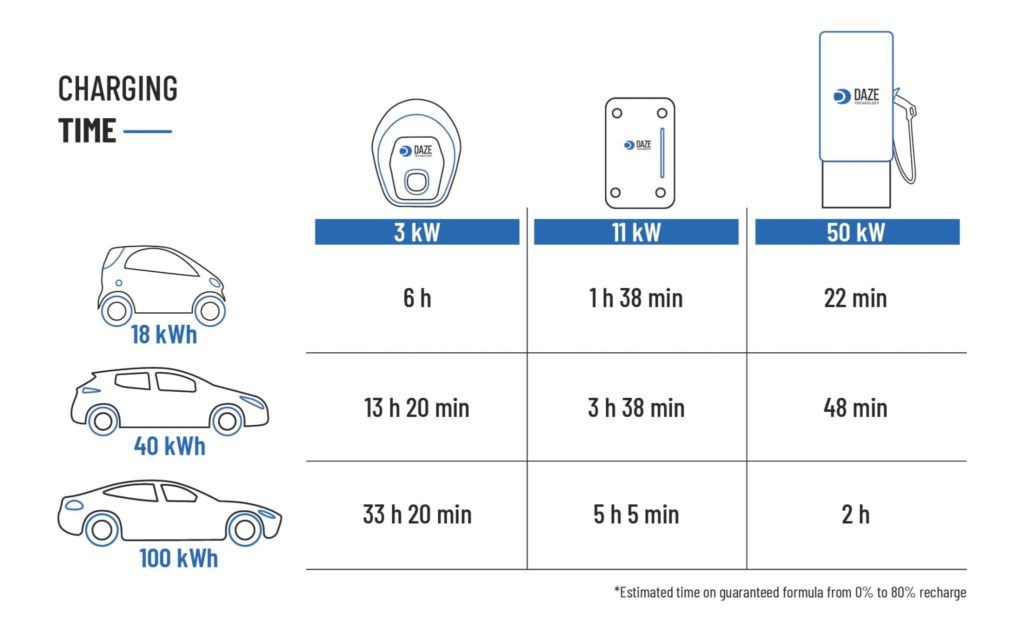
The most important factor is the battery size. Bigger batteries take more time to charge. For example, a small city EV might have a 40 kWh battery, while a large SUV could have a 100 kWh battery.
- Small battery (40 kWh): Charges faster
- Large battery (100 kWh): Takes longer
Charger Type
The charger you use matters a lot. There are three main types:
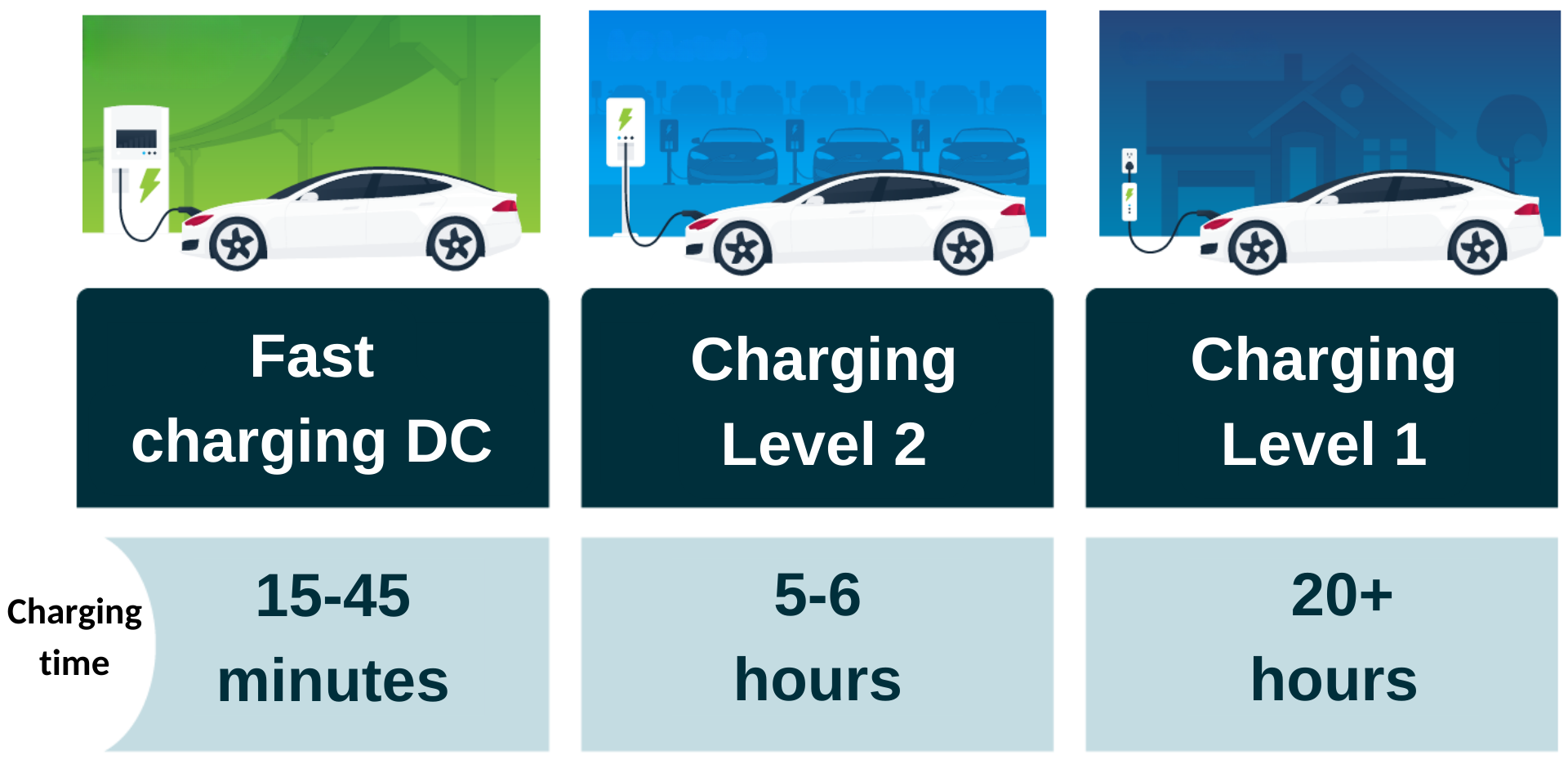
- Level 1 (slow): Uses a regular household outlet (120 volts). Adds about 3-5 miles per hour.
- Level 2 (medium): Uses a 240-volt outlet, like a dryer plug. Adds 15-30 miles per hour.
- DC Fast Charger (quick): Uses special equipment, often found at public stations. Adds 60-200 miles in 20-40 minutes.
State Of Charge
How full is your battery when you start charging? If your battery is already half full, it takes less time to reach 100%.
Weather And Temperature
Cold weather slows charging. Batteries work best in moderate temperatures. Once, I tried charging in winter and noticed the process was much slower than usual.
Car’s Charging Rate
Every car has a maximum rate it can accept. Even if you use a fast charger, your car may limit the speed.
Real-life Example
A friend’s Nissan Leaf (40 kWh) charges at home overnight (Level 2), reaching full in about 6 hours. My Tesla Model 3 (75 kWh) takes about 8 hours with the same charger, but at a public fast charger, it can fill from 10% to 80% in just 35 minutes.
Electric Car Charging Types Explained
Let’s look closer at the three main charging types. This helps you plan your charging and your day.
Level 1 Charging (home Plug)
This is the slowest option. You plug your car into a normal outlet.
- Speed: About 3-5 miles per hour
- Time: For a 40 kWh battery, it can take up to 40-50 hours from empty to full
Level 1 is good if you drive only a few miles each day. It’s not practical for big batteries or long trips.
Level 2 Charging (home Or Public)
This is more common for home use. You need a special outlet and charger.
- Speed: 15-30 miles per hour
- Time: For a 40 kWh battery, it takes 6-8 hours. For a 100 kWh battery, it can take 12-14 hours.
Many people charge overnight and wake up to a full battery.
Dc Fast Charging (public Stations)
DC fast chargers are found on highways and in cities. They are much faster.
- Speed: 60-200 miles in 20-40 minutes
- Time: Most cars can charge from 10% to 80% in 30-45 minutes.
Not all cars can use DC fast chargers. Check your car’s manual.
Charging Types Comparison
Here’s a simple table showing the differences:
| Charging Type | Speed | Common Location | Charging Time (40 kWh) | Charging Time (100 kWh) |
|---|---|---|---|---|
| Level 1 | 3–5 miles/hr | Home | 40–50 hrs | 100–120 hrs |
| Level 2 | 15–30 miles/hr | Home/Public | 6–8 hrs | 12–14 hrs |
| DC Fast | 60–200 miles/20–40 min | Public | 30–45 min (10–80%) | 40–60 min (10–80%) |
How Long Does It Take For Popular Electric Cars?
Charging times also depend on the car brand and model. Some cars are designed to charge quicker.
Tesla Model 3
- Battery: 60–75 kWh
- Level 2: 8–10 hours
- DC Fast: 30–40 minutes (10–80%)
Nissan Leaf
- Battery: 40–62 kWh
- Level 2: 6–8 hours
- DC Fast: 35–45 minutes (10–80%)
Chevrolet Bolt
- Battery: 60 kWh
- Level 2: 8–9 hours
- DC Fast: 30–40 minutes (10–80%)
Ford Mustang Mach-e
- Battery: 68–88 kWh
- Level 2: 10–12 hours
- DC Fast: 45–50 minutes (10–80%)
Hyundai Ioniq 5
- Battery: 58–77 kWh
- Level 2: 7–9 hours
- DC Fast: 18–25 minutes (10–80%)
Car Charging Time Comparison
Here’s a table comparing these popular models:
| Car Model | Battery Size | Level 2 Time | DC Fast Time |
|---|---|---|---|
| Tesla Model 3 | 60–75 kWh | 8–10 hrs | 30–40 min |
| Nissan Leaf | 40–62 kWh | 6–8 hrs | 35–45 min |
| Chevrolet Bolt | 60 kWh | 8–9 hrs | 30–40 min |
| Mustang Mach-E | 68–88 kWh | 10–12 hrs | 45–50 min |
| Hyundai IONIQ 5 | 58–77 kWh | 7–9 hrs | 18–25 min |
Charging At Home Vs Charging In Public
Most EV owners charge at home. It’s easy, and you don’t need to wait at a station. But there are times when you’ll use public chargers.
Home Charging
- Convenience: Plug in at night, wake up with a full battery.
- Cost: Usually cheaper than public charging.
- Speed: Level 2 chargers are fastest for home.
A tip from my own experience: If you set your charger to start late at night, you often pay less because rates are lower.
Public Charging
- Location: Found at malls, workplaces, highways.
- Speed: DC fast chargers are much faster.
- Cost: Sometimes more expensive.
I’ve used public chargers during road trips. It was easy to find a charger using apps, but sometimes there was a short wait if the station was busy.
Charging Cost Comparison
Here’s a table to compare home and public charging:
| Charging Location | Cost per kWh | Speed | Convenience |
|---|---|---|---|
| Home | $0.10–$0.20 | Level 2 (15–30 miles/hr) | High |
| Public | $0.25–$0.55 | DC Fast (60–200 miles/20–40 min) | Medium |
Fast Charging: What You Need To Know
Fast charging is great for road trips. But you should know a few things.
- Not for daily use: Fast charging can wear out the battery faster if used every day.
- Charging slows at high levels: When your battery gets close to full, charging speed drops. That’s why “10% to 80%” is often quoted, not 100%.
Real-world Example
On a trip, I stopped at a DC fast charger. The first 70% of charge was quick, but the last 20% took much longer. It’s often best to unplug once you reach 80% and continue your journey.
Charging Speed Vs Battery Health
Charging quickly is nice, but it can affect battery health.
- Frequent fast charging may reduce battery life.
- Level 2 charging is gentler and better for the battery.
Manufacturers recommend using home charging most days and fast charging only when needed.

Credit: www.besen-group.com
How To Estimate Your Charging Time
You can estimate charging time using simple math.
- Find your battery size (kWh).
- Find your charger’s power (kW).
- Divide battery size by charger power.
Example: If your battery is 60 kWh and your charger is 7.2 kW, charging time is 60 / 7.2 ≈ 8.3 hours.
But remember, the speed drops as the battery fills up. The last 10-20% always takes longer.
Charging Infrastructure In The Us
The US now has over 50,000 public charging stations, and more are being added each month. Most stations offer Level 2, but DC fast chargers are growing fast. Apps like PlugShare and ChargePoint help you find stations nearby.
The government and private companies are investing heavily in new chargers, especially along highways. This makes long-distance travel easier each year.
For updated statistics and future plans, you can check this US Department of Energy Station Locator.
Charging Times In Real Life: My Experience
When I first bought my EV, I worried about charging time. The idea of waiting hours seemed strange compared to a quick gas fill-up.
After a few weeks, I realized most charging happens while I sleep. I plug in at night, and by morning, my car is ready to go. I rarely need to charge during the day.
On road trips, I plan stops at fast chargers. Usually, I take a break, grab a coffee, and by the time I’m done, the car is ready. The process fits naturally into my routine.
A tip: If you use a fast charger, check if there’s a nearby café or shop. It makes the wait much easier.
Tips To Reduce Charging Time
You can make charging faster and easier with these strategies:
- Charge often: Don’t wait until your battery is empty. Top up when possible.
- Use Level 2 at home: Install a Level 2 charger if you can.
- Plan trips: Check charger locations before long drives.
- Avoid fast charging daily: Use it only when needed.
- Charge during off-peak hours: Electricity is cheaper and sometimes faster.
Credit: www.daze.eu
Common Mistakes When Charging
Beginners often make these mistakes:
- Waiting until the battery is almost empty, leading to longer waits.
- Not checking if their car supports fast charging.
- Assuming all public stations are fast chargers.
- Forgetting to check charging station availability during trips.
Charging Time And Range Anxiety
Many new EV owners worry about “range anxiety”—the fear of running out of battery. Charging time plays a role in this.
But once you understand charging speeds and plan your trips, range anxiety fades. Most charging happens at home, and public chargers are easy to find. After a few weeks, you’ll trust your EV’s range and charging routine.
Charging Time And Weather
Winter charging is slower. Batteries don’t like cold. If you park outside in winter, try to keep your battery above 20%. Use pre-conditioning (warming the battery before charging) if your car offers it.
Summer is better, but extreme heat can also slow charging. If possible, charge in a garage or shaded spot.
Future Of Charging: What’s Changing?
Charging speeds are improving every year. New chargers and cars are coming that can fill up even faster.
- Ultra-fast chargers: Some new stations offer 350 kW speeds, charging cars in less than 20 minutes.
- Battery technology: New batteries charge quicker and last longer.
Manufacturers are working on wireless charging—just park and charge, no cables needed.
Credit: www.octa.energy
Charging Times For Plug-in Hybrids
Plug-in hybrids (PHEVs) have smaller batteries. They charge much faster.
- Typical battery: 8–20 kWh
- Level 1: 4–8 hours
- Level 2: 2–3 hours
These cars can use gas if the battery runs out, so charging time is less important.
Frequently Asked Questions
How Long Does It Take To Charge An Electric Car At Home?
With a Level 2 charger, most cars take 6–12 hours to charge from empty to full. Level 1 chargers are much slower—up to 50 hours for large batteries.
Can I Charge An Electric Car Overnight?
Yes, most owners charge overnight. This is enough time to fill the battery, even for larger EVs. You wake up with a full battery.
Does Fast Charging Damage The Battery?
Frequent fast charging can reduce battery life over time. It’s best to use fast charging only when needed, and use Level 2 for daily charging.
How Much Does It Cost To Charge An Electric Car?
Charging at home costs about $0. 10–$0. 20 per kWh. Public chargers can cost $0. 25–$0. 55 per kWh. Charging a full battery usually costs $5–$15 at home, $15–$30 at public stations.
What Happens If I Run Out Of Battery?
If your battery runs out, you need to find a charger or call for roadside help. Some EVs have a small reserve, but it’s best to plan ahead and keep your battery above 20%.
Charging an electric car is easier than it seems at first. Most charging fits into your daily routine, and public chargers are becoming more common. With the tips and facts in this guide, you can plan your charging confidently and enjoy your EV without worry.
As technology improves, charging times will get even faster, making electric cars even more convenient for everyone.