

Introduction
For most healthy babies, a practical safety limit is about two hours at a time in a car seat, followed by a break. This is guidance for safe travel—not a federal law or a precise medical cutoff.
The American Academy of Pediatrics (AAP) advises parents to take regular breaks during long trips. A baby should never sleep in a car seat outside the vehicle, and no baby should be left alone in a parked car, even for a short time.
Newborns, premature babies, and babies with breathing or muscle problems may need shorter periods and more careful planning. If your baby slumps forward, has trouble breathing, changes color, or seems unwell, stop the trip and remove the baby from the seat as soon as it is safe.
The short answer: aim for two hours at a time
The safest general rule is to limit each car-seat session to about two hours, then take your baby out for a break. During the break, hold your baby, feed them if needed, change their diaper, and let them move on a flat, safe surface.


The two-hour advice is widely used by pediatric and child-passenger-safety professionals. However, it is not a single federal rule that applies to every baby or every trip. The exact safe duration can change with your baby’s age, health, size, seat position, temperature, and level of supervision.
A car seat protects a baby during a crash. It is not designed to serve as a crib, nap space, or sitting device for long periods when the car is not moving.
What “two hours” means
The two-hour period refers to one continuous stretch in the car seat. It does not mean a baby can safely spend only two hours in a car during an entire day.
For example, on a six-hour road trip, a parent might plan:
- Drive for about 90 minutes to two hours.
- Stop in a safe location.
- Remove the baby from the car seat.
- Feed, change, comfort, and hold the baby.
- Give the baby time to stretch on a safe, flat surface.
- Check the car seat and harness before continuing.
A longer break is helpful when the baby needs to feed, has a wet diaper, appears uncomfortable, or has been asleep for a long time.
Is the two-hour limit a law?
Usually, no. U.S. car-seat laws focus on the use of an appropriate restraint, correct installation, and proper child fit. They generally do not create a nationwide maximum number of minutes a baby may remain in a car seat.
The two-hour limit is better understood as conservative safety guidance. It helps reduce concerns linked with prolonged sitting, poor head position, limited movement, feeding delays, and overheating.
Your pediatrician may recommend a shorter limit for a premature baby or a baby with a medical condition.

Why can prolonged car-seat time be a concern?
A properly installed car seat can save a baby’s life in a crash. Still, the same reclined position that helps protect a baby in a vehicle can create problems if the baby stays there too long.
Head position and breathing
young babies have weak neck muscles and relatively large heads. If a baby’s head falls forward, the chin can press toward the chest. This position may narrow the airway and make breathing harder.


A baby may not be able to move their head back into a safer position. This risk is greater in newborns, premature babies, and babies with low muscle tone.
Watch your baby during the ride. A baby’s head should remain in the position allowed by the car-seat instructions, without the chin forced onto the chest.
Limited movement
A car seat holds a baby in one position. Long periods of restraint limit normal movement and may make a baby stiff, sweaty, hungry, or upset.
Regular breaks let you check the baby, change their position, and provide normal care. Babies should also have supervised time to move freely on a safe floor or other approved flat surface.
Sleep safety
Car seats are made for travel, not routine sleep. The AAP recommends that babies sleep on a firm, flat, non-inclined surface in their own approved sleep space.
If your baby falls asleep during a drive, you do not need to wake them while the vehicle is moving. Once you arrive, move the baby to a crib, bassinet, or other safe sleep space as soon as practical. Do not let the baby continue sleeping in the car seat inside the home, hotel, stroller, or another room.
Heat and dehydration
Cars can become dangerously hot, even when the outside temperature feels mild. Babies are more vulnerable to overheating because they cannot regulate body temperature as well as adults.
Do not cover the car seat with a blanket while driving. It can block air flow and hide signs of overheating. Check your baby often, use clothing suited to the weather, and never leave the baby alone in a vehicle.

How long can a newborn be in a car seat?
A newborn should spend only the time needed for safe travel in a car seat. For a healthy full-term newborn, many families use the two-hour maximum as an outside planning limit, with breaks sooner when possible.
Newborns may need more frequent stops because they feed often, need diaper changes, and have less control of their head and neck. A newborn can also become uncomfortable or develop a poor head position more quickly than an older infant.
Before a long trip, ask your baby’s pediatrician about the travel plan if your baby:
- Was born prematurely.
- Had a low birth weight.
- Has breathing or heart problems.
- Has low muscle tone.
- Has a condition that affects oxygen levels or airway control.
- Recently had surgery or a serious illness.
Some babies may need a medical car-seat test before hospital discharge. This test checks how a premature or medically fragile baby responds while seated in a car seat. It does not mean every baby needs the same test, so follow the hospital’s advice.
A newborn car-trip checklist
Before leaving, confirm that:
- The car seat is installed according to its manual.
- The seat is at the correct recline angle.
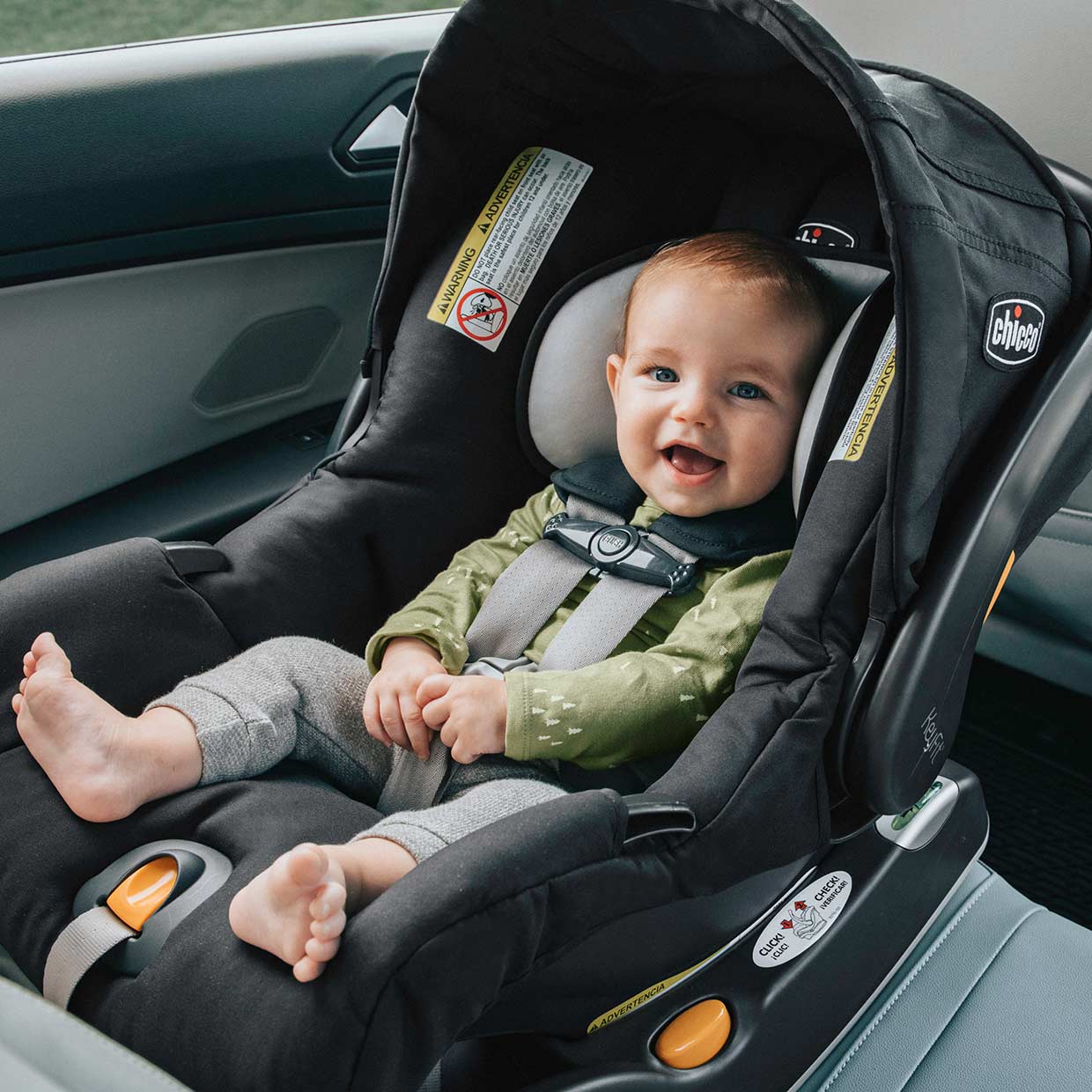
- The harness is snug and lies flat.
- The chest clip is at armpit level, if the seat uses one.
- The baby’s head is not pushed forward.
- The baby is dressed in thin layers under the harness.
- A second adult can sit near the baby on a long trip, when possible.
- You know where you will stop for feeding and diaper changes.


Never loosen the harness to make room for a thick coat or bulky blanket. Place a blanket over the secured harness instead, if needed.
How long can a baby sleep in a car seat?
A baby may sleep in a car seat during a necessary car ride, but the car seat should not become the baby’s regular sleep space.
When the vehicle reaches its destination, move the sleeping baby to a firm, flat, non-inclined sleep surface. This applies even if the baby seems comfortable and even if the seat is placed on the floor.
Do not use a car seat as a substitute for a crib or bassinet. Avoid letting a baby sleep in a car seat:
- In the living room.
- Beside the bed.
- On a couch or adult bed.
- On a kitchen counter or table.
- In a shopping cart.
- On a stroller frame unless the manufacturer specifically allows that use.
- On top of another surface.
The AAP’s safe-sleep guidance recommends placing babies on their backs for every sleep. Keep the sleep space free of loose blankets, pillows, bumper pads, and stuffed toys.
How to use a car seat safely on a long trip
A long trip can be manageable when you plan stops before you leave. The goal is not only to reach the destination. The goal is to keep your baby correctly positioned, fed, dry, cool, and supervised along the way.
1. Check the seat before the trip
Read both the car-seat manual and the vehicle owner’s manual. Confirm that the seat:
- Faces the correct direction for your baby.
- Fits your baby’s height and weight.
- Uses an approved installation method for that seating position.
- Has the correct recline setting.
- Does not move more than allowed by the manufacturer after installation.
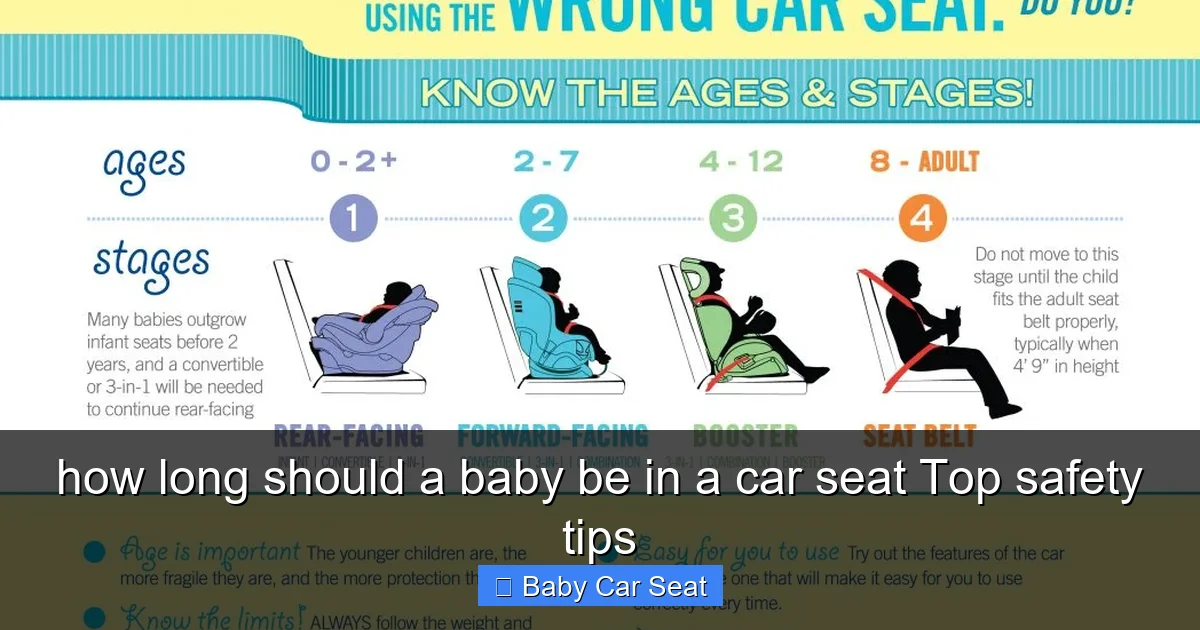
For infants and toddlers, rear-facing travel is generally recommended for as long as the child remains within the seat’s height and weight limits. The National Highway Traffic Safety Administration recommends keeping children rear-facing as long as possible.
2. Plan stops every 90 minutes to two hours
A planned stop is safer than waiting until the baby is crying hard or showing signs of discomfort. Look for safe places where you can park, remove the baby from the seat, and provide care.
A highway shoulder is not a good place for a routine break unless there is an emergency. Use a rest area, service station, or other safe location.
3. Take the baby out of the seat
Do not count a stop as a real break if the baby remains strapped into the seat. Remove the baby and hold them or place them on a safe, flat surface.
A stroller that keeps the baby in the same seated position does not provide the same type of break as supervised time on a flat surface.
4. Feed and change the baby outside the moving vehicle
Never breastfeed or bottle-feed while the car is moving. Stop the vehicle first and remove the baby from the harness for feeding.


During a break, check for:
- A wet or soiled diaper.
- Sweating or hot skin.
- Cold hands, feet, or body.
- A loose or twisted harness.
- A head that has fallen forward.
- Signs of hunger, pain, or illness.
5. Recheck the harness before driving
When the baby returns to the seat, place the shoulders against the seat back. Tighten the harness so that you cannot pinch extra webbing at the shoulder.
The harness should lie flat. The chest clip should sit at armpit level when the seat has one. Remove hats, coats, and other bulky clothing from under the harness.
6. Have an adult monitor the baby when possible
A second adult can watch the baby’s head position and breathing during the ride. This does not replace proper installation or regular stops.
If you are driving alone, use a properly adjusted mirror only if it does not block your view. Never turn around to check the baby while driving.

Signs that you should stop right away
Stop as soon as it is safe if your baby shows signs of breathing trouble, poor positioning, or distress.
Urgent signs include:
- The chin pressed tightly to the chest.
- A slumped body or head.
- Noisy, strained, or unusually slow breathing.
- Blue, gray, pale, or unusually red skin.
- Limpness or unusual difficulty waking.
- Repeated coughing, choking, or gagging.
- Heavy sweating or hot skin.
- Vomiting.
- A harness that has slipped off the shoulders.
- Crying that suggests pain rather than ordinary fussiness.
Once stopped, remove the baby from the seat and check them. If the baby is not breathing normally, is blue or gray, is unresponsive, or does not improve quickly, call 911.
Do not resume the trip if the baby remains unwell. Contact a health care professional for advice.

Common car-seat mistakes to avoid
Most travel problems come from position, installation, or supervision—not from the seat’s brand.
Leaving a baby in the car seat after arrival
A baby may look peaceful after falling asleep. Still, move the baby to a safe sleep space rather than carrying the seat indoors and leaving the baby there.
Using aftermarket inserts or head supports
Only use padding or accessories that came with the car seat or that the manufacturer specifically approves for that model. Extra inserts can change the harness fit or affect the baby’s position.
Adding bulky clothing under the harness
Thick coats and snowsuits can compress in a crash and leave the harness too loose. Use thin layers and place a blanket over the secured harness.
Reclining the seat too far
Use only the recline settings shown in the manual. A seat that is too upright may push the baby’s head forward. A seat that is installed incorrectly may not protect the baby as intended.
Turning the baby forward too soon
Keep the child rear-facing until the child reaches the car seat’s rear-facing height or weight limit. State law may set a minimum requirement, but a law is not always the best safety target.


Using a damaged or recalled seat
Do not use a seat after a moderate or severe crash unless the manufacturer says it may be reused. Check the National Highway Traffic Safety Administration’s recall information and register the seat so you can receive safety notices.
A simple decision guide
Use this guide when deciding whether to continue a trip or take a break.
| Situation | Best action |
|---|---|
| Baby has been in the seat for less than 90 minutes and is positioned well | Continue while monitoring the baby |
| Baby has been in the seat for about two hours | Stop at the next safe location and take a full break |
| Baby’s head falls forward | Stop as soon as safe and correct the position |
| Baby is hungry or needs a diaper change | Stop and remove the baby before feeding or changing |
| Baby is asleep when you reach the destination | Move the baby to a firm, flat sleep surface |
| Baby is sweating or feels hot | Stop, remove extra layers, cool the baby, and assess their condition |
| Baby has breathing trouble or changes color | Stop immediately when safe and call 911 if the problem is severe or does not resolve |
The table gives general travel guidance. Your child’s doctor may set a different plan based on medical needs.

What to do if a trip must last longer than two hours
Sometimes a family must travel farther than the recommended break schedule allows. In that case, do not try to make the trip safer by keeping the baby in the seat continuously.
Instead:
- Plan frequent stops before leaving.
- Identify rest areas and safe places to stop.
- Have another adult monitor the baby if possible.
- Take the baby out at each stop.
- Keep the baby rear-facing and correctly harnessed.
- Avoid travel during the hottest part of the day when practical.
- Ask the pediatrician for specific advice if the baby is premature or medically fragile.
If a trip can be delayed without serious consequences, postponing it may be the better choice for a very young or unwell baby. For necessary travel, a pediatrician or certified child passenger safety technician can help you create a safer plan.
You can find a certified technician through the National Highway Traffic Safety Administration’s child passenger safety resources. A technician can check the seat’s installation and show you how to position your baby correctly.
Key takeaways
- Aim for no more than about two hours at a time in a baby’s car seat.
- The two-hour advice is safety guidance, not a universal federal law.
- Take the baby out during every break; do not leave them in the seat.
- Stop sooner if the baby slumps, sweats, vomits, changes color, or has trouble breathing.
- Move a sleeping baby to a firm, flat sleep surface after arriving.
- Keep the baby rear-facing until the car seat’s rear-facing height or weight limit.
- Ask the pediatrician about travel plans for premature or medically fragile babies.
- Never leave a baby alone in a parked car.
Frequently asked questions
Can a baby be in a car seat for three hours?
A three-hour stretch is longer than the commonly advised limit. Plan to stop at about two hours, and stop sooner if the baby needs care or becomes poorly positioned. If the trip is unavoidable, ask the pediatrician for advice, especially for a newborn or medically fragile baby.
Can a baby sleep in a car seat for two hours?
A baby may sleep in a car seat during a car ride when the seat is correctly installed and the baby is properly harnessed. Once the car stops and you reach your destination, move the baby to a firm, flat sleep surface. Do not use the car seat for routine sleep.
Does the two-hour rule apply to newborns?
It is a general planning limit, not a guarantee of safety for every newborn. Newborns may need shorter trips and more frequent checks. Premature babies and babies with medical conditions may need a personalized plan from their pediatrician.
Can a baby stay in the car seat while eating?
No. Stop the vehicle and remove the baby from the harness before feeding. Never feed a baby while the car is moving.
Can I carry my baby into the house in the car seat?
You may carry the seat for convenience, but do not leave the baby sleeping in it after arrival. Move the baby to a safe sleep space as soon as practical.
What should I do if my baby’s head falls forward?
Stop at the next safe place, remove the baby, and check the seat’s recline angle and harness. Follow the car-seat manual. If the baby has breathing trouble, changes color, or remains unusually sleepy, seek emergency help.
Conclusion
A good rule for most families in the United States is to limit a baby’s time in a car seat to about two hours at a time, with regular breaks. The seat should be used for travel, not as a routine sleep or sitting space.


Before a long drive, check the installation, plan safe stops, watch your baby’s head position, and ask your pediatrician for guidance when your baby was premature or has a medical condition. Safety depends on the whole trip: the right seat, the right fit, regular breaks, and close attention to your baby’s condition.
