

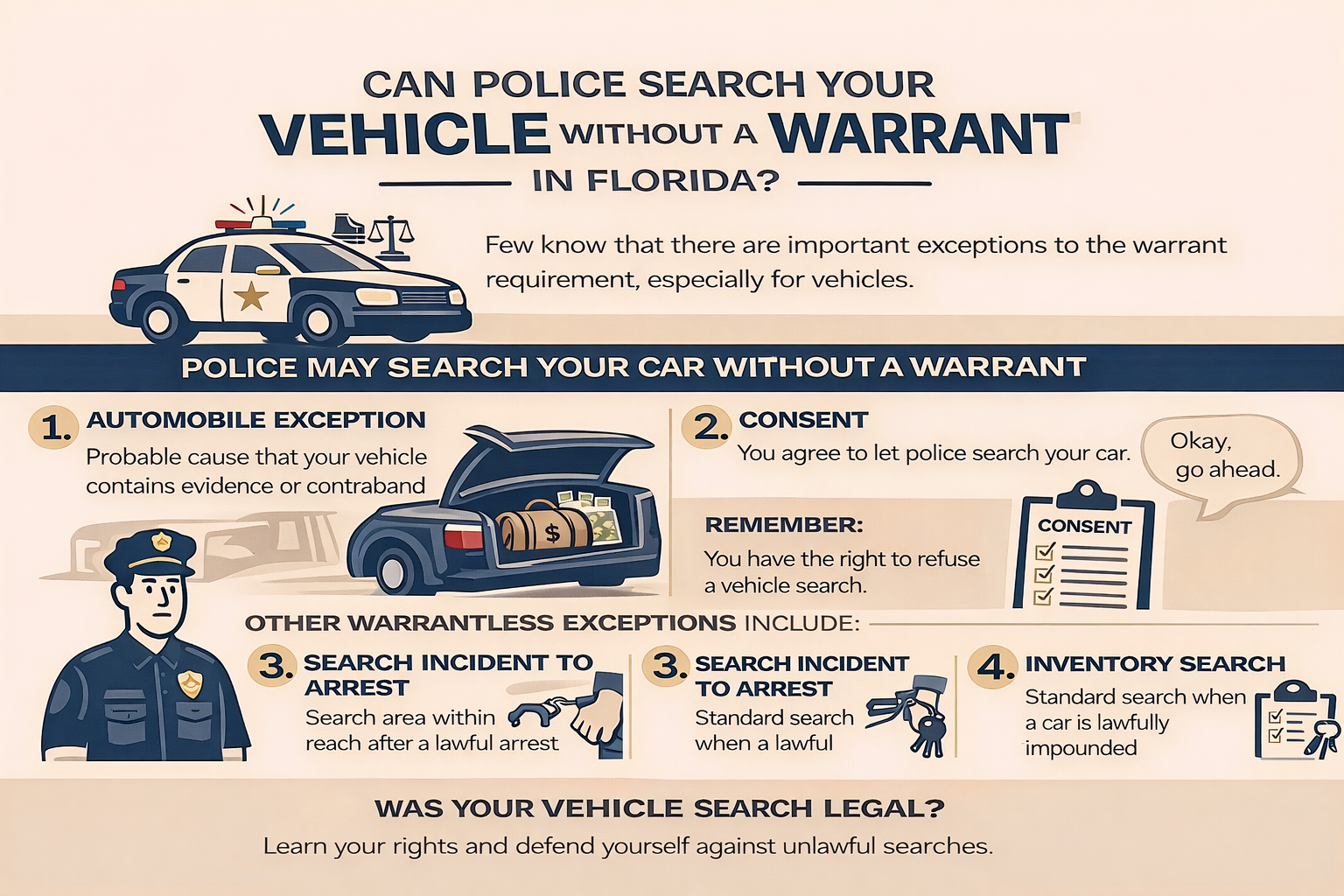
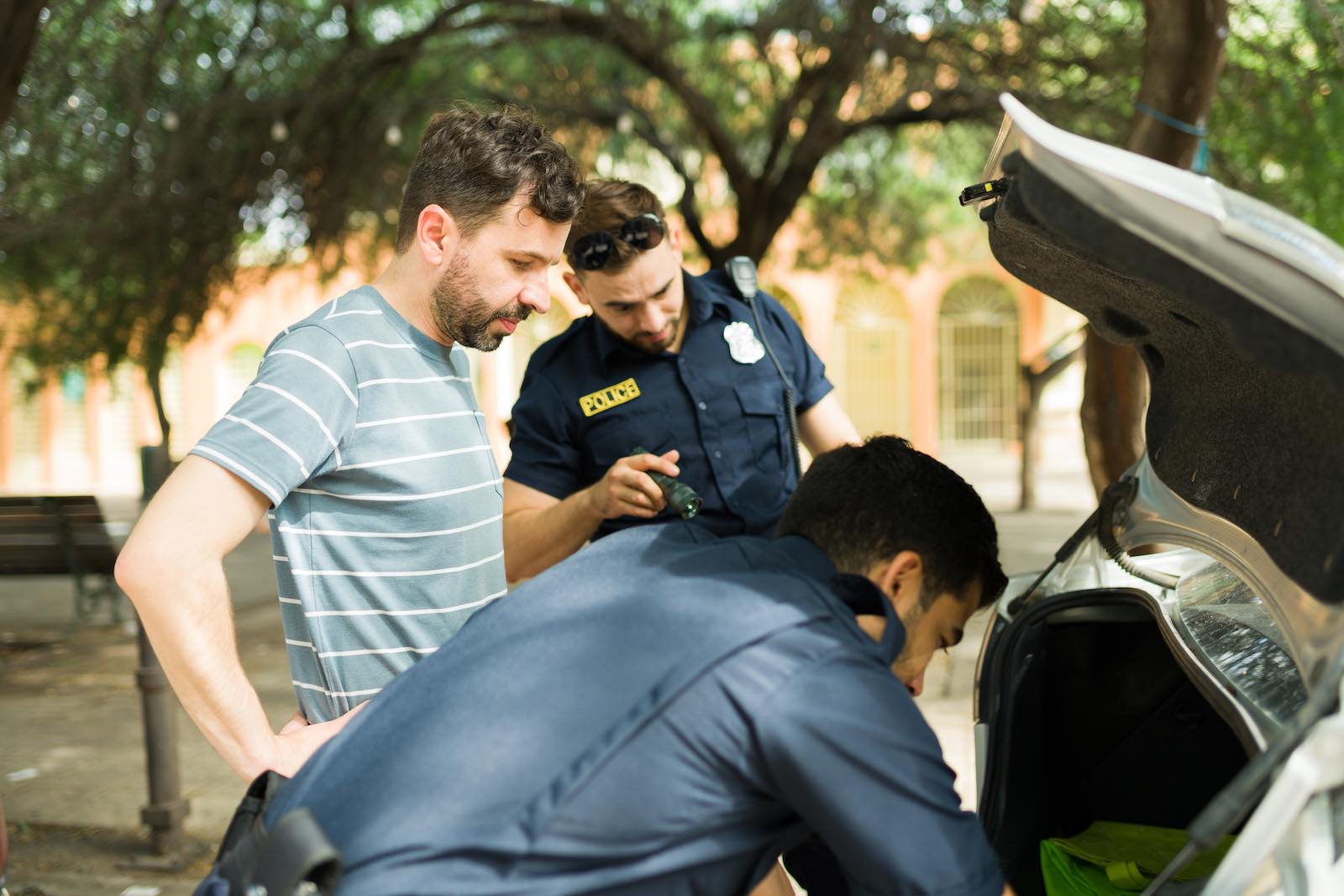
Yes. In the United States, a police officer may search your car without a warrant in several situations. The most common are your consent, probable cause, a lawful arrest, an inventory search, a limited weapons search, or an emergency.
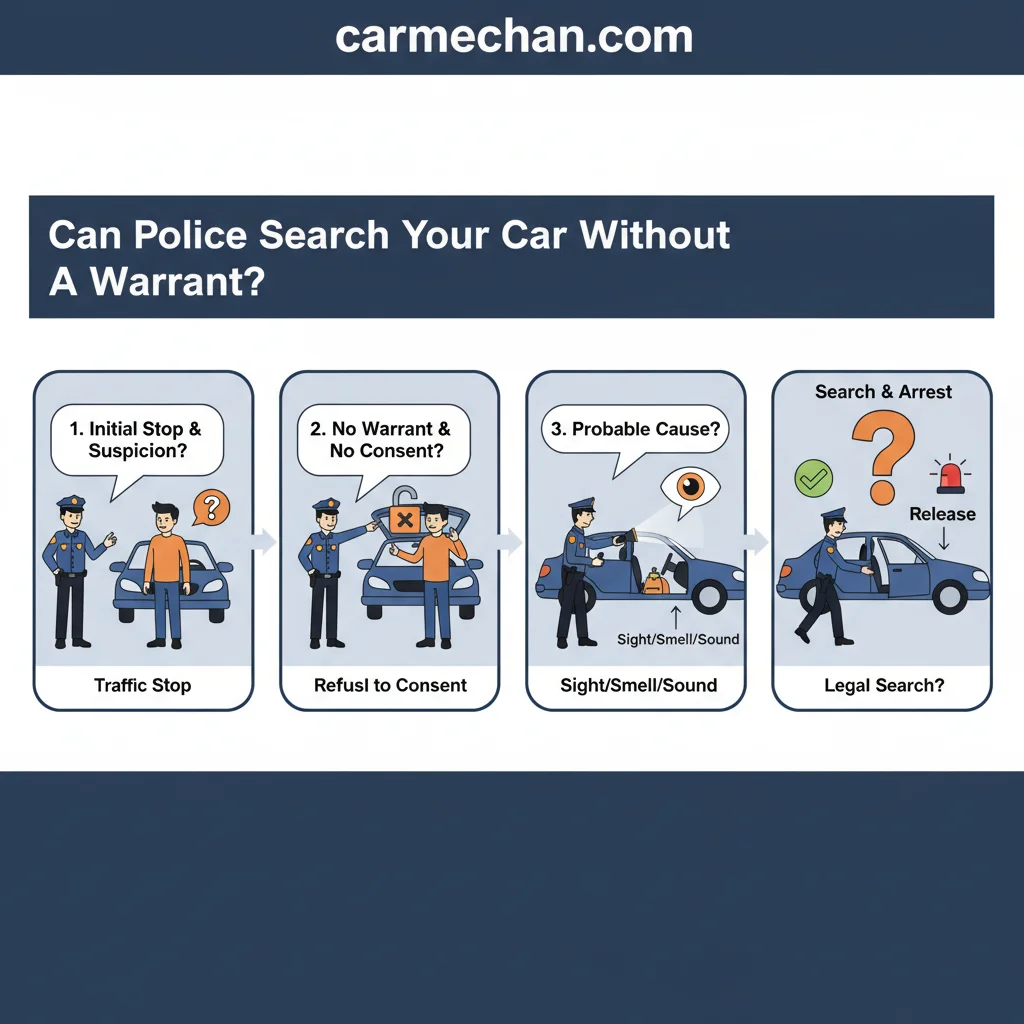
But a traffic stop alone does not give police unlimited power to search your vehicle. The reason for the stop, what the officer sees, what you say, and the rules in your state can all matter.
This guide explains when a warrantless car search may be legal, what you can say during the stop, and what to do if you believe the search violated your rights. It is general information, not personal legal advice. Search rules can vary by state and by the facts of the encounter.
When Can Police Search a Car Without a Warrant?
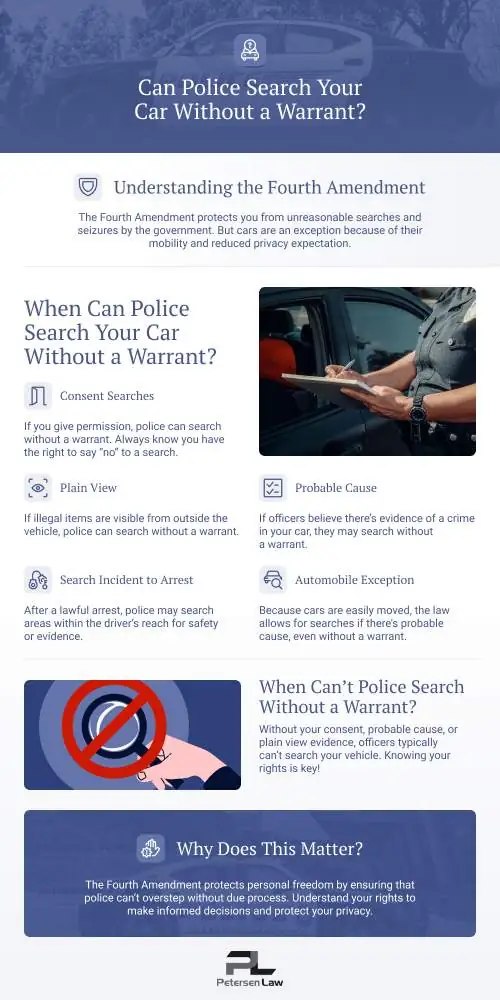
Police usually need a warrant to search private property. The Fourth Amendment protects people from unreasonable searches and seizures. However, courts recognize several exceptions for vehicles.
A warrantless car search may be allowed when:
- You give voluntary consent.
- The officer has probable cause to believe the car contains evidence or illegal items.
- The officer makes a lawful arrest and a narrow vehicle search is allowed.
- The officer performs a lawful inventory search after towing or impounding the car.
- The officer reasonably believes a person may access the car and poses a danger.
- The officer sees illegal items in plain view.
- An emergency makes it impractical to get a warrant.
- Another specific exception applies under federal or state law.
The key point is that “no warrant” does not always mean “no legal basis.” Police must still rely on a recognized exception.
The leading federal rule is the automobile exception. Under Carroll v. United States, the Supreme Court held that police may search a vehicle without a warrant when they have probable cause to believe it contains contraband or evidence of a crime.
A simple example
Suppose an officer stops a car for speeding. The officer smells a strong odor of marijuana and sees a bag of suspected drugs on the floor. Depending on state law and the facts, those facts may help create probable cause for a search.
By contrast, a broken taillight or a routine speeding violation does not automatically allow a full search of the passenger compartment and trunk.
Does a Traffic Stop Give Police the Right to Search Your Car?
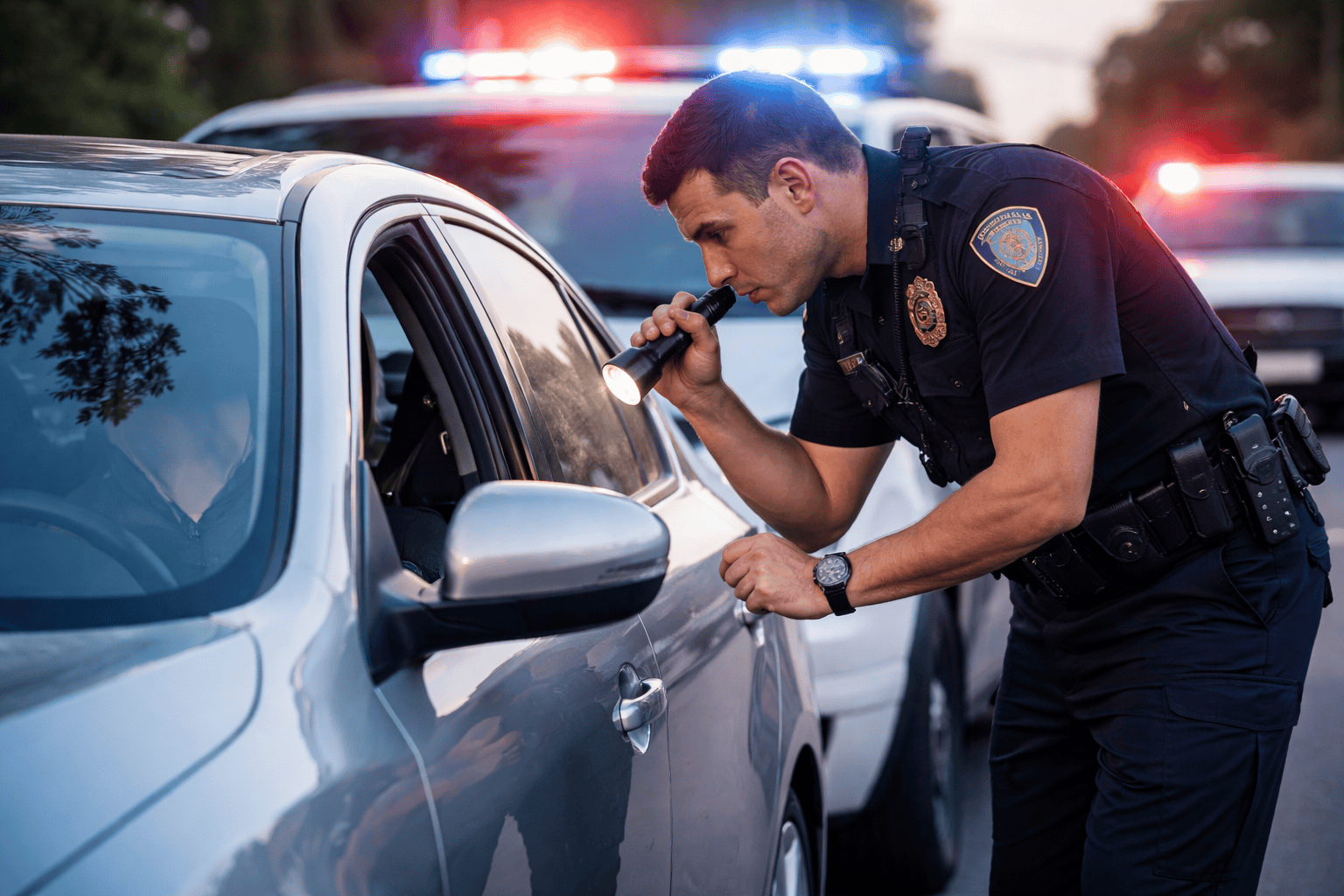
No. A routine traffic stop does not, by itself, permit a full search of your vehicle.
Police may usually:
- Ask for your driver’s license, registration, and proof of insurance.
- Check for outstanding warrants.
- Require the driver to step out of the car.
- Require passengers to step out in many circumstances.
- Conduct tasks tied to the traffic violation.
- Take reasonable steps to protect officer safety.
The officer may not extend the stop for unrelated investigation without a lawful reason. In Rodriguez v. United States, the Supreme Court held that police generally cannot prolong a traffic stop beyond the time reasonably needed to handle the traffic matter unless they have additional legal justification.
For example, an officer usually cannot finish writing a speeding ticket and then keep you waiting only to investigate a suspected drug offense without reasonable suspicion or another lawful basis.
Can an officer order everyone out?
Yes. The Supreme Court has held that an officer may order the driver out of a vehicle during a lawful traffic stop. In Maryland v. Wilson, the Court extended that rule to passengers.
Ordering someone out is not the same as searching the car. A separate legal basis is still needed for a vehicle search.
Can police search the car for a traffic violation?
Usually not based only on the traffic violation.
In Knowles v. Iowa, the Supreme Court rejected a broad vehicle search based only on issuing a traffic citation. A police officer may take safety steps, but a citation alone does not automatically create the right to search the entire car.

What Is the Automobile Exception?
The automobile exception allows police to search a vehicle without a warrant when they have probable cause to believe it contains evidence of a crime or contraband.
Probable cause means more than a hunch. It requires facts that would lead a reasonable officer to believe that evidence or illegal items are likely in the vehicle.
Possible facts may include:
- The smell of illegal drugs, where recognized by applicable law.
- Drugs or weapons visible through a window.
- An admission by the driver or passenger.
- Reliable information from a witness or informant.
- Items linked to a reported crime.
- Evidence discovered during a lawful investigation.
- Conduct that, viewed with other facts, supports a reasonable belief of criminal activity.
The facts must be evaluated as a whole. One fact may be weak by itself but stronger when combined with other facts.
How far can a probable-cause search go?
The scope depends on what police have probable cause to look for.
In United States v. Ross, the Supreme Court held that officers may search parts of the vehicle, including containers, where the object of the search could reasonably be found.
For example:
- If police have probable cause to search for a large stolen television, they generally cannot justify opening a small wallet.
- If police have probable cause to search for small packets of drugs, closed bags and other containers may fall within the search area.
- If probable cause relates only to the trunk, the search may not automatically extend to every part of the passenger area.
A vehicle search is not a blank check. Its lawful scope is tied to the evidence police are looking for.
State law can change the result
Federal constitutional law sets a baseline. State constitutions and state statutes may provide greater privacy protection.
Marijuana is a good example. State rules differ on possession, transport, odor, and whether the smell alone supports a search. A rule that applies in one state may not apply in another.

Can Police Search Your Car if You Consent?
Yes. If you voluntarily consent, police generally do not need a warrant or probable cause for the search.
An officer may ask:
“Do you mind if I search your car?”
You have the right to say:
“I do not consent to any searches.”
You do not need to explain your refusal. You also do not need to argue about the law.
Consent must be voluntary under the circumstances. Police do not always have to tell you that you may refuse. The fact that an officer is polite, authoritative, or armed does not automatically make consent involuntary.
However, threats, coercion, deception, or extreme pressure may affect whether consent was legally valid. Courts examine the full situation, including the person’s age, understanding, setting, police conduct, and the length of the encounter.
Can a passenger give consent?
Sometimes. A person may generally consent to a search of areas over which they have actual or apparent authority. A passenger may not have authority to consent to a search of the driver’s locked personal container.
Police may rely on apparent authority if the facts reasonably make it look as though the person controls the area. The details matter.
Can you take back consent?
Often, yes. You can clearly state:
“I withdraw my consent.”
Revoking consent does not erase anything police already found. It also may not stop a search supported by another legal basis, such as probable cause.
Do not physically block the officer. State your position calmly and let a lawyer challenge the search later if needed.
Can Police Search a Car After an Arrest?
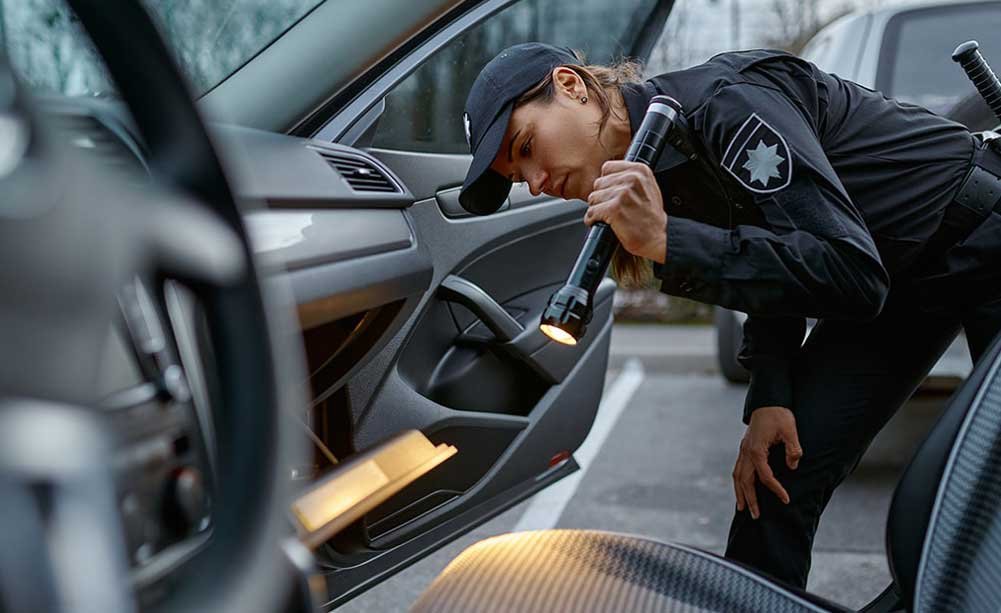
Sometimes, but an arrest does not automatically allow police to search the entire vehicle.
In Arizona v. Gant, the Supreme Court limited vehicle searches incident to arrest. Police may search the passenger compartment when:
- The arrested person is unsecured and can reach the vehicle at the time of the search; or
- It is reasonable to believe the vehicle contains evidence of the offense that led to the arrest.
For example, if a person is arrested for driving with a suspended license and secured in a patrol car, that arrest alone usually does not justify a full search for evidence.
A lawful arrest may still lead to other types of searches. Police may search the arrested person and the area within that person’s immediate control. They may also search a vehicle under the automobile exception if independent probable cause exists.
What about a search for weapons?
A limited protective search may be allowed when officers reasonably believe a person is dangerous and may access weapons in the vehicle.
Under Michigan v. Long, police may inspect areas of the passenger compartment where a weapon could be placed or hidden if specific facts support a reasonable safety concern.
This is not the same as a general evidence search. The search should be limited to places where a weapon could be located.

What Is a Plain-View Search?
Police may sometimes seize an item without a warrant when they are lawfully present and the item’s illegal nature is immediately apparent.
For plain view to apply:
- The officer must be lawfully in the viewing position.
- The officer must have a lawful right to access the item.
- The item must appear to be evidence, contraband, or connected to a crime.
If an officer sees an open bag of illegal drugs on the seat during a lawful stop, the officer may be able to seize it. That observation may also create probable cause for a broader search, depending on the circumstances and state law.
Plain view does not allow police to create a lawful view by unlawfully opening a locked box, moving property without justification, or entering an area they had no right to enter.

Can Police Search a Car Before Towing It?
Yes, police may conduct an inventory search when they lawfully impound a vehicle.
An inventory search is meant to:
- Protect the owner’s property.
- Protect police from claims that property was lost or damaged.
- Protect officers from dangerous items.
- Record property inside the vehicle.
The search must usually follow standardized department procedures. Police cannot use an impoundment as a pretext for a criminal investigation.
In South Dakota v. Opperman, the Supreme Court approved an inventory search of an impounded vehicle under established procedures. Later cases, including Colorado v. Bertine, addressed the importance of standardized rules for opening containers and handling property.
Whether an inventory search is valid may depend on:
- Whether the impoundment was lawful.
- Whether police followed written policy.
- Whether the policy gave officers improper discretion.
- Whether the search was truly administrative.
- Whether the vehicle was parked safely or could have been left lawfully.
If your vehicle was towed and searched, ask for the department’s impound and inventory policy. That document may matter in a suppression hearing.

What Should You Do During a Vehicle Search?
Your safest approach is to remain calm, avoid physical resistance, and clearly protect your rights.
Use this sequence
- Pull over safely. Turn off the engine and keep your hands visible.
- Provide required documents. Give your license, registration, and insurance when asked.
- Do not volunteer information. You can politely decline questions beyond basic identification and driving documents.
- Do not consent to a search. Say, “I do not consent to any searches.”
- Do not physically resist. Do not grab an officer, shut a door on an officer, or try to hide or destroy anything.
- Ask if you are free to leave. If the officer says no, remain calm.
- Ask for a lawyer if you are arrested or questioned about a crime.
- Remember details afterward. Write down the time, location, officer names, witnesses, statements, and what was searched.
You generally do not need to explain why you refuse consent. A clear refusal is better than an angry argument.
What if police search anyway?
Say:
“I do not consent to this search.”
Then do not interfere. Your objection may help show that the search was not consensual. The legality of the search can usually be challenged later through a lawyer and, in some cases, a motion to suppress evidence.
Do not lie to police. Do not run. Do not reach into the car without permission. Sudden movements can create a serious safety risk.
Can Police Search a Locked Trunk or Glove Box?
It depends on the legal basis for the search.
If police have probable cause to search the vehicle for small evidence, the search may reach a locked container or compartment where that evidence could fit. The automobile exception can cover containers in the vehicle, subject to the scope of the probable cause.
If the search is based only on a protective weapons check, police generally may inspect places where a weapon could be hidden and accessed. A tiny locked container may not fit that purpose.
If you consent, the scope may depend on your words and the circumstances. Saying “yes” to a search of the car may be interpreted broadly, although the law does not treat every consent question the same way.
You can set a limit:
“I do not consent to a search of my vehicle or any containers.”
That may not stop a search supported by probable cause, but it makes your position clear.
Can Police Search a Passenger’s Belongings?
Sometimes. Police may search a passenger’s belongings if a valid exception applies and the search reaches that item.
Under Wyoming v. Houghton, police may search a passenger’s belongings found in a vehicle when they have probable cause to search the vehicle for contraband. The Court reasoned that probable cause may extend to containers belonging to passengers when the item could contain the object of the search.
But the rule is not unlimited. Ownership, location, the purpose of the search, and the item’s size may matter.
A passenger should not assume that personal property is automatically protected from a vehicle search. The passenger can state, “I do not consent,” but should not physically take back or conceal the item during the stop.
What Makes a Car Search Unlawful?
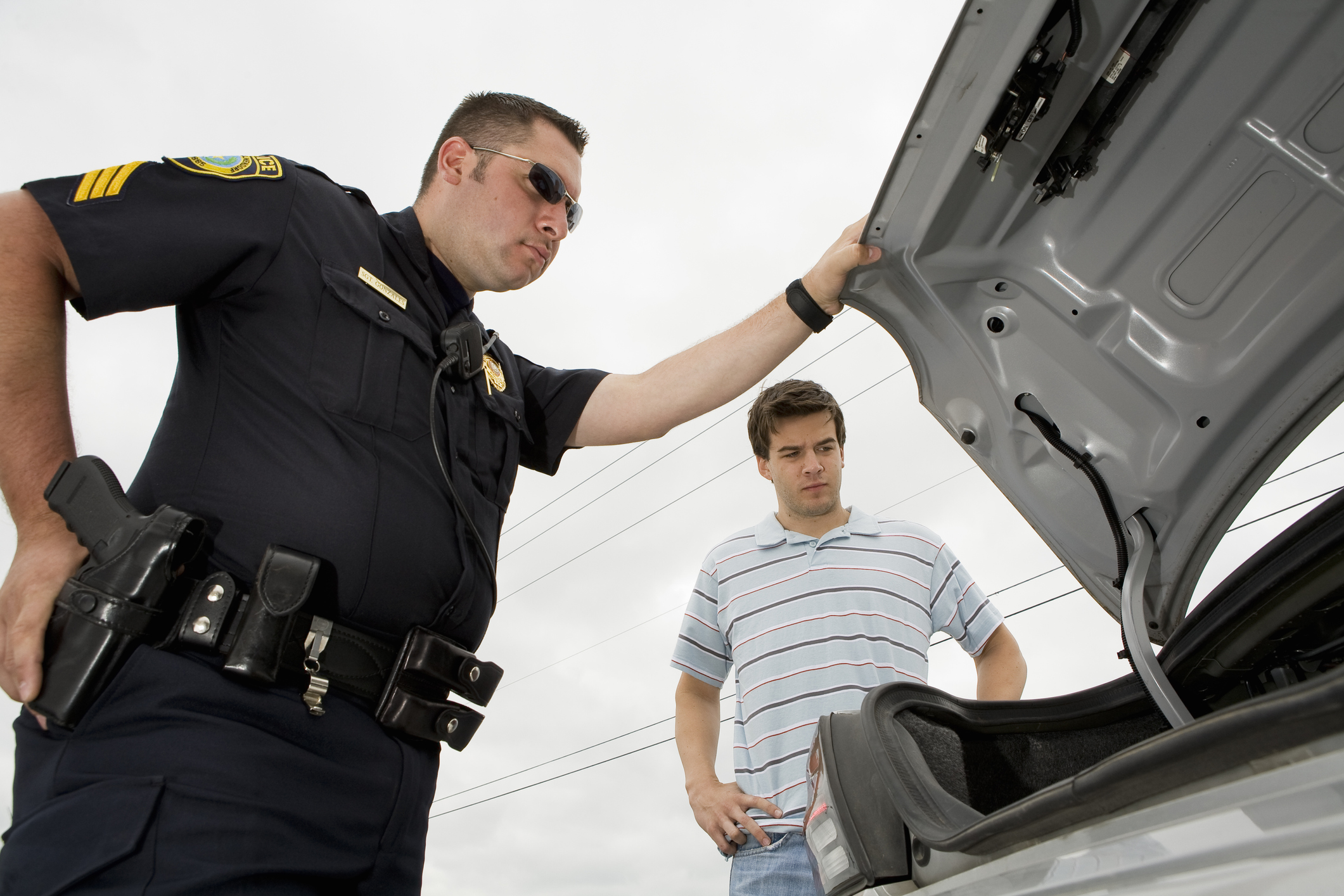
A search may be unlawful when police lack consent, probable cause, or another valid exception.
Potential warning signs include:
- The officer searched only because the driver refused consent.
- The officer searched after the traffic mission ended without reasonable suspicion.
- The officer searched areas that could not contain the suspected evidence.
- The officer used a citation alone to justify a broad search.
- The officer used an arrest as a pretext without meeting the limits in Arizona v. Gant.
- The vehicle was impounded without a valid reason.
- The inventory search did not follow department policy.
- The officer prolonged the stop without legal grounds.
- The officer entered or opened a container without a valid basis.
A search can still be lawful even if the officer made a mistake about the law. Courts often analyze whether the officer had an objective legal basis, not only what the officer personally intended.
What happens to evidence from an illegal search?
A judge may exclude evidence under the exclusionary rule. This is often called “suppression.”
Suppression is not automatic. Exceptions may apply, including:
- Good-faith reliance on a warrant or court record.
- Independent discovery of the evidence.
- Inevitable discovery.
- Attenuation between the police conduct and the evidence.
- A separate lawful source for the evidence.
The result depends on the facts, the jurisdiction, the type of error, and the evidence involved.
Federal Rules at a Glance
The following table summarizes major federal principles. State law may provide more protection.
| Situation | Is a warrantless search possibly allowed? | Main limit |
|---|---|---|
| Routine traffic stop | Usually no full search | The traffic stop alone is not enough |
| Voluntary consent | Yes | Consent must be voluntary and within its scope |
| Probable cause | Yes | Search scope must match the suspected evidence |
| Arrest of driver | Sometimes | Arizona v. Gant limits searches incident to arrest |
| Protective weapons search | Sometimes | Specific safety facts are required |
| Plain view | Sometimes | Officer must be lawfully present and able to access item |
| Lawful impoundment | Sometimes | Inventory policy must be followed |
| Emergency | Sometimes | Circumstances must make a warrant impractical |
| Passenger property | Sometimes | Depends on the exception and search scope |
The most important practical distinction is between reasonable suspicion and probable cause. Reasonable suspicion may justify a short investigation or a limited weapons check. Probable cause may justify a broader vehicle search under the automobile exception.

Common Mistakes to Avoid
Mistake 1: Believing refusal equals guilt
You have a constitutional right to refuse consent. Refusing consent does not, by itself, prove that you committed a crime.
Still, police may continue the encounter if they have another lawful reason. Refusal is not a command to leave.
Mistake 2: Saying “I guess you can look”
Unclear language can create confusion. If you do not agree, say so clearly.
Use:
“I do not consent to a search.”
Mistake 3: Arguing on the roadside
A roadside debate rarely changes the officer’s decision. It can increase tension and create safety risks. Save legal arguments for court.
Mistake 4: Physically resisting
Even an unlawful search does not usually give you permission to fight or obstruct an officer. Challenge the search later through legal channels.
Mistake 5: Assuming the same rule applies in every state
State constitutions, marijuana laws, search rules, and police policies differ. A local criminal defense lawyer can review the exact facts.
Mistake 6: Waiting too long to seek legal help
Deadlines may apply to criminal cases, suppression motions, and administrative matters such as a driver’s license suspension. Contact a lawyer promptly if police found evidence, issued an arrest, or seized your vehicle.
What to Do After a Suspected Illegal Car Search
After the encounter, write down what happened while your memory is fresh.
Record:
- The date, time, and location.
- Why the officer said you were stopped.
- Whether the officer asked for consent.
- Your exact response.
- Whether the officer gave a reason for the search.
- Where the officer searched.
- What the officer found.
- Names and contact details of witnesses.
- Whether body-camera or dashboard-camera footage may exist.
- Whether the car was towed or impounded.
Save the citation, property receipt, tow paperwork, booking documents, and court papers.
Do not post detailed facts about the incident online. Do not contact witnesses in a way that could be viewed as pressure. A lawyer can request records, review video, examine department policy, and determine whether a suppression motion may be appropriate.
Frequently Asked Questions
Can I refuse a police search of my car?
Yes. You can clearly say, “I do not consent to a search.” Do not physically resist. Police may still search if they have probable cause or another lawful basis.
Does an officer need to tell me that I can refuse?
Usually, no. Police generally do not have to advise you that consent is optional before asking to search. You can refuse without waiting for that warning.
Can police search my car if they smell marijuana?
It depends on the state and the facts. Some states limit the legal effect of marijuana odor because possession or use may be lawful. Other facts may still create probable cause. Local law matters.
Can police search my car if I am arrested for a misdemeanor?
Not automatically. Under Arizona v. Gant, an arrest does not always allow a full vehicle search. The officer must satisfy the rule for a search incident to arrest, or rely on another exception.
Can police search my car during a DUI stop?
A DUI investigation may include lawful tests, observations, and safety measures. A full vehicle search still needs a recognized legal basis, such as consent, probable cause, or an inventory search after lawful impoundment.
Can I sue police for searching my car?
Possibly, but a civil rights claim has specific legal requirements and defenses. An illegal search may instead be addressed first through a criminal case and a motion to suppress. Speak with a lawyer who handles criminal defense or civil rights claims.
Key Takeaway
A cop can search your car without a warrant in the United States, but not simply because the officer wants to. The search usually must fit an exception to the warrant requirement, such as voluntary consent, probable cause, a limited arrest-related search, a protective weapons search, plain view, an emergency, or a lawful inventory search.
During the stop, stay calm, provide required documents, say that you do not consent to a search, and do not physically resist. If police search the vehicle or find evidence, contact a local lawyer quickly. The legality of the search depends on the precise facts and the law in the state where it occurred.
Legal Authorities
- Fourth Amendment to the U.S. Constitution
- Carroll v. United States, 267 U.S. 132 (1925)
- United States v. Ross, 456 U.S. 798 (1982)
- California v. Acevedo, 500 U.S. 565 (1991)
- Arizona v. Gant, 556 U.S. 332 (2009)
- Knowles v. Iowa, 525 U.S. 113 (1998)
- Rodriguez v. United States, 575 U.S. 348 (2015)
- Michigan v. Long, 463 U.S. 1032 (1983)
- South Dakota v. Opperman, 428 U.S. 364 (1976)
- Schneckloth v. Bustamonte, 412 U.S. 218 (1973)