

Introduction
A convertible car seat is a child safety seat made for use in both rear-facing and forward-facing positions. In the United States, many parents use one from infancy through the toddler years, as long as the child still fits the seat’s height and weight limits.
Unlike an infant-only seat, a convertible car seat usually stays in the vehicle. It does not need to click into a stroller. The main benefit is longer use, but correct installation and proper fit matter more than the seat’s price or brand.
U.S. car seat laws differ by state. The safest choice is to follow the seat manual, your vehicle manual, and current guidance from the National Highway Traffic Safety Administration (NHTSA) and the American Academy of Pediatrics (AAP).

What Is a Convertible Car Seat?
A convertible car seat is a child restraint that can be installed rear-facing first and forward-facing later. It uses an internal five-point harness to hold the child in both modes.
The word “convertible” refers to the seat’s direction of use. It does not always mean the seat converts into a booster.
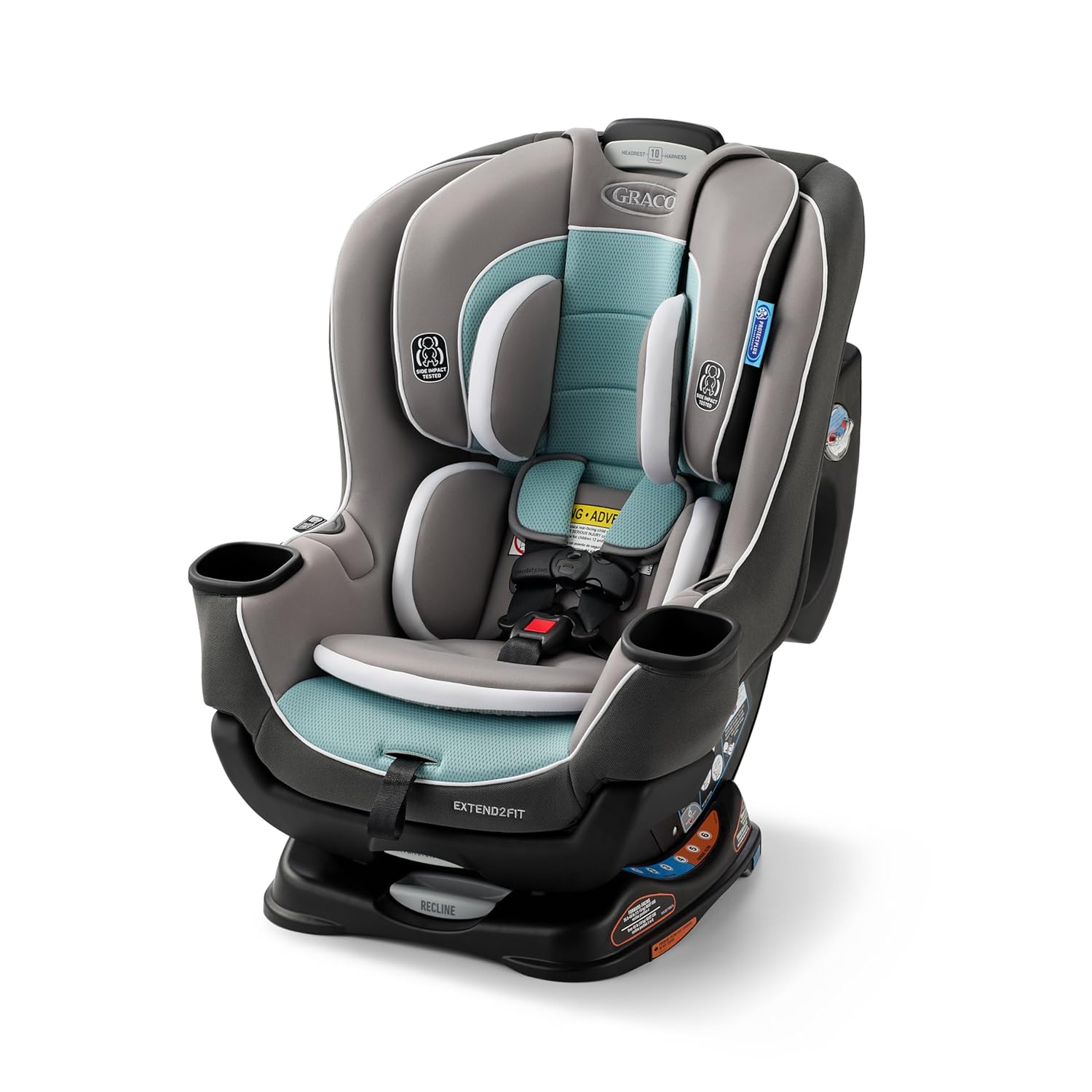
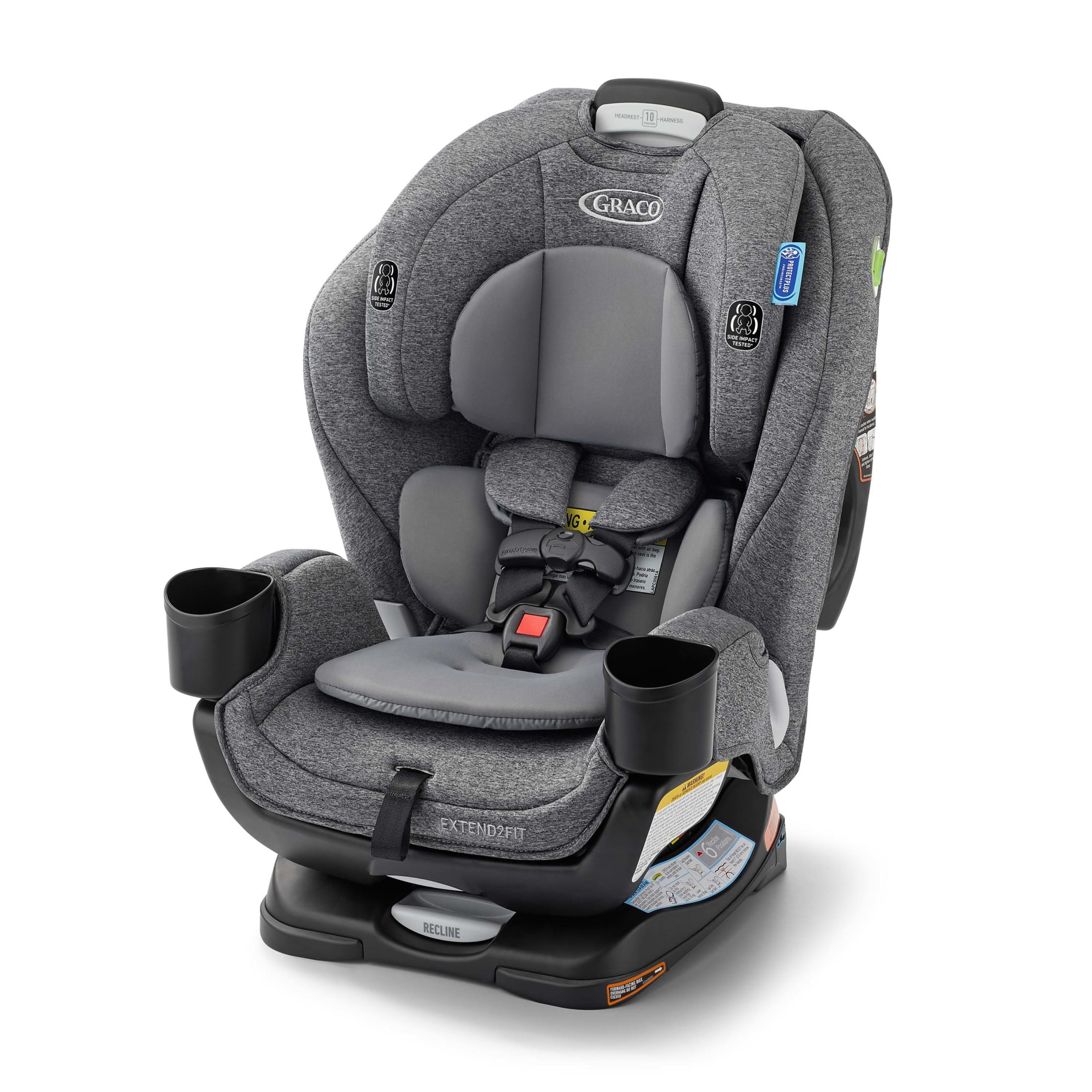
Most convertible seats include:
- A seat shell that supports the child’s body
- A five-point harness
- Harness straps and a chest clip
- Padding and head support
- A rear-facing belt path
- A forward-facing belt path
- Lower-anchor connectors or a seat-belt installation method
- A recline system
- A tether strap for forward-facing use
The five-point harness has two shoulder straps, two hip straps, and one buckle between the legs. It spreads crash forces across stronger parts of the child’s body.
A convertible car seat differs from an infant-only seat in several ways:
| Feature | Convertible car seat | Infant-only car seat |
|---|---|---|
| Rear-facing use | Yes | Yes |
| Forward-facing use | Yes, when allowed | No |
| Detaches from a base | Usually no | Usually yes |
| Works as a stroller carrier | Usually no | Often yes |
| Typical use period | Longer | Shorter |
| Can become a booster | Some models only | Rarely |
A convertible seat is not automatically safer than an infant-only seat. Both types can provide protection when they are appropriate for the child, installed correctly, and used as directed.

How Does a Convertible Car Seat Work?
A convertible car seat changes the direction in which the child faces, not the basic safety rules. The child must remain within the seat’s stated limits in each mode.
Rear-facing mode
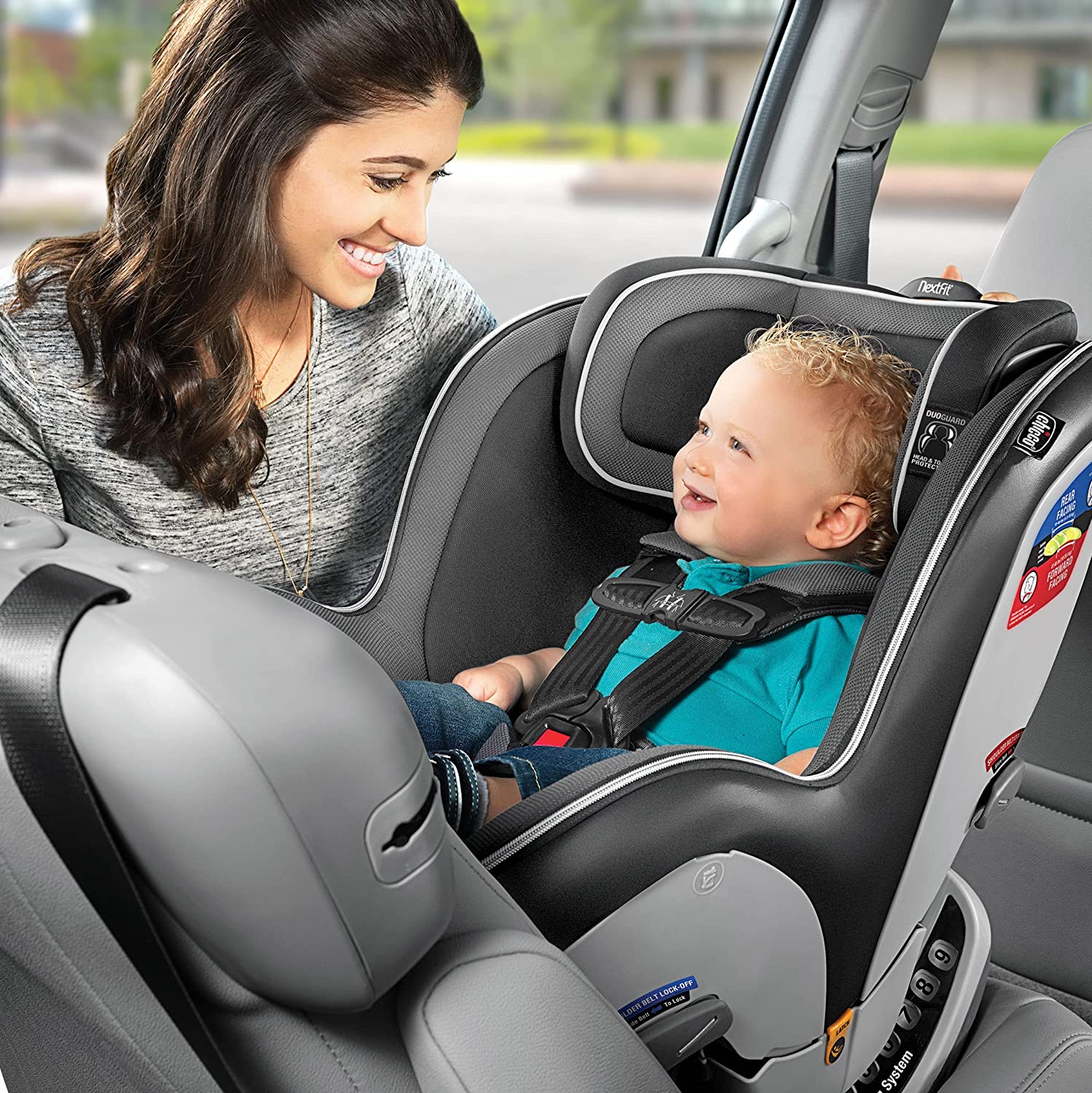
In rear-facing mode, the child faces the back of the vehicle. The seat supports the child’s head, neck, and back during a crash.
The AAP recommends keeping children rear-facing as long as possible, until they reach the highest height or weight limit allowed by the seat. A child does not need to turn forward simply because the child reaches age 2.
Rear-facing use may include:
- Newborn mode
- Infant mode
- Toddler rear-facing mode
The seat manual determines whether a newborn fits safely. Some convertible seats need an infant insert, a specific recline setting, or a minimum weight.
Forward-facing mode
In forward-facing mode, the child faces the front of the vehicle and continues to use the five-point harness. The seat’s top tether should be used when the seat and vehicle instructions allow or require it.
The AAP advises keeping children in a forward-facing harness seat until they reach the seat’s upper height or weight limit. After that, many children move to a belt-positioning booster.
Booster mode
A standard convertible car seat does not always work as a booster. A seat that supports booster use will say so in its manual and on its label.
An all-in-one car seat may include:
- Rear-facing harness mode
- Forward-facing harness mode
- High-back booster mode
- Sometimes backless booster mode
A booster does not restrain the child with its own five-point harness. Instead, it raises the child so the vehicle’s lap and shoulder belt fit correctly.
What happens in a crash?
A properly used restraint helps manage the child’s movement and spreads crash forces. Rear-facing seats support the head, neck, and spine as one unit. Forward-facing harnesses hold the child in position and limit movement.
No car seat prevents every injury. A seat also cannot compensate for a child who is too large for it, a loose harness, an incorrect recline angle, or an installation that moves too much.
When Should a Child Use a Convertible Car Seat?
A child can use a convertible car seat from birth if the specific model is approved for newborns and the child meets its minimum requirements. Other families start with an infant-only seat and switch later.
The correct timing depends on:
- The child’s weight
- The child’s seated height
- The child’s standing height
- The seat’s minimum and maximum limits
- The seat’s recline and harness rules
- The vehicle’s available space
- The caregiver’s ability to install and use the seat correctly
The child should remain rear-facing until the child reaches the seat’s rear-facing height or weight limit. Turning the seat forward because the child’s legs look bent is usually not necessary. Bent legs alone do not mean the child has outgrown a rear-facing seat.
A child has outgrown rear-facing use when the seat manual says one or more limits have been reached. The manual may use:
- Maximum weight
- Maximum standing height
- A head-clearance rule
- A specific harness-position rule
Do not rely on a general age rule. Age can guide planning, but the seat’s limits decide whether the seat still fits.

How Do You Choose a Convertible Car Seat?
The best convertible car seat is one that fits the child, fits the vehicle, and can be used correctly on every trip. A lower-cost seat used properly can be a better choice than a costly seat that does not fit the vehicle.
Check the child’s fit
Before buying, confirm:
- The child meets the minimum weight and height
- The harness can sit at the correct height
- The child’s shoulders fit within the harness area
- The buckle position works for the child
- The child has not reached the rear-facing limits
- The child has not reached the forward-facing limits
Use the manufacturer’s limits, not a retailer’s summary alone. Models can have different rules even when they look similar.
Check the vehicle fit
Measure or test the seat in the vehicle. Pay attention to:
- Front-seat legroom
- Seat width
- Buckle placement
- Lower-anchor location
- Headrest shape
- Seat-belt length
- The vehicle’s center-seat rules
- Whether the seat touches the front seat
A rear-facing seat may take more space than expected. A large seat can make the front passenger seat uncomfortable or prevent a safe installation.
Check ease of use
Look for clear instructions and adjustments you can manage. Useful features may include:
- A no-rethread harness
- Easy recline settings
- Clear belt paths
- Accessible tightening straps
- A removable cover that can be washed
- A manual that explains each mode
These features do not prove that one seat protects better in a crash. They may, however, reduce daily-use mistakes.
Check the label and history
Every U.S. car seat should have labels that identify the model and manufacture date. Before purchase, check:
- The expiration information
- The model number
- The manufacture date
- The registration card or online registration method
- Recall information
- Whether the seat has been in a crash
Do not use a seat with an unknown history. NHTSA advises replacing a car seat after a moderate or severe crash. The agency provides limited exceptions for a minor crash, but the seat must meet every listed condition.
How Do You Install a Convertible Car Seat?
Read both manuals before installation: the convertible seat manual and the vehicle owner’s manual. The vehicle manual may explain which seating positions support lower anchors, how to lock the seat belt, and whether a center position is allowed.
Rear-facing installation
Use this general process:
- Choose an approved rear seating position.
- Set the seat to the correct rear-facing recline angle.
- Route the vehicle seat belt or lower-anchor strap through the rear-facing belt path.
- Remove slack from the belt or lower-anchor strap.
- Press the seat down while tightening, if the manual directs you to do so.
- Check movement at the belt path.
- Attach and tighten the child’s harness according to the manual.
- Check that the child’s head and body meet the seat’s fit rules.
A properly installed seat should not move more than about 1 inch from side to side or front to back when tested at the belt path, according to NHTSA guidance. Do not test movement by shaking the top of the seat.
Forward-facing installation
For forward-facing use:
- Set the seat to the required forward-facing position.
- Route the vehicle belt or lower anchors through the correct belt path.
- Tighten the installation.
- Attach the top tether if the seat and vehicle allow it.
- Check movement at the belt path.
- Adjust the harness to the forward-facing position listed in the manual.
- Tighten the harness until it passes the pinch test.
The top tether can reduce forward movement in a crash. Never skip it simply because the seat feels tight at the bottom.
Harness fit
The harness should lie flat and snug against the child. You should not be able to pinch extra webbing at the shoulder.
For rear-facing use, the harness generally comes from at or below the child’s shoulders. For forward-facing use, it generally comes from at or above the shoulders. The exact rule depends on the seat design, so follow the manual.
The chest clip belongs at armpit level. It is not meant to sit on the stomach or near the neck.
Remove bulky coats before buckling the harness. A thick coat can compress in a crash and leave the harness too loose. Place a blanket over the secured harness instead.
What if installation fails?
Stop and try these checks:
- Confirm that the belt is in the correct belt path.
- Check the recline angle.
- Remove slack before locking the belt.
- Confirm that the seat belt is locked in the way the vehicle manual describes.
- Make sure the lower anchors are not being used beyond their stated limits.
- Try another approved seating position.
- Check whether the seat is resting against the front seat when that contact is not allowed.
- Ask a certified child passenger safety technician for help.
You can find inspection events and technician resources through NHTSA’s child passenger safety page.
What Are the U.S. Car Seat Laws?
U.S. car seat laws vary by state. They may set minimum requirements for rear-facing seats, forward-facing seats, booster seats, and the age or size at which a child may use a vehicle belt alone.
State law is a legal minimum, not always the safest practice. To check current requirements, use your state’s transportation, highway safety, or public safety website.
Federal rules also matter. Car seats sold in the United States must meet applicable federal motor vehicle safety requirements, including Federal Motor Vehicle Safety Standard 213. That standard sets performance and labeling requirements for child restraint systems.
Federal approval does not mean every seat fits every child or vehicle. It also does not remove the need to follow the manufacturer’s instructions.
A safe U.S. travel plan should include:
- Your state’s current child-restraint law
- The car seat manual
- The vehicle manual
- The child’s current size
- The seat’s expiration and recall status
- A plan for correct use in every vehicle

Common Convertible Car Seat Mistakes
Many problems come from everyday use rather than the seat’s design. The most common mistakes include:
Turning the child forward too soon
A child may appear tall or cramped while still fitting rear-facing. Keep the seat rear-facing until the child reaches the seat’s stated limits.
Using the wrong belt path
Convertible seats often have separate rear-facing and forward-facing belt paths. Using the wrong path can make the installation unsafe.
Skipping the top tether
When a child faces forward, attach the top tether as directed. Do not substitute a lower anchor for the tether.
Leaving the harness loose
The harness should be snug enough that you cannot pinch slack at the shoulder. Tighten it each time, even for short drives.
Adding unapproved accessories
Head supports, strap covers, inserts, mirrors, and seat protectors may change how the restraint performs. Use only items approved by the car seat manufacturer.
Using both lower anchors and the seat belt without permission
Many seats do not allow both installation methods at once. Follow the seat and vehicle manuals.
Keeping an expired or damaged seat
Plastic, webbing, and other parts can age. Replace the seat after its stated expiration date or after a crash that meets the manufacturer’s replacement guidance.
Buying a used seat with an unknown history
A used seat may be missing parts, recalled, expired, or previously involved in a crash. Unknown history is a safety concern.

Convertible Car Seat Safety Checklist
Use this short checklist before regular travel:
- The seat is in an approved seating position.
- The seat is installed with the correct belt path.
- The seat moves no more than about 1 inch at the belt path.
- The recline angle is correct.
- The child meets the seat’s height and weight limits.
- The harness is snug.
- The chest clip is at armpit level.
- The harness straps are in the correct position.
- The child wears no bulky coat under the harness.
- The top tether is attached for forward-facing use when required.
- The seat is not expired or recalled.
- No unapproved add-ons are being used.
- All caregivers know how to buckle the child.
A certified technician can check the installation, but technicians may not be available at every location or event. You remain responsible for following the seat and vehicle manuals.

Frequently Asked Questions
Is a convertible car seat safe for a newborn?
It can be, if the model is approved for newborn use and the baby meets its minimum size and fit requirements. A newborn’s head, neck, and airway must remain positioned as the manual shows. If the baby does not fit well, use a different approved seat.
Can a convertible car seat face forward?
Yes. A convertible seat is designed for rear-facing and forward-facing use. Keep the child rear-facing until the seat’s rear-facing limits are reached, then use the forward-facing harness until its limits are reached.
Is an infant car seat better than a convertible car seat?
Neither type is automatically better for every family. An infant-only seat may be easier to carry and may attach to a stroller. A convertible seat may offer longer use and avoid an early seat change. Correct fit and use are the deciding factors.
Can a convertible car seat be used on an airplane?
Many harnessed convertible seats are approved for aircraft use, but not every model or mode is. Check the label and manual. Aircraft seats do not have shoulder belts, so a booster mode cannot be used during a flight.
When can a child stop using a car seat?
The answer depends on the child’s size, the restraint type, and state law. After outgrowing a forward-facing harness, a child often uses a booster until the vehicle lap and shoulder belt fit correctly without help. Many children need a booster until roughly 4 feet 9 inches tall, but fit and law should guide the decision.
Conclusion
A convertible car seat is a child restraint that starts in rear-facing mode and later turns forward-facing. Some models also become boosters, but that feature is not included in every convertible seat.
Choose a seat that fits your child, vehicle, and routine. Keep the child rear-facing as long as the seat allows, use the harness correctly, install the seat according to both manuals, and check recalls and expiration dates.
The best next step is simple: read the seat manual, inspect the vehicle manual, and arrange a certified car seat check if the installation feels uncertain.