

Yes. Most airlines in the United States let you gate-check a child’s car seat at no extra cost. You bring the seat to the aircraft gate, where airline staff tag it and place it in the plane’s cargo hold. At many airports, you can collect it at the aircraft door after landing.
Policies can differ by airline, airport, aircraft, and connection. Before your trip, check your airline’s current baggage rules and ask the gate agent where the seat will be returned.
If your child has a seat on the plane, the safest option is usually to use an approved car seat onboard instead of checking it. The Federal Aviation Administration (FAA) and the American Academy of Pediatrics support using an approved child restraint during flight when possible.


What Does “Gate Checking” a Car Seat Mean?
Gate checking means you take the car seat through airport security and hand it to airline staff at the gate. The airline then loads it into the aircraft’s cargo area.
You do not place a gate-checked car seat in the overhead bin. You also do not give it to the airline at the main check-in counter unless you choose regular baggage check.
The usual process is:
- Bring the car seat to the gate.
- Ask an agent for a gate-check tag.
- Attach the tag to the seat or its travel bag.
- Leave the seat at the marked jet bridge or aircraft door area.
- Collect it after landing, often near the aircraft door.
The return process is not always the same. Some airports send gate-checked items to the baggage claim area, especially after a tight connection, a bus arrival, or a change in airport handling.
Can You Gate Check a Car Seat for Free?
Usually, yes. Major U.S. airlines commonly allow passengers to check child safety seats and strollers without counting them as standard checked bags.
Airline rules can change, so check the policy for your specific carrier. Look for rules under:
- Car seats
- Child safety seats
- Strollers
- Special items
- Traveling with children
- Gate-checked items
A car seat may be checked in one of two ways:
| Method | Where you hand it over | Main benefit | Main concern |
|---|---|---|---|
| Regular check | Ticket counter or baggage desk | You do not carry it through the airport | It spends more time in the baggage system |
| Gate check | Aircraft gate or jet bridge | You keep it until boarding | It may still be handled roughly or returned elsewhere |
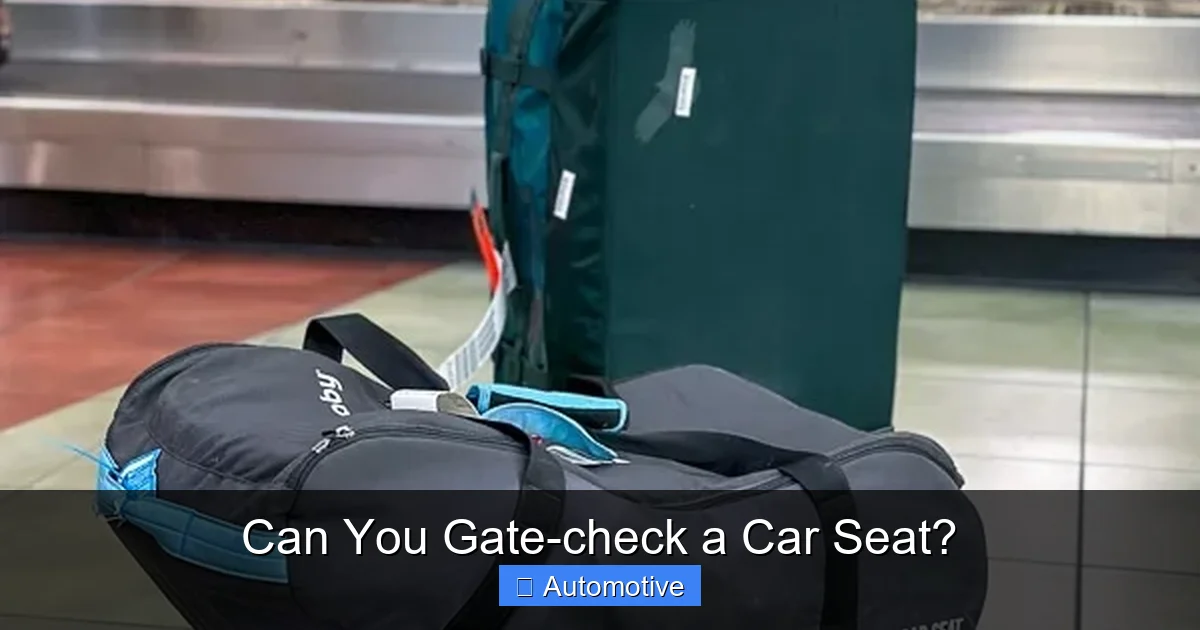
A padded travel bag may make carrying easier. However, a bag does not guarantee that the seat will avoid damage.
Should You Use the Car Seat on the Plane or Gate Check It?
If your child has a purchased seat, using the car seat onboard is generally the safer choice. It keeps the child secured during turbulence and protects the seat from baggage handling.
The car seat must be approved for use on aircraft. Look for a label that says:


“This restraint is certified for use in motor vehicles and aircraft.”
Do not assume that every car seat can be used on a plane. Check the seat’s manual and label first.
Using a car seat onboard also helps when you need a car seat immediately after landing. You do not have to wait for a gate-checked item or worry about damage before driving away.
Gate checking may make sense when:
- Your child will sit on your lap during the flight.
- The seat is not approved for aircraft use.
- You have no usable seat beside your child.
- You are traveling with more than one child restraint.
- Your child has outgrown the seat.
- You have another approved restraint ready at your destination.
For children under age 2, U.S. airlines generally allow a parent or caregiver to hold the child during the flight. The FAA recommends using an approved child restraint instead. A lap-held child is not protected in the same way during severe turbulence.
How to Gate Check a Car Seat: Step-by-Step
Follow these steps to reduce confusion and protect the seat.
1. Check the airline’s rule before leaving home
Read the current policy on the airline’s website. If the wording is unclear, call the airline or ask an agent at the airport.
Confirm:
- Whether car seats can be gate checked
- Whether the service is free
- Whether the seat must be in a bag
- Where gate-checked items are returned
- Whether car seats and strollers follow different rules
- What happens during a connection
Save a screenshot of the policy on your phone. Airline staff may still apply local procedures, but the written rule can help if questions arise.
2. Decide whether the seat will travel in the cabin
If you plan to use the car seat onboard, bring it to the aircraft door and tell the gate agent. The agent may ask to see the label showing that the restraint is approved for aircraft use.
Keep the manual with you. It can help you confirm the correct installation method.
Most forward-facing car seats are installed with the airplane lap belt. Aircraft seats do not have the same lower anchors used in many cars. A car seat that needs a top tether in a vehicle usually does not use that tether on an airplane unless the manufacturer specifically says otherwise.
Never use an inflatable seat belt with a child restraint unless both the car seat manufacturer and airline permit it. Many child restraints are not compatible with inflatable belts.
3. Ask for a gate-check tag
Tell the agent that you want to gate check a car seat. The agent will give you a tag and may ask you to fill out a claim slip.
Attach the tag where it can be seen. Keep the claim portion or receipt until you recover the seat.
If you use a travel bag, place the tag on the bag as directed. Also put your name and phone number inside the bag in case the outer tag comes off.


4. Use a protective bag if you choose one
A car seat travel bag can make the seat easier to carry. A backpack-style bag may be useful when you also have a child, carry-on bags, and a stroller.
A bag can protect against dirt and light surface wear. It cannot fully protect the restraint from drops, crushing, or other heavy handling.
Do not pack loose items inside the bag unless the airline allows them. Extra items may make the bag harder to handle or may be removed.
5. Leave the seat at the location the agent gives you
Airports may use different drop-off points. The agent may direct you to:
- The end of the jet bridge
- A marked area near the aircraft door
- A special baggage belt near the gate
- A nearby service desk
Do not leave the car seat until airline staff confirm that they have accepted it.
6. Confirm where you will collect it
Ask one clear question:
“Will this be returned at the aircraft door, or should I pick it up at baggage claim?”
The answer can vary by airport. Ask again when you land if you have a tight connection or need the seat for the next part of your trip.

What Should You Do if the Car Seat Is Damaged?
Do not use a car seat after serious impact or visible damage. A seat can have hidden damage even when the shell looks fine.
Before leaving the airport, inspect:
- The plastic shell
- The harness
- Buckles
- Adjusters
- Chest clip
- Padding
- Base
- Locking parts
- LATCH components
- Instruction labels
- Carry handle, if present
Look for cracks, bends, deep cuts, missing parts, broken stitching, or parts that no longer move as they should.
If the seat is damaged:
- Take clear photos.
- Keep the baggage tag and claim receipt.
- Report the problem to the airline before leaving the airport.
- Ask for written instructions about a claim.
- Contact the car seat manufacturer before trying to repair it.
- Do not use glue, tape, or an unapproved replacement part.
A car seat involved in a crash should be replaced based on the manufacturer’s instructions. Airline handling is not the same as a known vehicle crash, but visible or suspected damage still needs careful attention.
Airlines may have different liability rules for checked child restraints. Do not assume the airline will automatically replace the seat. Ask about the carrier’s policy and keep proof of purchase if you have it.


How Can You Protect a Car Seat When You Check It?
The best protection is to keep the car seat in the cabin. If you must check it, use a sturdy, well-fitting travel bag and inspect the seat as soon as you receive it.
These steps may help:
- Remove loose accessories.
- Secure or remove cup holders if the manual allows it.
- Tighten or secure straps so they do not drag.
- Place the seat in a thick travel bag.
- Add your name and phone number inside the bag.
- Photograph the seat before travel.
- Photograph the model and serial number.
- Keep the manual and warranty details.
- Do not place heavy items on top of the seat.
- Check the seat before installing it in a vehicle.
A hard-sided case can offer more protection than a thin fabric bag, but it can be heavier and less convenient. Choose based on the level of protection you need and how you will move through the airport.
Avoid wrapping the seat in loose plastic or blankets. These materials can tear, catch on equipment, or hide damage from view.
Can You Gate Check a Car Seat and Stroller Together?
Often, yes. Many U.S. airlines allow a stroller and car seat to be checked without an additional fee. Some let you gate check both items. Others may ask you to check a car seat-and-stroller travel system at the ticket counter if it is large or does not fit their gate-handling process.
Ask the gate agent whether:
- The stroller must be folded
- The car seat must be removed from the stroller
- Both items need separate tags
- The set will return at the aircraft door
- The items will be sent to baggage claim
If the stroller holds the car seat, check that the combined item is stable and easy for staff to move. A bulky travel system may be treated differently from a small umbrella stroller.
What If You Have a Connecting Flight?
Tell the gate agent about your connection before checking the seat. Ask whether the car seat will be tagged to the final destination or returned at the connection point.
You may need to:
- Collect the seat at the first airport
- Carry it to the next gate
- Have it tagged again
- Recheck it for the next flight
Build extra time into the connection. A gate-checked item may not be ready when you leave the plane.
If you need the seat for a rental car during the connection, do not gate check it unless you know where and when you will get it back.

Common Mistakes to Avoid
Checking a seat without checking the airline rule
Policies vary. A rule that applies to one airline may not apply to another.
Assuming “gate check” means “no damage”
The seat still enters the cargo-handling system. Gate checking may reduce the time in baggage handling, but it does not remove the risk.


Forgetting the seat at the aircraft door
Some travelers expect the seat to appear at the jet bridge after landing. That often happens, but not always. Ask where to collect it.
Using an unapproved seat on the plane
A car seat must have the required aircraft-use label. If it does not, the airline may not allow it in the passenger cabin.
Installing a car seat with the wrong belt path
Read the manual. The correct aircraft installation may differ from the vehicle installation.
Leaving the airport before checking for damage
Inspect the seat before you put it in a rental car or use it at your destination.
Packing important parts in checked luggage
Keep the car seat manual, child’s travel documents, and any needed installation parts with you. If the checked seat is delayed, you may not have what you need.
Quick Decision Guide
Use the table below to choose the most practical option.
| Your situation | Usually the better choice |
|---|---|
| Your child has a paid seat and the car seat is FAA approved | Use the car seat onboard |
| Your child will travel as a lap child | Gate check the seat, if needed |
| You need the seat immediately after landing | Use it onboard or carry it into the cabin if approved |
| You have a long layover and need a car seat during the trip | Keep it with you |
| You are flying with an unapproved seat | Gate check it |
| You are checking the seat because it is inconvenient | Consider the safety and damage trade-off first |
| You are using a rental car at your destination | Bring the seat in the cabin when possible |
The key trade-off is simple: using the seat onboard gives the most control, while gate checking is easier but adds handling and retrieval risks.

What the FAA and NHTSA Say
The FAA recommends that young children use an approved child restraint system during air travel. The FAA also explains that children under age 2 may travel on an adult’s lap under current U.S. rules, although a separate seat with an approved restraint provides better protection.
The National Highway Traffic Safety Administration (NHTSA) focuses on proper car seat use in vehicles. Its guidance includes selecting a seat that fits the child, installing it correctly, and replacing seats after certain crashes or when they expire.
For air travel, use these official sources:
- FAA: Flying with Children
- FAA: Child Safety Seats
- NHTSA: Car Seats and Booster Seats
- American Academy of Pediatrics: Car Seats and Booster Seats
Rules and airline procedures can change. Check the current airline policy before each trip.
Frequently Asked Questions
Can I gate check a car seat without a travel bag?
Usually, yes. Many airlines do not require a bag for gate checking. A bag can keep the seat cleaner and make it easier to carry, but the airline may still accept the seat without one.
Will a gate-checked car seat be returned at the plane door?
Often, but not always. Ask the gate agent where it will be returned. Airport procedures, connections, aircraft size, and local handling can change the answer.
Can I bring a car seat through TSA?
Yes. A car seat can generally go through airport security. It must pass through the screening process, and security officers may inspect it. Check TSA’s current rules if you are traveling with other child equipment.


Can I use a car seat in an airplane seat?
Only if the seat is approved for aircraft use and the airline permits it. Look for the aircraft-use statement on the restraint. Follow the car seat manual and the flight crew’s instructions.
Should I gate check a booster seat?
A belt-positioning booster usually does not have a harness and may not be useful in an airplane seat. Many families pack it in carry-on luggage or gate check it. Use it in the vehicle only as directed by the manufacturer and your state’s child passenger safety law.
Key Takeaways
- Yes, you can usually gate check a car seat on a U.S. airline.
- Gate checking is often free, but airline rules vary.
- If your child has a seat, using an FAA-approved car seat onboard is generally the safer option.
- Ask where the seat will be returned after landing.
- Use a protective bag if you check the seat, but do not treat the bag as full damage protection.
- Inspect the car seat before using it after travel.
- Report damage to the airline before leaving the airport.
Conclusion
You can usually gate check a car seat in the United States, and it is often a practical choice for a lap child or an extra restraint. The main downside is that the seat still goes into the cargo system and may be delayed or damaged.
When possible, use an aircraft-approved car seat in the child’s own airplane seat. If you gate check the seat, confirm the airline’s rule, attach the tag correctly, ask where it will be returned, and inspect it before using it in a car.
