

Install your baby’s car seat before you go to the hospital for birth. A good target is about three to four weeks before your due date, but you can install it earlier if your baby may arrive soon or you want time to check the fit.
In the United States, hospitals often require a car seat before they discharge a newborn who will travel home by car. The hospital may inspect the seat, but it usually does not install it for you. Read both the car seat manual and your vehicle owner’s manual before installation.
For a newborn, use a rear-facing car seat in the back seat. Keep the seat rear-facing until your child reaches the seat’s maximum rear-facing height or weight limit. State laws differ, so check your state’s child passenger safety law as well as current guidance from the National Highway Traffic Safety Administration (NHTSA) and the American Academy of Pediatrics.

When Should You Install a Car Seat Before Birth?
Install the car seat before labor begins, not on the way to the hospital. This gives you time to read the instructions, correct mistakes, and have the installation checked by a trained child passenger safety technician.


There is no federal rule that says you must install a car seat on a certain day of pregnancy. The “three to four weeks before the due date” goal is a practical planning window, not a medical requirement. Babies can arrive early, and an unfinished seat can add stress during an already busy time.
A simple pregnancy timeline
- During the third trimester: Choose a seat that fits your vehicle and your baby’s needs.
- Around 34 to 36 weeks: Install the seat or infant seat base.
- Before the due date: Check the harness, recline angle, and seat movement.
- Before hospital discharge: Bring the correct seat with you and know how to use it.
If you plan to use a convertible car seat, install it in the rear-facing position before the baby arrives. If you use an infant carrier, install the base before birth and practice clicking the carrier into place.
Some families keep the infant carrier out of the car until the ride home. That is fine, but the base must be installed correctly before the trip. You can also bring the carrier into the hospital for staff to see, although hospital staff may not be trained to inspect the installation.

Why the Timing Matters
Installing early gives you time to solve problems that are hard to fix during labor or discharge. Common issues include a seat that does not fit between the vehicle seats, a base that sits at the wrong angle, or a harness that is set too high for a newborn.
Your vehicle and car seat manuals are the main instructions. Car seats differ in their belt paths, recline settings, lower-anchor limits, and newborn insert rules. Do not rely only on a video for a different seat model.
Early installation also lets you find a certified technician. NHTSA provides a child passenger safety technician search tool. Many fire stations, police departments, hospitals, and community groups offer checks, but services vary by location and not every station has a certified technician.
A car seat check is especially useful if:
- You are using a convertible seat for the first time.
- Your vehicle has small or unusual rear seats.
- You are installing three car seats across one row.
- You are using a seat belt instead of lower anchors.
- The seat will be used in more than one vehicle.
- Your baby was born early or has special medical needs.

How to Install a Newborn Car Seat
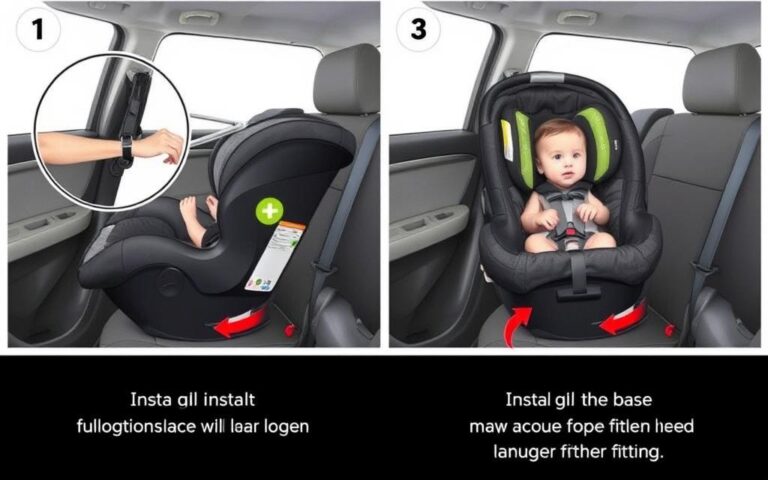
Follow the exact instructions for your seat and vehicle. The basic process below applies to many seats, but the manuals control if they differ.
1. Put the seat in the back seat
Place the car seat in a rear seating position whenever possible. The center position is not always the safest or easiest position because it may not have lower anchors or may not allow a secure seat belt installation.


Never place a rear-facing car seat in front of an active passenger air bag. An air bag can seriously injure or kill a child in a rear-facing seat.
Choose the position that gives the seat a tight, correct installation. A side position can be appropriate when it provides a better fit or lets an adult reach the child safely.
2. Select one approved installation method
Most car seats can be installed with either:
- The vehicle seat belt
- Lower anchors in the LATCH system
Use the method allowed by both manuals. Do not use the seat belt and lower anchors together unless the car seat manufacturer specifically permits that combination.
Lower anchors are not automatically safer than a seat belt. A correct installation with either approved method can work well. The best choice is the one that produces a tight fit and that every caregiver can use correctly.
3. Set the rear-facing angle
Adjust the recline so the indicator on the car seat matches the instructions. A newborn needs the correct angle to help keep the head from falling forward.
Do not add towels, pillows, aftermarket head supports, or other products under or around the baby unless the car seat manufacturer allows them. If the seat needs leveling help, use only the method listed in the manual.
4. Tighten the seat at the correct path
Route the belt or lower-anchor strap through the rear-facing belt path. Remove slack while pressing the seat down and back as instructed.
After tightening, hold the seat at the belt path and try to move it side to side and front to back. It should move less than 1 inch in any direction at the belt path. Do not judge the fit by movement at the top of the seat.
5. Set the harness for a newborn
For a rear-facing child, the harness straps should come from at or below the child’s shoulders. Place the baby’s back and bottom flat against the seat.
The harness should lie flat and pass over the shoulders. Tighten it until you cannot pinch extra webbing at the shoulder. Place the chest clip at armpit level.
Bulky coats can create dangerous slack. Take off thick outerwear before buckling the child, then place a blanket over the harness if needed. Never put a blanket under the harness unless the seat instructions specifically allow it.

How to Know the Installation Is Correct
A correct installation has several signs:
- The seat is in an approved rear seating position.
- The seat is rear-facing for a newborn.
- The recline indicator is within the allowed range.
- The seat moves less than 1 inch at the belt path.
- The belt or lower-anchor strap is flat and tight.
- The harness is at or below the newborn’s shoulders.
- The chest clip is at armpit level.
- The harness passes the pinch test.
- No part of the seat is installed against the vehicle’s front seat unless both manuals allow it.
- The car seat does not press the front seat in a way that changes its position or blocks an air bag system.


The seat does not need to feel completely immovable at the top. The standard movement check applies at the belt path, where the seat is attached to the vehicle.
If the seat fails the movement test, remove it and start again. Check that you used the correct belt path, locked the vehicle belt if required, removed slack, and followed the correct recline setting.
If the seat still does not fit, try another approved seating position or the other permitted installation method. Do not use rolled towels, extra padding, or improvised attachments to force a fit.

When to Reinstall or Change a Car Seat
You should reinstall or reassess a car seat whenever something changes. Installation is not a one-time task for the entire life of the seat.
| Situation | What to do |
|---|---|
| Before the baby comes home | Install and check the rear-facing seat |
| A different vehicle | Install it again; do not assume the old fit transfers |
| A different seating position | Recheck the belt path, angle, and movement |
| The seat is removed for cleaning | Reinstall it according to both manuals |
| The child reaches a height or weight limit | Change to the next approved mode or seat |
| A crash occurs | Replace the seat if required by its manual or manufacturer |
| The seat is expired or damaged | Stop using it and replace it |
| The seat is bought used | Verify its history, parts, labels, and expiration date |
| A new caregiver uses it | Teach that person the installation and harness steps |
After a crash
Follow the car seat manufacturer’s crash-replacement policy. NHTSA says a car seat should be replaced after a moderate or severe crash. A seat may not need replacement after a minor crash if all conditions in NHTSA’s guidance are met, but the manufacturer may have stricter instructions.
Replace the seat after a crash if:
- Someone was injured.
- The vehicle could not be driven away.
- The door nearest the seat was damaged.
- The air bags deployed.
- There is visible damage to the seat.
When in doubt, contact the manufacturer. Do not use a seat with cracks, missing parts, damaged straps, or unknown crash history.
When your child outgrows the rear-facing position
Do not turn a child forward-facing just because the child reaches age 2 or seems cramped. The correct time depends on the seat’s rear-facing height and weight limits.
Keep the child rear-facing until the child reaches the highest limit allowed by that seat. Then follow the seat manual for forward-facing harness use. Later, a child may move to a belt-positioning booster when the child meets the seat and state-law requirements.

Common Car Seat Installation Mistakes
Small errors can reduce how well a seat works. These are some of the most common problems.
Installing the seat too loosely
A loose seat can shift during a crash. Test movement at the belt path, not by pulling on the top of the shell.
Using both LATCH and the seat belt without permission
Using two methods does not always make an installation safer. It can conflict with the seat design or vehicle instructions. Use both only when the manufacturer clearly allows it.
Putting a rear-facing seat in front of an air bag
The safest location for a newborn is the back seat. Never use a rear-facing seat in front of an active passenger air bag.
Leaving a bulky coat under the harness
A thick coat can compress in a crash and leave the harness too loose. Buckle the child in regular clothing and place a blanket over the straps.
Adding unapproved accessories
Head supports, strap covers, seat protectors, mirrors, and padding can affect the seat or harness. Use only items that came with the seat or that the manufacturer approves for that model.


Moving to the next stage too soon
Age alone does not decide when to turn the seat forward-facing or move to a booster. Use the height, weight, maturity, and belt-fit rules in the manual and your state law.
Buying an unknown used seat
Avoid a used seat if you cannot confirm its model, expiration date, crash history, recalls, and complete parts. A low price is not worth an unknown safety history.
Does the Hospital Install the Car Seat?
Usually, hospital staff do not install the car seat for you. Some hospitals check that you have a suitable seat before discharge, and some offer a car seat education program. Policies vary across the United States.
Call your hospital before the due date and ask:
- Must the car seat be installed before discharge?
- Will staff check the seat?
- Does the hospital have a certified technician?
- Should the infant carrier come inside?
- What happens if the baby leaves in a taxi or rideshare?
Parents should learn to install the seat themselves because the seat may later move to another vehicle. A certified technician can show you the process, but the technician cannot replace the instructions for your exact model.

What If You Use a Taxi or Rideshare?
Bring an appropriate car seat when traveling with a newborn in a taxi or rideshare. Do not assume the vehicle will provide one or that an unfamiliar seat will fit your child correctly.
The safest choice is a seat that you know how to install with the vehicle’s seat belt. Many taxis and rideshare vehicles may not have lower anchors available, so practice a seat-belt installation before the trip.
Federal and state rules for taxis, rideshares, and child restraints vary. Some exemptions apply to commercial vehicles, but an exemption does not make an unrestrained ride safe. Check the law where you will travel and use a properly installed child restraint whenever possible.

Quick Decision Guide
Use this short guide if you are unsure when to install your car seat:
- Baby is due soon: Install it now and have it checked.
- You are still pregnant but the due date is months away: Research the seat and vehicle fit; installation can wait, but early practice is fine.
- You are leaving the hospital today: Use a rear-facing seat in the back seat before driving home.
- You bought a new vehicle: Reinstall and test the seat.
- You changed from an infant seat to a convertible seat: Install the convertible seat rear-facing.
- Your child reached the rear-facing limit: Follow the manual for the next mode.
- The seat was in a crash: Check the manufacturer’s replacement rules before using it again.
- The seat is used or has missing history: Do not use it until its safety history and parts are verified.

Frequently Asked Questions
Can I install a car seat too early?
No. Installing it early does not harm the seat if it remains properly secured and is not damaged. However, recheck the installation before the baby rides because the seat may have shifted or been removed.
Should the car seat be behind the driver or passenger?
Either rear side can work if the seat fits correctly. Choose the position that gives the most secure installation and lets caregivers load the child safely. The center is not always best if it lacks a compatible belt or lower anchors.
Can I leave the infant car seat in the car?
Yes, if it is installed correctly and the baby is removed when the trip ends. Do not use the infant carrier as a routine sleep space outside the vehicle. The American Academy of Pediatrics advises moving a sleeping baby to a firm, flat sleep surface when practical.
Do I need a new car seat for every child?
Not always. A seat may be used for another child if it is not expired, has no damage, has all required parts, has no unknown crash history, and still fits the child and vehicle. Check the manufacturer’s instructions and recall information first.


What should I do if the car seat will not fit?
Read the car seat and vehicle manuals again, try the other approved installation method, or test another rear seating position. If the seat still fails the less-than-1-inch movement check, contact the manufacturer or a certified child passenger safety technician.
Final Takeaway
Install your newborn’s car seat before the due date, ideally several weeks before birth. Use it rear-facing in the back seat, follow both manuals, check movement at the belt path, and practice securing the baby before the first ride.
Your next step is simple: install the seat, test the harness and angle, then locate a certified child passenger safety technician through NHTSA if anything feels unclear.
