

The best way to find cheap tires near you in the United States is to compare the full installed price from local tire shops, national retailers, warehouse clubs, online sellers, and used-tire dealers. Search for your exact tire size, then ask for the final cost, including mounting, balancing, valve stems, disposal fees, taxes, and any required services.
A low sticker price is not always the lowest deal. A tire that costs $20 less may become more expensive after installation fees. It may also have a shorter warranty, less wet-weather grip, or an older manufacturing date.
This guide explains how to find affordable tires near you without cutting corners on fit or safety.
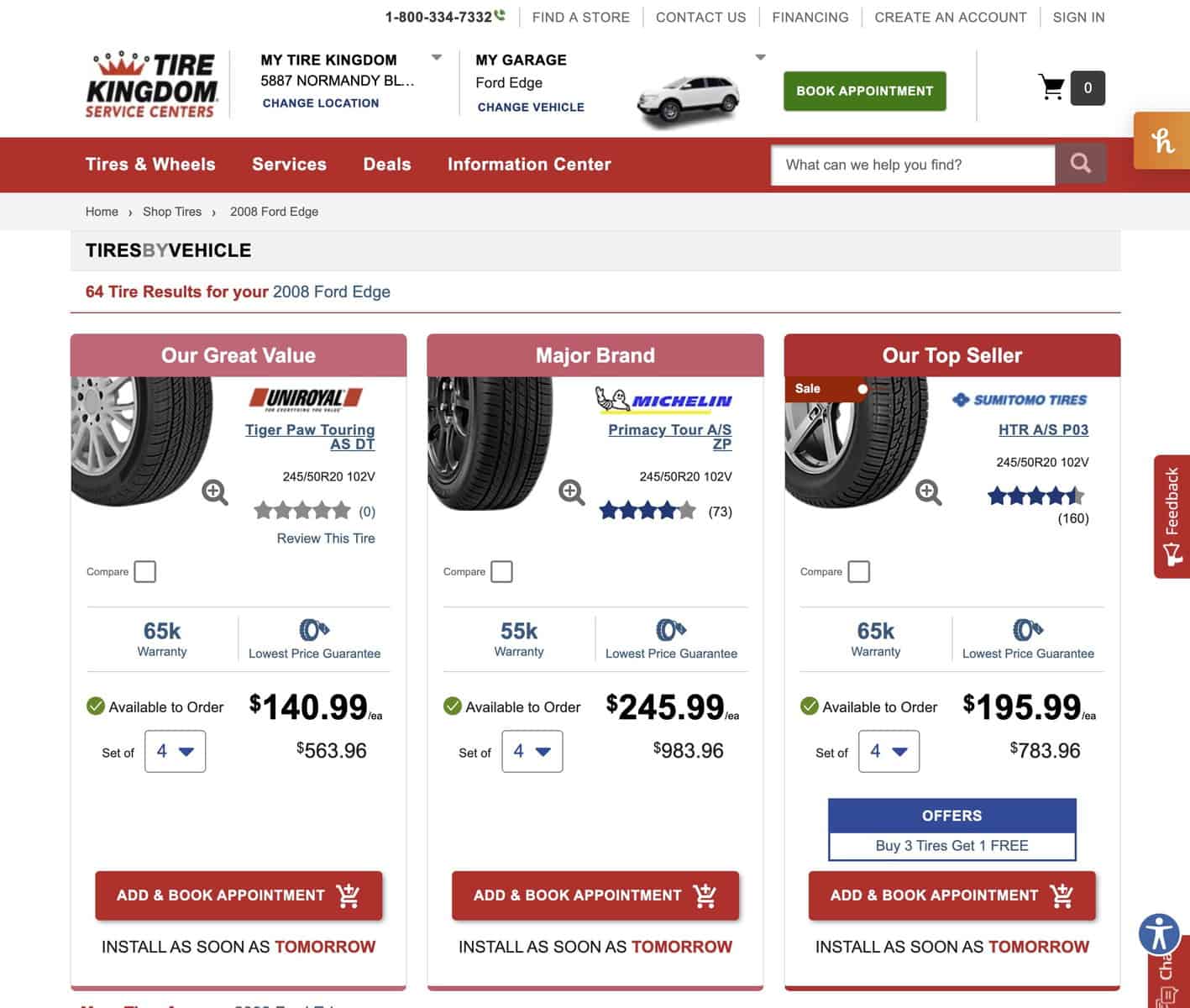
Where to Look for Cheap Tires Near You
Start with local tire shops, national tire chains, warehouse clubs, online tire sellers, and used-tire stores. Compare at least three quotes before you buy.


1. Local tire shops
Independent tire shops may offer:
- Lower installation prices
- Free tire rotations with purchase
- Same-day service
- Used or budget tire options
- Price matching
- Flexible payment choices
Call before driving over. Ask whether the shop has your tire size in stock and whether the quoted price includes installation.
2. National tire chains
Large tire chains often make it easy to compare brands, warranties, and service plans. Their websites may show local stock and appointment times.
Check the final checkout price. Some online prices exclude:
- Mounting
- Balancing
- Tire disposal
- Road-hazard coverage
- Taxes
- Shop or environmental fees
3. Warehouse clubs
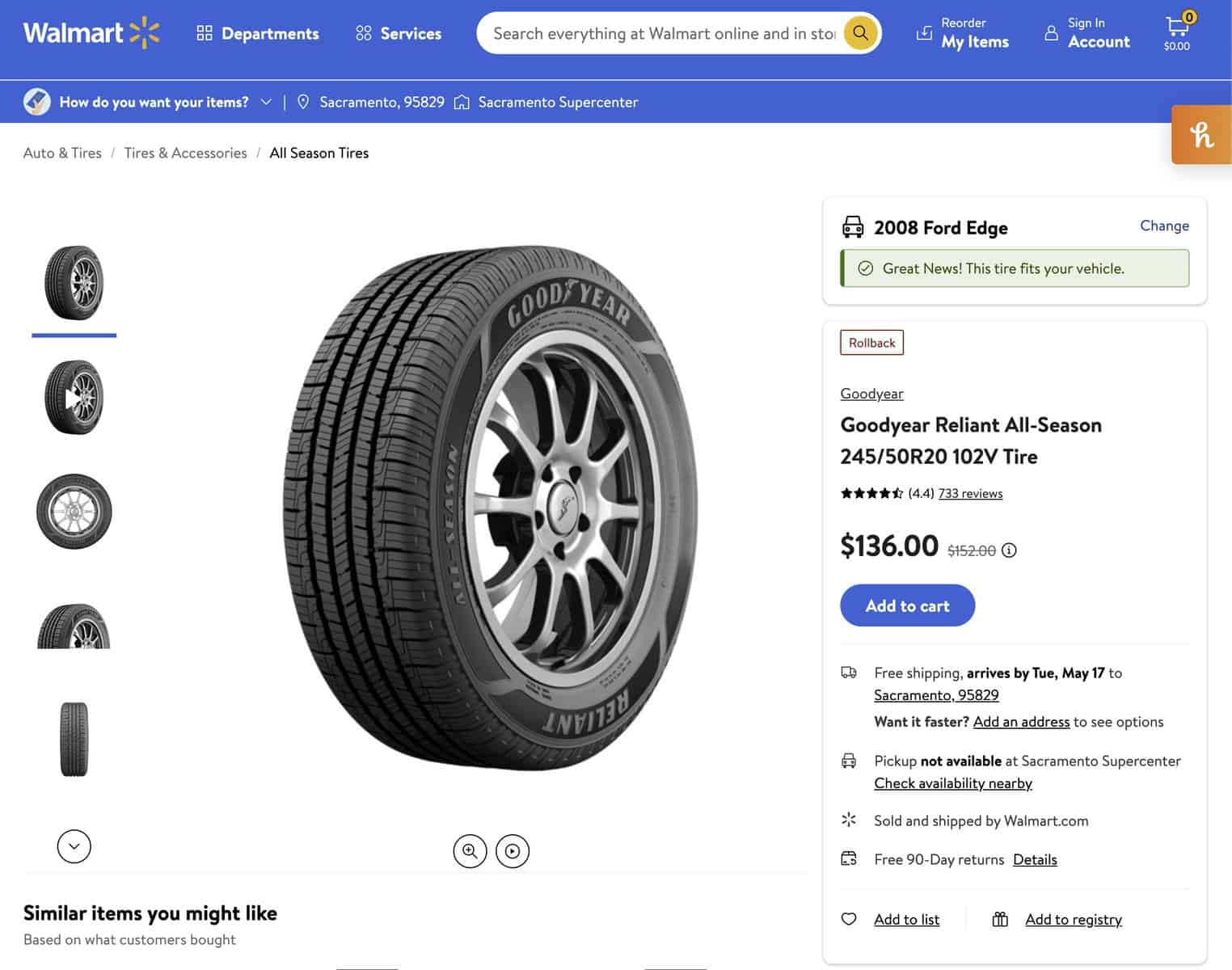
Warehouse clubs can have competitive tire prices and regular promotions. However, membership may be required, and appointments may fill up quickly.
Compare the complete package. A tire sale may include installation or other services, but the value depends on the club’s membership cost and local service fees.
4. Online tire sellers
Online sellers can provide a wide selection and clear model comparisons. Many ship tires to a nearby installer.
Before ordering, confirm:
- The tire size matches your vehicle.
- The installer accepts shipped tires.
- The installation fee is clear.
- The tires are new and include a valid warranty.
- The shipping address and delivery time are correct.
Online prices are useful for comparison, but local installation costs can change the final total.


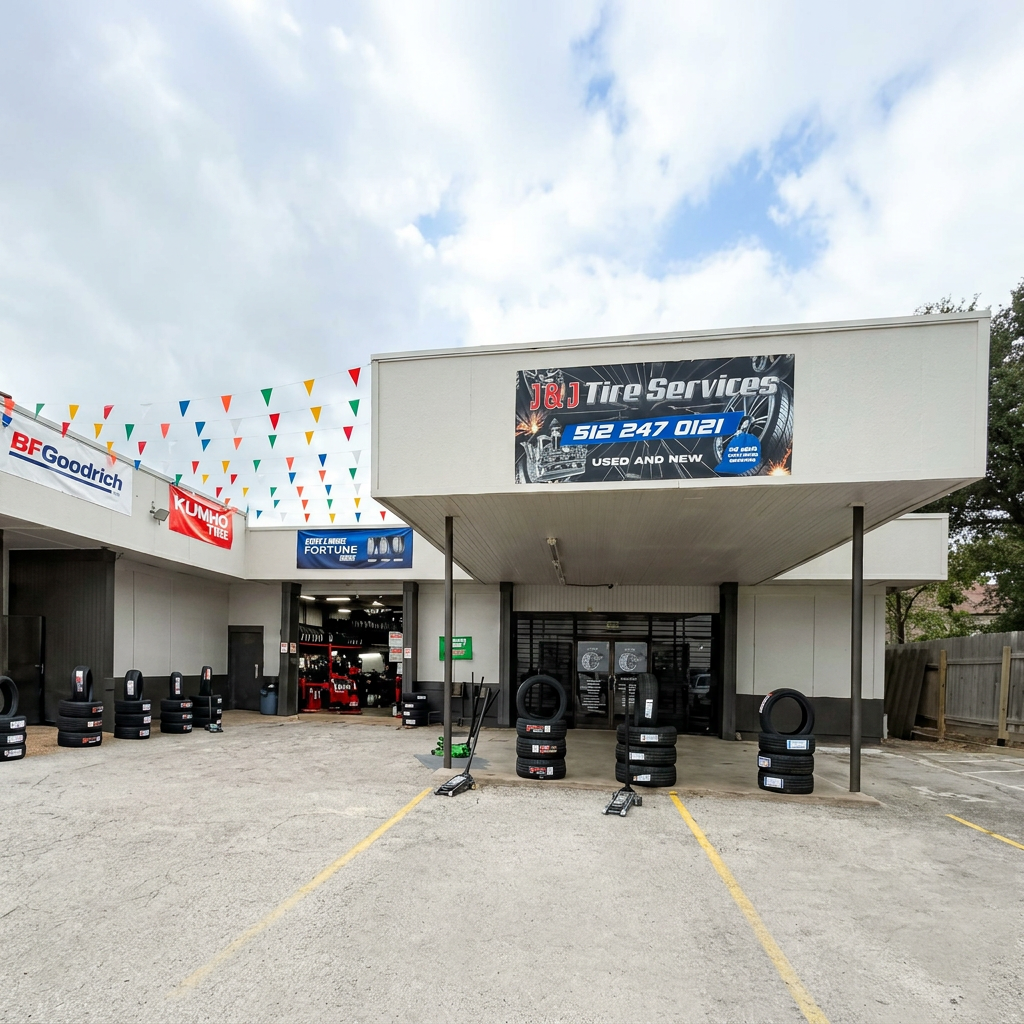
5. Used-tire dealers
Used tires can cost much less. They also carry more risk because their past use and storage may be unknown.
Only consider a used tire after a trained tire professional checks it. Avoid any tire with:
- Cracks or bulges
- Uneven wear
- Exposed cords
- A damaged bead
- A puncture in the sidewall
- Very old rubber
- Unclear size or load information
A cheap used tire is not a bargain if it fails or must be replaced soon.
How to Search for Cheap Tires Near Me
Use a specific search, not just “tires near me.” More detail produces better results.
Try searches such as:
cheap tires near mebudget tires near metire shop near me open todaydiscount tire installation near meused tires near me215/60R16 tires near mecheap tires for [your vehicle model]mobile tire installation near me
Add your ZIP code or city if search results cover too wide an area.
Then review local business listings. Look for:
- A clear phone number
- Posted hours
- Recent customer reviews
- Photos of the shop
- A working website
- Details about installation
- A physical address
Call two or three shops. Ask each one the same questions so the quotes are easy to compare.
Questions to ask a tire shop
Use this script:
“I need four tires in size [tire size] for a [year, make, and model]. What is your lowest safe option, and what is the complete installed price?”
Then ask:
- What brand and model is the tire?
- Is it new or used?
- What is the tire’s DOT date code?
- Does the price include mounting and balancing?
- Is tire disposal included?
- Are new valve stems included?
- Will you reset or service the TPMS?
- Is road-hazard coverage included?
- Are there rebates or discounts?
- How soon can you install them?
The phrase complete installed price helps prevent surprise fees.
Know Your Tire Size Before You Shop
Your tire size is printed on the sidewall and listed on the vehicle information placard. The placard is usually found on the driver-side doorjamb. It may also appear in the owner’s manual.


A tire size may look like this:
215/60R16 95H
Here is what the markings mean:
- 215: Tire width in millimeters
- 60: Sidewall height as a percentage of tire width
- R: Radial construction
- 16: Wheel diameter in inches
- 95: Load index
- H: Speed rating
Do not choose a tire based only on width or wheel size. The load index and speed rating also matter.
The safest low-cost choice is usually a tire that meets or exceeds the vehicle maker’s listed size, load index, and speed rating. If you want a different size, ask a qualified tire professional first.
Check the vehicle placard
The placard may list:
- Front and rear tire sizes
- Recommended cold inflation pressure
- Vehicle load limits
- Temporary spare information
The pressure on the placard is more useful than the number molded into the tire’s sidewall. The sidewall number is the tire’s maximum permitted pressure, not always the correct pressure for your vehicle.
Compare the Total Cost, Not Just the Tire Price
The total price usually includes more than the tire itself.
| Cost item | Why it matters |
|---|---|
| Tire price | The listed cost for each tire |
| Mounting | Fitting the tire to the wheel |
| Balancing | Helps reduce vibration |
| Valve stems | May need replacement |
| TPMS service | May apply to vehicles with tire-pressure sensors |
| Disposal fee | Charged for old tires in many areas |
| Alignment | Needed only when inspection shows a problem |
| Taxes | Vary by state and location |
| Road-hazard plan | Optional coverage with added cost |
Use this simple calculation:
Total installed cost = tire price × number of tires + service fees + taxes − discounts
Hypothetical example
Suppose one shop quotes:
- Four tires at $72 each: $288
- Mounting and balancing: $96
- Disposal fees: $20
- Taxes: $25
The estimated total is $429.
A second shop may list tires at $78 each but include installation. If its taxes and fees bring the total to $390, the higher tire price is the cheaper deal.
Ask for the quote in writing by text, email, or printed estimate. This makes it easier to compare offers.

Choose the Cheapest Tire That Fits Your Driving
The least expensive tire is not always the best value. Choose based on where and how you drive.


For normal city driving
A basic all-season tire may be enough if you drive mostly on paved roads in a mild climate. Check its wet traction rating, warranty, and load rating.
For rain
Look for a tire with strong wet-weather performance. Worn tread can increase stopping distance on wet roads. Avoid buying a tire with a poor condition simply because it is cheap.
For snow and ice
All-season tires may not provide enough grip in areas with regular winter snow. Winter tires are made for cold conditions and snow, but they add purchase and storage costs.
Some drivers use all-weather tires with the severe snow service symbol. Ask a local tire professional whether that type fits your climate and vehicle.
For highway driving
Highway drivers may benefit from tires with a stronger tread-life warranty and lower road noise. A slightly higher purchase price may make sense if the tires last longer.
For trucks and SUVs
Confirm the correct load range. A tire made for a small car may not safely support a heavy truck or SUV, even if the size looks similar.
Do not buy a tire with a lower load index or speed rating than your vehicle requires.

Are Cheap Tires Safe?
A low price does not automatically mean a tire is unsafe. Many budget tires meet federal standards. However, price alone does not tell you how a tire will perform in rain, snow, heat, or emergency braking.
Check these details before buying:
- Correct size
- Correct load index
- Correct speed rating
- New tire condition
- Clear brand and model
- Adequate tread
- No cracks, cuts, bulges, or exposed cords
- Current warranty information
- Reasonable manufacturing date
The National Highway Traffic Safety Administration explains that tires have a legal minimum tread depth of 2/32 of an inch in the United States, but performance can decline before that point. Tire makers may also provide their own replacement guidance.
The DOT code on a tire shows when it was made. The last four digits identify the production week and year. For example, 2524 means the tire was made in the 25th week of 2024.
The date code is not the only measure of tire condition. Storage, heat, sunlight, inflation, and use also affect rubber. Ask a tire professional to inspect older tires.

When Should You Buy Four Tires?
Replace all four tires when all four are worn, damaged, or near the end of their useful life. Replacing four at once can help maintain balanced handling.
If only two tires need replacement, many tire makers and vehicle manufacturers recommend placing the newer tires on the rear axle. This can help reduce the risk of losing control on a wet road.
This rule may change for:
- All-wheel-drive vehicles
- Four-wheel-drive vehicles
- Vehicles with different front and rear tire sizes
- Vehicles with strict tread-depth limits
- Cars with a manufacturer-approved tire replacement plan


Check the owner’s manual and ask the tire shop before replacing only one or two tires. Some all-wheel-drive systems can be affected by large differences in tire circumference.
Ways to Lower the Final Tire Cost
You can often reduce the price without choosing an unsafe tire.
Compare the same tire model
Ask several shops for the exact same brand and model. Comparing different tire models can make one quote look cheaper when it is not equivalent.
Ask about rebates
Manufacturers and retailers may offer rebates at certain times. Read the terms. Some rebates require online submission, a specific payment method, or purchase dates.
Skip services you do not need
A shop may recommend an alignment, tire protection plan, nitrogen fill, or other service. Ask why it is needed and request the inspection result.
An alignment can be useful when the vehicle pulls to one side, the steering wheel is off center, or the tires show uneven wear. It is not automatically required with every tire purchase.
Buy during a sale
Holiday sales and seasonal promotions may lower the price. Compare the final installed cost rather than relying on the advertised discount.
Use a tire price match
Some retailers match a lower price from a qualifying competitor. Ask about limits, installation requirements, and whether the competitor must have local stock.
Consider fewer premium features
You may save money by choosing a basic touring tire instead of a premium performance tire. Do not give up required load capacity, speed rating, or suitable weather performance.
Common Mistakes to Avoid
Avoid these mistakes when looking for cheap tires near you:
Buying the wrong size
A tire may fit the wheel but still be wrong for the vehicle. Confirm the full size, load index, and speed rating.
Comparing tire prices without service fees
A $55 tire can become a $90 tire after mounting, balancing, disposal, and taxes.
Choosing based only on tread depth
A used tire may have good tread but hidden damage, uneven wear, or an old production date.
Replacing only one tire without asking
Uneven tire diameters can affect handling and some all-wheel-drive systems.
Ignoring the spare tire
Check the spare while the vehicle is at the shop. A flat spare or damaged temporary tire will not help during a roadside emergency.


Delaying a needed repair
If a tire has a bulge, exposed cords, a serious cut, or a rapid leak, do not keep driving on it. Use the spare if safe, or arrange roadside assistance.
Trusting online reviews alone
Reviews can help you find a shop, but they do not confirm that a tire is right for your vehicle. Use the vehicle placard, owner’s manual, and professional inspection as well.
What to Do After You Buy New Tires
After installation, check that the tire shop:
- Tightens the wheel nuts to the vehicle maker’s specification
- Sets cold tire pressure correctly
- Balances the wheels
- Checks for leaks
- Resets the tire-pressure monitoring system when needed
- Gives you the warranty paperwork
- Returns or properly disposes of the old tires
Recheck tire pressure when the tires are cold. The correct pressure is usually listed on the driver-side door placard.
Have the tires inspected if you notice:
- Steering-wheel vibration
- Pulling to one side
- A repeating thump
- Uneven tread wear
- A tire-pressure warning
- New noise after installation
Rotate the tires according to the vehicle and tire maker’s schedule. Regular pressure checks and rotation can help the tires wear more evenly.
Frequently Asked Questions
What is the cheapest place to buy tires?
The cheapest option depends on your tire size, local fees, promotions, and installation cost. Compare independent tire shops, warehouse clubs, national chains, online sellers, and used-tire dealers using the full installed price.
Is it safe to buy used tires?
Used tires can be safe when a qualified professional confirms their condition, size, age, and repair history. Do not buy a used tire with cracks, bulges, exposed cords, sidewall damage, or an unknown condition.
How much should I pay for tire installation?
Installation prices vary by shop, tire size, vehicle, location, and included services. Ask for a complete quote that lists mounting, balancing, valve stems, TPMS service, disposal, taxes, and other fees.
Can I replace only two tires?
Sometimes, but ask a tire professional first. Replacing two tires may be unsuitable for some all-wheel-drive and four-wheel-drive vehicles. When only two tires are replaced, the newer pair is often placed on the rear axle.
How do I know if a tire is too old?
Read the four-digit DOT date code and inspect the tire for cracks, hardening, bulges, and other damage. Tire age guidance can vary by manufacturer, so check the tire warranty and ask a qualified professional.
Do I need an alignment with new tires?
Not always. An alignment may be needed if the vehicle pulls, the steering wheel is off center, or the old tires show uneven wear. Ask the shop to explain the inspection result before paying for the service.
Bottom Line: Find the Lowest Safe Installed Price
To find cheap tires near you, begin with the tire size on your vehicle’s door placard. Get at least three local quotes for the same tire model or comparable specifications. Compare the full installed price, warranty, tire age, weather performance, and load rating.
The best deal is not simply the tire with the lowest advertised price. It is the lowest safe, correctly fitted, fully installed option for your vehicle and driving conditions.
For official tire safety information, review guidance from NHTSA and check your vehicle owner’s manual before buying.
