

Introduction
You can buy a tire from a local tire shop, a car dealership, a warehouse club, a national tire chain, or an online tire retailer in the United States. The best choice depends on your tire size, vehicle, budget, installation needs, warranty, and how soon you need the tire.
Before you buy, check the tire size printed on your current tire or inside the driver’s doorjamb. Then compare the tire’s load rating, speed rating, type, age, price, installation fee, and return policy. If the tire is damaged or losing air quickly, drive only as far as needed to reach a safe repair location—or use roadside assistance.
Where Can You Buy a Tire in the United States?
The main places to buy a tire are local tire stores, online retailers, dealerships, warehouse clubs, and large automotive chains. Each option has different strengths.
Local independent tire shops
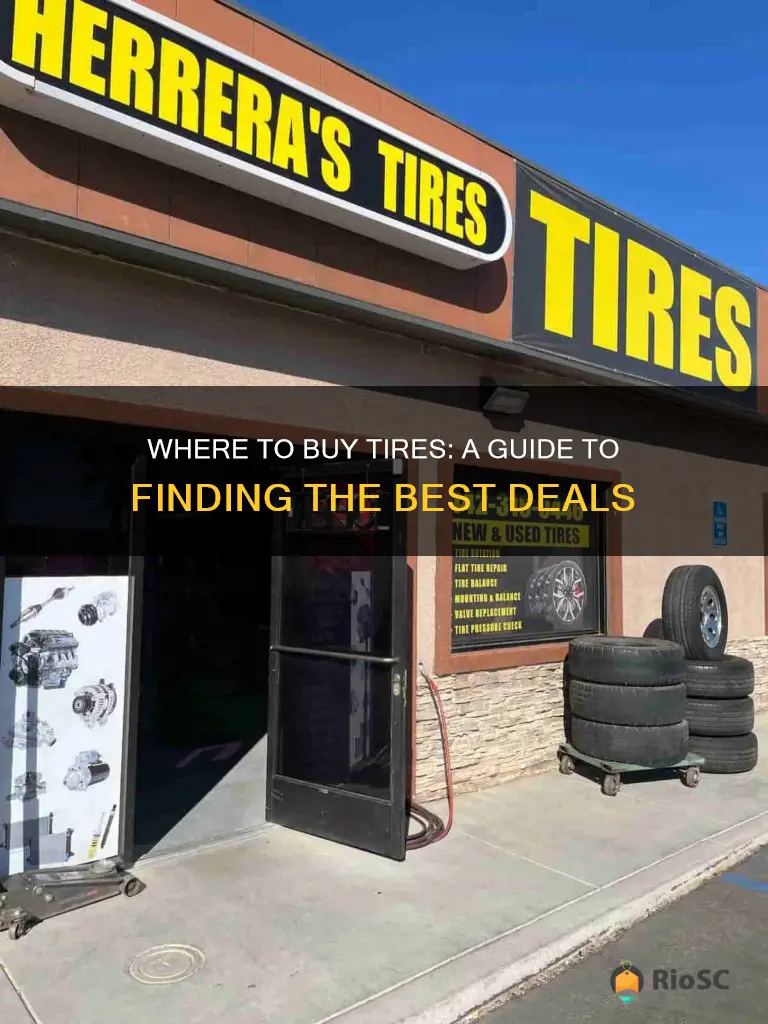
A local tire shop can be a good choice when you want advice, quick service, or help with a tire problem. Many shops can inspect the tire, check alignment, mount and balance the replacement, and dispose of the old tire.


Ask whether the quoted price includes:
- Mounting and balancing
- A new rubber valve stem
- TPMS service
- Road-hazard coverage
- Tire disposal
- Sales tax
- Shop or environmental fees
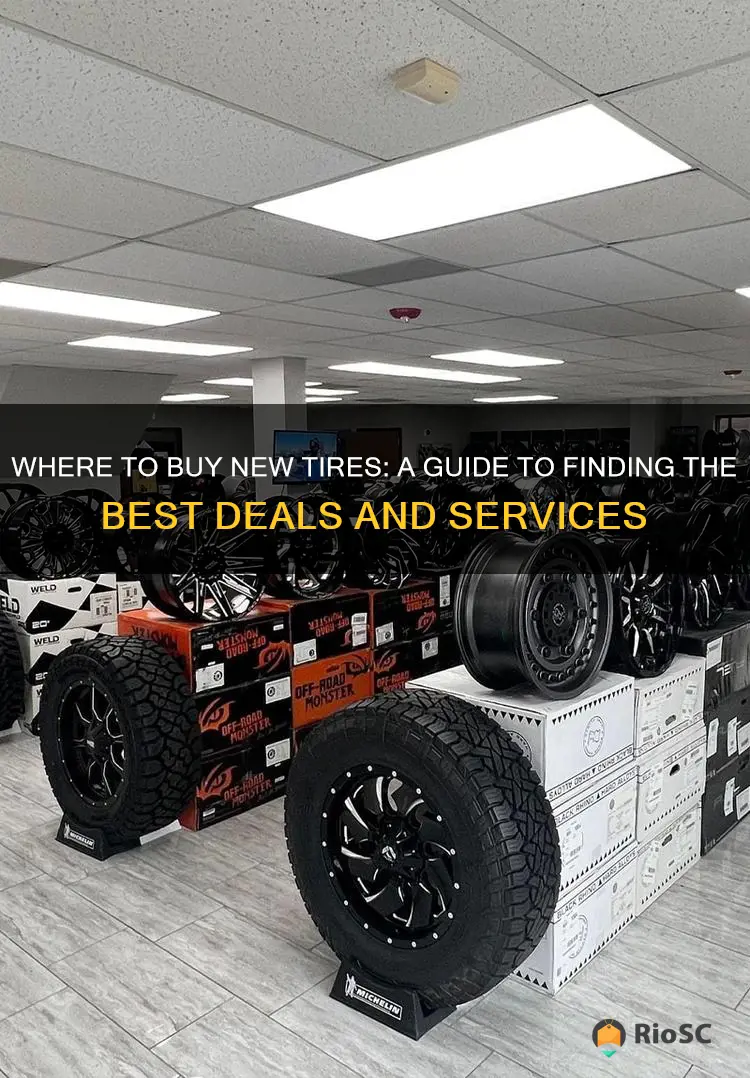
A local shop may also have access to brands or sizes that are not displayed online. Call first if you need a rare size or a tire the same day.
Online tire retailers
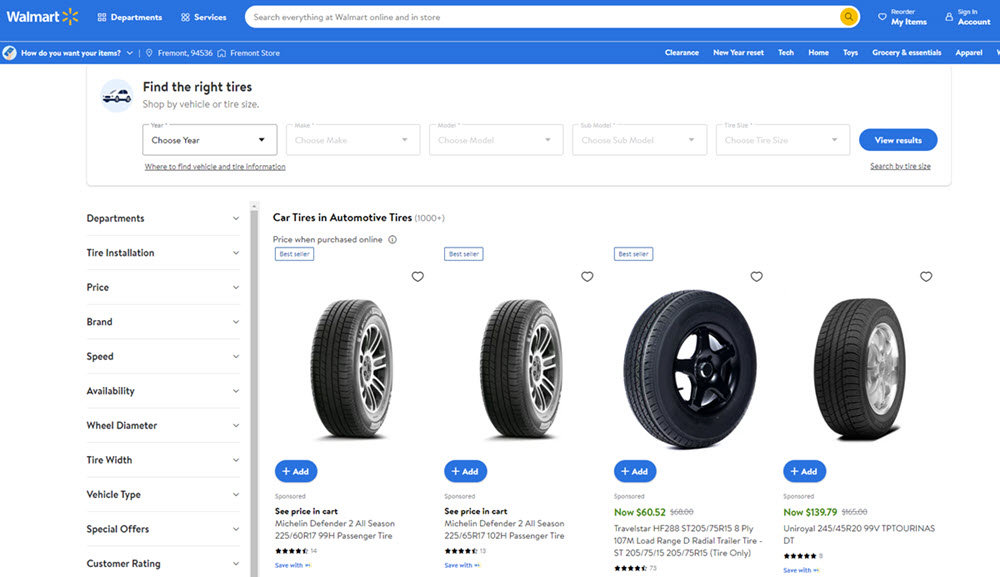
Online retailers let you compare brands, ratings, prices, warranties, and delivery times from home. Some ship tires to your home. Others send them to a partner shop for installation.
Online buying works well when:
- You already know the exact tire size.
- You can wait for delivery.
- You want to compare several brands.
- You have a trusted installer nearby.
- You understand the total cost after installation.
Do not compare only the tire price. Add shipping, installation, balancing, valve service, disposal, taxes, and any package fee.
National tire chains
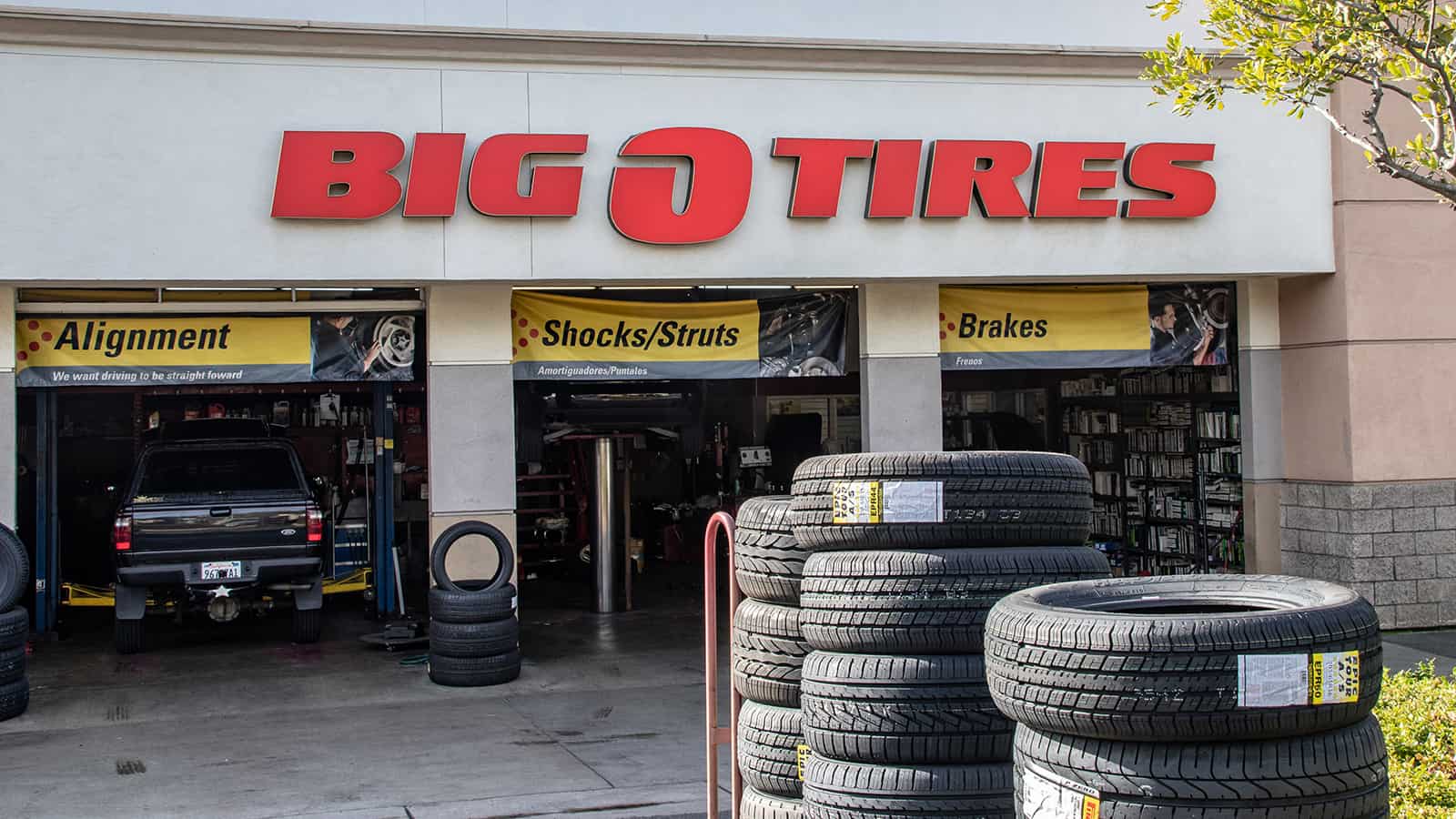
Large tire chains often offer online ordering, store pickup, installation, tire rotations, repairs, and limited warranty programs. Their main benefit is convenience if the company has locations near your home or work.
Service quality can vary by store. Read the written terms for warranties and ask what the local store includes in the installation price.
Car dealerships
A dealership is a useful option when your vehicle has unusual tire requirements, electronic systems, or a special performance package. The service department can check the tire against the vehicle manufacturer’s specifications.
Dealership prices may be higher than other sellers, but the staff may be familiar with the exact vehicle trim and original equipment tire. Compare the complete installed price with at least one other source.
Warehouse clubs
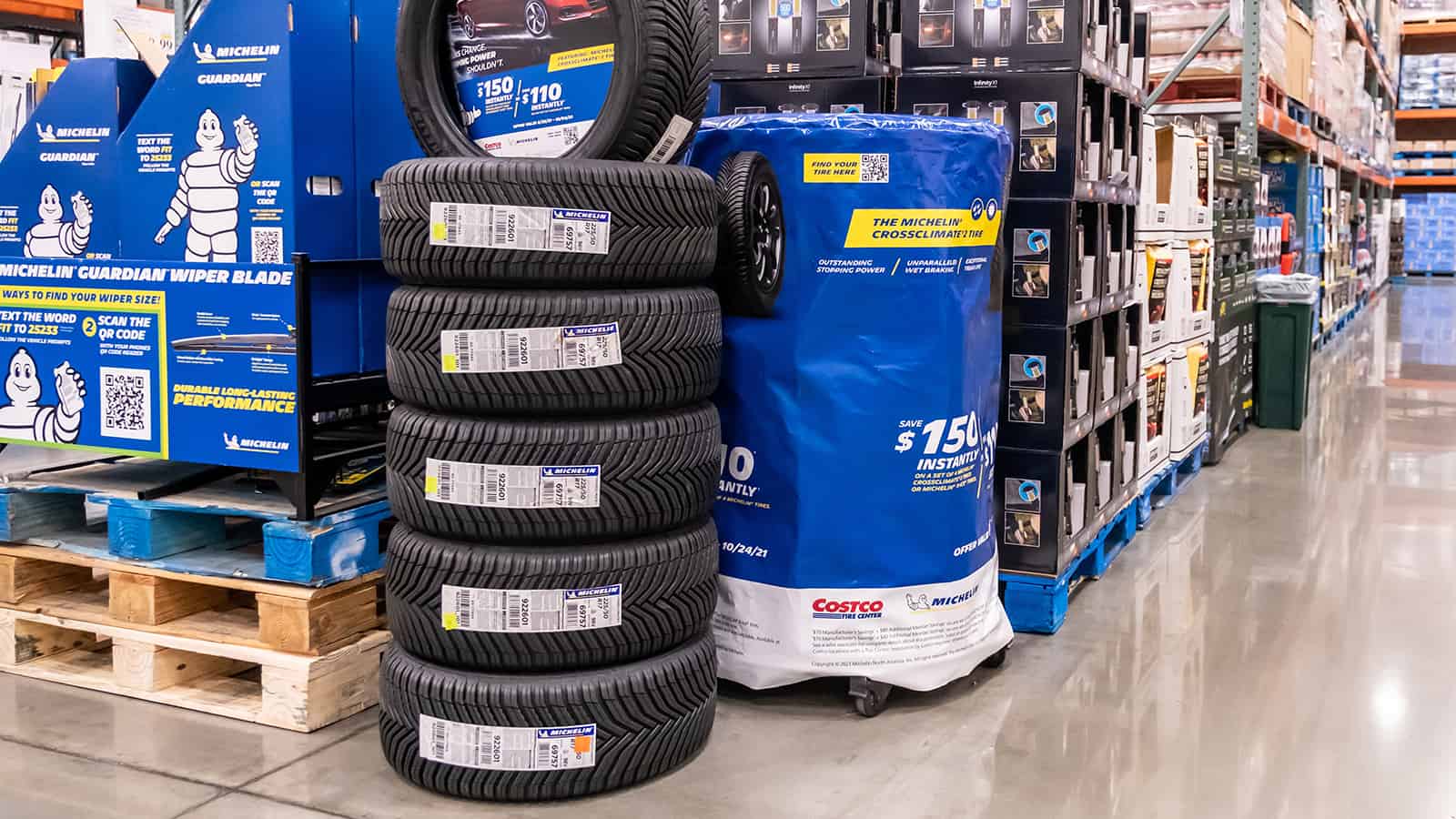
Warehouse clubs may offer competitive tire packages to members. These packages can include installation, rotation, balancing, flat repair, or road-hazard coverage, but the details differ by club and location.


The trade-off is convenience. Appointments may be limited, and some clubs may not provide emergency service or same-day installation for every tire size.
What Should You Check Before Buying a Tire?
Start with the information on your vehicle, not with a brand name. The correct tire must fit the wheel and support the vehicle’s weight.
Find the correct tire size
Look for the tire size in these places:
- The label inside the driver’s doorjamb.
- The owner’s manual.
- The current tire sidewall.
- The vehicle manufacturer’s online specifications.
A size may look like 225/65R17 102H. The parts mean:
- 225: Tire width in millimeters.
- 65: Sidewall height as a percentage of tire width.
- R: Radial construction.
- 17: Wheel diameter in inches.
- 102: Load index.
- H: Speed rating.
Use the vehicle manufacturer’s recommended size unless a qualified tire professional confirms that a different size is safe and compatible.
Check the load index and speed rating
The load index shows how much weight the tire can carry under specified conditions. The speed rating shows the maximum speed category for which the tire is rated under controlled test conditions.
Do not choose a lower load index or speed rating simply because the tire costs less. A lower rating can change handling, load capacity, ride, and safety.
If you tow, carry heavy cargo, drive a large SUV, or use a work truck, tell the seller. The correct tire may need a higher load range or a specific commercial rating.
Match the tire to the vehicle and climate
Common tire categories include:
- All-season tires: Designed for varied conditions and moderate weather.
- Summer tires: Built for warm-weather grip and handling; they are not intended for winter conditions.
- Winter tires: Designed for cold weather, snow, and ice. They use special rubber and tread designs.
- All-terrain tires: Made for trucks and SUVs that travel on pavement and light off-road surfaces.
- Highway tires: Focused on road use, comfort, and long-distance driving.
- Run-flat tires: Designed to allow limited travel after a loss of air, subject to the tire maker’s limits.
All-season does not mean all-weather. If you drive in areas with regular snow and ice, winter tires may offer a better fit. In some regions, severe winter conditions may also require approved traction devices.
Check the tire’s age
A tire’s Department of Transportation identification number includes a four-digit date code. The last four digits show the week and year of manufacture. For example, 2324 means the tire was made in the 23rd week of 2024.
Ask the seller for the date code if the tire is old stock. NHTSA advises drivers to follow the tire maker’s guidance on aging and replacement. Some manufacturers recommend replacing tires after a stated number of years, even when tread remains.


A tire’s age is not the only factor. Heat, sunlight, underinflation, storage, road conditions, and damage also affect tire condition.
How Much Does It Cost to Buy and Install a Tire?
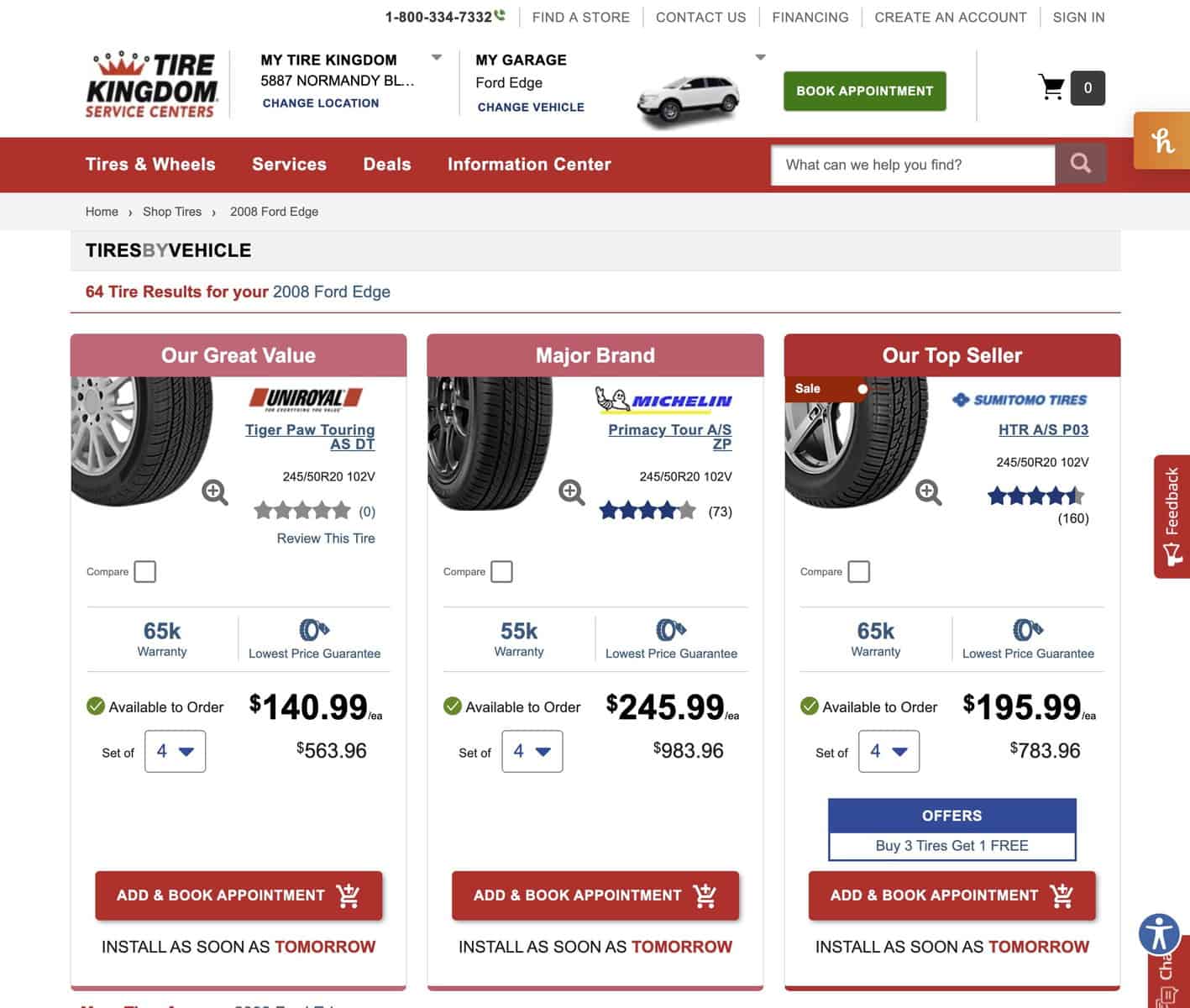
The total cost depends on the tire, vehicle, location, service package, and taxes. A low advertised tire price may not be the final price.
Your total may include:
- Tire price
- Shipping or delivery
- Mounting
- Balancing
- New valve stem
- TPMS service
- Tire disposal
- Sales tax
- Road-hazard coverage
- Alignment, if needed
A useful comparison is the installed price per tire:
Tire price + required fees + installation + tax = installed price
Example of a price comparison
This is a hypothetical example, not a current market quote.
| Cost | Seller A | Seller B |
|---|---|---|
| Tire | $145 | $158 |
| Shipping | $0 | $0 |
| Installation and balance | $28 | $20 |
| Disposal and valve service | $6 | $8 |
| Road-hazard coverage | $0 | $18 |
| Estimated total before tax | $179 | $204 |
Seller A has the lower total in this example. Seller B may still be a better fit if its warranty, service network, or appointment time meets your needs.
Should you replace one tire or more?
Replacing only one tire may be acceptable in limited cases, but it can create different tread depths and handling characteristics. Many vehicles, especially all-wheel-drive vehicles, have strict limits on tread-depth differences.
Ask a tire professional before replacing fewer than two tires. If two tires are replaced, the newer tires are often placed on the rear axle to help reduce oversteer on wet roads. Follow the tire maker’s and vehicle maker’s instructions because vehicle design can change the recommendation.
If one tire has a puncture, repair may be possible. A repair usually requires the puncture to be in the tread area, within accepted size limits, and away from earlier damage. A shop should remove the tire from the wheel to inspect the inside. A plug-only repair made from outside the tire is not the same as a proper internal repair.
How Do You Buy a Tire Online?
Buying online is simple when you verify the fit and calculate the full cost before ordering.
Step 1: Enter the vehicle information
Use the year, make, model, and trim when the website asks for it. Some vehicles use different tire sizes for different trims or front and rear axles.
If the site lets you search by tire size, compare that result with the vehicle placard and owner’s manual.
Step 2: Confirm the tire specifications
Check:
- Tire size
- Load index
- Speed rating
- Tire type
- Run-flat status
- Original-equipment markings, if required
- Warranty terms
- Estimated manufacture date, if available


Do not assume that a tire listed as “fits your vehicle” meets every requirement. Verify the sidewall specifications.
Step 3: Choose delivery and installation
A seller may offer home delivery or shipment to an installer. Before paying, confirm:
- The installer accepts tires from outside sellers.
- The installer has the correct equipment.
- The appointment includes mounting and balancing.
- TPMS service is available.
- The shop will dispose of the old tires.
- The shop honors the seller’s warranty process.
Some installers charge extra for large wheels, run-flat tires, low-profile tires, or vehicles with special sensors.
Step 4: Inspect the tires when they arrive
Check the tire size and look for cuts, bulges, bead damage, or other defects. Confirm the date code when possible. Do not install a tire that appears damaged.
If the tire is not the size you ordered, contact the seller before installation. Once mounted, return rules may be more difficult to use.
Step 5: Keep your records
Save the invoice, tire identification information, warranty documents, and installation receipt. You may need them for a replacement claim, road-hazard claim, or recall.

Where Can You Buy a Tire Today?
For same-day service, start with nearby tire shops, national chains, dealerships, and warehouse clubs. Call before driving there because online inventory may not reflect the exact stock in that store.
Give the store:
- Your vehicle year, make, model, and trim
- Tire size
- Number of tires needed
- Whether you need mounting and balancing
- Your location
- Any warning light or damage
If the tire is flat, badly cut, has a sidewall bulge, or is losing air fast, do not drive at normal speed. Use the spare tire if it is properly inflated and safe to use, or contact roadside assistance.
A portable inflator is useful for a slow leak only when the tire has no visible damage and you can reach a safe repair facility. Adding air does not repair a puncture.
How Do You Choose the Best Place to Buy a Tire?
The best seller is the one that provides the correct tire, a clear installed price, suitable service, and usable warranty support.
Use this decision guide:
| Your priority | Usually worth checking first |
|---|---|
| Fast local help | Independent tire shop or national chain |
| Lowest total price | Online retailer and local shop comparison |
| Vehicle-specific advice | Dealership or experienced tire shop |
| Warehouse-club benefits | Membership club tire center |
| Unusual size | Local shop, dealer, or specialty online seller |
| Snow and ice driving | Local tire shop familiar with winter tires |
| Easy warranty visits | Seller with nearby service locations |
| Emergency replacement | Nearby shop with confirmed inventory |
Price should not be the only factor. A slightly higher installed price may be worthwhile if the seller offers better support, a nearby warranty location, or a faster appointment.
Read reviews as clues, not proof. Look for repeated comments about appointment delays, billing surprises, incorrect fitment, and warranty handling. Also check the seller’s written terms.
Common Mistakes When Buying a Tire
The most common mistake is buying by price alone. A cheap tire that has the wrong size, an unsuitable load rating, or poor availability for warranty service can cost more later.


Avoid these errors:
- Reading the size from memory instead of checking the vehicle placard.
- Buying a lower load index or speed rating.
- Assuming all all-season tires perform the same in snow.
- Comparing tire prices without installation fees.
- Ignoring the tire’s manufacturing date.
- Replacing one tire on an all-wheel-drive vehicle without checking limits.
- Repairing sidewall or shoulder damage.
- Driving on a tire with a bulge.
- Assuming a tire warranty covers every type of damage.
- Forgetting to reset or inspect the TPMS after installation.
- Skipping an alignment after uneven wear or a major impact.
After installation, check that the vehicle does not pull, shake, or make unusual noise. Confirm that the tire-pressure warning light turns off after the system is serviced and driven as directed by the vehicle manual.
Tire Buying Safety and U.S. Resources
Tires are a safety part of the vehicle. A professional should inspect damage, mounting problems, unusual wear, and repeated air loss.
Use the tire placard for normal cold inflation pressure. Do not use the maximum pressure printed on the tire sidewall as the vehicle’s normal pressure unless the vehicle maker specifies it.
Reliable U.S. resources include:
- NHTSA Tire Safety
- NHTSA Recalls
- U.S. Tire Manufacturers Association
- Your vehicle owner’s manual
- The tire manufacturer’s warranty and service information
State rules for tire disposal, inspections, traction devices, and studded winter tires can differ. Check your state transportation or environmental agency when a local rule affects your purchase.

Frequently Asked Questions
Can I buy just one tire?
Sometimes, but it depends on tread depth, drivetrain, tire type, and the vehicle manufacturer’s limits. Ask a tire shop to measure the other tires before buying only one.
Is it better to buy tires online or in a store?
Online buying can make price and specification comparisons easier. A store can provide immediate inspection, installation, and local warranty help. Compare the complete installed price and service terms.
How do I know if a tire will fit my car?
Match the size, load index, and speed rating on the vehicle placard or in the owner’s manual. The wheel diameter must also match. When in doubt, ask a qualified tire professional.
How long does it take to install a tire?
The tire work itself may be fairly quick, but appointment time, vehicle inspection, TPMS service, alignment, and shop workload can change the total. Ask the shop for an estimated wait before arriving.
Can I buy used tires?
Used tires can cost less, but their history may be unknown. Inspect them for repairs, uneven wear, sidewall damage, exposed cords, and age. A new tire with a known history is often easier to evaluate. Never buy a used tire that a qualified professional considers unsafe.
Conclusion: The Best Place to Buy Your Next Tire
You can buy a tire from a local tire shop, online retailer, dealership, warehouse club, or national chain. The right choice is the seller that can provide the correct tire size and rating at a clear installed price, with service and warranty support that work for you.
Start by checking the vehicle placard. Then compare at least two complete quotes, confirm the tire’s specifications and age, and ask how the shop will handle mounting, balancing, TPMS service, disposal, and future warranty needs. If the tire is damaged or unsafe to drive on, arrange professional help before shopping for a replacement.
