

For drivers in the United States, a car misfire means one or more cylinders fail to burn the air-fuel mixture correctly. The result may be a rough idle, shaking, weak acceleration, poor fuel economy, or a flashing check engine light.
A misfire can come from a bad spark plug, weak ignition coil, fuel problem, vacuum leak, low engine compression, or a fault in the engine computer. Some causes are minor. Others can damage the catalytic converter or leave you stranded.
This guide explains what a misfire feels like, why it happens, how mechanics find the cause, and when it is safe to drive.
What Is a Misfire in a Car?
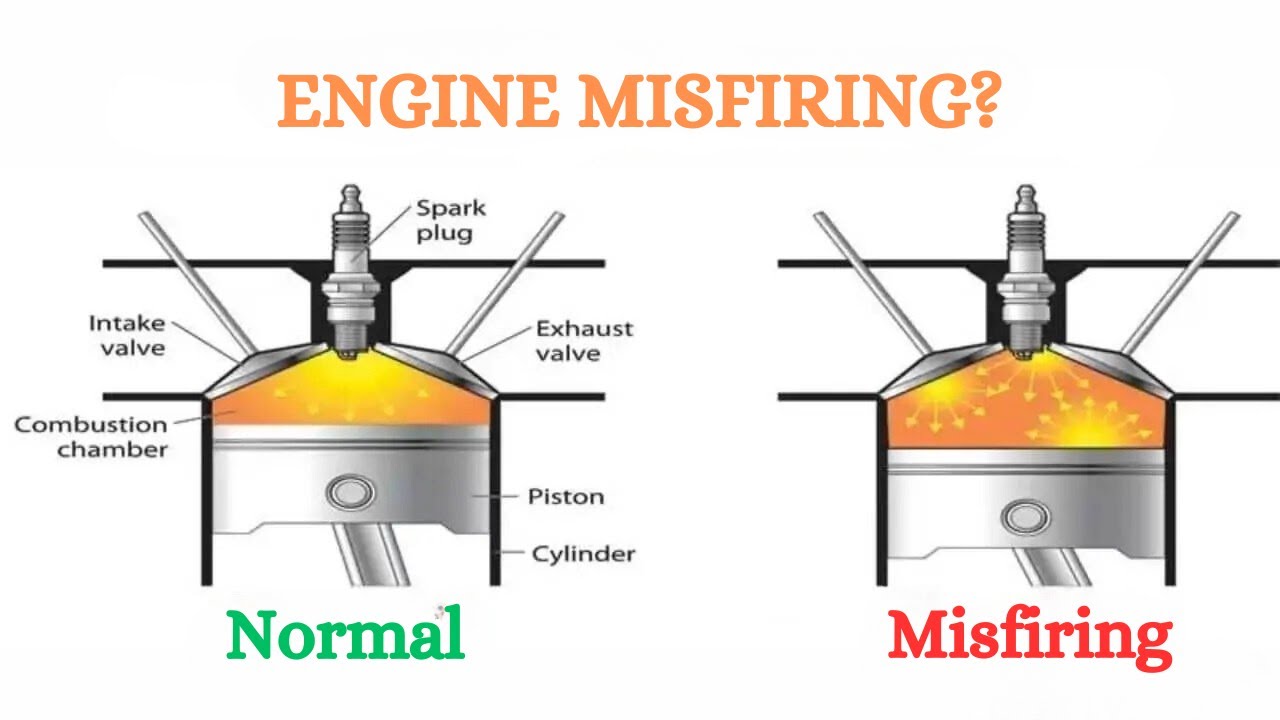
A misfire happens when a cylinder does not complete combustion as it should. In a gasoline engine, each cylinder needs the right mix of air, fuel, compression, and spark at the correct time.


If one of those parts is missing or weak, the cylinder may produce little or no power. The engine then runs unevenly because the other cylinders must work around the failed combustion event.
A four-cylinder engine, for example, may feel very rough if one cylinder stops contributing. A six- or eight-cylinder engine may hide a mild misfire at first, but the problem can still harm the engine or emissions system.
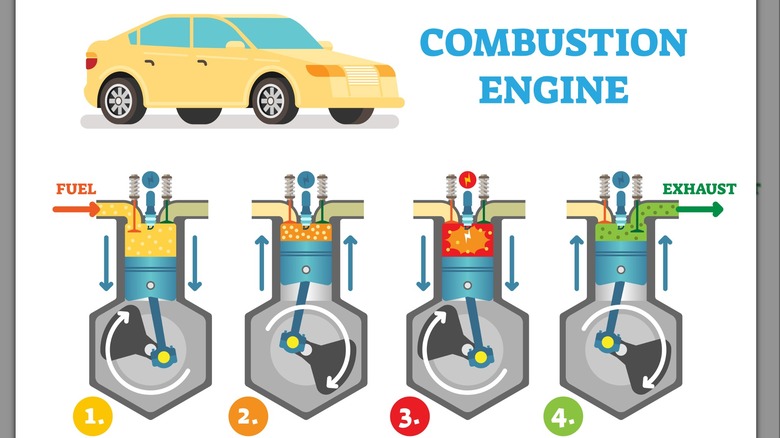
How combustion normally works
A typical gasoline engine follows these basic steps:
- The cylinder draws in air and fuel.
- The piston compresses the mixture.
- The spark plug ignites it.
- Burning fuel pushes the piston down.
- The exhaust leaves through the exhaust valve.
A misfire occurs when the mixture does not ignite, burns poorly, or burns at the wrong time.
In a diesel engine, there is no spark plug for normal combustion. A diesel misfire may result from poor fuel delivery, low compression, injector trouble, or a glow plug issue during cold starts.
The EPA explains that vehicle emissions systems monitor faults that can increase pollution. That is why the onboard diagnostic system can detect some misfires even before the driver notices a major running problem.
What Does a Car Misfire Feel Like?
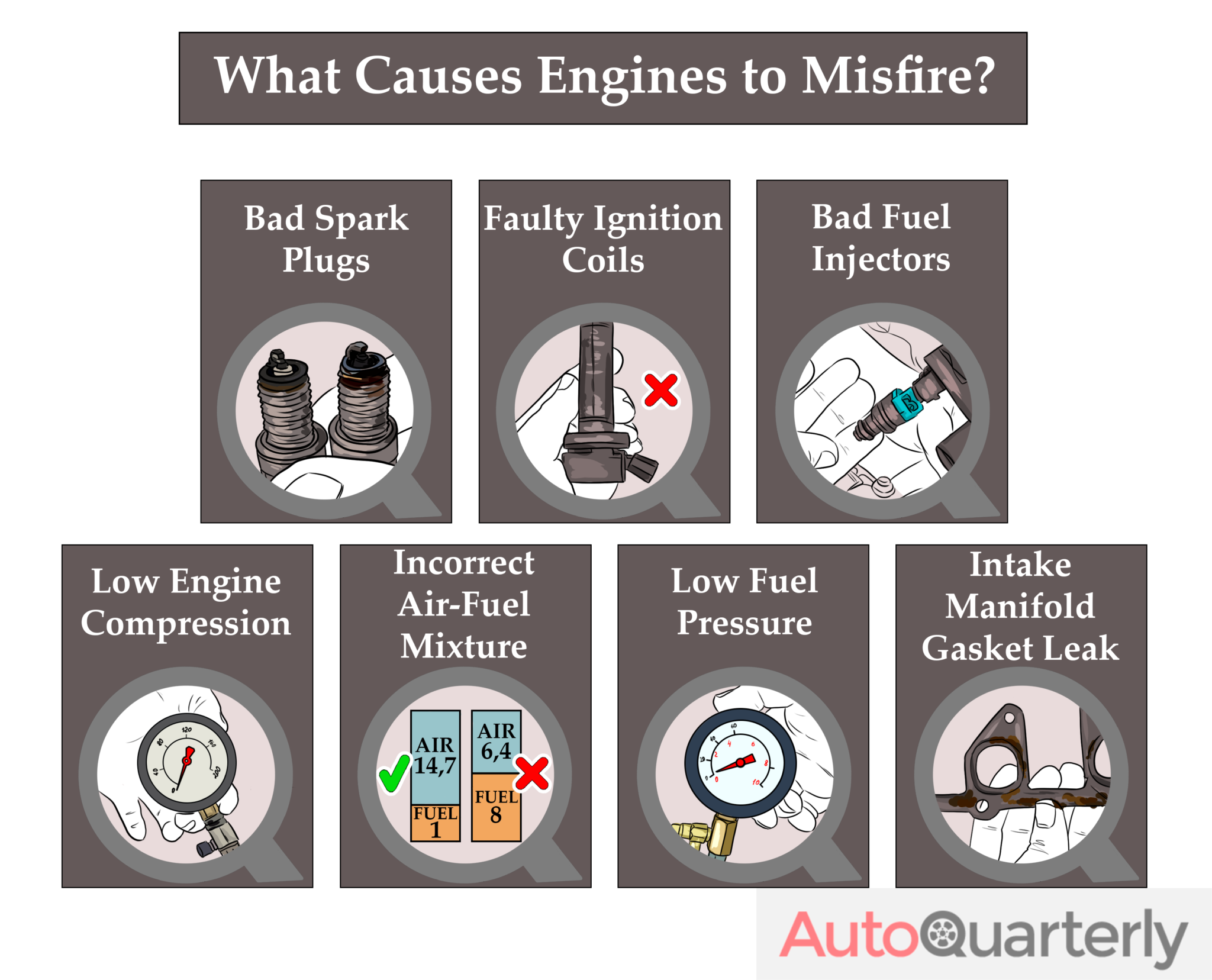
A misfire often feels like shaking, stumbling, or a brief loss of engine power. The exact symptom depends on how often the misfire occurs and which cylinder is affected.
Common signs include:
- Rough or uneven idle
- Shaking through the steering wheel or seat
- Hesitation when you press the gas pedal
- Slower acceleration
- Engine bucking under load
- Poor fuel economy
- A strong fuel smell from the exhaust
- Popping sounds from the intake or exhaust
- Hard starting
- An engine that stalls
- A check engine light
A mild misfire may happen only when the engine is cold, during rain, or under heavy acceleration. A severe misfire may happen all the time.
What the check engine light means
A steady check engine light means the vehicle computer found a fault that may need service soon. You can often drive a short distance if the engine runs normally, but you should arrange a diagnosis.


A flashing check engine light usually signals a severe misfire. Unburned fuel can enter the exhaust and overheat the catalytic converter. Reduce speed, avoid hard acceleration, and stop driving if the engine continues to shake or lose power.
Do not assume the light will go away because the car still runs. A damaged catalytic converter can cost far more than the original ignition repair.
What Causes an Engine Misfire?
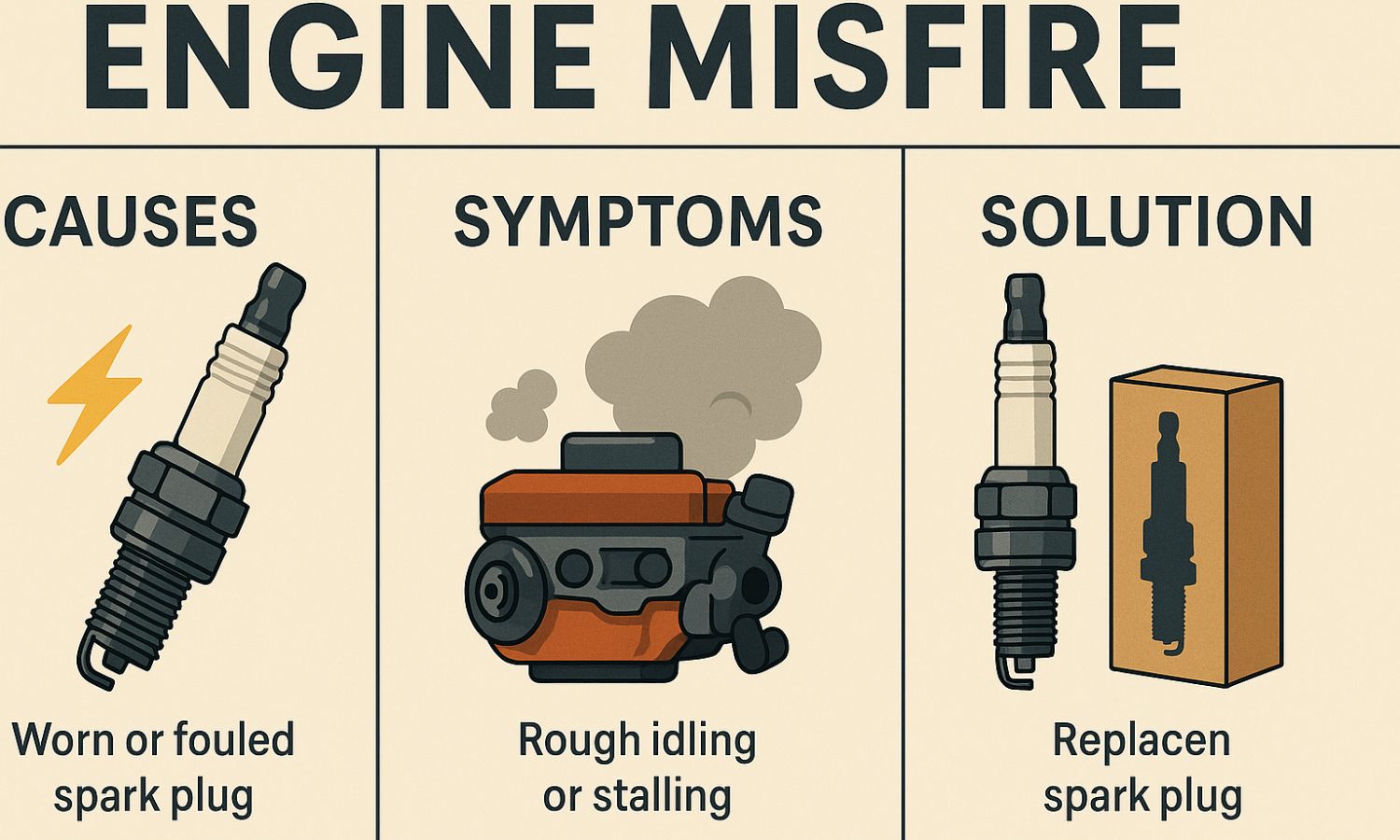
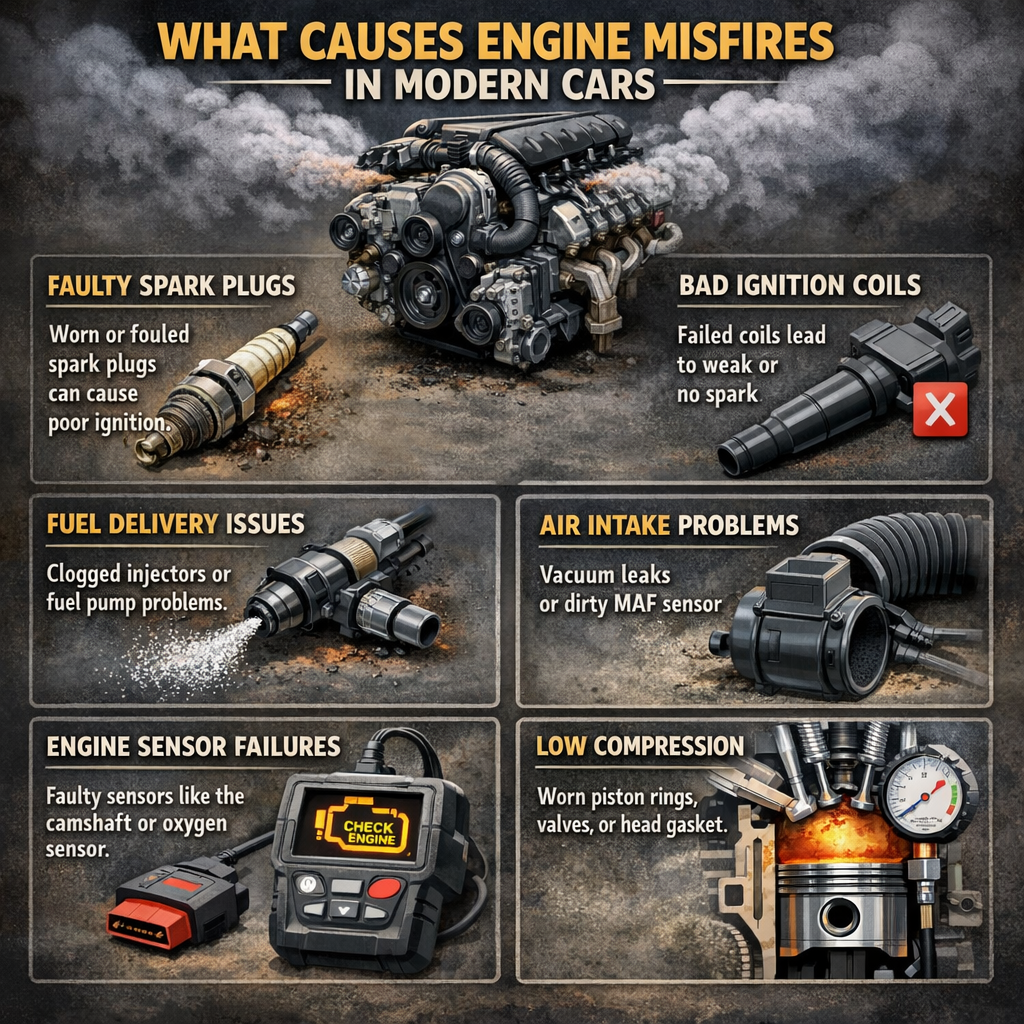
The most common misfire causes involve ignition, fuel, air, timing, or compression. A diagnostic trouble code can point to the affected cylinder, but it does not always identify the failed part.
1. Worn or damaged spark plugs
Spark plugs wear over time. The gap between the electrodes can grow, and deposits can weaken the spark.
A spark plug may also foul with oil, fuel, or carbon. A cracked ceramic insulator can cause the spark to travel somewhere other than the intended electrode.
Common clues include:
- Misfire during acceleration
- Hard starting
- Poor fuel economy
- A maintenance history that is overdue
Use the plug type and gap listed for the specific vehicle. Do not choose a replacement based only on appearance.
2. A failing ignition coil
Modern gasoline cars often use one coil for each cylinder or one coil pack for several cylinders. A weak coil may work at idle but fail when cylinder pressure rises during acceleration.
A coil problem can cause:
- A repeatable misfire on one cylinder
- Rough running under load
- A flashing check engine light
- A fault that appears after the engine warms up
On some vehicles, a mechanic can move the suspected coil to another cylinder. If the misfire follows the coil, the coil becomes a strong suspect. This test must match the vehicle design and should not replace proper diagnosis.
3. Faulty fuel injectors
A fuel injector must deliver the right amount of fuel at the right time. A clogged, leaking, or electrically faulty injector can make one cylinder run too lean or too rich.
Possible signs include:
- A cylinder-specific misfire
- Poor acceleration
- A fuel odor
- Longer cranking
- Uneven engine operation
Injector testing may require electrical checks, pressure tests, or specialized equipment. Adding fuel-system cleaner is not a reliable fix for a damaged injector.
4. Vacuum leaks and unmetered air
A vacuum leak lets air enter the engine without being measured by the airflow system. This can create a lean mixture, especially at idle.
Possible leak points include:
- Cracked vacuum hoses
- Intake manifold gaskets
- Throttle-body gaskets
- Brake-booster hoses
- Positive crankcase ventilation components


A vacuum leak often causes a rough idle and may trigger lean mixture codes along with a misfire code.
5. Low engine compression
A cylinder needs enough compression to burn the mixture. Low compression may result from:
- A burned valve
- Worn piston rings
- A damaged piston
- A blown head gasket
- Valve-train damage
Compression problems often cause a persistent misfire in the same cylinder. They usually require more testing than a spark or fuel fault.
6. Incorrect valve or ignition timing
A timing belt, timing chain, camshaft sensor, crankshaft sensor, or variable valve timing system can affect when the engine opens valves or fires the spark.
Timing faults may cause:
- Several cylinder misfire codes
- Hard starting
- Poor power
- Rattling noises
- A fault that affects the whole engine
Do not replace a camshaft or crankshaft sensor solely because a scan tool shows a related code. The code may describe the result, not the root cause.
7. Contaminated or incorrect fuel
Bad fuel, water in the fuel, or the wrong fuel can cause rough running and misfires across several cylinders.
If the problem began soon after refueling, tell the mechanic. That timing is useful evidence. Do not keep driving if the engine runs badly after filling the tank.
8. Engine computer or wiring problems
Damaged wiring, loose connectors, poor grounds, or an engine control module fault can interrupt spark or injector control.
These problems are less common than worn spark plugs or failing coils. They should be checked after basic ignition, fuel, air, and compression tests.
What Do Misfire Codes P0300 and P0301 Mean?
OBD-II codes help identify the misfire pattern. Most vehicles sold in the United States since the 1996 model year use OBD-II emissions diagnostics, although exact systems vary by vehicle.
Common codes include:
| Code | General meaning |
|---|---|
| P0300 | Random or multiple-cylinder misfire |
| P0301 | Misfire detected in cylinder 1 |
| P0302 | Misfire detected in cylinder 2 |
| P0303 | Misfire detected in cylinder 3 |
| P0304 | Misfire detected in cylinder 4 |
| P0305–P0308 | Misfire detected in cylinders 5 through 8 |
These codes are useful clues, not automatic parts orders.
For example, P0301 means the computer detected a misfire in cylinder 1. It does not prove that cylinder 1 needs a new spark plug. The actual cause could be the coil, injector, wiring, compression, or a vacuum leak near that cylinder.
A P0300 code can result from a problem affecting several cylinders, such as low fuel pressure, a major vacuum leak, incorrect timing, or contaminated fuel.


The scan tool may also show pending codes, freeze-frame data, fuel-trim values, and misfire counts. These details can help reveal when the misfire occurs.
Can You Drive With a Misfire?
You should avoid driving with a severe misfire, especially when the check engine light flashes. A flashing light usually means the misfire may damage the catalytic converter.
If the check engine light is steady and the car runs smoothly, a short trip to a repair shop may be reasonable. Drive gently and avoid towing, steep hills, high speeds, and hard acceleration.
Stop driving and seek help if you notice:
- A flashing check engine light
- Severe shaking
- Major power loss
- Smoke
- A strong raw-fuel smell
- Overheating
- Loud popping or banging
- An engine that may stall in traffic
A misfire can also create a safety risk if the engine loses power while merging or crossing an intersection.
Never work near a running engine unless you understand the hazards. Hot exhaust parts can cause burns, moving belts can catch clothing, and fuel vapors can ignite. Disconnecting ignition parts can also create a high-voltage shock risk on some systems.
How Do You Diagnose a Car Misfire?
The best diagnosis follows a logical order. Start with stored data, then test the simplest likely causes before moving to compression or timing checks.
Step 1: Note when the misfire occurs
Record the conditions:
- Cold start or warm engine
- Idle or acceleration
- Light load or heavy load
- Wet weather or dry weather
- After refueling
- At a certain engine speed
- Only when the air conditioner is on
This pattern helps narrow the search.
Step 2: Scan for diagnostic trouble codes
Use an OBD-II scan tool. Record all codes before clearing them.
Check for:
- Cylinder-specific misfire codes
- Random misfire codes
- Fuel-trim codes
- Oxygen-sensor codes
- Camshaft or crankshaft timing codes
- Fuel-pressure-related codes
Do not clear the codes before saving the information. Clearing them removes useful evidence and may reset emissions monitors.
Step 3: Inspect the basics
With the engine off, inspect:


- Spark plug wires, if equipped
- Coil connectors
- Injector connectors
- Vacuum hoses
- Air-intake tubes
- Grounds
- Battery voltage and terminals
- Signs of oil or coolant in the plug wells
Look for loose plugs, broken wires, cracked hoses, and fluid contamination.
Step 4: Test for a spark problem
A technician may test the spark plug, ignition coil, and related wiring. On some vehicles, swapping a suspected coil or plug with another cylinder can show whether the misfire moves.
Do not use a swap test on a vehicle if the procedure could damage the ignition system or if you are unsure of the design. Follow the service information for that vehicle.
Step 5: Check fuel delivery
If ignition parts appear sound, the next checks may include:
- Fuel pressure
- Injector operation
- Injector wiring
- Fuel quality
- Air-fuel mixture data
Low fuel pressure can affect several cylinders. A single bad injector is more likely to affect one cylinder.
Step 6: Check for air leaks
A smoke test can find intake and vacuum leaks that are hard to see. Spraying flammable liquids around a running engine is unsafe and is not a good substitute for a proper smoke test.
Step 7: Test compression and leak-down
If the misfire stays on the same cylinder after ignition and fuel checks, compression testing may be needed.
A compression test measures how much pressure the cylinder can build. A leak-down test helps show where pressure escapes, such as through an intake valve, exhaust valve, piston rings, or head gasket.
These tests often require special tools and correct testing conditions.
Step 8: Check timing and control signals
If several cylinders misfire or the engine has timing-related codes, a technician may check:
- Crankshaft and camshaft signals
- Mechanical timing
- Variable valve timing
- Injector pulse
- Ignition control
- Engine computer data
A structured diagnosis is usually cheaper than replacing several parts based on guesses.

How Is a Misfire Repaired?
The repair depends on the failed system. A mechanic may replace a worn spark plug, repair a vacuum leak, replace an ignition coil, clean or replace an injector, repair wiring, or rebuild part of the engine.


Common repairs include:
- Spark plug replacement
- Ignition coil replacement
- Vacuum hose or intake gasket repair
- Fuel injector service or replacement
- Fuel system repair
- Sensor or wiring repair
- Valve-train or timing repair
- Head gasket or internal engine repair
- Catalytic converter replacement if damage has occurred
The correct repair should address the cause, not just erase the code. Replacing all ignition coils because one code appears may be unnecessary unless the vehicle maker recommends it or testing supports it.
After the repair, the shop should confirm that the misfire is gone. This may include a road test, another scan, and a check of emissions readiness monitors.
If you repair the car before an emissions inspection, ask whether the monitors need time to reset. Clearing codes or disconnecting the battery can leave the vehicle temporarily “not ready” for some state inspection programs.

How Much Does It Cost to Fix a Misfire?
Misfire repair costs vary widely by vehicle and cause. A simple spark plug replacement may cost much less than an injector, catalytic converter, timing repair, or internal engine repair.
The final price depends on:
- Vehicle make, model, and engine
- Number of affected cylinders
- Part prices
- Labor rates in your area
- Access to the failed part
- Diagnostic time
- Whether the catalytic converter is damaged
- Whether more than one fault exists
Ask for a diagnostic estimate before approving parts. A low-cost scan may identify a code but may not identify the failed component.
A useful estimate should separate:
- Diagnostic labor
- Parts
- Installation labor
- Taxes and shop fees
- Any follow-up testing
A repair shop should explain why the proposed repair fits the test results.

Common Misfire Diagnosis Mistakes
Several mistakes can turn a small repair into a large bill.
Replacing parts based only on the code
A P0302 code identifies cylinder 2. It does not identify the failed part. Test the plug, coil, injector, wiring, compression, and air leaks as needed.
Ignoring a flashing check engine light
A flashing light is not a routine maintenance reminder. Continuing to drive hard can overheat the catalytic converter.
Treating fuel additives as a universal fix
Fuel additives may help with some deposits, but they cannot repair a failed coil, damaged valve, broken wire, or low compression.
Clearing the code before diagnosis
The stored code and freeze-frame data can show engine speed, load, temperature, and other conditions when the fault occurred. Save that information first.
Replacing every spark plug without checking the cause
New plugs may help if the old ones are worn. But oil contamination, incorrect plug gap, a bad coil, or low compression may cause the misfire to return.
Using cheap or incorrect replacement parts
Use parts that match the vehicle and engine. The wrong spark plug, plug gap, coil, or injector can create new problems.
Ignoring related symptoms
Overheating, oil loss, coolant loss, fuel odor, or unusual smoke may point to a larger fault. Tell the repair shop about every symptom.

Misfire vs. Rough Idle: Are They the Same?
A misfire can cause a rough idle, but not every rough idle is a misfire.
A rough idle may also result from:
- A dirty throttle body
- A faulty idle-air system
- Engine mounts
- A vacuum leak
- Air-conditioning load
- Low battery voltage
- Normal cold-start behavior on some vehicles
A true misfire means one or more cylinders are not producing power correctly. A scan tool can help separate a combustion fault from a vibration or idle-control problem.
Engine mounts are a common source of confusion. A bad mount can make the car shake even when the engine is firing normally.

Frequently Asked Questions
Is a misfire serious?
It can be. A mild misfire may come from a worn plug, but a severe misfire can damage the catalytic converter, reduce power, increase emissions, or cause the engine to stall.
Can low oil cause a misfire?
Low oil can contribute to engine problems, especially in engines that use oil pressure for variable valve timing or hydraulic valve lifters. Low oil may also lead to serious internal damage. Check the oil level on level ground with the engine off, following the owner’s manual.
Low oil is not proof that it caused the misfire. A separate diagnosis is still needed.
Can a bad gas cap cause a misfire?
A loose or damaged gas cap usually triggers an evaporative-emissions code, not a direct cylinder misfire. However, fuel quality problems after refueling can cause rough running or misfires.
Will new spark plugs fix a misfire?
They may fix the problem if the plugs are worn, fouled, damaged, or incorrectly gapped. They will not fix a bad injector, failed coil, vacuum leak, timing fault, or low compression.
How long can I drive with a misfire?
There is no safe universal time limit. Avoid driving if the check engine light flashes, the engine shakes badly, or power drops. If the light is steady and the vehicle runs normally, drive only as far as needed for diagnosis and use gentle throttle.
Key Takeaways
- A car misfire occurs when one or more cylinders fail to burn the air-fuel mixture correctly.
- Common causes include spark plugs, ignition coils, fuel injectors, vacuum leaks, timing faults, and low compression.
- A flashing check engine light usually calls for immediate action because the catalytic converter may be at risk.
- Codes such as P0300 and P0301 identify a misfire pattern, not always the failed part.
- Proper diagnosis starts with the scan data and symptoms, then moves through ignition, fuel, air, compression, and timing tests.
- Do not keep replacing parts without confirming the cause.
Conclusion
A misfire is an engine combustion problem, not just an annoying vibration. The safest approach is to identify when it happens, scan the vehicle, and test the likely causes in a logical order.
If the check engine light flashes or the engine loses power, stop driving and arrange professional help. If the light stays on but the car runs normally, schedule a diagnosis soon. Early testing can prevent a small ignition or fuel problem from becoming expensive engine or catalytic-converter damage.
