

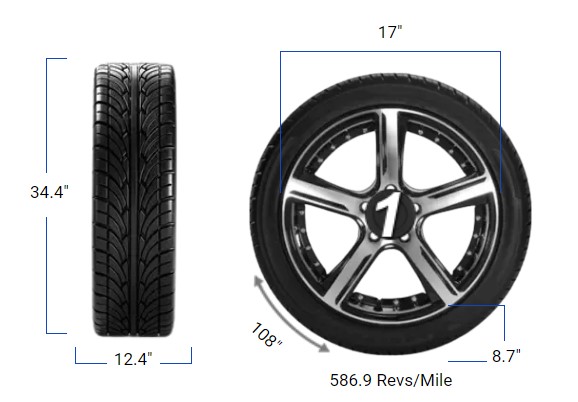
A 315/70 tire is about 12.4 inches wide, with a sidewall height of about 8.7 inches. Its total diameter depends on the wheel size.
For example:
- 315/70R17: about 34.4 inches tall
- 315/70R18: about 35.4 inches tall
- 315/70R20: about 37.4 inches tall
In the United States, people often call a 315/70R17 a “35-inch tire.” That is a useful shortcut, but the exact size changes when the rim diameter changes. The full marking, such as LT315/70R17, is needed for a precise answer.

What Do the Numbers in 315/70 Mean?
The numbers describe the tire’s width and sidewall ratio. They do not show the tire’s full height by themselves.


| Marking | Meaning | Approximate measurement |
|---|---|---|
| 315 | Tire width in millimeters | 315 mm, or 12.4 in |
| 70 | Sidewall height as a percentage of width | 220.5 mm, or 8.7 in |
| R | Radial construction | Radial tire |
| 17, 18, 20, or 22 | Wheel diameter in inches | Depends on the tire |
The 315 means the tire is about 315 millimeters wide from sidewall to sidewall. This is a nominal measurement. The actual width can vary by tire brand, tread design, approved wheel width, and inflation pressure.
The 70 is the aspect ratio. It means the sidewall height equals 70% of the tire’s width:
315 mm × 0.70 = 220.5 mm
The letter R means the tire uses radial construction. The final number must match the wheel diameter. A 315/70R17 tire fits a 17-inch wheel, while a 315/70R20 tire fits a 20-inch wheel.
How Tall Is a 315/70 Tire?
A 315/70 tire can have several different overall diameters because the rim size is part of the calculation.
Use this formula for the approximate tire diameter:
Overall diameter = (2 × sidewall height) + wheel diameter
The 315/70 sidewall is about 8.68 inches tall. The table below shows the estimated diameter for common wheel sizes.
| Tire size | Approximate width | Approximate diameter | Common description |
|---|---|---|---|
| 315/70R16 | 12.4 in | 33.4 in | About a 33-inch tire |
| 315/70R17 | 12.4 in | 34.4 in | Often called a 35-inch tire |
| 315/70R18 | 12.4 in | 35.4 in | About a 35-inch tire |
| 315/70R20 | 12.4 in | 37.4 in | About a 37-inch tire |
| 315/70R22 | 12.4 in | 39.4 in | About a 39-inch tire |
These are calculated dimensions, not guaranteed physical measurements. Tire makers may list a slightly different overall diameter. Tread depth, sidewall design, measuring rim, and load condition can all affect the result.

Is a 315/70R17 the Same as a 35-Inch Tire?
A 315/70R17 is close to a 35-inch tire, but it is not exactly 35 inches by calculation.
Its estimated diameter is:
- Width: 12.4 inches
- Sidewall: 8.68 inches
- Wheel: 17 inches
- Total: 34.36 inches
Many tire sellers and truck owners group it with 35-inch tires because the actual measured diameter may be close to 35 inches. However, “35-inch tire” is a general size label. It does not provide the same precision as 315/70R17.


A tire marked 35x12.50R17 is another common option. Its nominal measurements are:
- Diameter: about 35 inches
- Width: about 12.5 inches
- Wheel: 17 inches
The two sizes are similar, but they are not guaranteed to have the same width, height, load rating, or clearance requirements. Always compare the manufacturer’s published specifications before changing sizes.

How Does a 315/70 Tire Compare With Other Common Truck Sizes?
The closest comparison depends on the wheel diameter. A 315/70R17 is often compared with a 35x12.50R17, while a 315/70R20 may be compared with a 37-inch tire.
| Tire size | Approximate diameter | Approximate width |
|---|---|---|
| 285/70R17 | 32.7 in | 11.2 in |
| 315/70R17 | 34.4 in | 12.4 in |
| 35x12.50R17 | 35.0 in | 12.5 in |
| 295/70R18 | 34.3 in | 11.6 in |
| 315/70R18 | 35.4 in | 12.4 in |
| 35x12.50R18 | 35.0 in | 12.5 in |
A 315/70 tire is usually wider than a 285/70 or 295/70 tire. That extra width can affect steering clearance, mud-flap clearance, suspension clearance, and how far the tire extends beyond the fender.
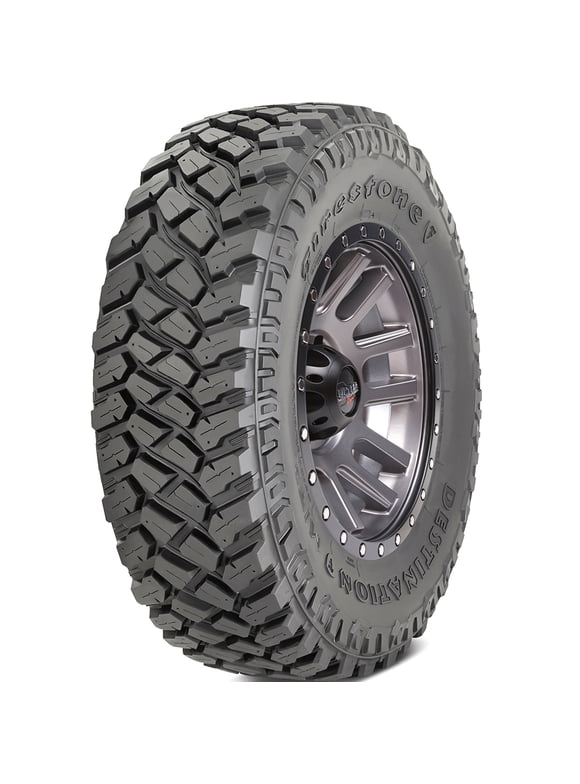
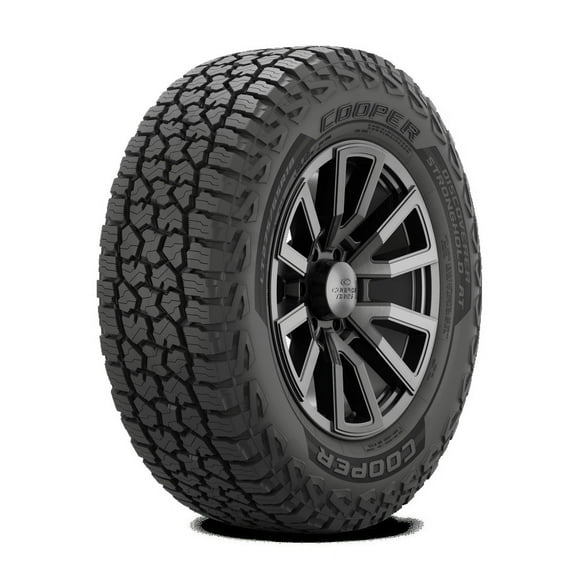
The comparison also depends on the tire’s construction. An LT tire, an all-terrain tire, and a mud-terrain tire may have different real-world dimensions even when they share the same nominal size.

What Vehicles Use a 315/70 Tire?
A 315/70 tire is commonly used on full-size pickup trucks, heavy-duty four-wheel-drive trucks, and off-road builds. In the U.S. market, it may appear on modified Ford, Chevrolet, GMC, Ram, Toyota, and other trucks.
That does not mean every truck can safely use the size. Vehicle compatibility depends on more than the tire’s width and diameter.
Check these items first:
- The vehicle manufacturer’s tire and wheel size recommendations
- The tire information placard on the driver-side doorjamb
- The owner’s manual
- Wheel width and offset
- Load rating and load range
- Brake and suspension clearance
- Fender and inner-wheel-well clearance
- Spare-tire compatibility
- Speedometer and driver-assistance system effects
A 315/70 tire may require a lift, different wheels, trimming, or changes to the steering system on some trucks. Those changes are vehicle-specific. A tire shop or qualified mechanic should check clearance through the full steering and suspension range.

Will a 315/70 Tire Fit My Truck?
A 315/70 tire will fit only if the truck has enough clearance and the wheel supports the tire’s approved width range. The tire’s load capacity must also meet or exceed the vehicle’s required capacity.
Before buying, follow this sequence:
- Read the door-jamb placard. Record the original tire size, recommended pressure, and required load information.
- Confirm the complete tire size. “315/70” is incomplete. You still need the rim diameter, such as R17 or R20.
- Check the wheel width. Use the tire manufacturer’s approved rim-width range.
- Compare the load index. The replacement tire should meet or exceed the vehicle manufacturer’s requirement.
- Measure clearance. Check the front tires at full left and right steering lock, as well as compression and rebound.
- Check the rear tires. Look for clearance near the frame, leaf springs, shock absorbers, and wheel wells.
- Check the spare. A different-size spare can affect traction systems and emergency use.
- Verify alignment and calibration. Larger tires can change steering geometry, speedometer readings, and electronic control behavior.
A tire that clears while parked may still rub while turning, flexing off-road, or carrying a heavy load. Rubbing on a suspension part or brake line is a safety concern and should be corrected before driving.

How Much Bigger Is a 315/70 Tire Than a 285/70 Tire?
A 315/70R17 is approximately 1.7 inches taller and 1.2 inches wider than a 285/70R17.


| Measurement | 285/70R17 | 315/70R17 | Difference |
|---|---|---|---|
| Approximate width | 11.2 in | 12.4 in | +1.2 in |
| Approximate diameter | 32.7 in | 34.4 in | +1.7 in |
| Approximate sidewall | 7.9 in | 8.7 in | +0.8 in |
The larger tire raises the truck’s axle and body by roughly half of the diameter difference, or about 0.85 inch, before accounting for tread shape and tire deflection.
The change can also reduce effective gearing. The engine may run at fewer revolutions per mile, but it may have to work harder to accelerate or climb. Depending on the vehicle, drivers may notice slower acceleration, more frequent downshifts, altered transmission behavior, or a different speedometer reading.

What Does LT315/70R17 Mean?
LT315/70R17 is a light-truck tire size. The LT prefix indicates that the tire is built for light-truck applications under the applicable tire classification system.
A typical LT315/70R17 marking tells you:
- LT: Light-truck tire
- 315: Nominal width in millimeters
- 70: Sidewall height equals 70% of the width
- R: Radial construction
- 17: Designed for a 17-inch wheel
Some LT tires also include a load-range letter, such as E. Load range relates to the tire’s construction and maximum load capability at a specified pressure. It does not mean that every tire with the same size has the same capacity.
Read the full sidewall marking. The size alone does not tell you the tire’s load index, speed rating, maximum pressure, or approved wheel width.

What Is the Difference Between 315/70R17 and 315/70R20?
Both tires are about 12.4 inches wide, but the 315/70R20 is about 3 inches taller because it uses a 20-inch wheel instead of a 17-inch wheel.
| Size | Approximate diameter | Main effect |
|---|---|---|
| 315/70R17 | 34.4 in | Shorter overall package |
| 315/70R20 | 37.4 in | Taller package with a larger wheel |
The sidewall height remains about 8.7 inches in both sizes because the width and aspect ratio are unchanged. The extra height comes from the larger rim.
This difference affects vehicle fit, gearing, speedometer accuracy, suspension clearance, and spare-tire storage. A 315/70R20 should not be treated as a direct replacement for a 315/70R17 without checking the vehicle and wheel setup.
Does a 315/70 Tire Need a Special Wheel?
A 315/70 tire needs a wheel with the correct diameter, suitable width, bolt pattern, offset, and load capacity.
For example, a 315/70R17 requires a 17-inch wheel, but not every 17-inch wheel is suitable. The wheel must also fall within the tire maker’s approved rim-width range and have enough load capacity for the truck.
Wheel offset matters because it changes the tire’s position in the wheel well:
- More negative offset can move the tire outward and increase fender exposure.
- More positive offset can move the tire inward and increase suspension or frame clearance concerns.
- Wheel spacers can change clearance and load paths and should be used only when approved and properly installed.


Do not select a wheel based only on appearance. Confirm the wheel specifications with the wheel maker, tire maker, vehicle manual, and a qualified installer.

Common Mistakes When Choosing a 315/70 Tire
The most common mistake is treating “315/70” as a complete tire size. It is not. The rim diameter must be included.
Other mistakes include:
- Assuming every 315/70 tire is exactly 35 inches tall
- Ignoring load index or load range
- Comparing a passenger tire with an LT tire as if they were identical
- Using a wheel that is too narrow or too wide
- Forgetting to check full-lock steering clearance
- Measuring only the unloaded truck
- Assuming a lift kit guarantees clearance
- Relying on the speedometer after changing diameter
- Failing to confirm the spare-tire size
- Mixing different tire sizes or tread types on a four-wheel-drive system
The actual tire specification from the manufacturer is more useful than a general label such as “35-inch tire.” Use the published overall diameter, section width, revolutions per mile, load index, and approved rim range for the exact model.

How Do You Correct the Speedometer After Installing a 315/70 Tire?
A taller tire travels farther with each revolution, so the speedometer may read lower than the truck’s actual speed. The exact change depends on the original tire’s measured diameter and the replacement tire’s measured diameter.
A rough correction formula is:
New speedometer reading = indicated speed × new tire diameter ÷ original tire diameter
For example, if a truck changes from an estimated 32.8-inch tire to a 34.4-inch tire:
60 × 34.4 ÷ 32.8 = about 63 mph
That means the truck could be traveling about 63 mph when the speedometer shows 60 mph, assuming the estimated dimensions are accurate.
Modern trucks may allow tire-size calibration through approved vehicle software or dealer equipment. The correct method depends on the model year and vehicle system. Do not rely on the formula alone for legal or safety-critical speed information.

FAQ About 315/70 Tires
Is a 315/70 tire a 35-inch tire?
A 315/70R17 is commonly called a 35-inch tire, but its calculated diameter is about 34.4 inches. A 315/70R18 is about 35.4 inches. The exact measured size varies by tire model.
How wide is a 315/70 tire?
The nominal width is 315 millimeters, or about 12.4 inches. Actual section width can vary based on the brand, model, tread design, wheel width, and tire pressure.
How tall is a 315/70R17 tire?
A 315/70R17 is approximately 34.4 inches tall. The tire maker’s specifications may show a slightly different diameter.
Can I replace a 35x12.50R17 with a 315/70R17?
They are often similar in size, but they are not automatically interchangeable. Compare actual diameter, section width, load rating, approved rim width, and vehicle clearance before changing sizes.
What rim width is best for a 315/70 tire?
The correct rim width depends on the exact tire model. Check the manufacturer’s approved rim-width range rather than using a general rule. The wheel must also have the correct diameter, offset, bolt pattern, and load rating.
Sources for Verification
For a purchase or fitment decision, verify the exact tire model and vehicle with these sources:


- NHTSA Tire Safety Information
- Tire and Rim Association
- Michelin Tire Size Guide
- Goodyear Tire Size Information
Manufacturer specifications should take priority over general size calculators because two tires with the same nominal marking can have different measured dimensions.
Final Answer: What Size Is a 315/70 Tire?
A 315/70 tire is approximately 12.4 inches wide, with an 8.7-inch sidewall. Its height depends on the wheel:
- 315/70R17: about 34.4 inches tall
- 315/70R18: about 35.4 inches tall
- 315/70R20: about 37.4 inches tall
The most common short answer is that a 315/70R17 is roughly a 35-inch tire. Before installing one, confirm the full tire marking, wheel specifications, load rating, vehicle clearance, and manufacturer fitment guidance.
