

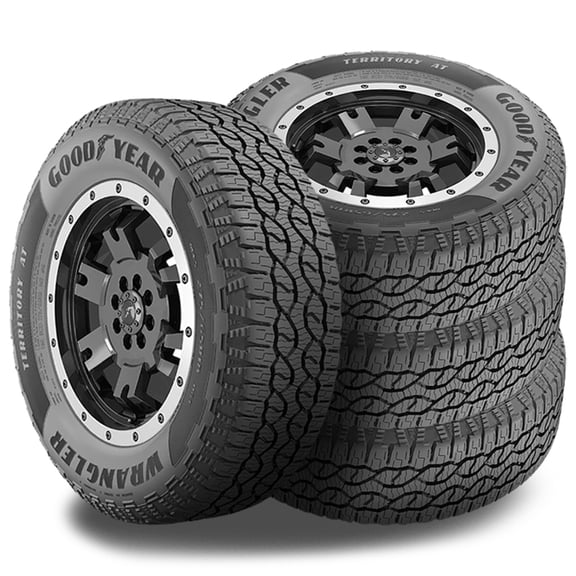
Four Goodyear tires usually cost about $400 to $1,200 before installation in the United States. After mounting, balancing, tire disposal fees, taxes, and other shop charges, a full set often costs $500 to $1,500 installed.
The final price depends on your tire size, Goodyear model, vehicle type, driving needs, and where you buy the tires. A set of small-car tires may cost less than $500. Four Goodyear truck, SUV, run-flat, or performance tires can cost well over $1,200.
Introduction
For most U.S. drivers, a realistic budget for four Goodyear tires is $700 to $1,100 installed. Economy and touring models tend to fall near the lower end. All-terrain, winter, high-performance, and large truck tires usually cost more.
The price shown online is often only the tire price. Your final bill may also include installation, balancing, new valve stems, tire recycling, sales tax, and optional wheel alignment. Ask for an out-the-door quote before you approve the work.


Average Cost of Four Goodyear Tires
The table below shows common U.S. price ranges. These are planning estimates, not fixed Goodyear prices. Retail prices change by tire size, store, region, promotions, and stock.
| Goodyear tire type | Approximate price per tire | Four tires before installation | Typical installed total |
|---|---|---|---|
| Basic passenger tire | $90–$150 | $360–$600 | $500–$800 |
| Touring all-season tire | $120–$220 | $480–$880 | $650–$1,100 |
| Premium all-season tire | $170–$280 | $680–$1,120 | $850–$1,350 |
| Performance tire | $160–$300+ | $640–$1,200+ | $800–$1,450+ |
| All-terrain truck or SUV tire | $180–$320+ | $720–$1,280+ | $900–$1,550+ |
| Winter tire | $150–$300+ | $600–$1,200+ | $750–$1,450+ |
These ranges cover common consumer sizes. Large wheels, specialty fitments, and premium load ratings can push the price higher.
For example, four tires priced at $175 each have a tire subtotal of $700. If installation costs $25 per tire, the service adds $100. A $20 recycling and shop fee brings the subtotal to $820 before tax.
A simple cost formula
Use this formula to estimate your bill:
Four-tire cost = tire price × 4 + installation + fees + tax
A sample estimate might look like this:
- Four Goodyear tires: $175 each × 4 = $700
- Mounting and balancing: $25 each × 4 = $100
- Tire disposal or shop fees: $20
- Sales tax: varies by state and local rate
- Estimated pre-tax total: $820
Some retailers include installation in a package. Others list it as a separate charge. Compare the complete total, not just the price of one tire.

What Changes the Price of Four Goodyear Tires?
The biggest price factors are tire size, model, vehicle weight, and the service package. Two Goodyear tires that fit the same vehicle can have very different prices.
Tire size and wheel diameter
A tire marked 205/55R16 is usually less expensive than a tire marked 275/55R20. Larger tires use more material and often require stronger construction.
Check the tire size on:
- The driver-side door-jamb label
- Your vehicle owner’s manual
- The current tire sidewall
- The vehicle manufacturer’s online fitment guide


Do not choose a cheaper tire with the wrong size. The replacement must match the vehicle maker’s approved size, load rating, and speed rating.
Goodyear model
Goodyear sells several tire families. The name on the sidewall affects both price and purpose.
Common examples include:
- Assurance: Passenger and touring tires for many cars, sedans, and crossovers
- Eagle: Performance-focused tires
- Wrangler: Truck and SUV tires
- WeatherReady: All-weather tires designed for changing conditions
- WinterCommand: Winter-focused tires
- EfficientGrip: Fuel-saving and touring applications in selected markets
A premium tire may offer a different balance of wet grip, road noise, tread life, or snow ability. A higher price does not make every tire better for every driver.
Vehicle type
A compact sedan often uses smaller tires with lower load needs. A heavy pickup may need tires with a higher load range and stronger sidewalls.
Electric vehicles can also use special fitments. Their weight and instant torque may affect tire wear. Use the vehicle maker’s approved specifications rather than buying based only on size.
Run-flat and specialty construction
Run-flat tires usually cost more than standard tires. They may let a driver travel a limited distance after a puncture, but they do not remove the need for prompt repair or replacement.
Other features that can raise the price include:
- Reinforced sidewalls
- High load ratings
- Extra traction compounds
- Self-sealing construction
- Original-equipment markings
- Specialized noise-control designs
Local demand and availability
Prices can vary between a Goodyear store, a national tire chain, an online seller, and an independent repair shop. Shipping, local taxes, rebates, and inventory can change the final deal.
A tire that appears cheaper online may cost more after shipping and installation. Ask whether the seller will ship the tires to a local installer and what that service costs.

How Much Does Goodyear Installation Cost?
Installation commonly adds about $20 to $50 per tire in the United States. That means installation for four tires may cost roughly $80 to $200.
The service may include:
- Removing the old tires
- Mounting the new tires
- Balancing the wheel and tire assemblies
- Installing valve stems
- Checking tire pressure
- Recycling the old tires
The exact package differs by retailer. Some stores charge a single package fee. Others charge separately for mounting, balancing, disposal, and shop supplies.
Possible extra charges
Your invoice may include these additional services:


| Service or fee | Common planning range |
|---|---|
| Tire disposal or recycling | $2–$10 per tire |
| New rubber valve stem | $2–$10 per tire |
| TPMS service | $5–$25 per tire |
| Road-hazard coverage | Varies by store |
| Wheel alignment | $80–$180 |
| Tire rotation later | Free to about $50 |
| Sales tax | Depends on your state and locality |
These are broad estimates. A retailer may charge more or include some items at no extra cost.
Is an alignment required with new tires?
Not every tire purchase needs an alignment. An alignment is more likely to help if:
- The vehicle pulls to one side
- The steering wheel is off-center
- The old tires wore unevenly
- You hit a pothole or curb
- The suspension was recently repaired
- The shop finds alignment angles outside the vehicle maker’s limits
An alignment does not fix a damaged suspension part. Ask the shop to explain the measurement and the reason for the service before paying for it.

Goodyear Tire Cost by Vehicle Type
Your vehicle gives a useful starting point, but the exact tire size still controls the quote.
Cars and sedans
Four Goodyear tires for a small or midsize sedan often cost $400 to $900 before installation. Installed totals may range from $550 to $1,100.
Smaller cars often have more budget-friendly tire choices. Touring tires may cost more but can offer longer tread warranties or a quieter ride.
Crossovers and SUVs
Four crossover or SUV tires often cost $550 to $1,200 before installation. An installed set may total $700 to $1,450.
A crossover with 17-inch wheels may cost much less than an SUV with 20-inch wheels. All-weather and all-terrain tread can also raise the price.
Pickup trucks
A set for a light-duty pickup may cost $650 to $1,300 before installation. Installed totals often reach $850 to $1,600 or more.
Check the truck’s required load range. A tire that fits the wheel may still be unsuitable for the truck’s weight or towing needs.
Sports cars and performance vehicles
Four performance tires may cost $700 to $1,500 or more before installation. Low-profile tires can also cost more to mount, and some vehicles use different tire sizes on the front and rear.
Do not assume that a standard all-season tire is an acceptable substitute for a performance tire. Follow the vehicle manufacturer’s fitment guidance.

How to Get the Lowest Legitimate Price
The best way to lower the cost is to compare complete quotes for the correct tire size. A low advertised price is not useful if installation or shipping adds large fees.
1. Confirm the exact tire size
Write down the full sidewall marking, such as 225/65R17 102H. The numbers and letters describe size, load capacity, and speed rating.


If your vehicle uses different front and rear sizes, you may need two different pairs. This is common on some performance cars.
2. Compare the same Goodyear model
Compare the exact model and size at several sellers. A quote for a Goodyear Assurance tire is not directly comparable with a Goodyear Eagle or Wrangler tire.
Also check for original-equipment versions. A tire made for a specific vehicle model may have a different specification from a similar-looking replacement tire.
3. Ask for the complete installed price
Use this question:
“What is the total price for four tires installed, including mounting, balancing, disposal, taxes, and any required fees?”
Ask whether the quote includes:
- Valve stems
- TPMS service
- Road-hazard coverage
- Free rotations
- Tire repairs
- A mileage warranty
- Sales tax
4. Check rebates and promotions
Goodyear and retailers may offer rebates or seasonal promotions. Read the terms carefully. Some offers require a specific payment method, purchase date, installation location, or online submission.
A rebate may lower your final cost, but it may not reduce the amount you pay on the day of installation.
5. Compare warranty value
A tire with a longer treadwear warranty may cost more at first. That does not guarantee a lower cost per mile. Tread life depends on alignment, inflation, rotation, climate, road surface, and driving habits.
Treat mileage warranties as limited terms, not promises of exact tire life.

Should You Replace All Four Goodyear Tires?
Replacing all four tires is often the simplest choice when all four are worn or when the vehicle uses all-wheel drive. However, the correct answer depends on tread depth, tire condition, vehicle design, and the tire maker’s guidance.
Replacing only two tires may be appropriate when:
- The other two tires are fairly new
- The new tires match the existing tires in size and type
- A tire professional confirms that the difference is acceptable
- The new tires are installed on the rear axle when recommended
Many tire manufacturers advise placing the tires with more tread on the rear axle. Better rear traction can help reduce the risk of oversteer on wet roads.
All-wheel-drive vehicles may have tighter limits on tread-depth differences. A large difference can place extra strain on the drivetrain. Check the owner’s manual or ask a qualified tire technician before replacing only one or two tires.


Never mix tires in a way that violates the vehicle maker’s instructions. Matching brand, model, size, construction, and tread pattern is often the safest approach.

How to Tell If a Goodyear Tire Quote Is Fair
A fair quote should clearly show the tire model, size, service fees, and final total. Compare at least two or three local quotes when time allows.
Use this checklist:
- Does the tire match the vehicle’s required size?
- Does it meet the correct load and speed rating?
- Is the tire new and recently manufactured?
- Are installation and balancing included?
- Are taxes and disposal fees listed?
- Is the warranty explained?
- Are rebates shown separately from the amount due today?
- Does the shop include tire pressure checks and rotation service?
Check the tire’s DOT date code on the sidewall. It identifies the week and year of manufacture. Tire age alone does not determine safety, but very old, cracked, damaged, or poorly stored tires deserve extra care.
The National Highway Traffic Safety Administration recommends regular tire inspections and proper inflation. Use the pressure listed on the vehicle’s door label, not the maximum pressure printed on the tire sidewall.
Common Mistakes That Raise the Final Cost
Comparing one tire price with another tire’s installed price
A $140 online tire may look cheaper than a $170 local tire. After shipping and installation, the online option may cost more.
Buying the wrong tire for the season
An all-season tire is not the same as a winter tire. An all-terrain tire may also create more noise and reduce fuel economy on pavement.
Choose based on your roads and weather, not only on the lowest price.
Paying for unnecessary services
Alignment, nitrogen inflation, road-hazard coverage, and premium valve components may be useful in some cases. They are not automatically required with every tire purchase.
Ask what problem each service solves.
Replacing only one tire without checking tread difference
A single new tire can have much more tread than the others. This may create handling or drivetrain concerns, especially on some all-wheel-drive vehicles.
Ignoring tire pressure and rotation
Poor inflation and skipped rotations can shorten tire life. That can make an inexpensive set more costly over time.
Frequently Asked Questions
Is $600 enough for four Goodyear tires?
It may be enough for four basic passenger tires before installation. It may not cover mounting, balancing, taxes, or disposal fees. For a complete installed purchase, many drivers need closer to $700 to $1,000.
Are Goodyear tires expensive?
Goodyear sells tires at several price levels. Basic passenger models can be reasonably priced, while premium, performance, winter, and truck tires can cost much more. The model and tire size matter more than the brand name alone.
How long do Goodyear tires last?
Tire life varies with the model, driving style, road surface, climate, maintenance, alignment, and inflation. Use the treadwear warranty as one comparison point, but do not treat it as a guaranteed service life.


Inspect tires for low tread, cracks, bulges, punctures, and uneven wear. Replace damaged tires promptly.
Can I buy only two Goodyear tires?
Sometimes. The answer depends on the remaining tread, drivetrain, tire specifications, and vehicle manufacturer’s guidance. On many vehicles, the tires with more tread should be installed on the rear axle.
Does Goodyear offer free installation?
Installation policies vary by store and promotion. Some offers include free or discounted installation, while others charge a package fee. Confirm the terms and the complete out-the-door price before purchase.
Conclusion
Four Goodyear tires usually cost $400 to $1,200 before installation and $500 to $1,500 installed in the United States. Most drivers shopping for common car or crossover tires should plan on roughly $700 to $1,100 for the full job.
To get an accurate price, confirm the tire size, compare the same Goodyear model, and request a written installed quote. Include mounting, balancing, disposal, taxes, rebates, and any alignment charge in your comparison.
Your next step is simple: read the tire size from the driver-door label, then ask two or three U.S. retailers for a complete quote for four matching tires.
