

Yes. You can buy a car in another U.S. state, whether you buy from a dealer or a private seller. The main challenge is not the purchase itself. It is handling the title, sales tax, registration, insurance, temporary tags, emissions tests, and state rules correctly.
In most cases, you register the car in the state where you live. That state may collect use tax, require a safety or emissions check, and set the paperwork rules. Before you pay, confirm the process with your home-state DMV and the seller’s state motor vehicle agency.

How buying a car in another state works
An out-of-state car purchase has two parts:
- Buying and taking possession of the car
- Titling and registering the car in your home state


The dealer or seller handles the first part. You usually handle the second part through your local DMV or county tag office.
A dealer may offer to complete title and registration work for you. A private seller usually will not. Ask for a written list of every document you will receive before you send money or sign the bill of sale.
The basic process is:
- Find and inspect the car.
- Check the vehicle history and title.
- Confirm the total price, tax, fees, and delivery cost.
- Arrange insurance.
- Sign the purchase documents.
- Get the title, bill of sale, odometer disclosure, and temporary permit.
- Bring the car to your home state.
- Complete any required inspection or emissions test.
- Pay local tax and registration fees.
- Apply for the title and permanent plates.
The exact order can change by state. Some DMVs want proof of insurance before issuing a temporary tag. Others require a VIN inspection before they will title an out-of-state vehicle.
Where do you pay sales tax on an out-of-state car?
You usually pay tax in the state where you will title and register the car. In many cases, a dealer collects that tax at the time of sale. A private seller may not collect it, so you pay it when you register the car.
Your home state may give you credit for sales tax paid to the other state. This depends on the two states’ tax laws. If you paid less tax in the purchase state, you may owe the difference when you register the car.
Example of a possible tax credit
Assume:
- Purchase price: $25,000
- Tax paid to the purchase state: 4%
- Tax rate in your home state: 6%
You paid $1,000 to the purchase state. Your home-state tax would be $1,500 before exemptions, credits, or local taxes. You might owe the $500 difference.
This is only a sample calculation. Some states use different tax bases, local taxes, trade-in rules, or fees. Some states also limit tax credits.
Ask both state tax agencies or DMVs:


- Does the dealer collect my home-state tax?
- Will I receive credit for tax paid elsewhere?
- Are local taxes due?
- Is tax based on the sale price, vehicle value, or another amount?
- Are trade-in credits allowed?
- What documents prove tax payment?
Do not assume that buying in a state with a lower tax rate will reduce your total cost. Your home state may still charge use tax when you register the car.
Can a dealer sell you an out-of-state car?
Yes. Many dealers sell cars to buyers who live in another state. A dealer may provide temporary tags, arrange transport, collect taxes, and submit registration papers.
However, the dealer may not be able to complete every part of your home-state registration. Some states require the buyer to visit a DMV office, submit a VIN inspection, or provide proof of local insurance.
Before signing, ask the dealer for an out-of-state buyer checklist. It should show:
- Vehicle sale price
- Dealer fees
- Document fees
- Sales or use tax
- Title fees
- Registration fees
- Temporary tag cost
- Shipping or delivery charges
- Warranty terms
- Return or cancellation terms
- Estimated registration steps
The Federal Trade Commission requires most used-car dealers to display a Buyers Guide on used vehicles offered for sale. The guide states whether the car is sold “as is” or with a warranty. Read it before signing. A verbal promise from a salesperson may not protect you if it is not in the written contract.
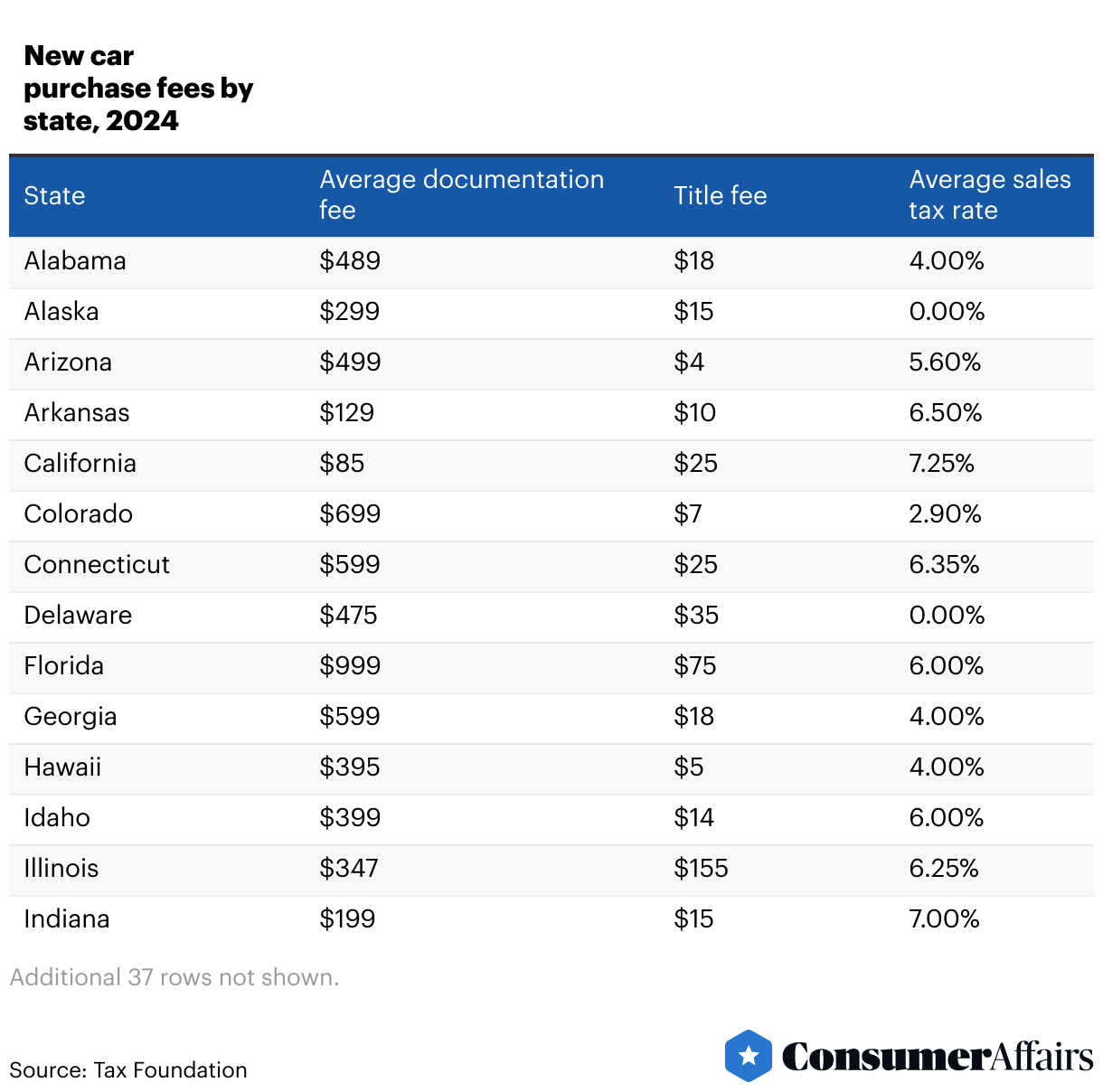
A dealer may also charge a documentation fee. That fee differs by dealer and state. Ask whether the listed price includes dealer fees.

Can I buy a car from a private seller in another state?
Yes, but private sales require more care. You must verify the seller, the title, the vehicle condition, and the transfer rules yourself.
Before paying, inspect the title for:
- The seller’s name
- Correct vehicle identification number, or VIN
- No missing lien release
- No crossed-out information
- No signs of alteration
- Correct mileage information
- Brand information, such as salvage, rebuilt, flood, or lemon law
A lien means a lender or another party may have a legal claim to the car. Do not buy the car until the lien is released or the lender provides a safe payoff process.
You should also get:
- A signed bill of sale
- An odometer disclosure when required
- Maintenance records
- Copies of repair invoices
- Both keys, if available
- The owner’s manual
- A lien release, if applicable
- A temporary permit or legal transport plan
Use a payment method that creates a record. Be careful with wire transfers, gift cards, cryptocurrency, and pressure to pay quickly. If the seller refuses an independent inspection, treat that as a warning sign.


How do I check an out-of-state car before buying it?
A pre-purchase inspection is one of the best ways to reduce risk. Have an independent mechanic inspect the car near the seller. The mechanic should not work for the seller or the dealership.
Ask the mechanic to check:
- Frame or structural damage
- Flood or fire damage
- Engine and transmission leaks
- Brake and tire condition
- Suspension and steering
- Warning lights
- Air-conditioning operation
- Battery and charging system
- Odometer consistency
- Signs of poor repairs
- Recall-related concerns
A vehicle history report can help, but it is not a substitute for an inspection. History reports may not show every accident, repair, flood event, or title problem.
Check the VIN through the National Highway Traffic Safety Administration’s recall lookup tool. You can also review title brands through approved vehicle-history services and, where available, the National Motor Vehicle Title Information System.
A clean title does not prove that a car has never been damaged. Some damage is not reported to insurers or state agencies. A mechanic’s inspection adds a second layer of protection.

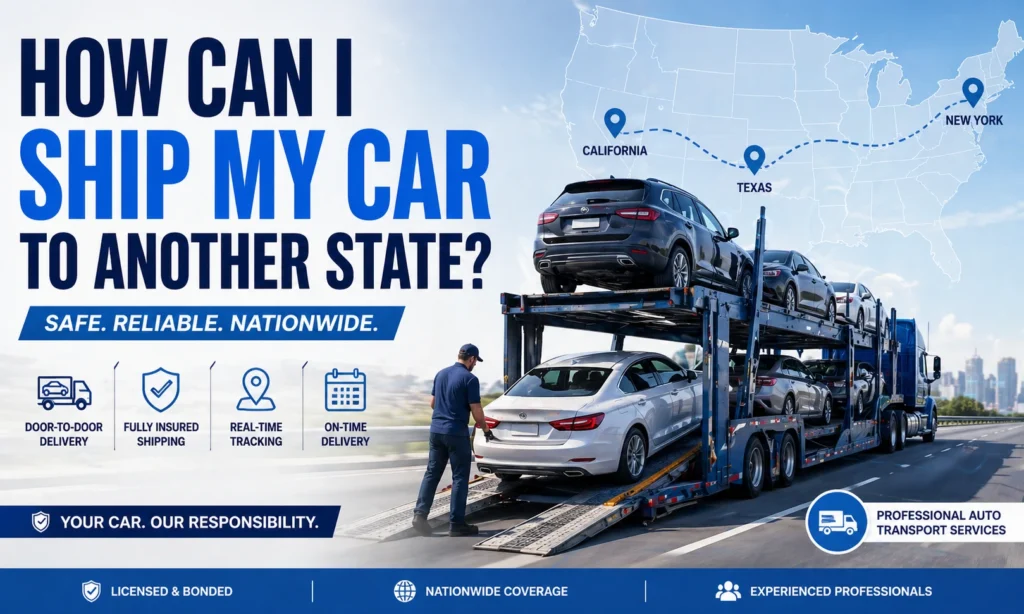
How do I transport the car to my state?
You have three common options:
| Transport method | Main benefit | Main risk or cost |
|---|---|---|
| Drive it home | Often the lowest transport cost | Requires legal tags, insurance, and a roadworthy car |
| Hire an open carrier | Usually less costly than enclosed shipping | Vehicle is exposed to road dust and weather |
| Hire an enclosed carrier | More protection for a valuable car | Usually costs more |
If you drive the car home, confirm that the temporary tag is valid in every state on your route. A permit issued by the seller’s state may have limits. Carry the bill of sale, title documents, insurance card, and temporary registration.
If you ship the car, ask the carrier:
- Is the carrier licensed and insured?
- Is the quote binding or estimated?
- What damage coverage applies?
- Is inspection required at pickup and delivery?
- Are personal items allowed inside the vehicle?
- What happens if delivery is delayed?
Photograph the car from all sides before shipment. Take close photos of existing scratches, wheels, glass, and the interior. Compare the car with the delivery inspection report.

What documents do I need to register an out-of-state car?
Your home-state DMV may ask for some or all of these documents:
- Original title or electronic title transfer
- Bill of sale
- Purchase contract
- Odometer disclosure
- Proof of identity
- Proof of address
- Proof of insurance
- Temporary registration
- VIN inspection form
- Safety inspection certificate
- Emissions test result
- Sales-tax receipt
- Lienholder information
- Power of attorney, if someone files for you
Requirements differ widely. For example, some states require an out-of-state VIN inspection. Others require a safety inspection or emissions test based on the vehicle’s age, fuel type, or registration county.
Call the DMV before you travel to buy the car. Ask for the exact title and registration checklist for an out-of-state purchase. Written guidance on the agency’s official website is useful, but unusual cases may require a phone call.
Keep copies of every document and payment receipt. Store the originals in a safe place while the title transfer is pending.


Do I need insurance before I drive the car home?
Usually, yes. Arrange insurance before driving the car on public roads. Your insurer may provide temporary coverage when you replace or add a vehicle, but the time limit and conditions vary.
Give the insurer:
- VIN
- Purchase date
- Vehicle year, make, and model
- Your home address
- Lienholder details
- Planned use of the vehicle
Ask when coverage starts. Do not assume that a policy begins simply because you requested a quote.
If you ship the car, confirm whether your own policy covers the vehicle during transport. The carrier’s insurance may cover damage caused by the carrier, but its limits and exclusions matter.
You may not be able to register the car without proof of insurance. Driving without required insurance can lead to fines, license problems, or denial of a claim.
Can I finance a car bought in another state?
Yes, but financing can add extra steps. A lender will usually want the title to show its lien. The lender may also have rules about the dealer, vehicle age, mileage, or state of registration.
Before choosing a loan, ask:
- Does the lender finance cars bought across state lines?
- Who sends the title to the lender?
- How will the lien appear on the title?
- Does the lender require a specific dealer?
- Can the loan fund a private-party purchase?
- Are transport and registration fees included?
- What happens if the title is delayed?
Private-party financing may require a bank inspection, payoff letter, title verification, or direct payment to the existing lienholder. These steps can take longer than dealer financing.
Do not send a seller the full amount based only on a promise that the title will arrive later. If a lender holds the title, confirm the payoff process with the lender directly.

What are the risks of buying a car in another state?
The main risks involve paperwork, vehicle condition, and limited legal remedies.
Title problems
The title may have a lien, incorrect information, or a brand that affects value and registration. Review it before payment.
Hidden damage
A car may look clean after cosmetic repairs but have flood, frame, or mechanical damage. Use an independent inspection.
Registration delays
Missing documents can delay plates and title issuance. Ask the DMV for its checklist before buying.
Unexpected taxes and fees
A low advertised price may not include tax, shipping, dealer fees, inspection costs, or registration charges. Calculate the full cost before comparing cars.
Limited return rights
Many used-car sales are final unless the contract provides a return period or state law gives you a specific right. Do not assume that distance creates a return right.


Warranty limits
A manufacturer warranty may apply across the United States, but dealer warranties and service contracts can have limits. Read the written warranty for coverage, exclusions, and repair locations.
Is buying a car in another state worth it?
It can be worth it when the car is rare, the price difference is large, or the buyer has access to a trusted inspection and clear paperwork.
It may not be worth it when the savings are small. Add these costs before deciding:
- Travel
- Temporary tags
- Fuel
- Shipping
- Inspection
- Sales tax
- Title and registration
- Dealer or document fees
- Financing costs
- Repairs discovered after delivery
Hypothetical cost comparison
Suppose an out-of-state car costs $2,000 less than a similar car near home. You then spend:
- $900 on shipping
- $250 on inspection and travel
- $700 in fees and registration costs
Your apparent savings falls to $150 before any repair. The cheaper car may still be the better choice, but the full calculation changes the decision.
Compare the out-the-door cost, not only the listing price.

A safe checklist for buying a car across state lines
Use this checklist before sending money:
- Confirm the car’s VIN.
- Check the title and lien status.
- Review a vehicle history report.
- Get an independent inspection.
- Ask whether the car has a salvage, flood, rebuilt, or other brand.
- Get a written out-the-door price.
- Confirm tax and registration treatment.
- Check temporary tag rules.
- Arrange insurance.
- Confirm the payment and title process.
- Read the sales contract and Buyers Guide.
- Photograph the vehicle before transport.
- Keep copies of all documents.
- Contact your home-state DMV before purchase.
The transaction is in good shape when you know who holds the title, where tax will be paid, how the car will reach your state, and what documents your DMV requires.

Frequently asked questions
Can I buy a car in another state and register it at home?
Yes. You usually register it in the state where you live. That state may require tax payment, a VIN inspection, emissions testing, safety testing, proof of insurance, and other documents.
Can I avoid sales tax by buying a car in another state?
Usually not. Your home state may charge use tax when you title and register the vehicle. It may provide credit for tax already paid, but the rules vary.
Can I drive an out-of-state car home without plates?
Only if you have a valid temporary permit, temporary tag, or another form of legal authorization. Requirements vary by state and by travel route. Confirm the rules before driving.
Is it safer to buy from a dealer than a private seller?
A dealer may provide more paperwork support and legal disclosures, but a dealer sale is not automatically risk-free. A private sale may cost less but places more responsibility on you to verify the title, condition, and payment process.


What if the DMV rejects my title paperwork?
Ask the DMV for the specific reason in writing. Common causes include a missing lien release, incorrect VIN, incomplete odometer statement, unpaid tax, or a title that does not meet your state’s requirements. Contact the seller, lender, or dealer before making further payment.
Conclusion
You can buy a car in another state, but the safest plan is to treat it as a purchase plus a separate registration project. Confirm the title, inspect the car, calculate the full cost, arrange insurance, and check your home-state DMV rules before paying.
Your next step is simple: call the DMV where you live and ask for its current checklist for titling and registering an out-of-state vehicle. Then compare the car’s complete delivered cost with similar cars near home.
