

You can spot a bad alternator through dim lights, warning lamps, weak starts, and low charging voltage.
Knowing how can you tell if your car alternator is bad can save you from a sudden breakdown. The alternator charges the battery while the engine runs and powers systems such as the headlights, radio, engine computer, and heated seats. When it starts to fail, your car may give small warnings before it stops.
This guide explains the most reliable signs, safe voltage tests, common causes, and the difference between an alternator problem and a weak battery. You will also learn when a simple home check is enough and when a professional electrical test is the smarter choice.
What does a car alternator do?
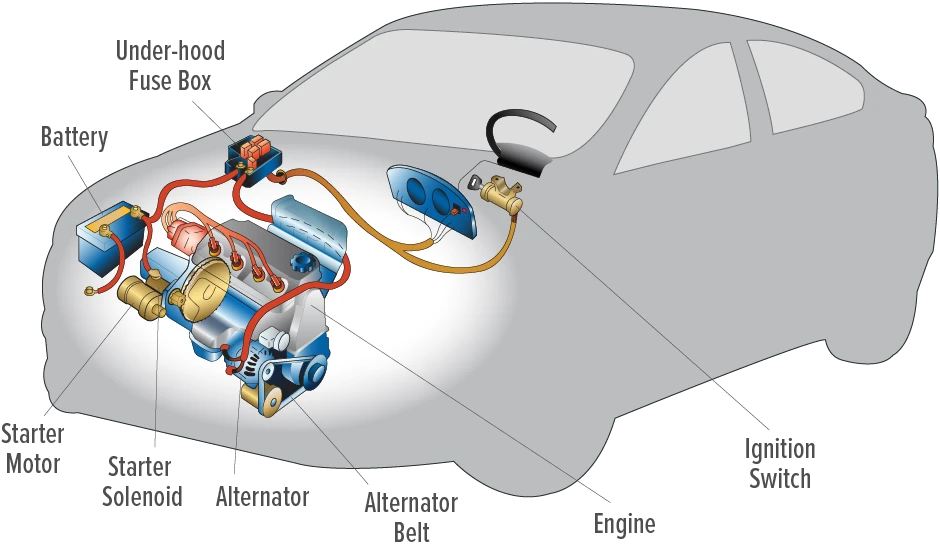
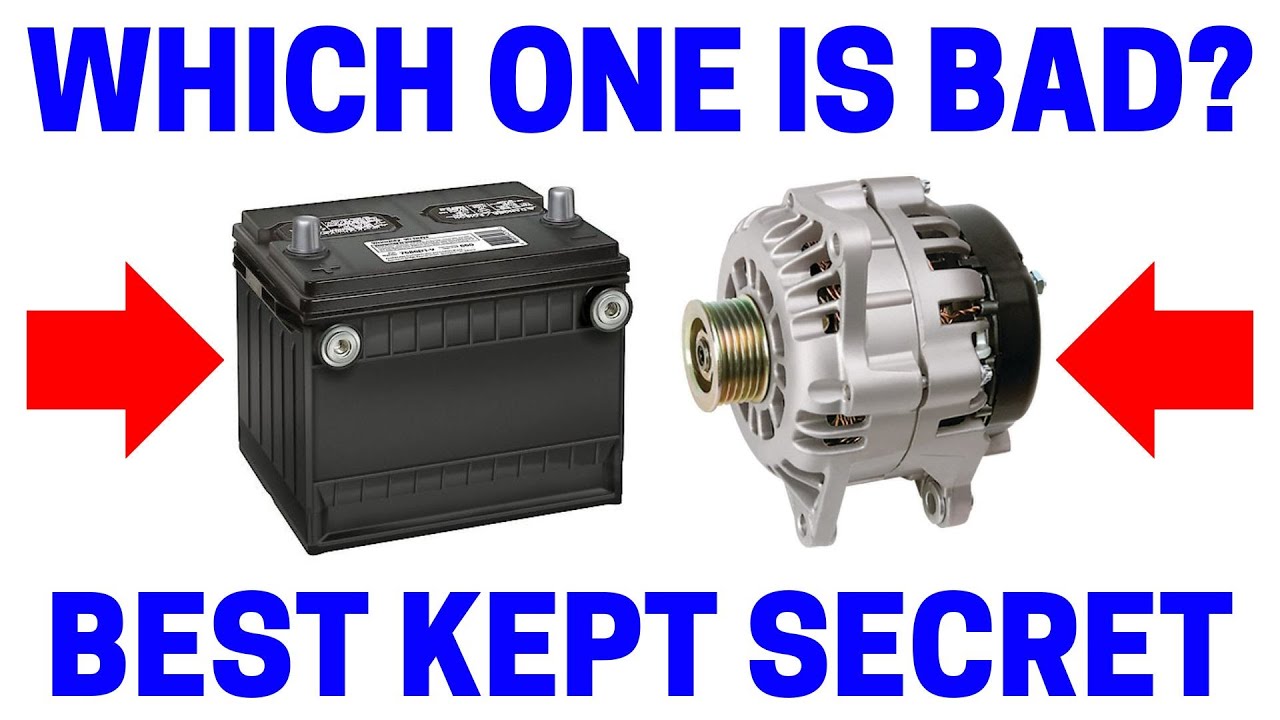
The alternator is a small generator driven by the engine. A belt spins its pulley, and the alternator changes mechanical energy into electrical energy. That power runs the car’s electrical parts and recharges the battery.


The battery mainly helps start the engine. Once the engine is running, the alternator should supply most of the electrical power. Think of the battery as a water tank and the alternator as the pump that keeps it full.
A typical alternator system includes:
- Alternator assembly
- Serpentine or drive belt
- Voltage regulator
- Battery cables and ground connections
- Battery
- Charging warning circuit
Modern cars may use smart charging systems. These systems can change the charging voltage based on battery temperature, electrical load, and driving conditions. Because of this, one voltage reading should not always be treated as a final diagnosis.

How can you tell if your car alternator is bad?
The clearest method combines symptoms, a visual check, and voltage testing. One symptom alone does not prove the alternator has failed. Several symptoms together make the diagnosis much more likely.
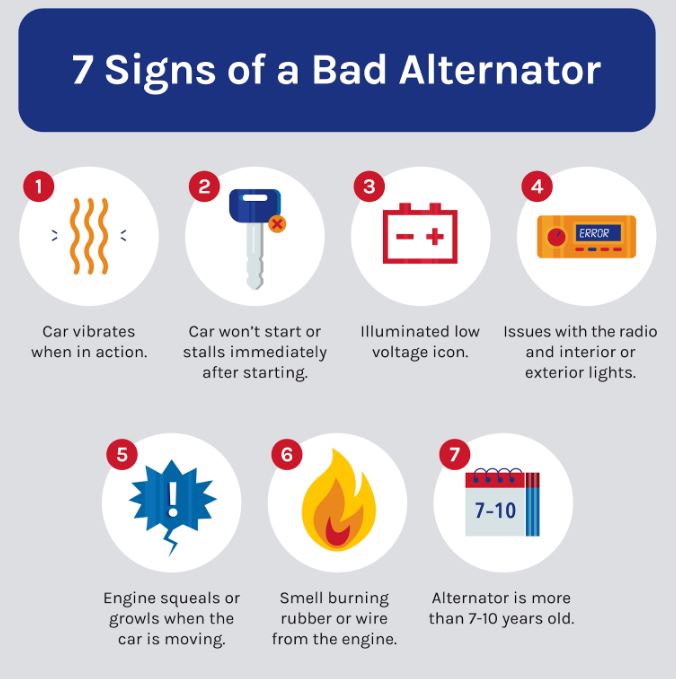
Watch for a battery or charging warning light
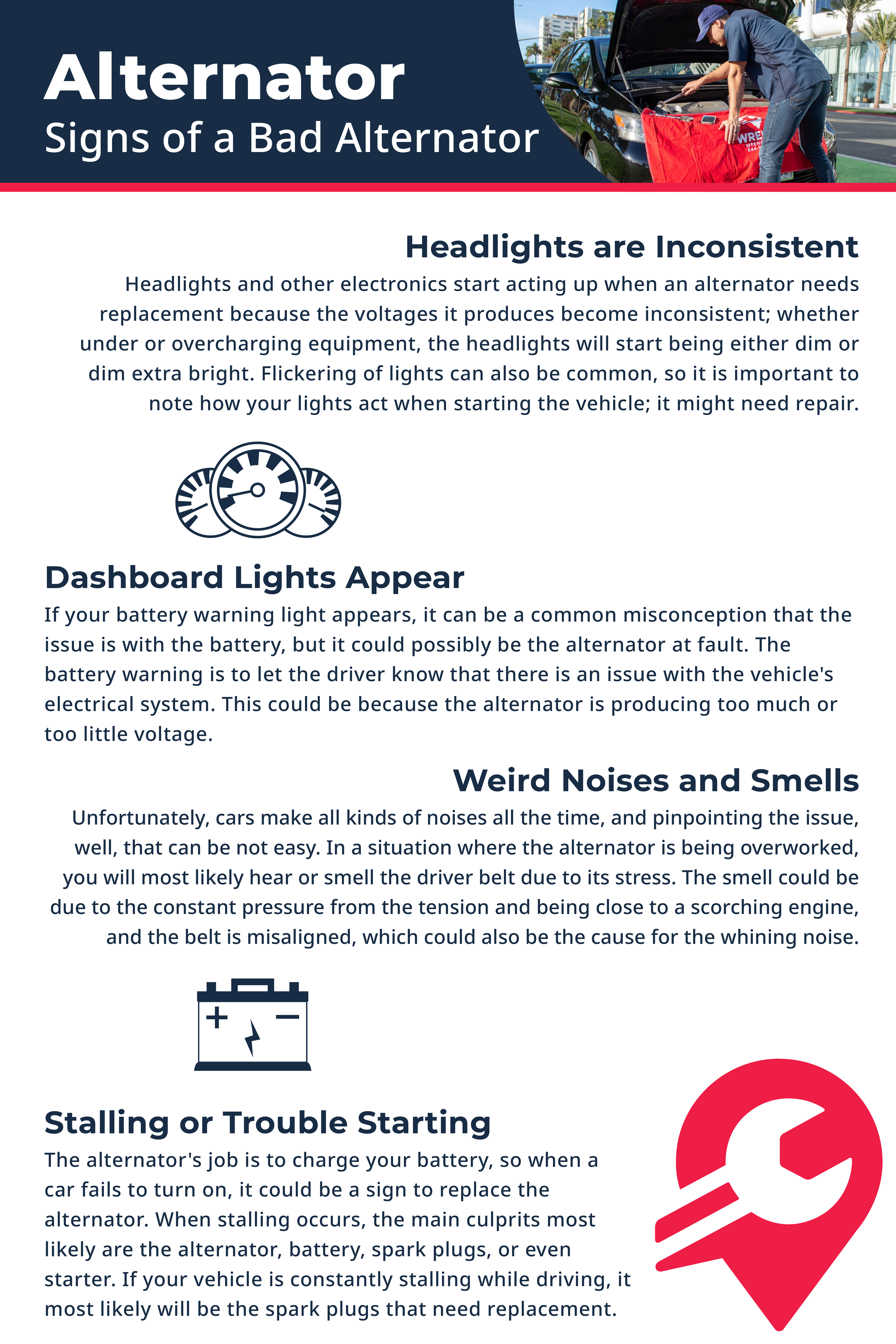
The battery-shaped light on the dashboard often means a charging system fault. It does not always mean the battery itself is bad. It may point to the alternator, voltage regulator, wiring, belt, or a poor connection.
If the light appears while driving, turn off nonessential electrical items. Avoid driving far, because the car may soon run only on stored battery power.
Look for dim or flickering lights
Headlights that become dim at idle or flicker when you use the heater fan may signal unstable charging. Interior lights, dashboard lights, and instrument displays may also pulse.
A failing voltage regulator can cause voltage to rise and fall. This may make lights brighter when you press the gas and dimmer when the engine slows.
Listen for unusual sounds
A worn alternator bearing can make a growling, whining, or grinding noise. A slipping belt may squeal, especially during cold starts or when you switch on the air conditioner.
Do not place your hands near a moving belt. Listen with the hood open from a safe distance, and shut the engine off before touching anything.


Notice electrical accessories that work poorly
A weak alternator can cause several systems to act strangely. You may notice:
- Slow power windows
- A weak blower fan
- A radio that cuts out
- Heated seats that lose power
- Warning messages on the dashboard
- Strange behavior from electronic gauges
These signs can also come from wiring faults or computer issues. Still, several failing accessories at once deserve a charging system test.
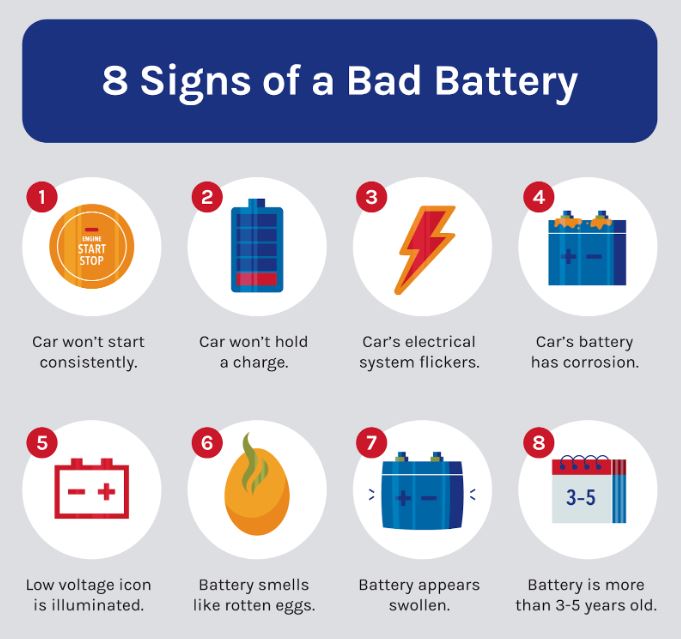
Pay attention to repeated dead batteries
If the battery keeps going flat after replacement, the alternator may not be recharging it. A loose cable, bad ground, parasitic drain, or short drive pattern can cause the same issue.
A new battery cannot fix an alternator that is not producing enough power. It may only hide the problem for a few days.
Smell hot rubber or electrical insulation
A slipping belt can create a hot rubber smell. An overloaded or failing alternator may produce a hot electrical smell. Stop driving if you see smoke or smell burning insulation.
How to test an alternator with a multimeter
A digital multimeter gives you a useful first check. You can buy one at most auto parts stores, but use care around the running engine.
Step 1: Check the battery with the engine off
Park the car, turn off all accessories, and let the vehicle sit for at least 20 minutes if possible. Set the multimeter to DC volts and touch the red probe to the positive battery post and the black probe to the negative post.
A healthy, fully charged 12-volt battery often reads close to 12.6 volts. A reading around 12.2 volts suggests partial discharge. A reading below 12 volts indicates a very low charge or a battery problem.
This test checks battery charge, not alternator output.
Step 2: Check voltage with the engine running
Start the engine and measure the battery again. Many conventional charging systems show about 13.5 to 14.8 volts with the engine running. The exact number depends on the vehicle and its charging strategy.
A reading near the battery’s resting voltage may mean the alternator is not charging. However, smart charging systems may temporarily show lower voltage, so compare the result with the vehicle service information.
Step 3: Add an electrical load
Turn on the headlights, blower motor, rear defroster, and heated seats if available. Watch the meter for a large voltage drop.
The voltage should remain reasonably stable. If it falls close to battery voltage and stays there, the alternator may not meet the electrical demand.
Step 4: Check for unstable readings
Watch the meter at idle and at about 1,500 to 2,000 rpm. Large swings can suggest a regulator problem, diode fault, loose connection, or belt issue.


Do not disconnect the battery while the engine runs. Older people sometimes used this as a quick test, but it can damage modern electronic modules.
Step 5: Test voltage drop in the cables
A good alternator can appear weak if power cannot travel through corroded cables. A technician can test voltage drop between the alternator output terminal and the battery positive post, then between the alternator case and battery negative post.
High voltage drop points to resistance in a cable, ground strap, fuse, or connection. Cleaning or replacing a cable may solve the issue without replacing the alternator.

How can you tell if your car alternator is bad versus the battery?
An alternator and a battery work as a team, so their symptoms often overlap. The battery stores energy for starting. The alternator restores that energy and supports the car after the engine starts.
A battery problem is more likely when:
- The engine cranks slowly after the car sits overnight
- The battery case is swollen or leaking
- The battery is several years old
- The car starts with a jump but fails again after sitting
- Charging voltage is normal while the engine runs
An alternator problem is more likely when:
- The battery light appears while driving
- Lights dim while the engine runs
- The battery dies again after a long drive
- The engine stalls after electrical accessories stop working
- Running voltage stays near 12 volts
Both parts can fail together. A weak alternator may repeatedly drain and damage a battery. For this reason, a proper repair should include a battery test and a charging system test.

Common causes of alternator failure
Alternators do not always fail because of age alone. Heat, vibration, moisture, and high electrical demand can shorten their service life.
Worn brushes and slip rings
Many alternators use carbon brushes that transfer current to the rotating part. These brushes wear over time. The alternator may charge intermittently before it stops charging completely.
Failed voltage regulator
The regulator controls charging voltage. If it fails, the system may undercharge or overcharge. Overcharging can damage the battery and sensitive electronic parts.
Bad diode
Alternators use diodes to change alternating current into direct current. A damaged diode can reduce output and create an electrical drain while the car is parked.
Loose or damaged belt
A loose, cracked, or glazed serpentine belt may spin the alternator too slowly. A worn belt tensioner can cause the same problem.
Corroded cables and grounds
Battery terminals, ground straps, and alternator cables can corrode. This creates resistance and may mimic a failed alternator.


Excessive heat
High engine temperatures can damage internal alternator parts. Oil leaks and coolant leaks may also contaminate the unit.
Heavy electrical demand
Aftermarket lights, audio amplifiers, winches, and other accessories can place more demand on the charging system than the original alternator can handle.

Can you drive with a bad alternator?
You may be able to drive for a short time, but it is risky. If the alternator stops charging, the car runs on battery power alone. The driving time may be a few minutes or several hours, depending on battery condition and electrical load.
The engine can stall when the battery voltage becomes too low. Some vehicles may also lose power steering assistance, braking support, lights, or other important functions.
If the charging warning light comes on:
- Turn off the air conditioner, heated seats, stereo, and other nonessential loads.
- Avoid stopping the engine in an unsafe place.
- Drive to a repair shop only if it is very close and the car remains stable.
- Call for roadside help if lights fade, gauges act strangely, or the engine begins to stumble.
Do not continue driving if you smell burning, see smoke, hear severe belt noise, or notice overheating.
How much does alternator repair cost?
The cost depends on the vehicle, alternator type, labor rates, and whether other parts failed. A simple cable or belt repair costs much less than alternator replacement.
A replacement may involve:
- A new alternator
- A remanufactured alternator
- A serpentine belt
- A belt tensioner
- Battery replacement
- Diagnostic labor
- Charging system cables or fuses
A remanufactured unit can cost less, but quality varies. Ask about the warranty and whether the unit was tested under load. A new original-equipment unit often costs more but may offer better fit and long-term reliability.
Before approving replacement, ask the shop to show the test results. A good diagnosis should identify whether the fault is low output, excess ripple, a bad diode, poor wiring, or a weak battery.
Mistakes to avoid when diagnosing an alternator
A few common mistakes can waste money or create a safety problem.
Replacing the battery first without testing
A dead battery is easy to blame, but it may be the victim rather than the cause. Test both the battery and alternator before buying parts.
Trusting one voltage reading
Voltage changes with temperature, engine speed, and smart charging controls. Use symptoms, resting voltage, running voltage, and load testing together.
Ignoring cables and grounds
A clean-looking battery terminal can still have corrosion between the post and clamp. Check the positive cable, negative cable, engine ground, and alternator connection.


Testing by removing the battery cable
Never remove a battery cable while the engine runs. The voltage spike can harm the engine computer, airbag system, stereo, and other electronic parts.
Using a cheap replacement without checking fit
The alternator must match the car’s output rating, pulley design, plug, and charging system. The cheapest part may create new problems.
In practical repair work, one of the most common wrong turns is replacing the alternator before checking the belt and ground cable. A five-minute inspection can prevent an expensive guess.
How to prevent charging system problems
You cannot prevent every alternator failure, but regular care helps.
- Inspect the serpentine belt during routine service.
- Keep battery terminals clean and tight.
- Check for oil or coolant leaks near the alternator.
- Test the battery before extreme winter or summer weather.
- Use the correct battery type for vehicles with start-stop systems.
- Make sure aftermarket electrical accessories are installed correctly.
- Repair warning lights instead of ignoring them.
Short trips can keep the battery undercharged, especially in cold weather. A healthy alternator still needs enough driving time to replace the energy used during starting.
Frequently Asked Questions About How Can You Tell If Your Car Alternator Is Bad
How can you tell if your car alternator is bad without a multimeter?
Look for a battery warning light, dim headlights, flickering lights, slow accessories, strange electrical behavior, or repeated dead batteries. These signs suggest a charging issue, but a multimeter or professional charging test is needed for a reliable diagnosis.
Can a bad alternator cause a car not to start?
Yes. A failed alternator can drain the battery until the starter no longer has enough power. A jump-start may get the engine running, but the car can stall again if the alternator is not charging.
What voltage should a car alternator produce?
Many traditional systems produce about 13.5 to 14.8 volts with the engine running. Smart charging systems may use a wider range, so the vehicle’s service data and a load test provide a better answer.
Can a bad battery look like a bad alternator?
Yes. Both problems can cause slow cranking, dim lights, and starting trouble. Testing the battery with the engine off and the charging system with the engine running helps separate the two.
How long can a car run with a bad alternator?
There is no dependable time limit. The vehicle may run for only a few minutes or may continue longer, depending on battery size, condition, temperature, and electrical demand.
Will a new battery fix a bad alternator?
No. A new battery may temporarily mask the issue, but it will eventually discharge if the alternator does not recharge it. Both parts should be tested before replacement.
Is alternator noise always a sign of failure?
Not always. Belt tensioners, idler pulleys, and other accessories can make similar noises. A mechanic should isolate the sound before condemning the alternator.
Conclusion
The best way to understand how can you tell if your car alternator is bad is to combine warning signs with testing. Dim lights, a battery warning lamp, weak electrical accessories, unusual noise, and repeated dead batteries all deserve attention.
Start with a visual inspection, measure battery voltage, and check running voltage under electrical load. Remember that smart charging systems can behave differently, and wiring faults can imitate alternator failure.


Do not ignore a charging warning light. Arrange a proper battery and alternator test before the car leaves you stranded, and share your experience or questions in the comments.
