

Family medicine is a type of primary care, but the terms do not mean exactly the same thing. Primary care is the broad category. Family medicine is one medical specialty within that category.
In the United States, a family medicine doctor can care for people at every stage of life. Primary care may also come from an internal medicine doctor, pediatrician, nurse practitioner, physician assistant, or another qualified clinician. The right choice depends on your age, health needs, family situation, insurance plan, and the services available at the practice.

What is primary care?
Primary care is the first point of contact for most everyday health needs. It includes preventive care, diagnosis, treatment, health education, and long-term care for common conditions.
A primary care clinician may help with:


- Annual wellness visits
- Vaccines and routine screenings
- Coughs, infections, rashes, and minor injuries
- High blood pressure and diabetes
- Mental health concerns
- Medication management
- Health advice and risk reduction
- Referrals to specialists
- Follow-up after hospital care
The Agency for Healthcare Research and Quality describes primary care as care that is accessible, continuous, comprehensive, and coordinated. In simple terms, primary care is meant to be a steady home base for your health.
Primary care is not defined only by the clinician’s job title. It also describes the role the clinician plays. A doctor who gives ongoing, broad care and helps coordinate specialty services is providing primary care.
Who can provide primary care?
In the United States, primary care may be provided by:
- Family medicine physicians
- Internal medicine physicians
- Pediatricians
- Geriatricians
- Nurse practitioners
- Physician assistants
- Certified nurse-midwives in suitable settings
The exact services vary by state law, training, practice policy, and the clinician’s experience. A pediatrician, for example, provides primary care for children but usually does not treat adults. An internal medicine doctor usually treats adults and does not provide routine pediatric care.
Primary care is the broader service. Family medicine is one trained specialty that commonly provides it.

What is family medicine?
Family medicine is a medical specialty focused on comprehensive care for people of all ages. Family physicians train to care for children, teenagers, adults, and older adults.
They may treat several generations of one family. However, the word “family” does not mean that relatives must use the same doctor. It refers mainly to the specialty’s broad scope and life-span approach.
Family medicine physicians complete medical school and residency training. In the United States, family medicine residency usually includes training in areas such as:


- Adult medicine
- Pediatrics
- Emergency care
- Women’s health
- Newborn care
- Surgery
- Psychiatry and behavioral health
- Geriatric medicine
- Community medicine
The American Board of Family Medicine describes family medicine as a specialty that provides continuing, comprehensive health care for individuals and families.
A family doctor may manage a person’s care for many years. That continuity can help the clinician understand a patient’s medical history, family risks, lifestyle, and treatment goals.
Does every family doctor provide the same services?
No. Family medicine training is broad, but each practice may offer a different range of care.
For example, one family medicine office may provide:
- Prenatal care
- Birth control counseling
- Skin procedures
- Minor office surgery - Sports physicals
- Joint injections
- Basic fracture care
Another office may focus mainly on adult primary care and refer maternity care, procedures, or complex conditions elsewhere.
Ask the practice about its services before making an appointment. Also check whether the clinician is accepting new patients and participates in your health plan.

Family medicine vs. primary care: What is the difference?
The main difference is category versus specialty.
| Term | What it means | Typical age group | Main role |
|---|---|---|---|
| Primary care | A broad type of ongoing health care | Depends on the clinician | Prevention, common illnesses, chronic care, and coordination |
| Family medicine | A physician specialty | All ages | Comprehensive care for children and adults |
| Internal medicine | A physician specialty focused on adult medicine | Adults | Prevention and treatment of adult health conditions |
| Pediatrics | A physician specialty focused on children | Infants through adolescents | Prevention and treatment for children |
| Geriatric medicine | A specialty focused on older adults | Older adults | Care for complex aging-related needs |
This means the following statements can all be true:
- A family medicine doctor provides primary care.
- A primary care doctor may not be a family medicine doctor.
- An internal medicine doctor can be a primary care doctor.
- A pediatrician can be a child’s primary care doctor.
- A nurse practitioner or physician assistant may provide primary care under applicable state and practice rules.
The terms overlap, but they are not interchangeable.
A simple example
Suppose a 45-year-old patient needs blood pressure care, a cholesterol check, a flu vaccine, and help with sleep problems.
That patient might see:
- A family medicine physician
- An internal medicine physician
- A nurse practitioner in a primary care clinic
- A physician assistant working in primary care
All four may provide appropriate primary care. A family medicine physician may also care for the patient’s child or parent, but that is an added feature of the specialty—not a requirement for primary care.


Is a family medicine doctor a primary care doctor?
Usually, yes. Family medicine doctors are commonly primary care doctors because their training prepares them to provide broad, ongoing care.
A family physician may serve as your main clinician for:
- Routine checkups
- Preventive screenings
- Acute illnesses
- Chronic disease care
- Medication review
- Basic mental health care
- Reproductive and sexual health
- Health counseling
- Referrals
Some family physicians also provide hospital care, emergency care, nursing home care, or maternity services. Those services depend on the doctor’s current practice and local medical system.
A family medicine doctor may not be the best or only clinician for every condition. A person with a rare disease, complex cancer, or severe heart problem may need a specialist. The family physician can still help coordinate that care and manage other health needs.
Is primary care the same as a primary care physician?
Not always.
“Primary care” describes a type of care. “Primary care physician” usually means a medical doctor who provides that care. In everyday use, people may use “primary care provider,” or PCP, more broadly to include:
- Medical doctors
- Doctors of osteopathic medicine
- Nurse practitioners
- Physician assistants
Your health plan may use “primary care provider” as an administrative term. Its rules may allow you to select a physician, nurse practitioner, physician assistant, or another clinician as your PCP.
Check your insurance documents for the exact definition. Some plans require you to name a PCP before they cover certain services or specialist visits. Other plans allow direct access to specialists.

Which is better: family medicine or another type of primary care?
Neither is automatically better. The best choice depends on what you need from your regular clinician.
Family medicine may fit you if:
- You want one office for children and adults.
- You value care across different life stages.
- You want a clinician who can treat many common conditions.
- You prefer long-term care in a community practice.
- You want help with prevention and specialist coordination.
- You may need some women’s health or minor procedure services.
Internal medicine may fit you if:
- You are an adult seeking adult-focused care.
- You have several chronic conditions.
- You prefer a practice centered on adult health.
- You may later need a subspecialist in cardiology, endocrinology, or another field.
Internal medicine doctors, often called internists, are trained to diagnose and treat adult health problems. Some work as primary care doctors, while others work mainly as hospitalists or specialists.
Pediatrics may fit your child if:
- Your child needs age-specific preventive care.
- You want care focused on growth and development.
- Your child has school, behavioral, or developmental concerns.
- Your family prefers a child-focused office.


A family medicine doctor may also provide excellent care for children. The better option depends on the doctor’s pediatric experience, the child’s needs, and the practice’s services.
A geriatric specialist may help when:
- An older adult has several interacting conditions.
- Medicines create a high risk of side effects.
- Falls, memory loss, frailty, or complex care needs are present.
- Care decisions involve function, safety, and quality of life.
A family physician or internist may continue to provide primary care while working with a geriatrician or other specialist.

How should you choose a primary care practice?
Start with your care needs, then check practical details. A convenient, accessible practice is more useful than a theoretically ideal office that you cannot visit.
1. Check your insurance network
Use your insurer’s directory, but confirm the information with the office. Provider directories can become outdated.
Ask:
- Is the clinician in network?
- Is the practice accepting new patients?
- Do I need to choose this clinician as my PCP?
- Do I need a referral for specialists?
- What will a routine visit cost?
2. Match the clinician to your age and needs
Ask whether the practice treats:
- Children
- Adults
- Older adults
- Pregnancy-related needs
- Mental health concerns
- Chronic conditions
- Preventive care needs
If you need care for more than one family member, ask whether the same practice accepts all of you.
3. Check access and continuity
Find out:
- How soon new patients can get an appointment
- Whether the practice offers same-day sick visits
- Who covers the office after hours
- How urgent concerns are handled
- Whether you can see the same clinician regularly
- How the office handles referrals and test results
Continuity matters because a clinician who knows your history may spot changes more easily. Access matters because delayed care can turn a small problem into a larger one.
4. Confirm the services offered
Do not assume that every family medicine or primary care office offers the same care. Ask about vaccines, lab testing, women’s health, pediatric care, procedures, behavioral health, and telehealth.
5. Prepare for the first visit
Bring or update:


- A list of medicines and supplements
- Allergies
- Major medical records
- Vaccine history
- Names of specialists
- Family medical history
- Your main health concerns
Write down your questions before the visit. Start with the issue that matters most to you.
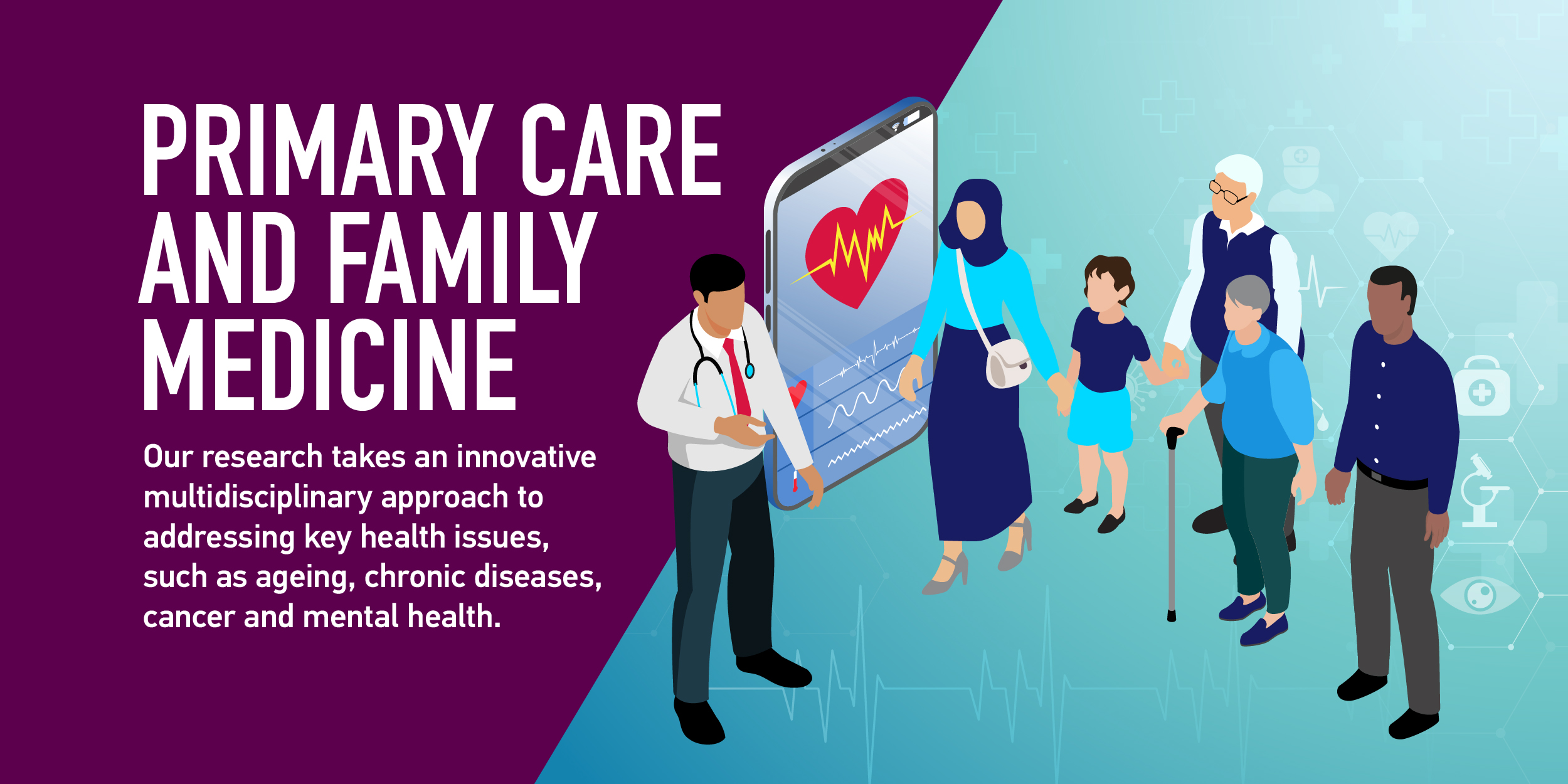
Common misunderstandings about family medicine and primary care
“Primary care only means yearly checkups.”
Primary care includes checkups, but it also includes care for illness, chronic conditions, mental health, prevention, and referrals.
“A family medicine doctor only treats families.”
Family physicians treat individual patients. You do not need to bring a relative or have children to see one.
“Family medicine is less specialized.”
Family medicine is a recognized physician specialty with its own residency training and board certification. Its focus is broad care across age groups rather than one organ system.
“An internist only works in a hospital.”
Some internists work in hospitals, but many provide outpatient primary care for adults.
“A primary care clinician can treat every problem.”
Primary care clinicians manage many common conditions, but they may refer you when a problem needs advanced testing, a procedure, or specialized treatment.
“I should wait for my primary care appointment for every symptom.”
Seek urgent or emergency care for severe symptoms. Examples include trouble breathing, chest pressure, signs of stroke, severe bleeding, sudden confusion, or a life-threatening allergic reaction. When in doubt, contact a health professional or emergency service rather than relying on general online information.
Frequently asked questions
Can I use a family medicine doctor as my primary care provider?
Yes. A family medicine doctor can usually serve as your primary care provider. Confirm that the doctor accepts your insurance and offers the services you need.
Can a family medicine doctor treat adults?
Yes. Family medicine physicians train to care for adults as well as children and older adults. The office may set limits based on its services and staffing.
Can a family medicine doctor treat children?
Often, yes. Many family medicine practices care for children. Ask about age limits, newborn care, vaccines, and developmental visits.
Is family medicine the same as general practice?
The terms can overlap in casual conversation, but they may describe different training systems depending on the country and context. In the United States, family medicine is a formal physician specialty with accredited residency training and board certification. Ask the individual practice about its clinician’s training and services.
Do I need a primary care doctor if I feel healthy?
Regular primary care can help with prevention, vaccines, screening, and early detection even when you feel well. The timing and type of visits depend on your age, risk factors, medical history, and current guidance.
Can I see a specialist without a primary care doctor?
Sometimes. Your insurance plan may require a referral, while other plans do not. A primary care clinician can still help organize your care, review results, and make sure different treatments fit together.
Conclusion
Family medicine and primary care are closely related, but they are not the same term. Family medicine is a physician specialty; primary care is a broad type of ongoing health care.


A family medicine doctor commonly provides primary care for people of all ages. Other primary care options include internal medicine doctors for adults, pediatricians for children, and qualified nurse practitioners or physician assistants.
To choose well, check the clinician’s training, services, availability, insurance status, and fit with your health needs. If you have complex symptoms or an urgent problem, contact a qualified health professional rather than relying on this general guide.
