

Introduction
In the United States, welding can be a good career for people who enjoy hands-on work, can follow strict safety rules, and want a trade that does not always require a four-year degree. Welders work in construction, manufacturing, shipbuilding, energy, transportation, repair, and many other American industries.
The career has real strengths. Training can be faster and less costly than college. Demand exists in many states. Skilled welders may earn more as they gain experience, pass specialty tests, join a union, travel, or move into inspection and supervision.
It also has limits. Welding can be hot, loud, tiring, and risky. Some jobs involve nights, overtime, outdoor work, or travel. Pay can vary widely by location, skill, industry, and type of weld.
Short answer: Welding is a good career for the right person, but it is not an easy job. It offers a practical path to skilled work, yet success depends on training, safety, physical stamina, and a willingness to keep learning.


What Does a Welder Do?
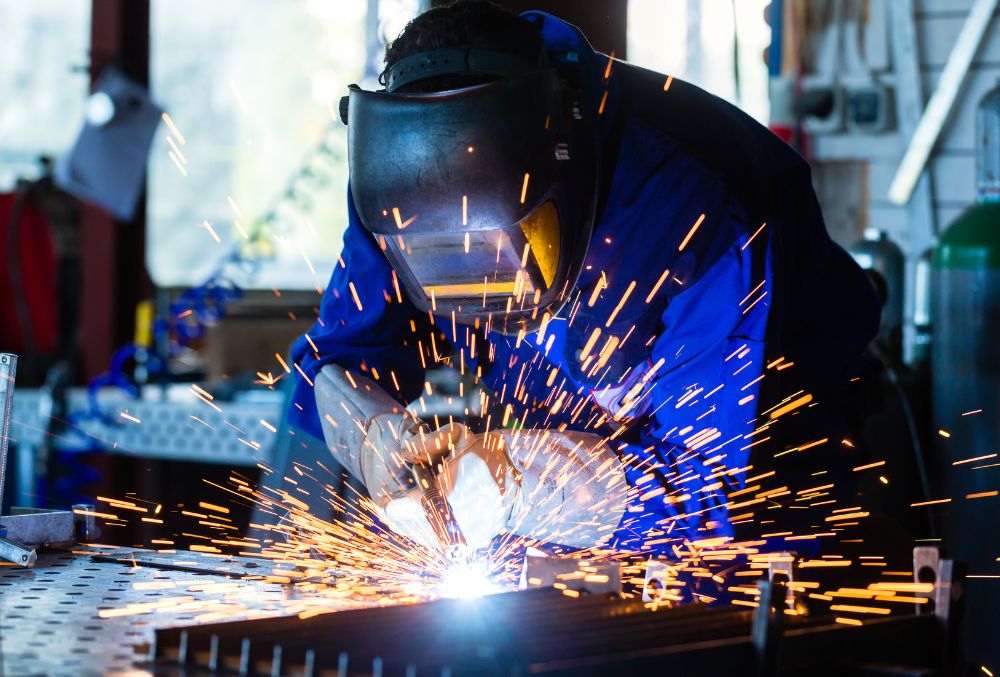
A welder joins metal parts by using heat, pressure, or both. The process melts a base metal, a filler metal, or both. As the joint cools, the parts form a strong bond.
Common welding processes include:
- SMAW, or stick welding: Common in construction, repair, pipelines, and outdoor work.
- GMAW, or MIG welding: Often used in manufacturing and fabrication.
- GTAW, or TIG welding: Used for precise work on materials such as stainless steel and aluminum.
- FCAW, or flux-cored arc welding: Useful for heavy steel and outdoor work.
- Oxyfuel welding and cutting: Used for some repair and cutting tasks.
A welder may do more than weld. Daily tasks can include:
- Reading blueprints and weld symbols
- Measuring and cutting metal
- Setting machine voltage, wire speed, gas flow, or amperage
- Cleaning and preparing metal
- Inspecting welds for cracks or weak spots
- Using grinders, saws, drills, and hand tools
- Recording work and following job procedures
- Working with inspectors, fitters, engineers, and supervisors
The exact job depends on the industry. A production welder may repeat the same weld for many hours. A pipe welder may work on complex joints in difficult positions. A structural welder may build bridges, buildings, tanks, or heavy equipment.
Is Welding a Good Career in the United States?
Welding is a good career when you value skilled work, steady improvement, and practical results. It is less attractive if you want a quiet office job, predictable hours, or work with little physical strain.
The U.S. Bureau of Labor Statistics groups welders with cutters, solderers, and brazers. Its Occupational Outlook Handbook reports median annual pay near $49,000 for this group in May 2023. The same BLS outlook projected a small employment decline from 2022 to 2032, but it still expected many openings because workers retire, change jobs, or leave the field.
That outlook gives a balanced picture. Welding is not a guaranteed high-income career. It is also not a dead-end trade. Employers still need people who can weld, fit, read plans, inspect work, and solve problems.
When welding is a strong career choice
Welding may suit you if you:
- Prefer hands-on work to desk work
- Like tools, machines, and mechanical tasks
- Can work carefully for long periods
- Accept heat, noise, fumes, and protective gear
- Want a trade with several industries to choose from
- Are willing to take tests and renew skills
- Want to enter the workforce without a four-year degree


When welding may be a poor fit
Think twice if you:
- Have trouble following safety rules every time
- Dislike repetitive work
- Need a low-noise or low-heat workplace
- Cannot tolerate standing, kneeling, climbing, or lifting
- Want fixed daytime hours in every job
- Have health limits that make respirators or heavy protective gear unsafe
The best answer is personal. Welding can provide a solid living, but the work conditions matter as much as the job title.

How Much Do Welders Make?
Welder pay in the United States depends on skill, location, industry, shift, overtime, and certification. A beginner may earn much less than an experienced pipe, aerospace, or underwater welder.
The BLS wage figure is a national median. It is not a promise for a new worker. Half of workers in the occupation earned less than the median, and half earned more. Local wages can differ sharply from the national figure.
| Career stage or role | Typical pay pattern | What can affect pay |
|---|---|---|
| Entry-level production welder | Often near the lower end of local wage ranges | Training, speed, quality, and shift |
| Skilled fabricator-welder | Often earns more than an entry worker | Blueprint reading, fit-up, multiple processes |
| Certified structural or pipe welder | May earn a higher rate | Weld test results, code work, location |
| Union welder | Pay may include strong benefits | Local agreement, classification, overtime |
| Welding inspector or supervisor | Can earn more than production roles | Experience, inspection knowledge, credentials |
| Traveling or shutdown welder | May receive higher total pay | Travel, per diem, long hours, job risk |
These categories are not official national pay bands. They are a practical way to understand why two welders can earn different amounts.
A simple pay comparison
Suppose a welder earns $24 per hour and works 40 hours each week:
$24 × 40 × 52 = $49,920 per year before taxes
This is a hypothetical calculation. It does not include overtime, unpaid time, insurance costs, retirement benefits, or time between jobs.
A worker earning $30 per hour at the same schedule would make:
$30 × 40 × 52 = $62,400 per year before taxes
The hourly rate is only part of the picture. A job with lower pay but health insurance, retirement contributions, paid training, and steady hours may be worth more than a job with a higher rate and no benefits.
Check local wage data before choosing a school or moving for work. Useful sources include the BLS Occupational Employment and Wage Statistics program, state labor departments, union locals, and current job postings.

What Are the Benefits of a Welding Career?
The main benefits are accessible training, varied work, and a clear path to higher skill.
1. You may not need a four-year degree
Many welding jobs require a high school diploma or equivalent, practical training, and an employer test. A community college, technical school, employer program, or apprenticeship can provide a starting point.


This does not mean training is free. Tuition, tools, protective gear, travel, and lost work time can add up. Compare the full cost before enrolling.
2. Welding skills transfer across industries
A welder may work in:
- Building construction
- Metal fabrication
- Heavy equipment repair
- Automotive manufacturing
- Aerospace manufacturing
- Ship and boat construction
- Oil and gas
- Power generation
- Railroad work
- Farm equipment
- Water and wastewater systems
- Maintenance and repair
A slow market in one industry does not always affect every other industry in the same way.
3. You can build a specialty
Specialty skills may improve your job options. Examples include:
- Pipe welding
- Structural steel
- Stainless steel
- Aluminum
- Pressure vessels
- Robotic welding support
- Welding inspection
- Underwater welding
- Welding education
A specialty usually requires more training and testing. It may also bring harder work or more travel.
4. You can advance without leaving the trade
A welding career does not have to end at production work. Possible next steps include:
- Lead welder
- Welding foreman
- Welding inspector
- Welding supervisor
- Welding instructor
- Welding engineer, with additional education
- Quality assurance technician
- Fabrication estimator
- Welding business owner
5. The work can feel useful
Many welders like seeing a finished product. A weld may become part of a truck, building, machine, ship, bridge, or pressure system. That visible result can make the work satisfying.

What Are the Disadvantages of Being a Welder?
The main disadvantages are exposure to hazards, physical strain, variable schedules, and uneven pay.
Safety risks
Welding can expose workers to:
- Metal fumes and gases
- Ultraviolet and infrared radiation
- Burns and hot metal
- Electric shock
- Fire and explosions
- Eye injuries
- Cuts and crush injuries
- Noise
- Awkward postures
- Heavy lifting
The Occupational Safety and Health Administration requires employers to control workplace hazards. Controls may include ventilation, fire prevention, protective equipment, training, safe storage, and proper work procedures.
A welding hood does not remove every risk. Respiratory protection must be selected and used under a proper workplace program. Welding on coated, painted, galvanized, or unknown metal can create added hazards.
Never weld a container unless a qualified process confirms it is safe and free of flammable material.

Physical demands
Welders may stand for long periods. They may crawl into tight spaces, climb ladders, work overhead, or hold tools in awkward positions. Repeated grinding and lifting can also strain the hands, shoulders, back, and knees.
Good technique helps, but it does not remove the physical demands. Ask an employer about lifting limits, shift length, ventilation, noise, and break schedules.
Work schedules may change
Some employers run night shifts or rotating shifts. Shutdown, construction, marine, and field work may require travel. Overtime can raise income, but it can also affect sleep, family time, and recovery.
Pay may not rise automatically
Time in the job does not guarantee a higher wage. Employers often reward better weld quality, speed, blueprint reading, fit-up skills, certifications, leadership, and reliability.

How Do You Become a Welder?
A practical path starts with basic training, safe practice, and an entry-level job or apprenticeship.
Step 1: Learn the basic requirements
Many employers look for:
- A high school diploma or GED
- Basic math skills
- Ability to read simple plans
- Reliable transportation
- Physical ability to perform the job
- Legal authorization to work
- Willingness to follow safety rules
Some employers hire beginners. Others want prior shop or technical school experience.
Step 2: Choose a training route
Common U.S. routes include:
Community college or technical school:
This route may offer structured instruction, shop time, and exposure to several welding processes. Compare tuition, equipment access, class hours, completion rates, and job support.
Apprenticeship:
An apprenticeship combines paid work with classroom instruction. Requirements vary by employer, union, and state.
Employer training:
Some factories and fabrication shops train entry-level workers for a specific process. This can be a fast route, but the skills may be tied to one workplace.
High school career program:
Career and technical education can provide a low-cost introduction before graduation.
Step 3: Practice more than one process
MIG may be a useful starting point because many shops use it. Stick and TIG can expand your options later. Learn how material type, thickness, joint design, position, shielding gas, and machine settings affect the weld.


Step 4: Learn to read weld symbols
Blueprint reading is a major career skill. A welder who understands symbols, dimensions, tolerances, and joint details can do more than someone who only follows a sample bead.
Step 5: Pass employer or code tests
Many jobs require a practical weld test. The test may specify:
- Metal type
- Thickness
- Welding process
- Position
- Joint design
- Filler metal
- Acceptance standard
Passing one test does not qualify you for every welding job. Qualification is tied to the test and its requirements.
Step 6: Build a safe work record
Employers value attendance, clean work, careful setup, and safe habits. A fast welder who creates defects or ignores hazards may be less valuable than a slower worker who produces sound welds.

Do You Need a Welding Certification?
You may not need a general certificate to start welding, but many employers require a process-specific qualification or test.
The American Welding Society offers certification programs, including Certified Welder testing. AWS certification can help show that you passed a defined test. It does not replace workplace training, and it does not make a person qualified for every process or job.
Some projects follow a welding code, contract, or employer procedure. The required qualification may depend on the job. For example, structural steel, pressure work, and pipeline work can have different rules.
Before paying for a certificate, ask:
- Do local employers require it?
- Which process and position does it cover?
- Is the test tied to a specific code?
- Does the credential expire or need renewal?
- Will employers accept the test result?
- Does the school provide testing, or only classroom training?
Do not confuse a school completion certificate with a code qualification. They serve different purposes.

Is Welding Hard to Learn?
Welding is not impossible to learn, but it takes repeated practice. A beginner must control several things at once: torch or electrode angle, travel speed, arc length, heat input, joint fit-up, and cleanliness.
Early mistakes are common. A weld may have poor penetration, porosity, undercut, cracks, or a weak shape. Training helps you link the appearance of the bead to the cause of the defect.
Progress is easier when you:
- Practice on clean material
- Change one setting at a time
- Keep notes on settings and results
- Ask an instructor to inspect the weld
- Cut and examine sample welds when possible
- Learn correct tacking and fit-up
- Use the right protective equipment
- Practice in several positions
A clean-looking weld is not always a sound weld. Some defects are hidden. Visual inspection has limits, and certain work requires nondestructive testing or other inspection methods.



Welding vs. Other Skilled Trades
Welding may be a good choice, but it is not the only trade with a strong practical path.
| Trade | Main work style | Possible advantage | Possible drawback |
|---|---|---|---|
| Welding | Metal joining and fabrication | Many industries and specialties | Fumes, heat, and physical strain |
| Plumbing | Pipe, water, and gas systems | Clear licensing path in many states | Emergency calls and job-site demands |
| Electrical | Wiring and control systems | Strong technical progression | Strict safety rules and code study |
| HVAC | Heating and cooling systems | Service and installation options | Seasonal demand and field work |
| Machining | Precision parts and machines | High focus on measurement | Standing, noise, and precision pressure |
| Heavy equipment repair | Machines and hydraulic systems | Strong mechanical variety | Dirty, heavy, and outdoor work |
The best trade depends on your interests, local job market, physical limits, and willingness to study. Visit a shop or training center before committing. A short conversation with workers can reveal conditions that a course catalog does not show.

How Can You Earn More as a Welder?
Higher pay usually comes from higher value, not from a job title alone.
Focus on skills that employers can use:
- Read blueprints and weld symbols
- Weld in more than one position
- Work with steel, stainless steel, and aluminum
- Learn pipe fit-up
- Understand weld defects and inspection
- Use measuring tools correctly
- Follow a welding procedure
- Learn basic computer and production systems
- Keep a clean safety record
- Take relevant qualification tests
- Accept difficult shifts only when the total compensation is worthwhile
Travel and overtime can increase gross pay. They can also add fuel costs, time away from home, fatigue, and job instability. Compare total compensation instead of looking only at the hourly rate.
A move into inspection, supervision, estimating, or teaching may reduce daily welding exposure. Those roles often require stronger communication, documentation, and code knowledge.

Common Mistakes to Avoid
Choosing a school by price alone
A cheap program may lack current machines, shop time, testing, or employer links. A costly program may also offer poor value. Ask for a full cost breakdown and recent graduate outcomes.
Buying too many tools too soon
You may need basic protective equipment and a few hand tools. Do not buy an expensive machine or a large tool set before you know which process and job you want.
Treating all certifications as equal
A certificate can mean course completion, equipment training, or a formal performance qualification. Read the exact credential details.
Ignoring ventilation
A hood protects your eyes and face. It does not replace fume control. Follow the employer’s ventilation and respiratory protection rules.
Focusing only on bead appearance
A smooth bead may still contain defects. Learn fit-up, penetration, procedure limits, and inspection methods.
Assuming overtime is permanent
A job may advertise high earnings based on overtime or short-term shutdown work. Ask about normal weekly hours and the length of the project.

Key Takeaways
- Welding can be a good U.S. career without a four-year degree.
- Pay varies by skill, industry, location, shift, and certification.
- The national median is not the same as entry-level pay.
- Safety, ventilation, and protective equipment are essential.
- Training can come from a technical school, apprenticeship, employer, or community college.
- Welding qualifications are usually tied to a process, position, code, or employer need.
- The best long-term opportunities often involve blueprint reading, inspection, pipe work, leadership, or multiple processes.
- Visit a local training center and review current job postings before spending money on a program.
Frequently Asked Questions
Is welding a good career for the future?
Welding is likely to remain useful in construction, manufacturing, repair, infrastructure, and maintenance. Automation may reduce some repetitive welding jobs, but it also creates demand for workers who can set up, program, inspect, repair, and maintain robotic systems. Future demand will vary by industry and region.
Can you make $100,000 as a welder?
Some welders may reach or exceed that gross income through specialized work, travel, overtime, union benefits, remote projects, or high-cost industries. It is not a normal starting wage, and the figure may depend on long hours and difficult conditions. Check local job postings and total hours before treating such claims as realistic.
Is welding bad for your health?
Welding has real health risks, especially from fumes, radiation, noise, burns, and awkward positions. Risk depends on the metal, coating, process, ventilation, work method, and protective controls. Follow OSHA rules and employer procedures. Ask a qualified health or safety professional about personal medical concerns.
Is welding a good career for women?
Yes. Welding skill depends on training, control, accuracy, safety, and work quality, not gender. Employers must provide a safe workplace and appropriate protective equipment. A training center or employer should judge ability by the same performance standards for every worker.
Can you start welding at 40?
Yes. Adults can enter welding through technical school, an apprenticeship, or employer training. Before starting, consider the physical demands, training cost, schedule, and local job market. Experience in construction, mechanics, manufacturing, or maintenance may help.
What is the best welding process to learn first?
MIG is often a practical first process because many fabrication shops use it and it can be easier to control for beginners. Stick, TIG, and flux-cored welding can open other paths. The best first process depends on local employers and the type of work you want.
Conclusion
Welding is a good career when its trade-offs fit your goals. It can offer practical training, varied industries, and a path to better pay through skill and specialization. It can also involve heat, fumes, noise, physical strain, and changing work hours.
Start with local research. Compare job postings, training costs, wages, schedules, benefits, and safety conditions. Then choose the training route that gives you real shop practice and a clear path to employer testing or recognized qualifications.
