

For the best gas mileage in the United States, the 2025 Toyota Prius LE leads most non-plug-in cars with an EPA-rated 57 mpg combined. Other strong choices include the Hyundai Elantra Hybrid Blue, Kia Niro FE, Toyota Camry LE, and Toyota Corolla Hybrid.
The best car for you depends on more than one number. A small hybrid may save the most fuel, while a larger hybrid sedan or SUV may offer more space and comfort. The figures below use EPA ratings from FuelEconomy.gov, the U.S. government’s official fuel-economy source.

The Cars With the Best Gas Mileage
The most fuel-efficient cars use hybrid power. Hybrid vehicles combine a gasoline engine with an electric motor and battery. They can save the most fuel in city traffic, where braking helps recharge the battery.
The table shows EPA-rated combined fuel economy for selected 2025 models. Exact results can change by trim, drivetrain, wheel size, and equipment.
| Vehicle | Best listed trim | EPA combined rating | Best for |
|---|---|---|---|
| Toyota Prius | LE, front-wheel drive | 57 mpg | Maximum fuel economy |
| Hyundai Elantra Hybrid | Blue | 54 mpg | Low-cost compact hybrid |
| Kia Niro | FE | 53 mpg | A small crossover with high mileage |
| Hyundai Sonata Hybrid | Blue | 52 mpg | A roomy hybrid sedan |
| Toyota Camry Hybrid | LE, front-wheel drive | 51 mpg | A larger, comfortable sedan |
| Toyota Corolla Hybrid | LE | 50 mpg | Affordable daily driving |
| Honda Civic Hybrid | Sedan Sport Hybrid | 49 mpg | Sportier driving and strong mileage |
| Honda Accord Hybrid | Sport Hybrid | 48 mpg | More rear-seat and trunk space |
1. Toyota Prius: Best Overall Gas Mileage
The Toyota Prius LE is the clear choice when fuel economy is the main goal. Its EPA rating of 57 mpg combined places it at the top of this group.
The Prius also has a hatchback body. That gives it more flexible cargo space than many sedans. Higher trims, larger wheels, and all-wheel drive usually have lower EPA ratings than the front-wheel-drive LE.
The Prius makes the most sense for drivers who:
- Drive many miles each year.
- Spend time in city traffic.
- Want a hybrid without charging.
- Need useful cargo space.
- Prefer low fuel use over maximum engine power.
2. Hyundai Elantra Hybrid: Strong Value and Mileage
The Hyundai Elantra Hybrid Blue earns up to 54 mpg combined. It is a compact sedan with a traditional trunk and a lower seating position than a crossover.
The Elantra Hybrid can cost less than larger hybrid sedans. It is a good fit for a commuter who wants high mileage but does not need a tall ride height or large cargo area.
3. Kia Niro: Best High-Mileage Small Crossover
The Kia Niro FE can reach 53 mpg combined. It sits higher than a sedan and has a hatchback design, so it offers an easier step-in and more flexible cargo area.
The Niro is not a full-size SUV. Its small size helps its fuel economy. Buyers who need three rows, heavy towing, or a large cargo hold will need to consider a larger vehicle and accept lower mileage.
4. Hyundai Sonata Hybrid: Roomy Sedan With Good Fuel Economy
The Hyundai Sonata Hybrid Blue is rated at up to 52 mpg combined. It gives buyers more cabin room than a small compact car while still using much less fuel than many gas-only sedans.
This car may suit drivers who want a smooth highway ride and a roomy back seat. Its larger body can make it less efficient than the Prius or Elantra Hybrid, but it may be more comfortable for family use.
5. Toyota Camry Hybrid: Efficient Midsize Sedan
The front-wheel-drive Toyota Camry LE earns up to 51 mpg combined. The Camry is larger than the Corolla and Elantra, so it provides more room without giving up strong fuel economy.
All-wheel drive and higher trims can lower the rating. Check the EPA listing for the exact version before comparing prices or fuel costs.

What Does “Best Gas Mileage” Really Mean?
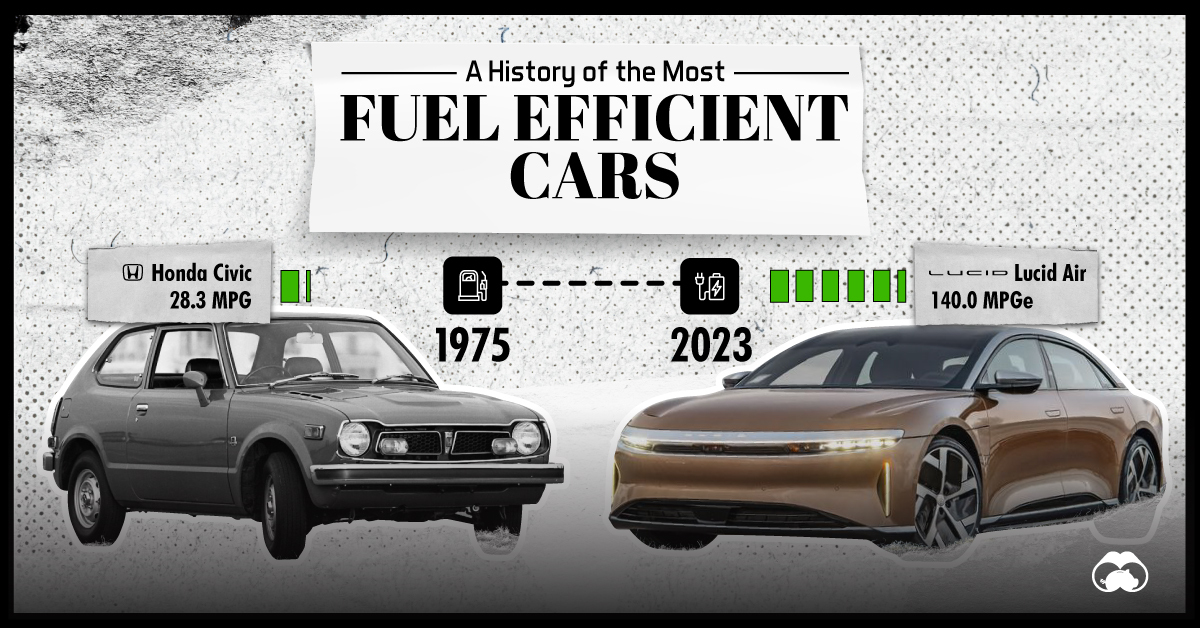
“Best gas mileage” usually means the highest EPA combined mpg rating. MPG means miles per gallon. A higher number means the car can travel farther on one gallon under the EPA test cycle.
For example, a car rated at 50 mpg may travel about 50 miles on one gallon during the EPA test. A car rated at 25 mpg may travel about 25 miles.
City, highway, and combined mpg
The EPA publishes three key figures:
- City mpg: Fuel use in stop-and-go driving.
- Highway mpg: Fuel use at steady higher speeds.
- Combined mpg: A weighted mix of city and highway driving.
Combined mpg is the best starting point for most shoppers. City and highway figures matter if your normal driving is very different from the EPA mix.
Hybrid cars often have a larger advantage in city driving. Their electric motors can move the car at low speeds, and regenerative braking can return energy to the battery.
MPG is not the same as fuel cost
The difference between two mpg ratings is not equal in fuel savings.
Going from 15 mpg to 25 mpg saves far more fuel than going from 35 mpg to 45 mpg. This happens because fuel use is based on gallons per mile, not miles per gallon alone.
Use this formula:
Annual fuel cost = annual miles ÷ actual mpg × fuel price
Example calculation
Suppose you drive 12,000 miles per year and pay $3.50 per gallon:
| Vehicle rating | Fuel used per year | Estimated annual fuel cost |
|---|---|---|
| 30 mpg | 400 gallons | $1,400 |
| 57 mpg | About 211 gallons | About $737 |
The 57-mpg car would save about $663 per year in this example. Your result will change with fuel prices, mileage, weather, traffic, and driving habits.
Gas Mileage by Vehicle Type
The most efficient vehicle type depends on your space and driving needs. Smaller cars usually use less fuel, but hybrids can deliver strong mileage even in midsize vehicles.
Best hybrid sedan
The Hyundai Elantra Hybrid Blue is one of the best choices for a small sedan. The Toyota Camry LE Hybrid is better for drivers who want a larger cabin.
Best hybrid hatchback
The Toyota Prius LE is the strongest choice for maximum rated fuel economy. Its hatchback layout also helps with cargo flexibility.
Best small hybrid SUV or crossover
The Kia Niro FE offers one of the highest fuel-economy ratings among small crossovers. It may be a better match than a sedan for shoppers who want a higher seating position.
Best affordable hybrid
The Toyota Corolla Hybrid and Hyundai Elantra Hybrid are practical starting points. Compare the exact purchase price, warranty, insurance cost, and standard features rather than looking only at mpg.
Best larger hybrid sedan
The Toyota Camry Hybrid and Honda Accord Hybrid offer more room than compact hybrids. The Camry reaches a higher EPA rating, while the Accord may appeal to buyers who prefer its cabin design and driving feel.
Are there fuel-efficient gas-only cars?
Yes. Gas-only compact cars can still deliver good mileage. However, the highest combined ratings now usually come from hybrids.
A small gas-only sedan may be cheaper to buy than a hybrid. It can be the better financial choice if:
- You drive only a few miles each year.
- The hybrid costs much more.
- You mainly drive at steady highway speeds.
- Local fuel prices are low.
- You plan to sell the car soon.
How to Choose the Right Fuel-Efficient Car
The car with the highest mpg is not always the car that saves you the most money. Use a simple comparison process before buying.
1. Match the body style to your needs
Start with the space you need.
A compact sedan may work well for one or two people. A hatchback can carry tall or bulky items. A small crossover provides a higher seating position. A midsize sedan gives rear passengers more room.
Do not buy a smaller car only to gain a few mpg if it cannot handle your daily needs.
2. Check the exact trim and drivetrain
Fuel-economy ratings can change within the same model.
Look for differences caused by:
- Front-wheel drive or all-wheel drive.
- Wheel and tire size.
- Battery and engine versions.
- Trim level.
- Vehicle weight.
- Optional equipment.
Use the exact model and trim in the EPA vehicle database. The number on a general model page may not apply to the car at a dealership.
3. Estimate your real fuel savings
Use your own annual mileage. A driver who travels 5,000 miles per year may save less than a driver who travels 25,000 miles per year.
Also compare the purchase-price difference. If a hybrid costs $4,000 more but saves $600 per year in fuel, fuel savings alone may take several years to recover that difference.
4. Consider maintenance and battery coverage
Hybrid systems have more components than a basic gas engine, but hybrid vehicles do not automatically require twice the maintenance. Many use regenerative braking, which can reduce brake wear.
Battery warranty terms vary by manufacturer and model year. Review the warranty booklet for:
- Battery coverage length.
- Mileage limits.
- Coverage for hybrid control parts.
- Transfer rules for a second owner.
- Requirements for warranty service.
Do not assume that every hybrid has the same warranty.
5. Think about your driving conditions
EPA ratings are useful for comparison, but your mileage may differ.
Fuel economy can fall with:
- Cold weather.
- High speeds.
- Heavy traffic.
- Roof racks.
- Low tire pressure.
- Aggressive acceleration.
- Strong air-conditioner use.
- Heavy cargo.
- Short trips.
- Snow or wet roads.
A hybrid often performs especially well in city driving. A gas-only car may narrow the gap on long highway trips, depending on speed and conditions.
Hybrid Cars vs. Plug-In Hybrids and Electric Cars
A regular hybrid does not need to be plugged in. It uses gasoline and manages its battery through the engine and regenerative braking.
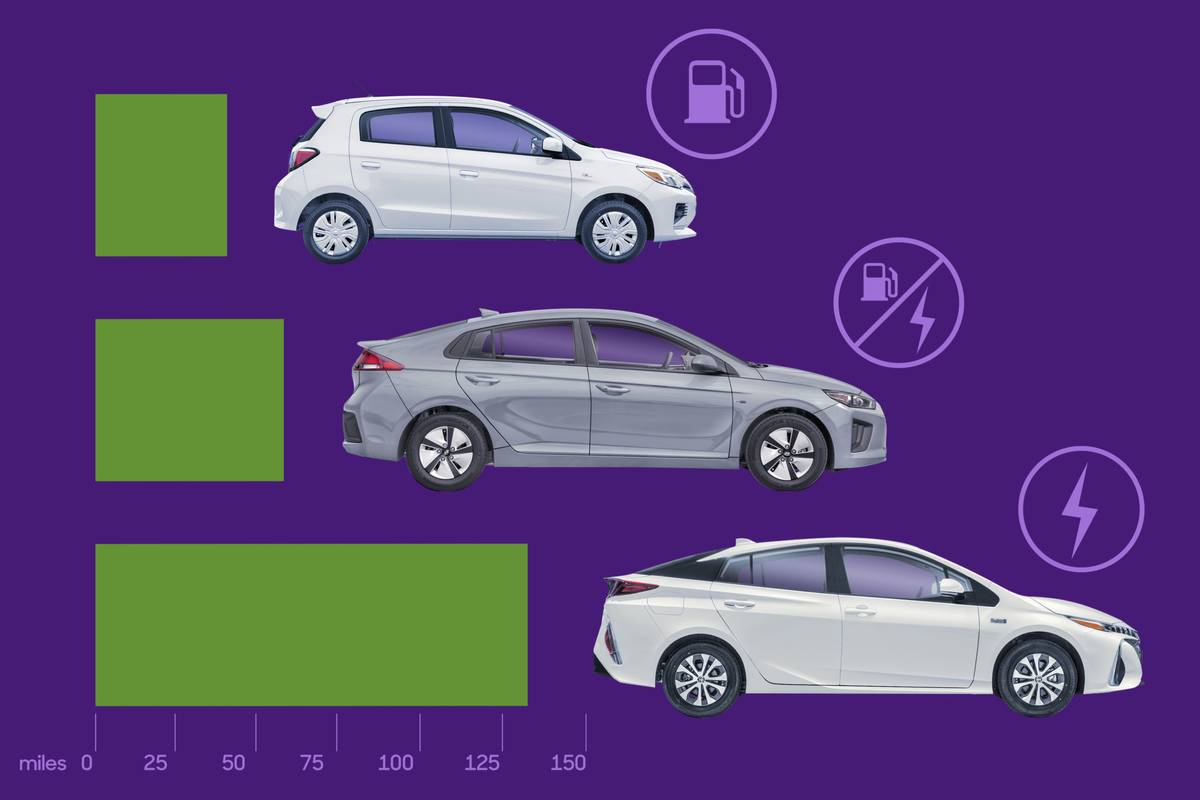
A plug-in hybrid electric vehicle, or PHEV, has a larger battery. You can charge it from an outlet and drive some miles on electricity before the gas engine starts.
PHEV fuel-economy labels can be harder to compare. The EPA may list:
- Electric range.
- Combined miles per gallon equivalent.
- Gasoline-only mpg.
- Annual fuel cost estimates.
A PHEV may use very little gasoline if you charge it often and drive within its electric range. If you rarely charge it, its value may be lower. It can also be heavier than a regular hybrid.
A fully electric vehicle uses no gasoline. It is outside the normal meaning of “best gas mileage,” but it may reduce energy costs for drivers who can charge at home.
Why Your Actual MPG May Be Lower Than the EPA Rating
EPA testing gives buyers a consistent comparison. It does not guarantee a specific result for every driver.
The EPA says its fuel-economy estimates are meant for comparison among vehicles. Real-world results can vary. The agency also provides a fuel economy guide that explains testing and label information.
Speed has a major effect
Driving faster increases air resistance. A vehicle may use much more fuel at 75 mph than at 55 or 60 mph, even on the same road.
Cold weather reduces mileage
Cold air, cold oil, snow, tire pressure changes, and cabin heating can reduce fuel economy. Hybrid systems may also spend more energy warming the engine and cabin.
Tire pressure matters
Check tire pressure when the tires are cold. Use the pressure listed on the driver’s door label, not the maximum pressure printed on the tire sidewall.
Never lower tire pressure below the vehicle maker’s recommendation to chase a mileage gain. Poor pressure can affect handling, braking, and tire wear.
Roof cargo can hurt mileage
A roof box or bike rack adds weight and wind resistance. Remove it when you do not need it.
Short trips use more fuel
A cold engine is less efficient. Several short trips can use more fuel than one longer trip of the same total distance.

Common Mistakes When Comparing Fuel Economy
Comparing different trims
A model name alone is not enough. A high-mpg base trim may not match the rating of the version you plan to buy.
Treating highway mpg as a normal average
Most drivers do not drive under the exact EPA highway test conditions. Use combined mpg for broad comparisons.
Ignoring purchase price
Fuel savings are only one part of ownership cost. Include financing, insurance, taxes, repairs, tires, and depreciation.
Assuming a hybrid always wins financially
A hybrid can use less fuel, but its purchase price may be higher. The best choice depends on miles driven, fuel prices, ownership length, and resale value.
Choosing a vehicle that is too small
A car that cannot carry your family or equipment may lead to an early replacement. That can cost more than the fuel savings.
Forgetting all-wheel-drive penalties
All-wheel drive can add weight and mechanical drag. It may also reduce the EPA rating. Choose it for traction needs, not only for appearance.
How to Improve Your Car’s Gas Mileage
You can often improve fuel economy without buying a new car.
- Keep tires at the recommended pressure.
- Combine short errands.
- Remove unused cargo.
- Avoid unnecessary idling.
- Accelerate smoothly.
- Use cruise control on suitable roads.
- Follow the maintenance schedule.
- Replace a clogged air filter or worn part when the vehicle requires it.
- Reduce very high speeds.
- Remove roof accessories when not needed.
Do not use unsafe driving methods to save fuel. Never coast in neutral on public roads, disable safety systems, or drive below a safe traffic speed.
Frequently Asked Questions
What car gets the best gas mileage without plugging in?
The 2025 Toyota Prius LE has one of the highest EPA ratings among non-plug-in vehicles, at 57 mpg combined. Its front-wheel-drive LE trim is the key version to check.
Is a hybrid worth it for highway driving?
It can be. Hybrid savings are often strongest in city traffic, but a hybrid can still use less fuel on the highway. Compare the purchase price with your annual highway mileage and expected ownership period.
Which SUV gets the best gas mileage?
Among small hybrid crossovers, the Kia Niro FE is a leading choice at up to 53 mpg combined. Larger SUVs usually have lower ratings because of their size, weight, and less aerodynamic shape.
Do hybrids cost more to maintain?
Not always. Hybrid vehicles have specialized components, but regenerative braking may reduce brake wear. Maintenance costs depend on the model, service needs, mileage, and repair rates. Check the manufacturer’s schedule and warranty before buying.
Should I buy a hybrid or an electric car?
Choose a hybrid if you want gasoline range and do not want to plan around charging. Consider an electric car if you have dependable charging, your daily trips fit its range, and you want to avoid gasoline use. Compare purchase price, electricity rates, fuel prices, charging access, and local incentives.
Conclusion: Which Car Has the Best Gas Mileage?
The Toyota Prius LE is the best overall answer for maximum gas mileage among regular non-plug-in cars, with an EPA rating of 57 mpg combined for the 2025 model year.
The Hyundai Elantra Hybrid is a strong compact sedan choice. The Kia Niro fits buyers who want a small crossover. The Toyota Camry Hybrid and Honda Accord Hybrid offer more space while still using less fuel than most gas-only midsize cars.
Before buying, compare the exact trim, drivetrain, price, warranty, cargo space, and your real driving pattern. The best fuel-efficient car is the one that meets your needs without costing more than the fuel savings can reasonably repay.
