

Yes, lightning can strike a car, but an enclosed metal vehicle offers strong protection.
Many drivers assume rubber tires stop lightning, but that is not the main reason cars can be safe during a storm. The real protection comes from the vehicle’s metal body, which can guide the electrical charge around the outside and into the ground. This guide explains how lightning affects cars, what risks remain, and what you should do before, during, and after a strike.

Can lightning strike a car?
Yes, lightning can strike a car. In fact, a moving or parked vehicle can become part of a lightning strike if it is near the strike path or is the tallest object in an area.
When lightning hits an enclosed metal car, the electrical charge usually travels over the outside surface. This effect is called a Faraday cage. The charge moves around the cabin instead of passing through the people inside.
A car is not safe simply because it has tires. Lightning carries far too much energy for rubber tires to provide meaningful protection. The metal roof, doors, and body do most of the work.
A lightning strike may still cause serious damage to:
• The vehicle’s electrical system
• The engine control unit
• The radio, cameras, and sensors
• The tires and wheels
• The paint and exterior panels
• The battery and wiring
• The windshield and windows
The National Weather Service and other public safety agencies advise staying inside a hard-topped vehicle during a thunderstorm when a strong building is not nearby. However, the vehicle must be enclosed, and you should avoid touching metal parts inside the cabin.

How does a lightning strike affect a car?
Lightning can carry millions of volts and extreme heat. When it hits a car, the current may spread across the roof, hood, doors, and trunk before reaching the ground.
The strike may leave a visible mark, but the damage is not always easy to see. Some problems appear later, especially when sensitive electronic parts have been affected.
Common damage after a lightning strike
A lightning strike can cause several types of damage:
• Burn marks on the roof, hood, or antenna
• Melted or damaged tires
• Broken windows or windshields
• Failed headlights or dashboard displays
• A dead battery
• Trouble starting the engine
• Damaged airbag systems
• Faults in driver assistance systems
• A burning smell from wires or plastic
• Fire in rare cases
Modern vehicles contain many computer modules. These modules control braking, steering assistance, airbags, fuel systems, entertainment systems, and safety sensors. A strong electrical surge can damage one or more of them.
Some cars may continue to drive after a strike. That does not mean they are safe to operate. A hidden fault in the airbag system, brakes, or steering controls can create a danger later.

Is it safe to sit inside a car during lightning?
An enclosed, hard-topped car is one of the safer places to be during a thunderstorm. Keep the windows closed, stay inside, and avoid touching metal parts or connected devices.
The safest position is to sit normally in the seat with your hands away from the doors, dashboard, and metal trim. Do not lean against the window or rest your arm on the door.
Follow these steps:
- Pull over in a safe place if driving conditions become dangerous.
- Park away from trees, utility poles, signs, and other tall objects.
- Turn on your hazard lights if visibility is poor.
- Close all windows and the sunroof.
- Keep your hands away from metal surfaces.
- Avoid using wired electronic accessories.
- Stay inside until at least 30 minutes after the last sound of thunder.
Do not get out to inspect the car during the storm. A nearby strike can still injure you, even if the car itself was not hit.
If you are driving, do not stop under a bridge, beneath a tree, or beside a damaged power line. A tree can fall onto the vehicle, and a downed wire can make the ground around the car dangerous.

Why do tires not protect you from lightning?
Many people believe lightning cannot enter a car because its rubber tires insulate it from the ground. This is a common myth.
The tires may help separate the vehicle from the road during normal electrical conditions, but lightning can easily travel through or around rubber. The voltage is so high that the tires cannot act as a reliable shield.
The metal body creates the safer path. Lightning tends to travel over the outer shell of a metal vehicle, much like water flowing over the outside of a smooth object.
This is why an enclosed metal sedan, SUV, truck, or van is generally safer than:
• A convertible with the top down
• A motorcycle
• A golf cart
• An open Jeep
• A vehicle with no solid roof
• A car with open windows or doors
A soft convertible top does not provide the same protection as a hard metal roof. If you drive a convertible during a storm, raise the roof and close the windows. Even then, a solid building remains the best shelter.

Can lightning strike a car while it is moving?
Yes, lightning can strike a moving car. Movement does not attract lightning or prevent it.
A moving car may actually be more exposed because the driver is focused on the road and may not have a safe place to stop. Heavy rain, glare, strong wind, and standing water can create risks that are more immediate than the lightning itself.
If a storm becomes severe, slow down and look for a safe parking area. Avoid sudden braking on wet roads. Keep extra distance from other cars and watch for fallen branches or power lines.
Never drive through floodwater after a storm. A road may be damaged below the surface, and water can hide debris or downed electrical wires.
A practical safety lesson is simple: the vehicle can protect you from much of the lightning danger, but it cannot protect you from a crash, flood, fire, or falling tree.

Can lightning strike an electric vehicle?
Lightning can strike an electric vehicle just as it can strike a gasoline-powered car. The vehicle’s power source does not make it more likely to attract lightning.
An electric vehicle usually provides the same basic protection when it has an enclosed metal cabin. However, a strike may damage high-voltage components, charging equipment, sensors, or battery control systems.
If your electric vehicle is charging during a storm, follow the owner’s manual and local safety advice. Avoid touching the charging connector during active lightning, especially if the charging equipment is outdoors.
After a possible strike, do not assume the battery is fine because the car still starts. Have the vehicle inspected by a qualified technician who understands high-voltage systems.
Watch for:
• Smoke or a burning smell
• Heat from the battery area
• Warning messages
• Electrical faults
• Unusual sounds
• Charging problems
• Fluid leaks or visible damage
If you notice smoke, leave the vehicle when it is safe and move well away from it. Call emergency services rather than trying to open panels or disconnect the battery yourself.
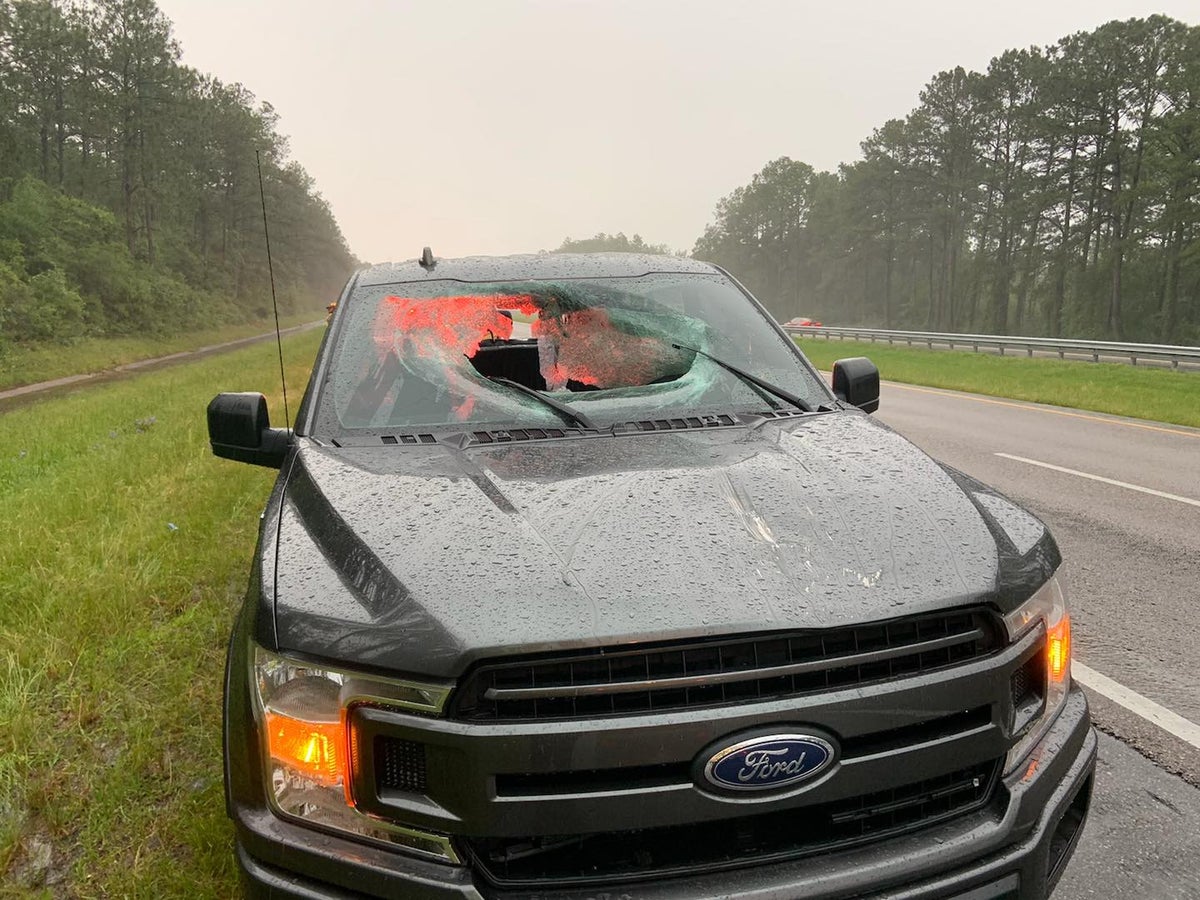
What should you do if lightning strikes your car?
If lightning strikes your car, remain calm and stay inside unless there is an immediate danger, such as fire, smoke, or a crash.
A strike can cause a loud bang, bright flash, temporary blindness, or a sudden loss of power. The car may stop, but the cabin can still protect you from the electrical current.
Use this response plan:
- Check yourself and passengers for injuries.
- Look for smoke, fire, broken glass, or fuel leaks.
- If there is no immediate danger, remain inside.
- Call emergency services if anyone is hurt or the car is unsafe.
- If you must leave because of fire or another urgent threat, exit carefully.
- Move away from the vehicle and any power lines.
- Do not touch exposed wires or damaged metal.
- Arrange a professional inspection before driving again.
If someone appears injured after a strike, call 911 and follow the dispatcher’s instructions. A person struck by lightning does not remain electrically charged, so it is safe to provide first aid when the scene is safe.
Do not restart the car repeatedly. The engine may start even when critical safety systems have been damaged.

How to check a car after a lightning strike
A professional inspection is important because some damage is hidden. A basic visual check can help you spot urgent problems, but it cannot confirm that the car is safe.
Look for:
• Scorch marks on the roof or hood
• Cracked glass
• Damaged tires
• Burned wiring
• Flickering lights
• Warning symbols on the dashboard
• A dead or weak battery
• Strange smells
• Trouble with the radio or navigation
• Problems with brakes, steering, or airbags
Ask a qualified repair shop to scan the vehicle’s computer systems. The technician may also need to inspect wiring, fuses, control modules, grounding points, tires, and high-voltage parts.
Contact your insurance company before authorizing major repairs. Lightning damage may be covered under comprehensive auto insurance, but coverage varies by policy and location.
Keep photographs of the damage and write down the date and time of the storm. Weather records may help support an insurance claim.

How to stay safe in a car during a thunderstorm
A car is useful shelter, but good storm habits still matter. Plan ahead if severe weather is expected.
Before driving, check:
• The weather forecast
• Flash flood warnings
• Road closures
• Wind advisories
• Visibility conditions
• The condition of your tires and windshield wipers
During the storm:
• Keep both hands available for steering when possible.
• Reduce speed on wet roads.
• Leave more space between vehicles.
• Avoid open fields and hilltops.
• Do not park under trees.
• Keep doors and windows closed.
• Do not use a phone while driving unless hands-free use is legal and safe.
• Stop driving if you cannot see the road clearly.
If you hear thunder, lightning is close enough to pose a risk. A useful rule is to wait at least 30 minutes after the final thunder before leaving a safe shelter.
The best shelter is a substantial building with plumbing and electrical wiring. A car is the next practical option when a building is not available.
Common myths about lightning and cars
Lightning safety advice is often mixed with old myths. Knowing the facts can help you make better choices.
Myth: Rubber tires make a car safe
Rubber tires are not the main source of protection. The metal body helps direct electrical current around the outside of the vehicle.
Myth: Lightning cannot strike the same place twice
Lightning can strike the same place many times. Tall towers, trees, buildings, and open areas may receive repeated strikes during one storm.
Myth: A car is always safe during lightning
An enclosed car offers good protection, but it cannot prevent crashes, floods, falling trees, or fires. Safe parking and careful driving still matter.
Myth: You should get out after a strike
Not unless the car is dangerous. Leaving the vehicle during an active storm may expose you to ground current, falling debris, or another strike.
Myth: Electric cars are more dangerous in lightning
Electric vehicles can be damaged by lightning, but they are not automatically more likely to be struck. The same shelter rules apply to enclosed electric and gasoline vehicles.
Frequently Asked Questions About Can Lightning Strike a Car
Can lightning strike a car with the engine off?
Yes, lightning can strike a parked car even when the engine is off. The vehicle does not need to be moving or running to become part of a lightning strike.
Is it safe to touch the door after lightning strikes a car?
Wait until the storm passes before touching the door or leaving the vehicle. The car may have hidden damage, and nearby lightning or downed wires could still create danger.
Can lightning damage a car without leaving a mark?
Yes, a strike can damage electronic modules, wiring, sensors, or airbags without causing obvious exterior damage. Have the vehicle checked if you suspect it was struck.
Can lightning strike a car through an open window?
Yes, an open window removes some of the protection provided by the enclosed cabin. Keep windows, doors, and the sunroof closed during a thunderstorm.
Are motorcycles safe during lightning?
No, motorcycles do not provide an enclosed metal shelter. Riders should leave the motorcycle and seek a substantial building as soon as it is safe.
Should you drive after lightning strikes your car?
Do not drive until you have checked for fire, smoke, tire damage, warning lights, and control problems. A professional inspection is the safest choice after a suspected strike.
Conclusion
Lightning can strike a car, but an enclosed metal vehicle usually offers strong protection when the windows and doors are closed. The metal body, not the rubber tires, helps carry the electrical charge around the cabin.
Stay inside during the storm, avoid metal surfaces, park away from trees and power lines, and wait 30 minutes after the last thunder. After a suspected strike, treat the car as damaged until a qualified technician checks its electrical, safety, and high-voltage systems.
Share this guide with other drivers, and review your vehicle’s storm safety steps before the next severe-weather warning.
