

A passenger may be allowed to drink alcohol in a car in some parts of the United States, but the answer depends on the state, city, vehicle type, and location of the drink. In many states, an open bottle or can in the passenger area is illegal even when the driver is sober. The driver can also face serious penalties if they are impaired or if a passenger’s alcohol affects safe driving.
The safest rule is simple: do not drink alcohol in a regular car unless you have checked the law for the exact state and city. Keep all alcohol sealed and stored in the trunk instead.
This guide explains open-container laws, passenger drinking rules, common exceptions, and what to do during a traffic stop.
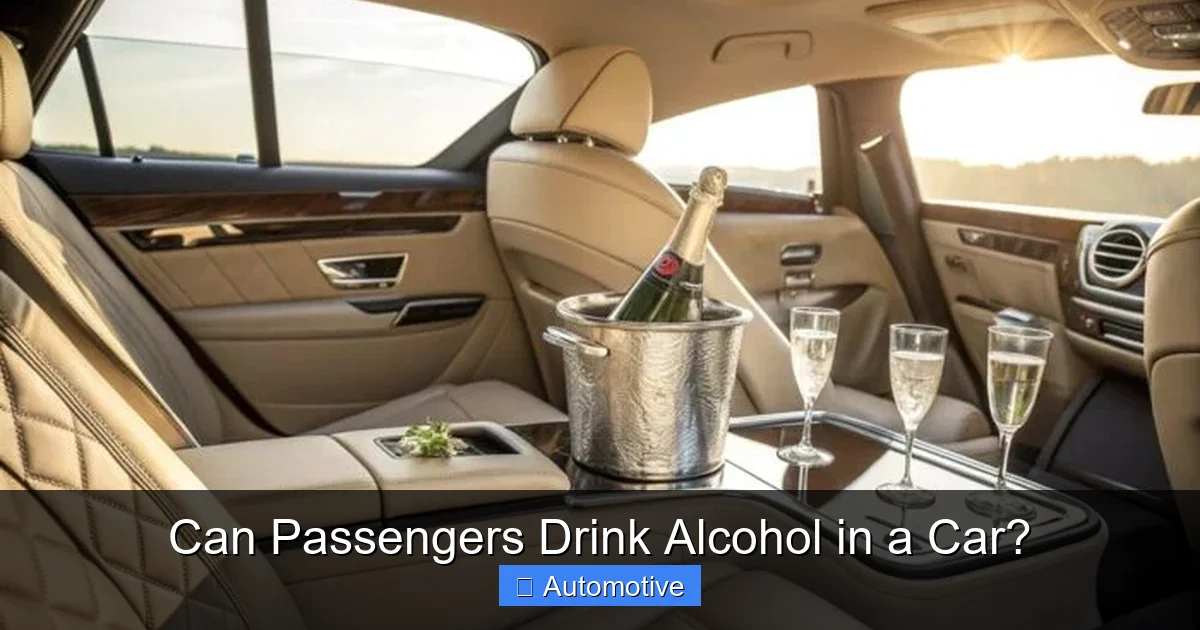
What is an open-container law?
An open-container law controls where an opened alcoholic drink may be stored or consumed in a motor vehicle. These laws usually apply to beer, wine, liquor, and mixed drinks.


A container may count as “open” when:
- The seal is broken
- The cap has been removed
- Some of the drink has been consumed
- The container has been resealed
- The drink is in a cup, glass, or other container
In many states, the law applies even if the passenger—not the driver—has the drink. Some laws ban only possession. Others ban both possession and drinking.
The key legal question is often whether the container is in the vehicle’s passenger area. This normally includes:
- The front seats
- The rear seats
- The center console
- Door pockets
- The glove box in some states
The trunk is usually outside the passenger area. In an SUV, hatchback, or station wagon, however, the cargo space may not count as a separate trunk. A covered cargo area may still be treated as part of the passenger compartment.
Because state definitions differ, do not assume that placing an open bottle behind a seat makes it legal.

Can a passenger drink alcohol in a car?
Sometimes, but often not in an ordinary passenger car. The legality depends on local law and the type of vehicle.
Many states prohibit an open alcoholic drink in the passenger area of a private vehicle. These laws can apply to the driver and passengers. In those states, a sober passenger generally cannot legally drink while the car is moving or parked on a public road.
Other states may allow passenger drinking under limited conditions. For example, the law may depend on whether:
- The vehicle is privately owned
- The drink is in the rear seating area
- The vehicle is being used as a paid transportation service
- The vehicle is a limousine, bus, or charter vehicle
- The road is public or private
- A local city or county rule adds restrictions


A passenger’s drinking does not automatically make the driver guilty of driving under the influence. However, the driver may still receive an open-container citation. If the driver is impaired, has alcohol in reach, or allows unsafe conduct, the legal risk becomes much greater.
Passenger drinking rules are state-specific
There is no single nationwide rule that answers every situation. Each state creates its own alcohol and vehicle laws. Some states also allow cities, counties, or special districts to impose additional limits.
For example:
- California generally prohibits possession of an open alcoholic container in the passenger area of a motor vehicle on a highway. California law includes exceptions for certain vehicles, such as buses, taxis, and limousines.
- Texas prohibits possessing an open container in the passenger area of a motor vehicle on a public highway, even if the vehicle is stopped or parked. Texas has exceptions for areas designed for passengers in certain transportation vehicles.
- New York generally prohibits possession of an open alcoholic beverage in a motor vehicle on a public highway. The rule can apply to passengers as well as drivers.
- Missouri does not have the same statewide open-container structure used by many other states, but local rules and other alcohol laws may still apply.
These examples are not a substitute for checking current law. Statutes can change, and local rules may be stricter than state law.
Drinking is different from transporting alcohol
Most states allow people to transport unopened alcohol in a vehicle, subject to age and other alcohol laws. A sealed bottle in the trunk is usually safer legally than an opened bottle in the passenger area.
Transport rules may still limit:
- Who may possess alcohol
- Whether the container must remain sealed
- Where the container may be stored
- Whether the vehicle is on a public road
- Whether the person transporting it is under the legal drinking age
When in doubt, keep the alcohol sealed and place it in the trunk or another area that is not accessible to passengers.

What vehicles may allow passenger drinking?
Some states create exceptions for specific types of vehicles. These exceptions do not apply everywhere, and they do not give the driver permission to drink.
Possible exceptions may include:
- Limousines
- Charter buses
- Tour buses
- Taxis
- Motor coaches
- Passenger vans operated by a licensed service
- Recreational vehicles, depending on state law
- Vehicles with a permanent partition between the driver and passengers
The exact exception matters. A stretch limousine may receive different treatment from a rented SUV. A party bus may be treated differently from a private van. A rideshare vehicle may not qualify for the same exception as a licensed limousine.
Rideshare vehicles are not automatically exempt
A passenger should not assume that Uber, Lyft, or another rideshare vehicle is a party vehicle. The vehicle may still be covered by the ordinary open-container law.
The driver may also have a company policy that bans alcohol, open containers, or intoxicated passengers. A driver can end the trip if a passenger spills alcohol, behaves dangerously, or damages the vehicle.
Before opening a drink in a rideshare vehicle, check both:
- The law in the state and city; and
- The transportation company’s current rules.
Recreational vehicles have special risks
An RV may include living space that is separate from the driving area. Some states treat that space differently from the cab. Other states apply broad open-container rules to the entire vehicle.


Do not rely only on the RV’s design. Check the law for the state where the RV is traveling. A rule that applies in one state may change as soon as the vehicle crosses a border.
Does it matter if the car is parked?
Yes, but parking does not always make an open container legal.
Some open-container laws apply when a vehicle is on a public highway, road, or street. Others may apply when the vehicle is simply located in a public place. In some states, the rule still applies when the vehicle is parked, stopped, or turned off.
A parked car in a private driveway may be treated differently from a car parked:
- On a public street
- In a public parking lot
- At a highway rest area
- Outside a stadium or event venue
- On federal property
- In a hotel or apartment parking lot
A vehicle that is safely parked does not remove other possible offenses. Public drinking laws, trespass rules, disorderly conduct laws, and local alcohol restrictions may still apply.
If the goal is to drink safely, leave the vehicle parked in a lawful location and move to a place where alcohol consumption is permitted. Do not sit in a public car and assume that the car itself creates a private space.
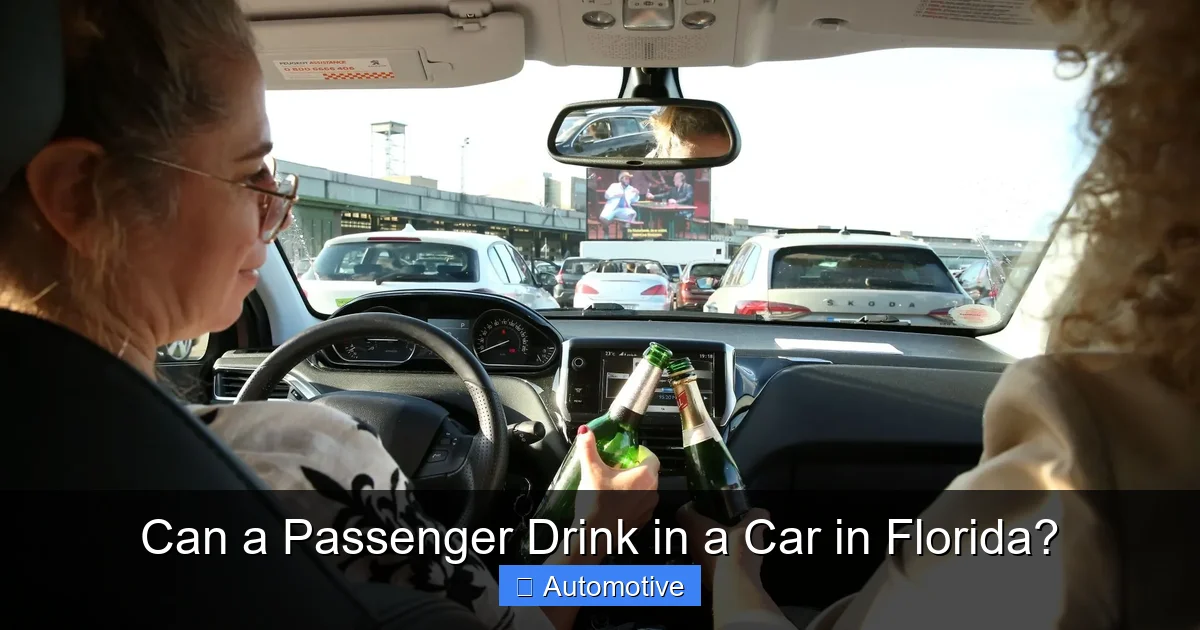
What happens if the driver is sober?
A sober driver may still face legal trouble if a passenger has an open alcoholic drink.
Possible consequences include:
- An open-container citation
- A traffic stop
- A fine
- Court costs
- Points or other driving-record consequences, depending on state law
- Vehicle impoundment in some situations
- Additional investigation for suspected impaired driving
An open-container violation is usually different from driving under the influence. Police still may investigate the driver if they smell alcohol, observe unsafe driving, or see signs of impairment.
The driver should never drink while driving. Even a small amount of alcohol can affect reaction time, judgment, and attention. The legal limit is not a safe-drinking target, and impairment can begin before a person reaches the per se limit used in DUI cases.

Can a passenger drink without getting the driver in trouble?
Not necessarily. Passenger conduct can create problems for the driver and other occupants.
The driver may be exposed to risk when:
- The state bans open containers in the passenger area
- The passenger passes alcohol to the driver
- The passenger blocks mirrors or interferes with vehicle controls
- The driver appears impaired
- The passenger is underage
- Alcohol is spilled or causes unsafe behavior
- The driver knowingly allows unlawful conduct
A passenger should never hand a drink to the driver, hold a drink near the driver, or encourage the driver to drink. The person operating the car must remain focused and sober.


The safest arrangement is for all alcohol to remain unopened until everyone is out of the vehicle.
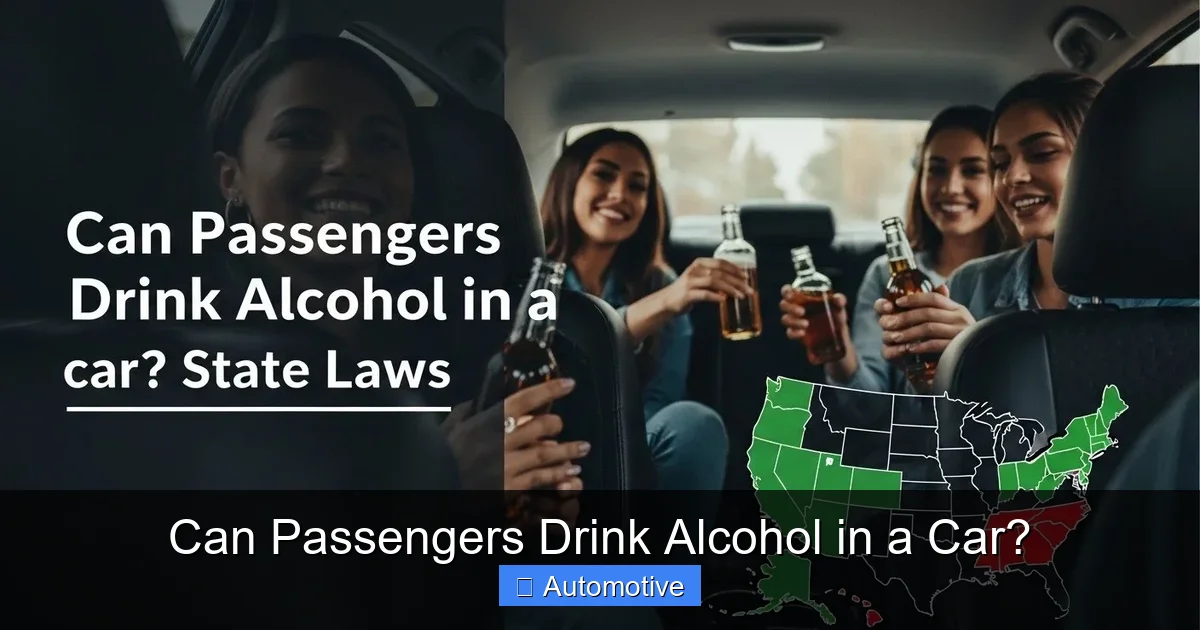
What are the rules for minors?
Minors face additional restrictions. In the United States, the legal drinking age is generally 21, but state laws contain limited exceptions for certain settings, family situations, religious uses, employment, or educational activities.
A minor’s possession or consumption of alcohol in a vehicle may lead to:
- A minor-in-possession charge
- A citation for underage drinking
- Driver’s-license consequences
- Charges against an adult who supplied the alcohol
- Child-safety or neglect concerns in serious cases
The exact rule depends on the state and the facts. A parent’s permission does not automatically make alcohol possession legal in a vehicle or public place.
An adult should not give alcohol to a minor in a car unless the conduct clearly falls within a valid state-law exception. When the rule is unclear, keep the alcohol away from the minor and seek advice from a local attorney.

What should you do during a traffic stop?
If a police officer stops the vehicle, the driver should pull over safely, keep hands visible, and follow lawful instructions. Do not reach for a bottle, move an open container, or argue about the law while the stop is active.
The driver should:
- Turn off the engine when appropriate.
- Keep hands on the steering wheel.
- Provide a license, registration, and proof of insurance when required.
- Avoid sudden movements.
- Ask before reaching into a glove box or console.
- Never admit to drinking and driving if that is not true.
- Avoid lying or making false statements.
- Contact a lawyer if the officer issues a citation or makes an arrest.
Passengers should not hide, discard, or pass an open container during the stop. That action may create additional suspicion or safety concerns.
The rules for searches differ by state and situation. A driver can politely ask whether they are free to leave and can state that they do not consent to a search, but should not physically resist an officer.

Common situations and the likely legal risk
The table below gives general guidance, not a legal ruling.
| Situation | Typical risk |
|---|---|
| Sealed beer in the trunk | Usually the lowest open-container risk |
| Open beer in the passenger’s hand | Often illegal in states with passenger-area bans |
| Open bottle behind the driver’s seat | Often still inside the passenger area |
| Passenger drinking in a parked car on a public street | May still violate state or local law |
| Passenger drinking in a limousine | May be allowed in some states, but not all |
| Passenger drinking in a rideshare car | Depends on law and company policy |
| Driver holding an open drink | High legal and safety risk |
| Passenger handing alcohol to the driver | Unsafe and may support further charges |
| Open alcohol in an RV | Depends on the state’s vehicle definition |
| Minor drinking in the vehicle | Additional underage-alcohol risk |
The safest choice in every row is to keep alcohol sealed until the trip is over.

Common mistakes to avoid
People often rely on assumptions that are not legally reliable.
“The passenger is not driving, so it must be legal”
Many open-container laws cover the passenger area, not just the driver’s seat. A sober driver does not always prevent a violation.
“The car is parked, so the law does not apply”
Some laws cover stopped or parked vehicles. Public-place rules may also apply.


“The drink is in a paper bag”
A paper bag may hide the container, but it does not necessarily change its legal status. Concealment can also create more suspicion during a traffic stop.
“A resealed bottle is closed”
Some laws treat a container as open once the original seal has been broken. A screw-top bottle may remain legally open after it is closed again.
“A rideshare car is a taxi”
A rideshare vehicle may not qualify for a statutory taxi or limousine exception. Company rules may be stricter than state law.
“The alcohol is in the back, so it is safe”
In a sedan, the rear seat is normally part of the passenger area. In an SUV, the cargo area may also be legally connected to the passenger compartment.

How to check the law in your state
Use this short process before allowing a passenger to drink:
- Identify the state where the vehicle is located.
- Check the state’s official motor-vehicle or transportation code.
- Search for terms such as “open container,” “passenger area,” and “alcoholic beverage.”
- Check city or county rules if the vehicle is in a public area.
- Look for exceptions covering buses, taxis, limousines, or RVs.
- Confirm whether the rule applies to parked vehicles.
- Check age restrictions and alcohol-supply laws.
- If the facts are unusual, ask a licensed attorney in that state.
Useful official sources include the state legislature, state department of motor vehicles, state police, and state alcohol-control agency. Federal guidance from the National Highway Traffic Safety Administration explains the role of state open-container laws, but state statutes control the specific answer.

Frequently asked questions
Can a passenger drink in a car while crossing state lines?
Do not assume that the law stays the same throughout the trip. The rules can change when the vehicle enters another state, and an open container may be legal in one state but illegal in the next. Keep alcohol sealed and stored outside the passenger area during interstate travel.
Can a passenger drink in a car on private property?
Private property may reduce the chance that a state highway rule applies, but it does not remove every alcohol law. The property owner may ban alcohol, and local public-safety or underage-drinking rules may still apply. Private property also does not excuse impaired driving.
Can a passenger drink in a limousine?
Some states permit alcohol in licensed limousines or similar vehicles. The exception may require a specific vehicle design, license, or operating status. Check the state law and the company’s policy before opening a drink.
Can a passenger drink a sealed drink after opening it?
Opening the container may trigger an open-container rule. The safest approach is to wait until the vehicle is no longer being used for travel and you are in a place where drinking is lawful.
Can the driver be arrested if only the passenger drank?
A driver is not automatically guilty of DUI because a passenger drank. The driver may still receive an open-container citation, and an arrest may occur if police have probable cause to believe the driver is impaired or another offense occurred.
Conclusion
A passenger can drink alcohol in a car only when the law for that location and vehicle allows it. In many states, an open drink in the passenger area is illegal even when the driver is sober and the car is parked.
For the lowest legal and safety risk, keep alcohol sealed, store it in the trunk or another non-passenger area, and wait until everyone is out of the vehicle. If the situation involves a minor, an RV, a limousine, a rideshare vehicle, or travel across state lines, check the exact state and local rules before opening the container.


