
Introduction
Yes, a 235/55R18 tire may fit in place of a 225/55R18 tire, but it is not automatically safe or suitable for every vehicle in the United States. The 235-size tire is wider and slightly taller, so you must check wheel width, suspension clearance, steering clearance, load rating, speed rating, and your vehicle maker’s approved tire sizes first.
The change is small: the tire is about 0.4 inches wider and 0.43 inches taller in overall diameter. That may work well on some cars and crossovers, but even a small size change can affect the speedometer, handling, fuel use, and clearance.

235/55R18 vs. 225/55R18: What Changes?
The main difference is width. Both tires have a 55-series aspect ratio and fit an 18-inch wheel, but the 235 tire has a wider tread section and a taller sidewall.
| Tire size | Approx. width | Sidewall height | Overall diameter | Difference |
|---|---|---|---|---|
| 225/55R18 | 225 mm, or 8.86 in | 123.75 mm, or 4.87 in | 704.7 mm, or 27.74 in | Baseline |
| 235/55R18 | 235 mm, or 9.25 in | 129.25 mm, or 5.09 in | 715.7 mm, or 28.18 in | About 1.56% larger |
These are calculated dimensions. The actual size can vary slightly by tire brand, tread design, and approved wheel width.


How to read the tire size
- 225 or 235: The tire’s nominal width in millimeters.
- 55: The sidewall height is 55% of the tire width.
- R: Radial construction.
- 18: The tire fits an 18-inch wheel.
Because both tires use the same 55 aspect ratio, increasing the width also increases the sidewall height. The 235/55R18 tire is not only wider; it is also slightly taller.
The key size difference
A 235/55R18 tire is approximately:
- 10 mm wider overall
- 5.5 mm taller on each side
- 11 mm larger in total diameter
- 1.56% larger in circumference
That 1.56% change is modest, but it is large enough to check before installation.
Will a 235/55R18 Tire Fit My Vehicle?
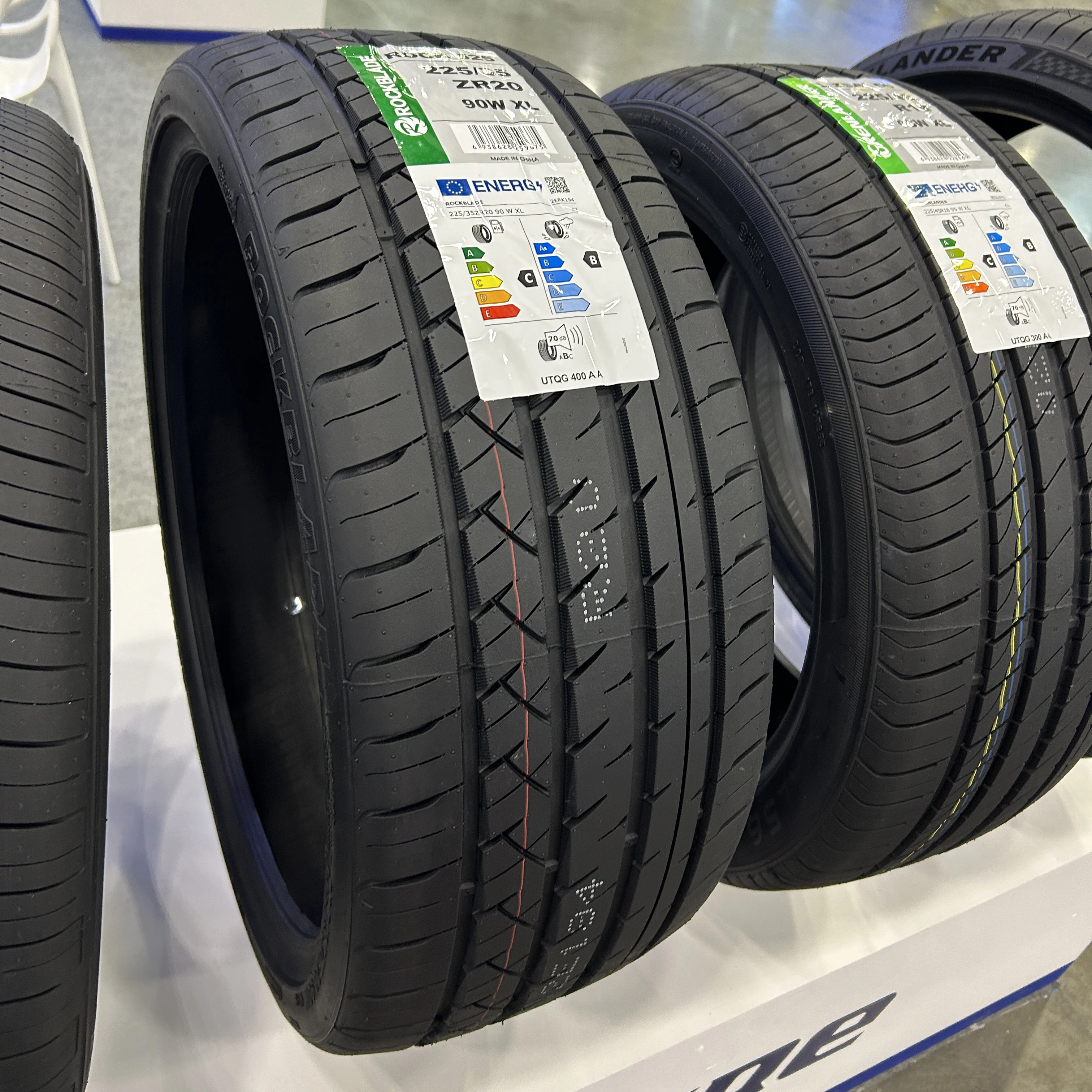
A 235/55R18 tire will fit only if your vehicle has enough space around the tire and the wheel supports the tire’s approved width range. The tire must clear the strut, spring, fender, inner wheel well, brake parts, and suspension parts through the full range of steering and suspension movement.
The safest starting point is your vehicle’s:
- Driver-door tire and loading information label
- Owner’s manual
- Original equipment tire size
- Vehicle manufacturer fitment information
The door-jamb label is usually the best source for the factory tire size, recommended cold inflation pressure, and load information. It may list more than one approved size.
Check the wheel width
A wider tire needs a wheel that can safely support it. The acceptable rim-width range depends on the specific tire model, not only the tire size.
For example, one manufacturer may approve a certain 235/55R18 tire on a wheel from roughly 6.5 to 8.5 inches wide, while another tire with the same nominal size may have a different range. Always check the tire maker’s technical data for the exact model.


Do not assume that a 235/55R18 tire is safe simply because it can be mounted on your existing wheel. A tire shop should confirm the wheel width and tire approval range.
Check clearance at full steering lock
A tire can appear to fit while the vehicle is parked straight ahead but rub when the steering wheel is turned fully left or right. Clearance should be checked:
- At full left steering lock
- At full right steering lock
- With the suspension compressed
- Near the front strut or spring
- Near the inner fender liner
- Near the outer fender or mud flap
- Around brake and suspension components
The wider 235 tire may reduce inner and outer clearance by about 5 mm per side, depending on the wheel’s offset. The taller diameter may also reduce vertical clearance by about 5.5 mm.
Wheel offset can change the result. A wheel with a different offset may move the tire inward toward the suspension or outward toward the fender.
Check load and speed ratings
The replacement tire should meet or exceed the vehicle maker’s required:
- Load index
- Speed rating
- Tire construction
- Seasonal performance requirements
A 235/55R18 tire with a lower load index is not an acceptable upgrade just because its physical size is close. Passenger cars, SUVs, and crossovers can have different load needs, especially when carrying passengers or cargo.
NHTSA advises drivers to use tires that meet the vehicle manufacturer’s specifications and to maintain the pressure shown on the vehicle placard. See the NHTSA Tire Safety page.
How Will the Size Change Affect the Speedometer?
The 235/55R18 tire is about 1.56% larger in diameter than the 225/55R18 tire. Because it travels farther with each revolution, the speedometer and odometer may read slightly low.
Example
If your speedometer shows 60 mph with the 235/55R18 tires, your actual speed may be about:
60 × 1.0156 = 60.9 mph
So the vehicle could be traveling close to 61 mph while the speedometer displays 60 mph.
The exact result depends on the vehicle and the original tire’s real measured diameter. Factory speedometers are not perfectly exact, and tire wear also changes the rolling circumference.
The odometer may also record slightly fewer miles than the vehicle actually travels. A 1.56% difference is small, but it still matters when using speed-sensitive systems or comparing mileage.

What Are the Benefits and Drawbacks?
A 235/55R18 tire may provide a slightly wider contact patch and a little more sidewall height, but the change also brings trade-offs.


Possible benefits
A wider tire may offer:
- A different steering feel
- More dry-road grip in some conditions
- A slightly fuller appearance in the wheel well
- A little more sidewall protection from sharp road edges
- A small increase in ride cushion from the extra sidewall height
These effects are not guaranteed. Tire compound, tread pattern, construction, inflation pressure, wheel width, alignment, and road conditions often matter more than a 10 mm change in nominal width.
Possible drawbacks
The larger size may cause:
- Rubbing during turns or suspension movement
- A small speedometer and odometer error
- Slightly heavier steering
- More road noise, depending on the tire model
- A small reduction in fuel economy
- More sensitivity to road grooves
- Different wet-weather or snow performance
- Changes in acceleration and braking feel
A wider tire does not automatically produce shorter stopping distances. Braking depends on the tire compound, tread, road surface, temperature, vehicle systems, and driver input.
A wider tire may also perform differently in snow or standing water. In some conditions, a narrower tire can cut through snow more effectively. The tire’s winter rating, tread design, and compound are more important than width alone.
Is 235/55R18 Safe on an AWD or 4WD Vehicle?
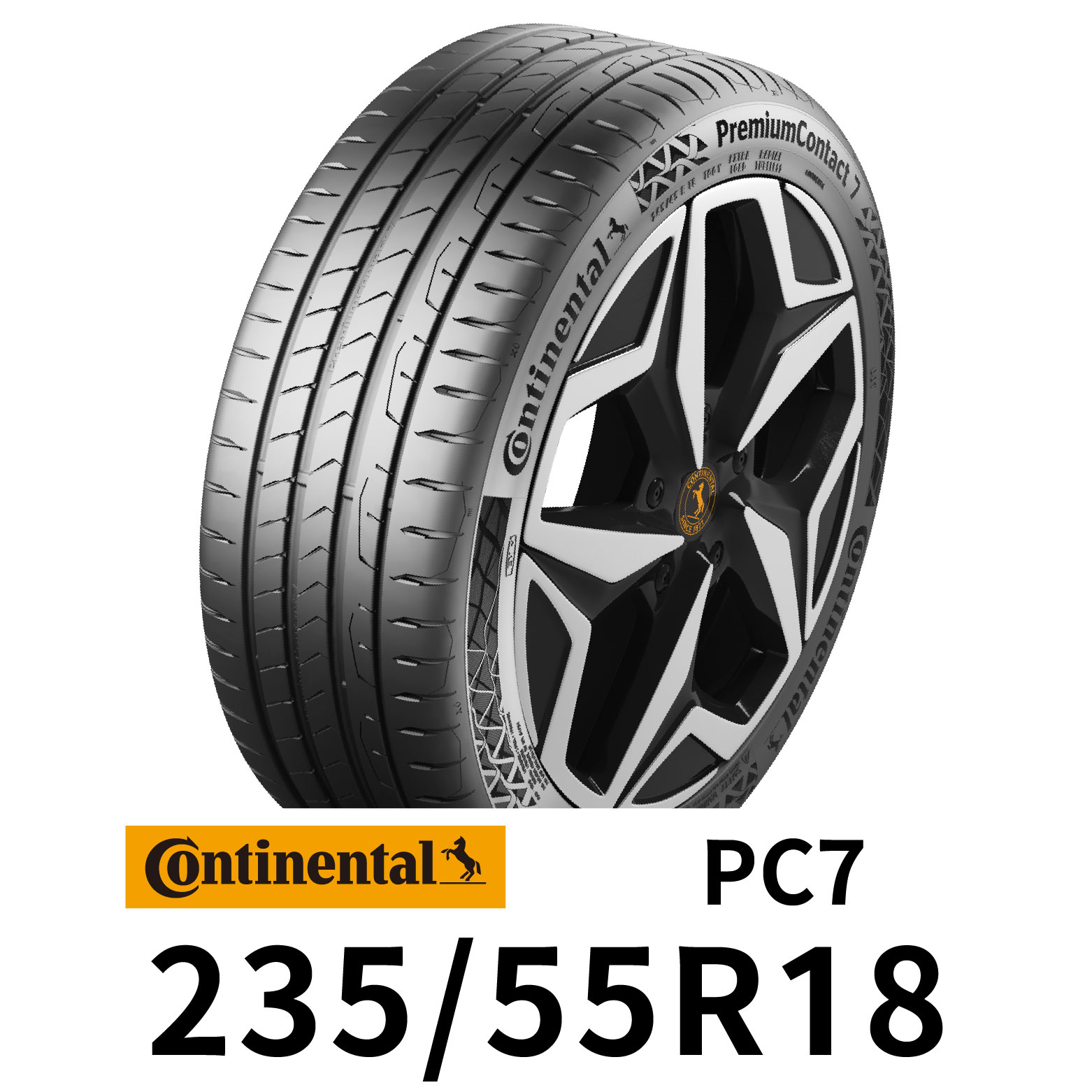
For an all-wheel-drive or four-wheel-drive vehicle, tire diameter matching is especially important. Some AWD systems can react poorly to significant differences in rolling circumference between tires.
If you change from 225/55R18 to 235/55R18, use the same size on all four corners unless the vehicle manufacturer specifically approves a staggered setup. Do not install two 235/55R18 tires and leave two 225/55R18 tires without confirming that the vehicle allows that difference.
Also match:
- Tire brand and model when possible
- Tread depth
- Tire construction
- Load index
- Speed rating
- Inflation pressure
Even tires with the same printed size can have slightly different rolling circumferences. AWD owners should follow the vehicle manual and ask a dealer or qualified tire professional before changing sizes.
For a two-wheel-drive vehicle, matching the same size on the same axle remains essential. Mixing different sizes across an axle can affect handling and braking.

How to Decide if You Can Make the Change
Use this checklist before buying or mounting 235/55R18 tires.
1. Check the vehicle placard and manual
Look for 235/55R18 in the list of approved sizes. If it appears there, the vehicle maker has documented that size for at least one configuration.
If it does not appear, continue with extra caution. An aftermarket fitment may still be possible, but it requires a proper clearance and load check.


2. Confirm the wheel width
Find the wheel width stamped on the wheel or listed in the vehicle specifications. Then compare it with the approved rim-width range for the exact 235/55R18 tire.
3. Compare load and speed ratings
The new tire must meet or exceed the original tire’s required ratings. Check the full sidewall marking, not just the size.
For example, these are different parts of the tire marking:
- 235/55R18: Size
- 100H: Load index and speed rating
- XL: Extra-load construction, if shown
Do not assume that every 235/55R18 tire has the same load capacity.
4. Check wheel offset and clearance
A tire shop should inspect the vehicle and confirm that the tire does not rub at full steering lock or during suspension compression. This check is especially important if the vehicle has:
- Lowered suspension
- Lifted suspension
- Wheel spacers
- Aftermarket wheels
- Nonstandard alignment
- Oversized brakes
- Fender modifications
5. Confirm pressure requirements
Do not automatically use the same pressure listed for the old tire. The correct pressure depends on the vehicle’s required load capacity and the new tire’s construction.
The door placard remains the starting point. A tire professional may also calculate whether the replacement tire can carry the required load at the recommended pressure.
6. Check electronic systems after installation
A small size change usually does not cause a warning light by itself, but tire-size changes can affect systems that use wheel-speed data, including:
- Anti-lock brakes
- Traction control
- Electronic stability control
- Adaptive cruise systems on some vehicles
- Advanced driver-assistance systems on some vehicles
If a warning light appears after installation, have the vehicle scanned and inspected. Do not ignore a stability-control or ABS warning.

When Should You Keep the Original 225/55R18 Size?
Keep the original 225/55R18 size when the vehicle maker does not approve the larger tire, clearance is uncertain, or the new tire cannot match the required load and speed ratings.
The original size is also the better choice when:
- The vehicle is leased
- The vehicle has AWD or 4WD
- You want the factory speedometer behavior
- The vehicle has little wheel-well clearance
- You drive in heavy snow or frequent rain
- You need a replacement tire with no fitment changes
- You want to preserve the factory handling balance


A tire retailer may recommend the larger size because it is physically close, but physical fit alone does not prove complete compatibility.
If the 235/55R18 size is not listed by the vehicle manufacturer, ask a qualified tire professional to verify the full fitment rather than relying on an online size calculator alone.

Common Mistakes to Avoid
Assuming the same wheel diameter means the tire will fit
Both sizes use an 18-inch wheel, but width, diameter, offset, and clearance still matter.
Comparing only the first number
The increase from 225 to 235 is not the only change. Because both tires have a 55 aspect ratio, the 235 tire also has a taller sidewall and larger diameter.
Mixing sizes on the same axle
Different tire sizes on one axle can create uneven handling and braking. They may also confuse wheel-speed-based systems.
Ignoring tire load capacity
A physically larger tire can still have an insufficient load index. Always compare the complete sidewall marking.
Using the old tire’s pressure without checking
The correct pressure is tied to vehicle load requirements and tire specifications. Follow the vehicle placard and tire manufacturer guidance.
Forgetting the spare tire
If you change tire size, check whether the spare can be used safely. A temporary spare may have strict limits, and a full-size spare may not match the new rolling circumference.
Treating “no rubbing while parked” as a full test
The tire can rub only under steering input, body roll, braking, or suspension compression. A proper inspection must account for those conditions.
Frequently Asked Questions
Can I put 235/55R18 tires on 225/55R18 rims?
Possibly. The wheel must fall within the approved rim-width range for the exact 235/55R18 tire. The vehicle must also have enough clearance and meet load and speed requirements. Confirm the wheel width before mounting the tire.
Will 235/55R18 tires damage my car?
They will not necessarily damage the vehicle, but an incorrect fit can cause rubbing, uneven wear, steering problems, or interference with suspension and brake parts. An AWD system may also be sensitive to tire-size differences. Verify the fit before driving.
Will 235/55R18 tires improve handling?
They may change steering response and dry-road grip, but improvement is not guaranteed. Tire compound, tread design, wheel width, alignment, pressure, and road conditions have a major effect on handling.
Do I need new wheels for 235/55R18 tires?
Not always. If your current 18-inch wheels have a suitable width and offset, they may work. The exact tire’s approved rim-width range and the vehicle’s clearance must still be checked.
Can I use 235/55R18 tires on only the front or rear?
Only if the vehicle maker approves that setup. On most vehicles, the same size should be used on all four corners. AWD and 4WD vehicles are especially sensitive to differences in rolling circumference.


Final Recommendation
A 235/55R18 tire is close enough to a 225/55R18 tire that it may fit many vehicles, but the answer is not automatically yes. The larger tire is about 10 mm wider and 1.56% larger in diameter, which can affect clearance, speedometer accuracy, handling, and drivetrain operation.
Before switching, confirm the approved size, wheel width, load index, speed rating, wheel offset, and full-lock clearance. If your vehicle is AWD or 4WD, use matching tires and follow the manufacturer’s guidance. When any part of the fitment is uncertain, have a qualified tire professional inspect the vehicle before installation.