

A car seat is expired when its manufacturer’s stated service life has ended. To check, find the seat’s manufacture date or expiration date on the label, then compare it with the limit in the owner’s manual. If you cannot confirm the date, contact the manufacturer before using the seat. If the seat has been in a serious crash, has missing parts, or has an unknown history, replace it even if the date has not passed.
The United States does not have one expiration date that applies to every car seat. Each manufacturer sets its own service-life limit, often between six and 10 years, based on the seat’s materials, design, testing, and available replacement parts.
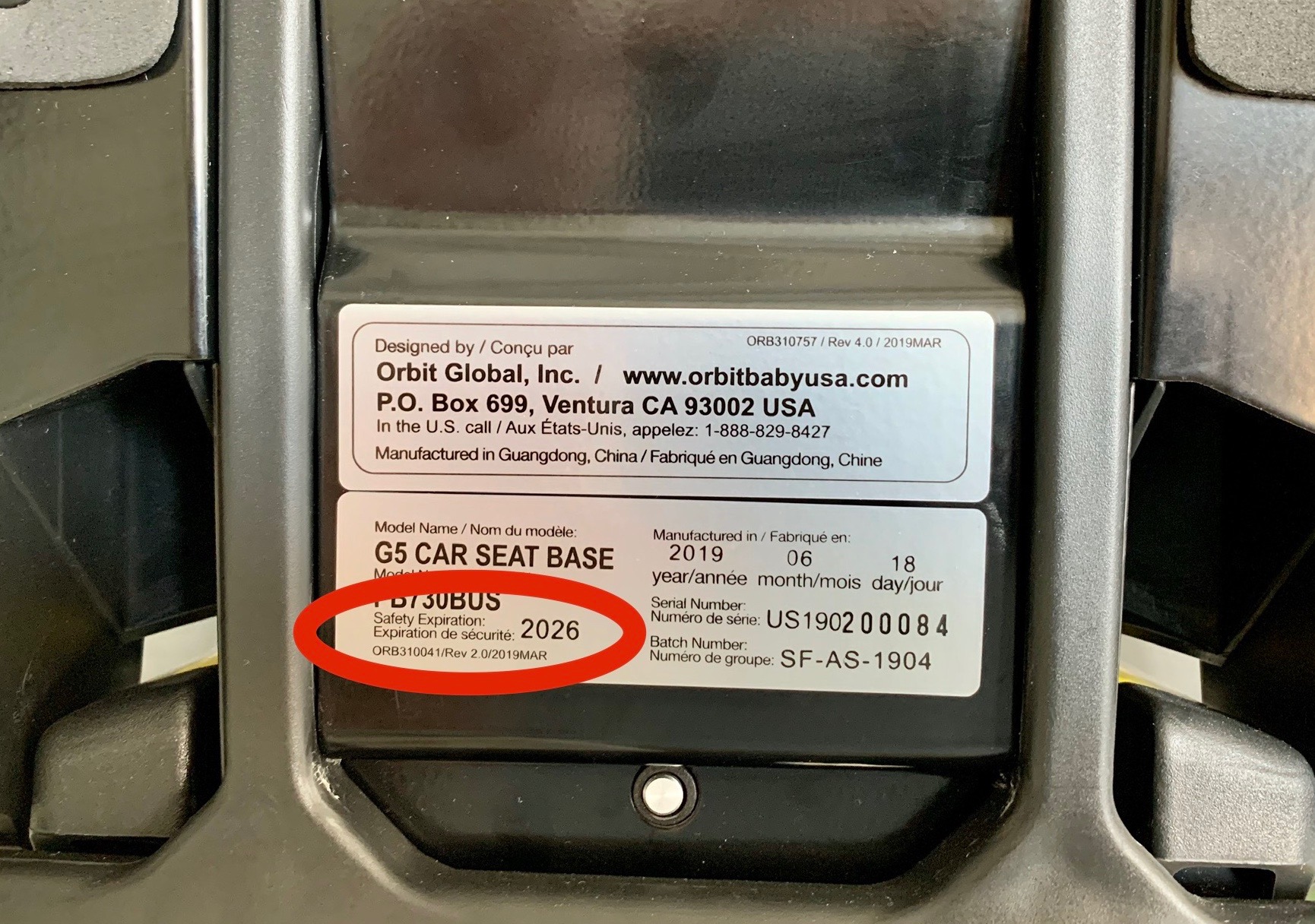
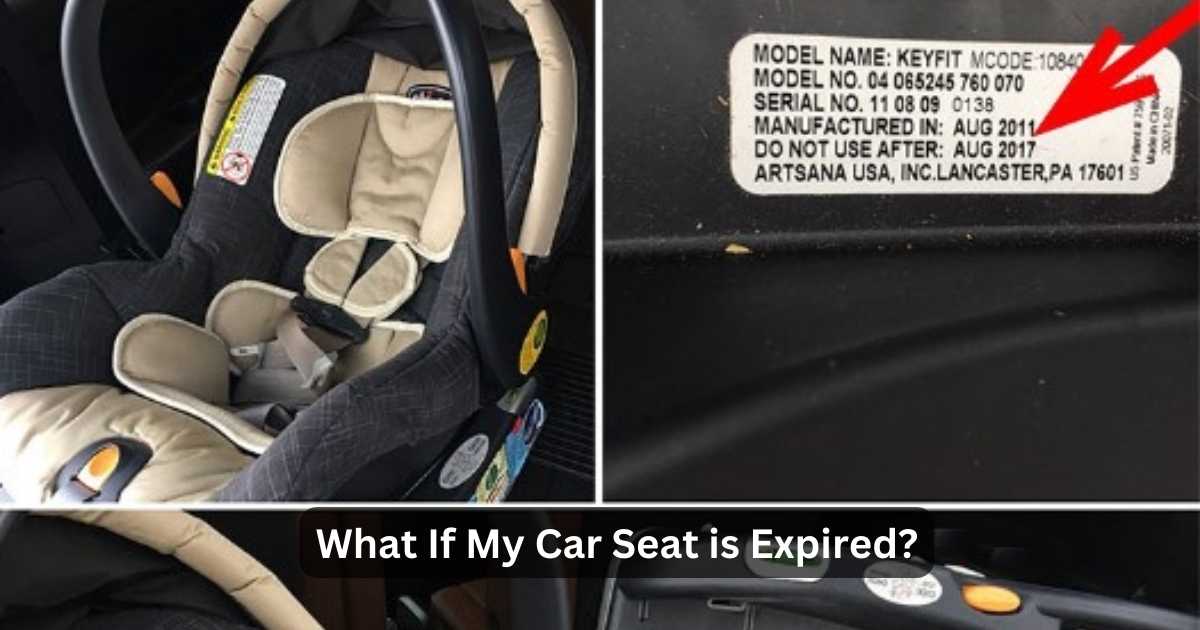
Where to Find a Car Seat’s Expiration Date
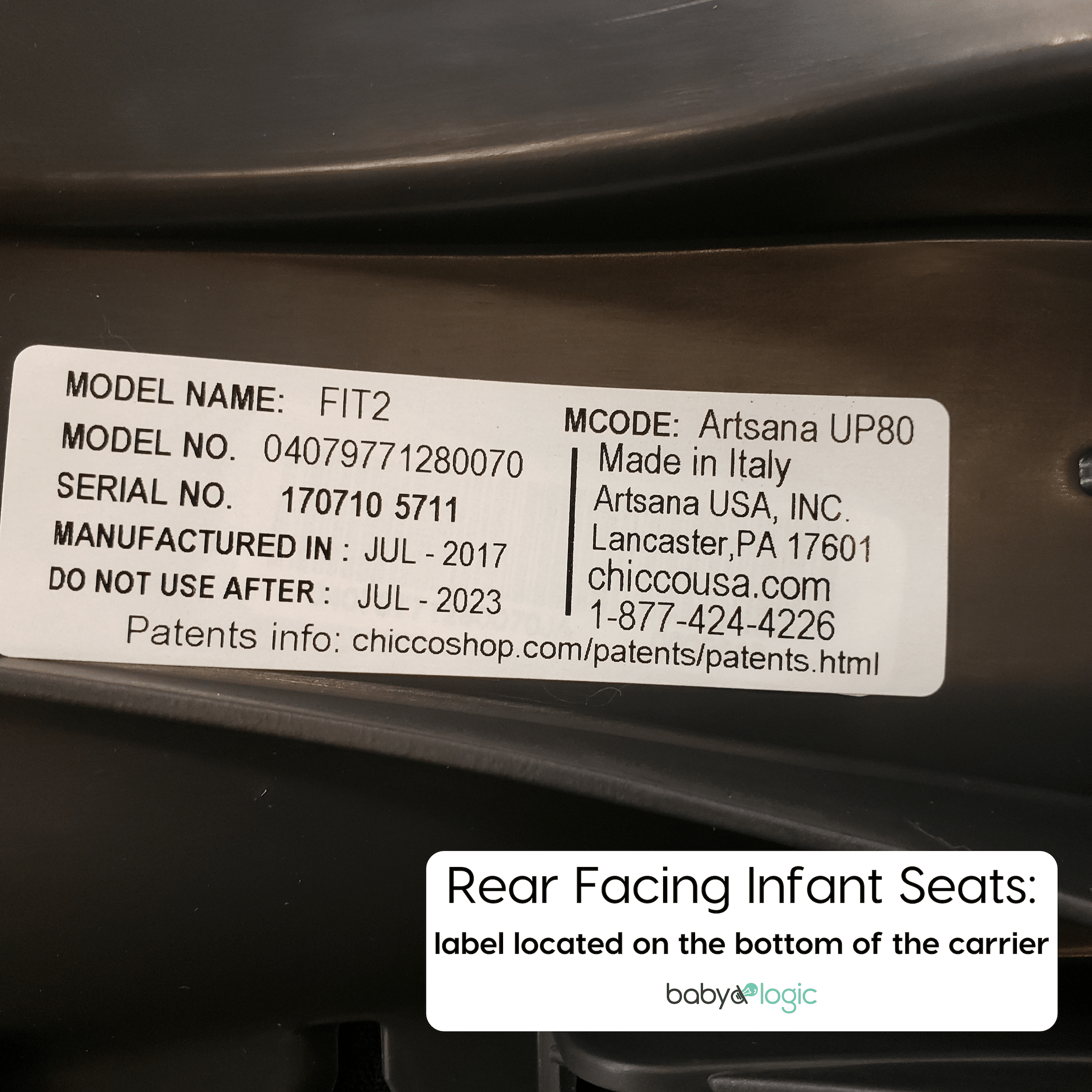
Most car seats do not print the word “expired” on the main cover. Instead, look for a manufacture date, an expiration date, or a label that states the useful life.


Check these areas:
- The back, side, or bottom of the seat shell
- The underside of the cover
- The base of an infant car seat
- The side near the harness adjustment area
- The registration card or product label
- The owner’s manual
- The manufacturer’s website
Look for phrases such as:
- “Do not use after”
- “Expiration date”
- “Useful life”
- “Do not use 10 years after the date of manufacture”
- “Manufactured on”
- “Date of manufacture” or “DOM”
Some seats show only the manufacture date. In that case, use the service-life period in the manual.
Example: Calculating the expiration date
Suppose a seat was made in August 2020, and the manual says not to use it more than seven years after manufacture.
- Manufacture date: August 2020
- Service life: Seven years
- Last month of use: August 2027
- Do not use after: The date stated by the manufacturer, if one is listed
Do not guess if the label shows only a year or if the print is hard to read. Ask the manufacturer for the correct interpretation.

Why Do Car Seats Expire?
Car seats expire because their safety system has a limited service life. The shell, harness, padding, buckles, and other parts may age over time. The manufacturer may also stop making replacement parts or supporting an older design.
An expiration date does not mean the seat will suddenly fail the next day. It means the manufacturer no longer supports its use after that point. The seat may be outside the period for which the company evaluated its materials, instructions, replacement parts, and design.
The American Academy of Pediatrics advises parents to follow the manufacturer’s instructions and avoid using car seats past their expiration date. The National Highway Traffic Safety Administration also tells caregivers to check the seat’s label and manual for its expiration information.
Car seats are tested under specific conditions. Older seats may not include newer design changes, updated instructions, or current fit features. That does not prove that every older seat is unsafe, but it is a reason to follow the stated service life.
Step-by-Step: How to Check if Your Car Seat Is Expired
Use this process for an infant seat, convertible seat, all-in-one seat, booster seat, or detachable base.


1. Identify the exact seat
Write down:
- Manufacturer
- Model name
- Model number
- Date of manufacture
- Serial number, if shown
The model number may be printed on a white or gray label. It may also appear in the manual.
This step matters because one manufacturer may use different service-life limits for different models. A detachable base may also have its own label and service-life information.
2. Inspect every label
Look on the seat shell, not only on the fabric cover. Check the base separately if the seat uses one.
Use a flashlight if needed. Do not remove a label to read it. If the label is missing, damaged, or unreadable, call the manufacturer with the model details and any photos you have.
3. Read the owner’s manual
The manual should explain how to use the manufacture date. It may say:
- Use the seat for six years after manufacture.
- Do not use the seat after a certain date.
- Use the seat until a specific date printed on the label.
- Use the base for a different period than the carrier.
Do not rely on a retailer listing or a general internet chart. The instructions for your exact model control.
4. Compare the dates
If the label gives an expiration date, use that date. If it gives only a manufacture date, apply the service-life rule in the manual.
If the date has passed, stop using the seat. If the date is close and you cannot find the manual, contact the manufacturer before the next trip.
5. Check recalls and missing parts
Search the manufacturer’s recall page and the NHTSA recall database. A recall is separate from expiration. A seat can be within its service life and still be subject to a safety recall.
You can search recalls through the NHTSA car seat and booster seat recall page or the manufacturer’s website.

What If the Car Seat Has No Expiration Date?
If you cannot find an expiration date, look for a manufacture date and read the manual. Many seats use the manufacture date instead of printing a final expiration date.
If you cannot find either date, contact the manufacturer. Provide:


- Brand name
- Model number
- Serial number
- Photos of all labels
- Where and when you obtained the seat
Do not use an old seat with no date simply because it looks clean. A missing date can make it impossible to confirm the seat’s age, recall status, or service life.
If the manufacturer cannot identify the seat or confirm its service life, replace it. This is especially important for a secondhand seat with an unknown history.
Signs You Should Replace a Car Seat Before It Expires
Age is only one reason to replace a car seat. Stop using the seat and contact the manufacturer or a certified child passenger safety technician if you find a serious problem.
Replace the seat when:
- It was involved in a moderate or severe crash.
- The shell is cracked, bent, split, or badly stressed.
- The harness is frayed, cut, torn, or damaged.
- The buckle does not latch or release as directed.
- The seat has missing parts.
- The seat was exposed to heat, fire, chemicals, or flood water.
- The label or model cannot be identified.
- The seat has an unknown crash or storage history.
- It is subject to a recall that requires replacement.
NHTSA recommends replacing a car seat after a moderate or severe crash. NHTSA also says a seat may not need replacement after a minor crash if all listed conditions are met, including that the vehicle could be driven away, the door nearest the seat was not damaged, no one was injured, airbags did not deploy, and there is no visible damage.
When in doubt after a crash, ask the manufacturer. Do not assume that a clean cover means the internal parts are undamaged.

How Expiration Differs From a Car Seat Recall
Expiration and recall are different problems.
| Issue | What it means | What to do |
|---|---|---|
| Expired seat | The manufacturer’s service-life period has ended | Stop using it and replace it |
| Recalled seat | The manufacturer or government has identified a specific safety problem | Follow the recall remedy |
| Crash damage | The seat may have experienced forces that affect its structure | Follow crash-replacement guidance |
| Missing parts | The seat may not work as designed | Get approved parts or replace it |
| Unknown history | You cannot confirm age, crash exposure, or care | Replace it if history cannot be verified |
A recall does not extend a seat’s expiration date. A repair kit also does not automatically restore an expired seat to usable status.
Register the seat with the manufacturer after purchase. Registration helps the company contact you about recalls or safety notices. Keep the manual in a safe place, too.
Can You Use an Expired Car Seat in an Emergency?
Avoid using an expired car seat for routine travel. If there is a true emergency and no safe alternative, call emergency services or seek help from a local child passenger safety program rather than treating an expired seat as acceptable for regular use.
An expired seat may still appear strong, but you cannot confirm that it remains within the manufacturer’s tested service period. The safest choice is to replace it with a seat that fits the child, fits the vehicle, and is within its service life.
Do not pass an expired seat to another family. Cut the harness straps and mark the seat as unsafe before disposal, following local waste rules. Some communities, retailers, and manufacturers offer car seat recycling or trade-in events, but availability changes by location.
How to Choose a Replacement Seat
When replacing an expired seat, start with the child and vehicle rather than the brand name.
Check these points:
- Child size: Follow the seat’s height and weight limits.
- Direction of travel: Keep the child rear-facing until the seat’s rear-facing limits are reached, as recommended by the AAP and the seat manufacturer.
- Vehicle fit: Confirm that the seat can be installed correctly in the vehicle seating position.
- Installation method: Read the vehicle manual and car seat manual for LATCH and seat-belt instructions.
- Expiration information: Find the new seat’s date label before purchase when possible.
- Recall registration: Register the seat as soon as you buy it.
- Used-seat history: Choose a used seat only if you know its complete history and can verify all parts, labels, instructions, and dates.


A certified Child Passenger Safety Technician can help check the fit and installation. Use the NHTSA child passenger safety inspection station locator to find local help.
The best seat is not automatically the most expensive one. The key requirements are correct fit, correct installation, an intact design, and use within the manufacturer’s instructions.
Common Mistakes When Checking a Car Seat
Mistake 1: Counting from the purchase date
Most manufacturers base the service life on the manufacture date, not the date you bought the seat. A seat that sat in a warehouse for two years may have less service life remaining than a newly made seat.
Mistake 2: Checking only the fabric
The expiration information is usually on the hard shell or a permanent label. The cover may hide it, but the cover itself is not the only part that matters.
Mistake 3: Assuming all seats expire after six years
Six years is common, but it is not universal. Some models have different limits. Use the exact manual for the exact model.
Mistake 4: Treating an expiration date as a recall
An expired seat is not necessarily recalled. A recalled seat may be newer than its expiration date. Check both issues separately.
Mistake 5: Buying an unknown used seat
A used seat may have been in a crash, stored in extreme heat, exposed to water, or cleaned with products that the manufacturer does not allow. If you cannot verify its full history, replace it.
Mistake 6: Using unapproved replacement parts
Do not add padding, clips, harnesses, covers, or inserts that the manufacturer did not approve for that model. Extra parts can change how the restraint works or prevent a proper fit.
Frequently Asked Questions
Do all car seats expire after six years?
No. Many car seats have a six-year service life, but some last longer or have different limits. Check the label and manual for the exact model.
Is the expiration date based on the manufacture date or purchase date?
Usually, it is based on the manufacture date. The manufacturer’s instructions decide how to calculate the service life.
Can an expired car seat be used as a backup?
It is best not to use an expired seat, even occasionally. Replace it with a seat that is within its service life and fits the child and vehicle.
Can I donate an expired car seat?
Do not donate an expired seat for another child to use. Mark it as expired, damage the harness if appropriate, and follow local disposal or recycling options.
Does a car seat expire if it has never been used?
Yes. The service-life period generally runs from the manufacture date, whether or not the seat was used. Materials and manufacturer support still age over time.
Final Check Before Your Next Trip
Find the manufacture or expiration date on the seat and base, read the exact manual, and check for recalls or damage. Replace the car seat if the service life has ended, the history is unknown, or the seat has a serious defect.
For installation questions, contact the manufacturer or a certified Child Passenger Safety Technician. A properly dated seat is only one part of safe travel; the seat must also fit the child, fit the vehicle, and be installed according to both manuals.


