
Yes, Mitsubishi makes dependable, practical cars that offer strong value, useful warranties, and affordable ownership.
If you are asking, “is Mitsubishi a good car?” the honest answer depends on the model, your budget, and what you value most. Mitsubishi vehicles often stand out for their long powertrain warranty, simple controls, standard safety features, and reasonable prices. However, some rivals offer better interior quality, stronger resale value, or more refined driving manners. This guide looks at reliability, safety, comfort, cost, performance, and long-term ownership so you can make a smart choice.

Is Mitsubishi a good car overall?
Mitsubishi is a good car brand for buyers who want practical transportation at a fair price. Its lineup is smaller than those of Toyota, Honda, Ford, or Hyundai, but it covers key needs with SUVs and compact cars.
The current Mitsubishi range in the United States has focused mainly on SUVs such as the Outlander, Outlander Sport, and Eclipse Cross. The Mirage has also been known for its low price and strong fuel economy, although availability and production plans can vary by model year and market.
Mitsubishi vehicles usually offer:
• Competitive purchase prices
• A long powertrain warranty
• Good fuel economy in smaller models
• Available all-wheel drive on several SUVs
• Useful safety technology
• Simple, easy-to-use controls
The brand is not always the best choice for a luxury feel or sporty handling. Still, it can make sense for drivers who want a new car with a manageable payment and low basic running costs.
Mitsubishi reliability and longevity
Reliability is one of the main reasons people search for “is Mitsubishi a good car?” The answer is generally positive, but it is not the same for every model or year.
A well-maintained Mitsubishi can serve for many years. Routine care matters more than the badge on the hood. Oil changes, tire rotations, brake service, transmission fluid changes, and prompt repairs can help prevent small problems from becoming expensive ones.
The brand’s long powertrain warranty also gives buyers extra peace of mind. In the United States, Mitsubishi has commonly offered a 10-year or 100,000-mile powertrain warranty for the original owner, along with a five-year or 60,000-mile new vehicle warranty. Coverage can change by model year, so always read the current warranty booklet before buying.
What affects Mitsubishi reliability?
Several factors shape long-term ownership:
• Model year: Newer models may have better technology but more complex systems.
• Maintenance history: A neglected vehicle can become costly, even if the model has a good record.
• Driving habits: Short trips, heavy towing, and rough roads can increase wear.
• Climate: Salt, heat, humidity, and extreme cold can affect batteries, brakes, and body panels.
• Transmission type: Continuously variable transmissions need the correct fluid and service schedule.
No reliability survey can predict the future of every individual car. A pre-purchase inspection is still one of the best tools for a used-car buyer.

Mitsubishi models worth considering
The best Mitsubishi for you depends on how you drive. Each model has a different balance of space, comfort, fuel use, and price.
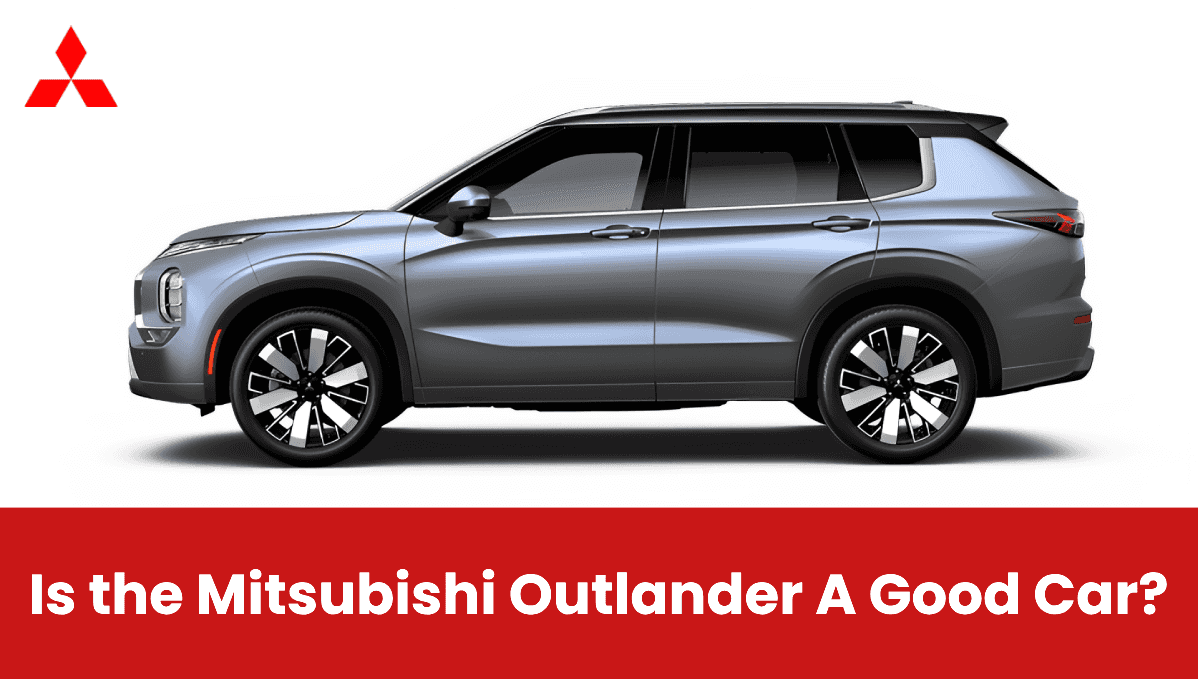
Mitsubishi Outlander
The Outlander is Mitsubishi’s larger family SUV. It offers three rows of seating, available all-wheel drive, and a broad set of driver assistance features.
Its strengths include:
• Room for small families
• A comfortable ride
• Available plug-in hybrid technology in some markets
• Good cargo flexibility
• A long warranty
The third-row seats are best for children or short trips. Adults may find them tight. The Outlander is also more focused on comfort than fast acceleration, so shoppers who want a sporty SUV may prefer another brand.
Mitsubishi Outlander Sport
The Outlander Sport is smaller and easier to park than the Outlander. It can work well for city drivers, students, and small households.
Its main advantages are:
• Compact dimensions
• Simple controls
• Available all-wheel drive
• Modest purchase and repair costs
• A higher seating position than a sedan
The cabin and powertrain may feel dated compared with newer competitors. Before buying, take a long test drive and check whether the engine and transmission feel smooth during highway merging.
Mitsubishi Eclipse Cross
The Eclipse Cross sits between a small and midsize SUV. It has a bold design, a raised driving position, and useful cargo space.
It may appeal to drivers who want:
• A distinctive exterior
• Available all-wheel drive
• A comfortable front seat
• Easy access for passengers
• A small SUV that feels different from common choices
The rear seat and cargo area are useful, but some competitors provide more space for the same money. Fuel economy and acceleration also depend on the drivetrain and trim level.
Mitsubishi Mirage
The Mirage has been a budget-focused compact car with excellent fuel economy and a low starting price. It is easy to drive in crowded areas and often costs less to insure than larger vehicles.
Its tradeoffs include:
• Slow acceleration
• Basic cabin materials
• More road noise
• Limited highway passing power
• Less space and comfort than a compact sedan
The Mirage can be a sensible choice if low purchase cost and fuel savings matter most. It is less appealing if you often drive on fast highways or carry several adults.
Mitsubishi safety features and crash protection
Safety is another important part of the answer to “is Mitsubishi a good car?” Modern Mitsubishi models commonly include systems such as forward collision warning, automatic emergency braking, lane departure warning, and automatic high beams. Exact features depend on the model and trim.
Some versions also offer:
• Blind-spot warning
• Rear cross-traffic alert
• Adaptive cruise control
• Lane keeping assistance
• A surround-view camera
These features can help reduce driver workload, but they do not replace attention. Sensors may also struggle in heavy rain, snow, bright sunlight, or when road markings are unclear.
Crash test results vary by model year and equipment. Check current ratings from the National Highway Traffic Safety Administration and the Insurance Institute for Highway Safety before choosing a specific Mitsubishi. A vehicle can have good safety technology but still receive different test results from another vehicle in the same class.
Mitsubishi fuel economy and performance
Mitsubishi vehicles are usually tuned for daily driving rather than excitement. Smaller models can use less fuel, while larger SUVs provide more room but consume more gas.
Fuel economy depends on:
• Engine size
• Front-wheel drive or all-wheel drive
• Vehicle weight
• Tire pressure
• Driving speed
• Weather and traffic
A continuously variable transmission can help an engine stay in an efficient range. Some drivers dislike the steady engine sound during hard acceleration, but others appreciate the smooth feel in normal city driving.
The Outlander Plug-in Hybrid can be especially interesting for drivers who have access to home charging. Electric driving may cover many short daily trips, while the gasoline engine supports longer journeys. Real-world range depends on temperature, speed, battery age, and how often the vehicle is charged.

Mitsubishi comfort, technology, and interior quality
Mitsubishi interiors are generally practical and easy to understand. Buttons and knobs are often simple to use, which can be helpful while driving. Some newer models offer smartphone integration, touchscreen navigation, heated seats, and a premium audio system.
However, cabin quality can vary. Some models use hard plastic in areas where competitors provide soft-touch materials. Road noise may also be more noticeable, especially in smaller vehicles with basic tires.
When comparing cars, do more than sit in the driver’s seat for five minutes. Try these checks:
Sit in every seating position.
Test the child-seat anchors if you have children.
Check cargo space with your normal bags or stroller.
Pair your phone with the infotainment system.
Drive over rough pavement and on the highway.
Listen for wind, tire, or suspension noise.
A test drive often reveals more than a brochure. It is the automotive version of trying on shoes before a long walk.

Mitsubishi maintenance and repair costs
Mitsubishi maintenance costs are often reasonable, especially for common service items. Oil changes, filters, tires, brakes, and batteries are usually easy for independent repair shops to handle.
Costs can rise when a vehicle needs specialized parts or electronic diagnosis. All-wheel-drive systems, turbocharged engines, hybrid components, and advanced driver assistance systems may require more trained technicians.
To control ownership costs:
• Follow the factory maintenance schedule.
• Use the correct engine oil and transmission fluid.
• Replace tires as a complete matching set when required.
• Keep service records.
• Repair warning lights early.
• Compare dealer prices with trusted independent shops.
A common mistake is choosing the lowest-priced used Mitsubishi without checking its history. A cheap car with worn tires, overdue fluids, and transmission problems can cost more than a well-kept example with a higher purchase price.

Mitsubishi warranty and resale value
Mitsubishi’s warranty is one of its strongest selling points. A 10-year or 100,000-mile powertrain warranty is longer than many standard warranties in the market. It can protect major components such as the engine, transmission, and drivetrain for the original owner.
Read the fine print before relying on warranty coverage. Important details may include:
• Whether coverage transfers to a later owner
• Required maintenance records
• Covered parts and exclusions
• Deductibles and claim procedures
• Roadside assistance limits
Resale value is more mixed. Popular Toyota and Honda models often hold their value better because demand is high and buyers trust their history. Mitsubishi’s lower resale value can be a disadvantage for owners who trade cars often, but it may help used-car shoppers find a newer vehicle at a lower price.
This creates a simple tradeoff: a Mitsubishi may cost less to buy, but it may not return as much money when you sell it.

Mitsubishi advantages and disadvantages
A clear list can make the decision easier.
Advantages of Mitsubishi
• Strong warranty coverage on many new vehicles
• Reasonable starting prices
• Available all-wheel drive
• Practical SUV choices
• Good fuel economy in smaller models
• Simple controls and user-friendly layouts
• Potentially lower used-car prices
Disadvantages of Mitsubishi
• Some interiors feel less refined than rivals
• Certain models offer modest acceleration
• Resale value may be weaker
• The lineup is smaller than many competitors
• Older models may have dated technology
• Dealer and parts availability can vary by location
The most important lesson is to judge the exact vehicle, not only the brand. A well-equipped Outlander may suit one buyer, while a used Mirage may suit another.
Is Mitsubishi a good used car?
A used Mitsubishi can be a good buy when it has a clean history and proper maintenance. The purchase price is often attractive, and depreciation may allow you to get more equipment for your money.
Before buying, review:
The vehicle history report.
Service and repair records.
Open safety recalls.
Tire age and tread depth.
Brake and suspension condition.
Transmission behavior.
Signs of water damage or rust.
The remaining factory warranty.
Arrange an inspection with an independent mechanic. Ask the mechanic to check fluid leaks, underbody rust, computer fault codes, suspension wear, and evidence of previous collision repairs.
During the test drive, watch for delayed engagement, shuddering, unusual noises, warning lights, or unstable steering. Walk away from a car that the seller will not let you inspect.
Is Mitsubishi worth buying for your needs?
Mitsubishi may be worth buying if you want a practical new vehicle with a long warranty and a lower entry price. It can be a strong fit for commuters, small families, first-time buyers, and drivers who prefer simple controls over luxury materials.
You may want another brand if you need:
• Class-leading resale value
• The quietest cabin
• Fast acceleration
• A large nationwide dealer network
• The most advanced hybrid system
• A highly polished interior
Make a short list of your real needs. Think about annual mileage, passenger space, snow or rain, fuel costs, insurance, and how long you plan to keep the car.
From an ownership perspective, keeping a vehicle for many years can reduce the impact of resale value. If you trade every two or three years, depreciation deserves more attention.
Frequently asked questions about is Mitsubishi a good car
Is Mitsubishi a reliable car brand?
Mitsubishi is generally a reliable brand when its vehicles receive regular maintenance. Reliability varies by model, year, powertrain, and owner care, so check records and model-specific reviews before buying.
Are Mitsubishi cars expensive to maintain?
Routine Mitsubishi maintenance is often affordable compared with many larger or luxury brands. Repair costs can increase for all-wheel-drive systems, hybrid parts, electronics, and neglected transmissions.
Do Mitsubishi cars last a long time?
A Mitsubishi can last many years when the owner follows the service schedule and fixes problems early. Mileage depends on driving conditions, maintenance quality, and the specific model.
Is Mitsubishi safer than Toyota or Honda?
Safety depends on the exact model and year, not just the brand. Compare current crash-test results and standard safety equipment for each vehicle before making a choice.
Does Mitsubishi have a good warranty?
Mitsubishi has been known for offering one of the longer powertrain warranties in the United States, commonly up to 10 years or 100,000 miles for the original owner. Terms can change, so confirm coverage for the exact model and model year.
Is a Mitsubishi Outlander a good family SUV?
The Outlander can be a good family SUV because it offers available three-row seating, safety features, and practical cargo space. Its third row is better for children than for adults, and other SUVs may provide stronger acceleration or a more upscale cabin.
Should I buy a new or used Mitsubishi?
A new Mitsubishi gives you the latest equipment and the strongest warranty protection. A used model may offer better value, but it should pass an independent inspection and have a clear maintenance history.
Conclusion
So, is Mitsubishi a good car? For many drivers, yes. Mitsubishi offers practical vehicles, useful safety features, competitive pricing, and a standout powertrain warranty. Its main compromises may include average resale value, basic interior materials, and less exciting performance than some rivals.
The smartest approach is to compare the exact model, trim, year, warranty, safety rating, and ownership cost. Take a long test drive, inspect any used vehicle, and request an insurance quote before signing. Explore current Mitsubishi models and independent vehicle ratings, then share your experience or questions in the comments.