

Cars made in the USA include popular Ford, Chevrolet, Tesla, Toyota, Honda, Jeep, Rivian, and many other models.
Knowing what cars are made in the USA is useful when you care about local jobs, supply chains, repair support, or domestic content. However, “made in America” can mean final assembly, American parts, or American-owned brands. Those are not always the same thing.
This guide explains what cars are made in the USA, where they are built, which brands have American factories, and how to check a specific vehicle before you buy it.

What does “made in the USA” mean for a car?
The phrase “made in the USA” usually means that a vehicle is assembled at a plant located in the United States. It does not always mean that every part comes from the United States.
Modern cars use global supply chains. A vehicle may be assembled in Michigan, Ohio, Kentucky, or Texas while using parts from Canada, Mexico, Japan, South Korea, Germany, or other countries. The engine, battery, transmission, electronics, and tires may all come from different locations.
When researching what cars are made in the USA, look at these three terms:
• Final assembly: The country where the vehicle is put together.
• U.S. and Canadian parts content: The share of parts sourced from the United States and Canada.
• Engine and transmission origin: The locations where these major components are built.
A car can have final assembly in the United States but still contain a large number of imported parts. Another vehicle may carry an American brand name but be assembled overseas.
Federal vehicle labels and annual government data can help shoppers compare these details. Still, the data can change by model year, trim, factory, and supply agreement. Always check the exact vehicle identification number, or VIN, when accuracy matters.
What cars are made in the USA by brand?
Several major automakers build vehicles in the United States. Some companies operate many plants, while others build only one or two models here.
Ford vehicles made in the USA
Ford has a long history of American manufacturing. Its U.S. plants build trucks, SUVs, electric vehicles, and commercial vans.
Common Ford vehicles assembled in the United States include:
• Ford F-150, built at plants in Michigan and Missouri
• Ford Super Duty, built in Kentucky and Ohio
• Ford Ranger, built in Michigan
• Ford Bronco, built in Michigan
• Ford Mustang, built in Michigan
• Ford Explorer, built in Illinois
• Ford Transit, built in Missouri
• Ford Mustang Mach-E, built in Mexico rather than the United States
Ford’s product mix shows why checking the exact model is important. Even within one brand, production can vary by vehicle and model year.
General Motors vehicles made in the USA
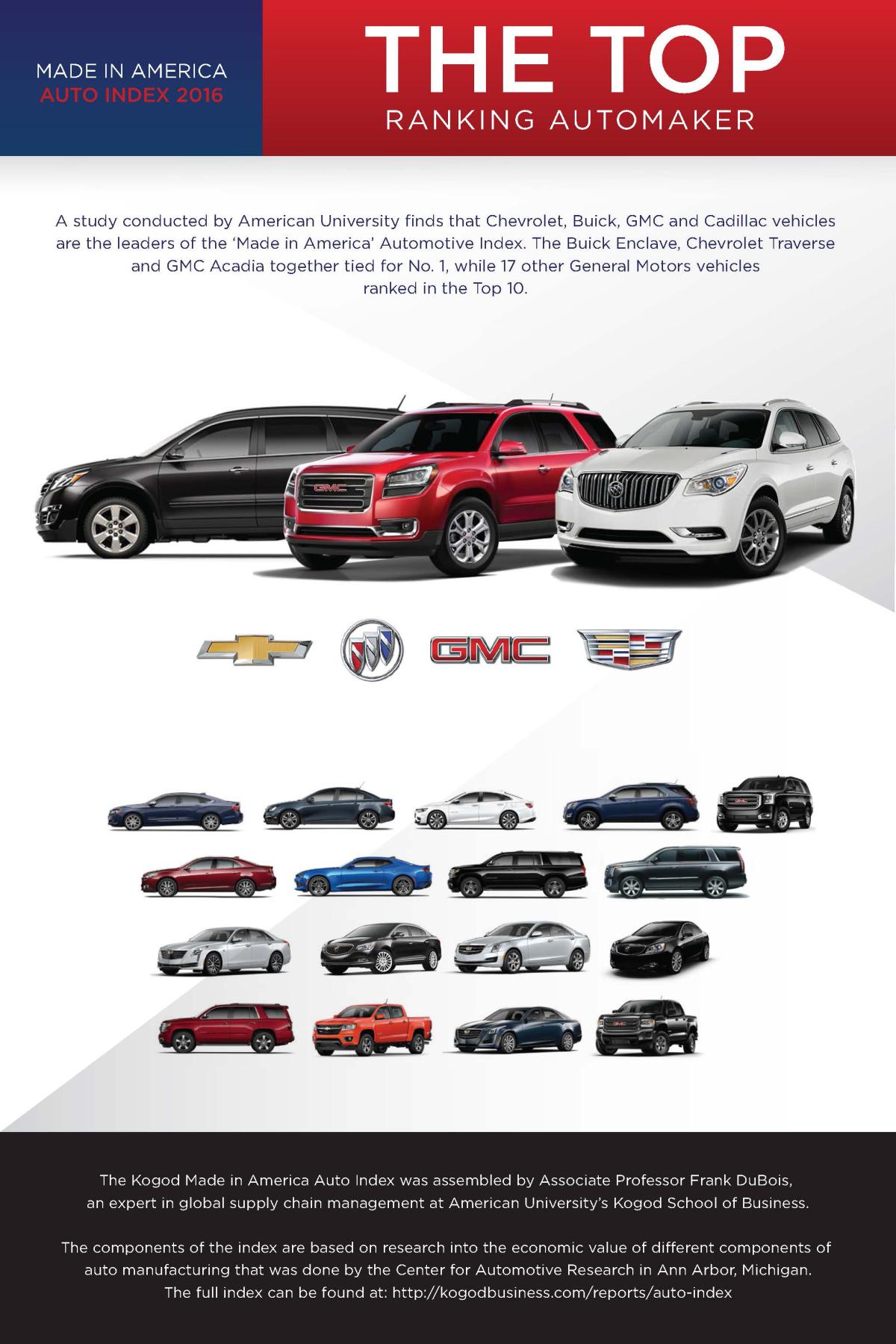
General Motors builds Chevrolet, GMC, Cadillac, and Buick vehicles in several American plants.
Examples include:
• Chevrolet Corvette, built in Kentucky
• Chevrolet Silverado, built in Indiana, Michigan, and Texas, depending on version
• Chevrolet Tahoe and Suburban, built in Texas
• GMC Yukon, built in Texas
• Cadillac Escalade, built in Texas
• Chevrolet Traverse, built in Michigan
• Cadillac CT4 and CT5, built in Michigan
• Chevrolet Colorado and GMC Canyon, built in Missouri
GM also builds electric vehicles in the United States. Production locations can change as battery plants open and factories are updated.
Stellantis vehicles made in the USA
Stellantis owns brands such as Jeep, Ram, Chrysler, and Dodge. Its American plants build many well-known trucks, SUVs, and minivans.
Vehicles made in the USA include:
• Jeep Wrangler, built in Ohio
• Jeep Gladiator, built in Ohio
• Jeep Grand Cherokee, built in Michigan
• Ram 1500, built in Michigan
• Ram 1500 Classic, built in Michigan
• Dodge Durango, built in Detroit
• Chrysler Pacifica, built in Canada, not the United States
The Jeep Wrangler is one of the clearest examples of an iconic American-built vehicle. It is strongly linked to U.S. manufacturing, although its parts still come from a global network.
Toyota vehicles made in the USA
Toyota operates a large manufacturing network in the United States. Its plants build cars, trucks, SUVs, engines, and transmissions.
Toyota vehicles assembled in the USA include:
• Toyota Camry, built in Kentucky
• Toyota Corolla, built in Mississippi
• Toyota Highlander, built in Indiana
• Toyota Sienna, built in Indiana
• Toyota Tundra, built in Texas
• Toyota Sequoia, built in Texas
• Toyota Grand Highlander, built in Indiana
• Toyota RAV4, built in Canada rather than the United States
Toyota is a good example of a foreign-owned company with deep American manufacturing roots. The company also employs thousands of workers and buys parts from many North American suppliers.
Honda vehicles made in the USA
Honda has built vehicles in the United States for decades. Its American plants produce cars, SUVs, minivans, engines, and other components.
Examples include:
• Honda Accord, built in Ohio
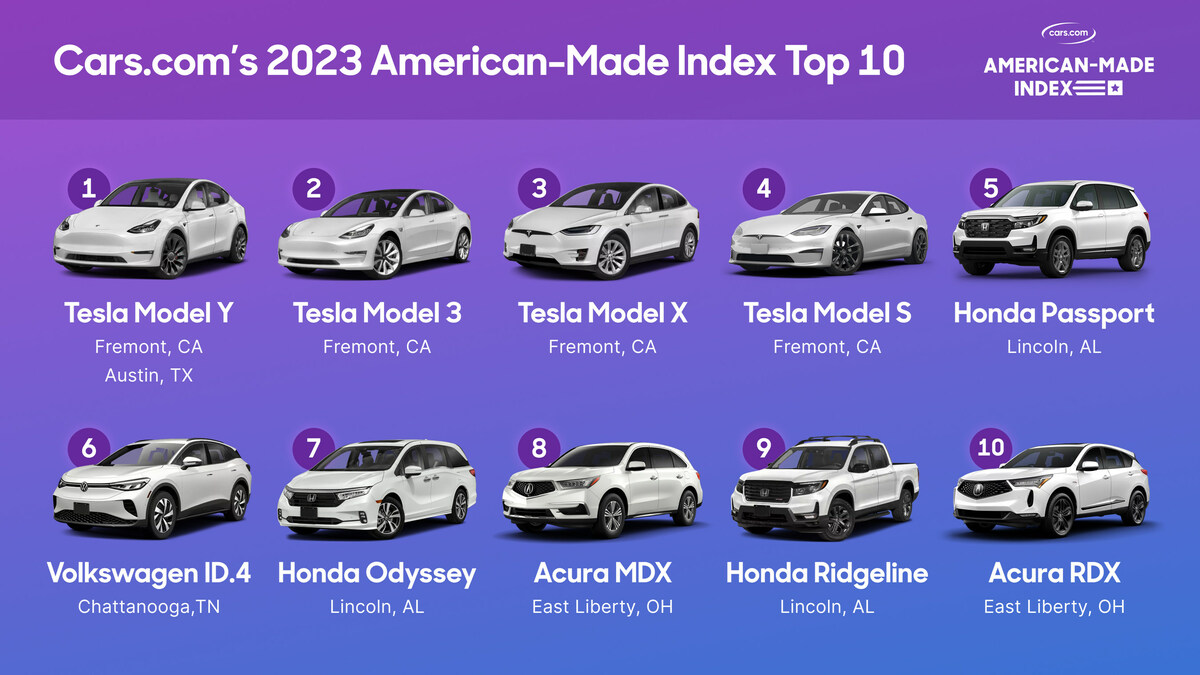
• Honda Odyssey, built in Alabama
• Honda Pilot, built in Alabama
• Honda Passport, built in Alabama
• Honda Ridgeline, built in Alabama
• Acura Integra, built in Ohio
• Acura MDX, built in Ohio
The Honda Civic is a popular American-made car in some production periods, but it is often imported depending on the model year and body style. Buyers should check the vehicle label rather than relying on the badge.
Tesla vehicles made in the USA
Tesla builds many vehicles in the United States, especially at its plants in California and Texas.
U.S.-built Tesla models include:
• Tesla Model S, built in California
• Tesla Model X, built in California
• Tesla Model 3, built in California and Texas, depending on version
• Tesla Model Y, built in California and Texas, depending on version
• Tesla Cybertruck, built in Texas
Tesla production is closely tied to battery sourcing and electric vehicle incentives. The place of assembly and battery origin can affect eligibility for federal tax credits, so buyers should verify current rules before ordering.
Nissan vehicles made in the USA
Nissan builds several vehicles in Tennessee and Mississippi.
Examples include:
• Nissan Pathfinder, built in Tennessee
• Nissan Murano, built in Mississippi
• Nissan Armada, built in Mississippi
• Nissan Leaf, built in Tennessee during applicable production periods
• Nissan Maxima, previously built in Tennessee before production ended
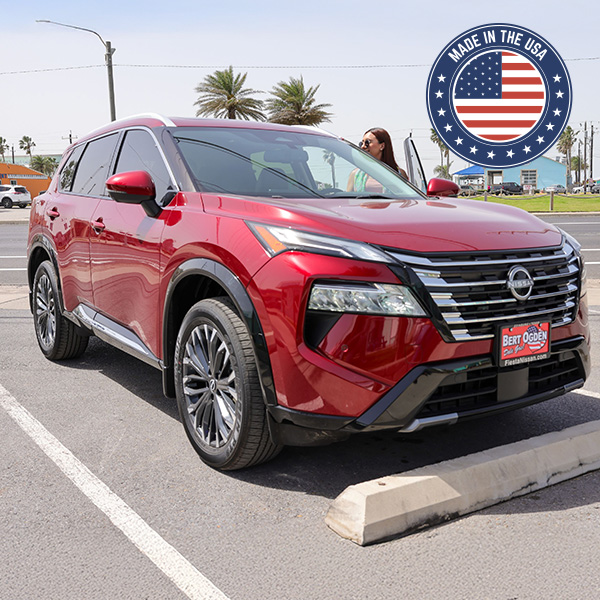
The Nissan Rogue is commonly associated with North American production, but many versions have been built in Japan or elsewhere. Exact production information matters.
Hyundai and Kia vehicles made in the USA
Hyundai and Kia have expanded their American manufacturing operations.
U.S.-built examples include:
• Hyundai Santa Fe, built in Alabama during applicable production periods
• Hyundai Tucson, built in Alabama for certain model years
• Hyundai Sonata, built in Alabama during applicable production periods
• Hyundai Elantra, built in Alabama during applicable production periods
• Kia Telluride, built in Georgia
• Kia Sorento, built in Georgia during applicable production periods
• Kia Sportage, built in Georgia for certain production periods
These brands also import many vehicles. A Hyundai or Kia badge alone does not tell you where the vehicle was assembled.
Subaru vehicles made in the USA
Subaru builds several popular crossover models at its plant in Indiana.
These include:
• Subaru Ascent
• Subaru Impreza
• Subaru Legacy
• Subaru Outback
Subaru production has changed over time, so the exact model year remains important. The company also builds many other vehicles in Japan.
Volkswagen vehicles made in the USA
Volkswagen operates a major plant in Chattanooga, Tennessee.
Vehicles assembled there include:
• Volkswagen Atlas
• Volkswagen Atlas Cross Sport
• Volkswagen ID.4, for certain production periods
The Volkswagen Golf, Jetta, and Tiguan are commonly produced outside the United States. A vehicle built in Tennessee may also qualify for different incentives than an imported Volkswagen.
BMW, Mercedes-Benz, and other luxury vehicles
Several luxury automakers build SUVs in the United States.
Examples include:
• BMW X3, X4, X5, X6, X7, and XM, built in South Carolina, depending on model
• Mercedes-Benz GLE, GLS, and EQE SUV, built in Alabama, depending on model
• Volvo S60, built in South Carolina during applicable production periods
• Polestar 3, built in South Carolina for certain production periods
Luxury vehicles often have complex global supply chains. American assembly does not necessarily mean a vehicle has high U.S. parts content.

American-made electric cars
Electric vehicle production has grown rapidly in the United States. New battery plants have changed what cars are made in the USA and where they are built.
U.S.-assembled electric vehicles include:
• Tesla Model 3 and Model Y
• Tesla Model S and Model X
• Tesla Cybertruck
• Chevrolet Equinox EV
• Chevrolet Blazer EV
• Chevrolet Silverado EV
• Cadillac Lyriq
• Ford F-150 Lightning
• Ford Mustang Mach-E
• Rivian R1T
• Rivian R1S
• Lucid Air
• Volkswagen ID.4 for certain production periods
• Honda Prologue for certain production periods, depending on production source
Electric vehicles require extra research because battery production can happen in a different country from final assembly. Battery minerals may also come from several regions.
Federal incentive rules have placed greater attention on battery components and critical minerals. Since those rules can change, confirm current eligibility through official government and manufacturer tools before making a purchase decision.

Which American car brands build vehicles in the USA?
People often ask whether an American brand means an American-made car. The answer is no.
Ford, Chevrolet, Cadillac, Buick, Jeep, Ram, Chrysler, Dodge, Tesla, Rivian, and Lucid are commonly viewed as American brands. However, these companies may also build some vehicles in Canada, Mexico, Europe, Asia, or other regions.
Likewise, Toyota, Honda, BMW, Mercedes-Benz, Volkswagen, Hyundai, Kia, Nissan, and Subaru are foreign-owned or foreign-founded brands with U.S. factories.
This creates four useful categories:
• American brand and U.S. assembly: Examples can include the Ford F-150, Chevrolet Corvette, and Tesla Model Y.
• American brand and foreign assembly: Some Ford, Chevrolet, Jeep, and Dodge models are built outside the United States.
• Foreign brand and U.S. assembly: Examples include the Toyota Camry, Honda Accord, BMW X5, and Volkswagen Atlas.
• Foreign brand and foreign assembly: Many compact cars and specialty models fit this group.
The country of ownership is different from the country of assembly. If your priority is supporting U.S. manufacturing, focus on assembly location and parts content rather than the brand’s headquarters.
How to check where a car was built
If you want to know what cars are made in the USA, do not depend only on advertisements. Use several checks.
Check the vehicle window sticker
The window sticker may show the final assembly point and parts content. On a new vehicle, this is often the fastest way to compare similar models.
Look for:
• Final assembly location
• Domestic and foreign parts percentages
• Engine origin
• Transmission origin
• Country of origin information
The sticker applies to that specific vehicle, not every vehicle sold under the same model name.
Decode the VIN
The first character of the VIN often identifies the region where the vehicle was built. A VIN beginning with 1, 4, or 5 generally points to the United States, while other characters can identify Canada, Mexico, Japan, South Korea, or other countries.
VIN decoding is useful, but it does not tell the complete story about parts content. Use it with the window sticker and official manufacturer information.
Check the official government database
Government vehicle databases provide information on final assembly and parts content for many vehicles. These records can help you compare different trims and model years.
For used vehicles, also inspect the VIN plate, title records, and original build information. Production can move during a model year, so two vehicles with the same badge may have different origins.
Ask the dealer for proof
A dealer should be able to provide a window sticker or build sheet. Ask direct questions:
Where was this exact vehicle assembled?
Where were the engine and transmission built?
What percentage of parts came from the United States and Canada?
Does this vehicle qualify for any current federal or state incentive?
A clear answer is better than a vague statement such as “This is an American car.”

Is an American-made car better?
American assembly does not automatically make a car better or worse. Quality depends on the design, factory process, supplier parts, maintenance, and model history.
Some U.S.-built vehicles earn strong reliability scores. Others may have recalls or early production problems. The same is true for vehicles built in Japan, Germany, Mexico, South Korea, or Canada.
A practical buying decision should include:
• Reliability history
• Crash-test performance
• Repair costs
• Fuel economy or electric range
• Warranty coverage
• Resale value
• Local dealer support
• Parts availability
• Total ownership cost
In my vehicle research and comparison work, one common mistake is treating “built here” as a substitute for checking reliability data. A locally assembled car can still have a weak transmission, expensive electronics, or poor fuel economy. Country of assembly is one useful factor, not the whole scorecard.
Benefits and limits of buying a U.S.-built vehicle
Choosing a U.S.-assembled vehicle can offer real advantages, but it also has limits.
Potential benefits
• It supports workers at American assembly plants and supplier businesses.
• Parts and service networks may be strong in the United States.
• Some vehicles qualify for federal or state incentives.
• Large trucks and SUVs built here may be designed for local driving needs.
• Domestic production can shorten some supply routes.
• American factories often build vehicles with features suited to U.S. roads and regulations.
Important limits
• A U.S.-built vehicle can still use many imported parts.
• An American brand may assemble a vehicle overseas.
• Assembly location can change from one model year to the next.
• Federal incentive rules may change.
• A vehicle with more domestic content is not always the best value.
• Imported vehicles can also provide excellent reliability and support.
The best approach is to match the vehicle to your needs first. Then use American assembly and domestic content as part of the final comparison.

What cars are made in the USA for families?
Families often look for safe SUVs, minivans, and trucks with useful cargo space. Several U.S.-built choices fit these needs.
Popular examples include:
• Honda Odyssey for minivan buyers
• Toyota Sienna for hybrid minivan buyers
• Honda Pilot for three-row SUV shoppers
• Toyota Highlander and Grand Highlander
• Subaru Ascent
• Volkswagen Atlas
• Chevrolet Tahoe and Suburban
• Ford Explorer
• Jeep Grand Cherokee
• Kia Telluride
Availability can vary by plant and model year. Before buying, compare child-seat access, third-row space, fuel use, safety ratings, and repair costs.
A large SUV may look practical but cost much more to fuel and maintain. Sometimes a smaller American-built crossover is the wiser choice for daily school runs and commuting.
What cars are made in the USA for trucks and work?
The United States remains a major center for pickup truck production. Many full-size trucks are built for towing, hauling, construction, farming, and recreation.
Common U.S.-built trucks include:
• Ford F-150
• Ford Super Duty
• Chevrolet Silverado
• GMC Sierra
• Ram 1500
• Toyota Tundra
• Nissan Titan during applicable production periods
• Rivian R1T
When comparing trucks, check more than the assembly location. Towing capacity depends on the engine, axle ratio, cab style, bed length, tires, and equipment package.
A base truck and a heavily equipped truck can have very different capabilities. Read the door-jamb payload label and the manufacturer’s towing guide for the exact vehicle.
What cars are made in the USA for performance fans?
American factories build several performance cars and high-powered vehicles.
Examples include:
• Chevrolet Corvette
• Ford Mustang
• Cadillac CT4-V and CT5-V Blackwing
• Dodge Durango SRT during applicable production periods
• Chevrolet Camaro during its production period
• Tesla Model S Plaid
• Lucid Air Sapphire
The Chevrolet Corvette is built in Bowling Green, Kentucky, and remains one of the best-known sports cars assembled in the United States. The Ford Mustang is built in Michigan and has a long connection to American performance culture.
Performance buyers should inspect more than horsepower. Tire cost, brake wear, insurance, cooling systems, and fuel use can make ownership much more expensive than expected.
Common mistakes when searching for what cars are made in the USA
Searching for what cars are made in the USA can become confusing because online lists are often outdated. Avoid these mistakes:
• Assuming an American badge means U.S. assembly
• Ignoring the model year
• Checking the brand instead of the exact VIN
• Confusing “North American made” with “U.S. made”
• Treating domestic parts percentage as a quality score
• Assuming every trim is built at the same plant
• Forgetting that electric vehicle incentives have detailed requirements
• Using an old article without confirming current production
Manufacturing changes are normal. Plants add new models, stop old models, or share production with another factory. Always confirm the vehicle you are actually considering.
Frequently asked questions about what cars are made in the USA
What is the most American-made car?
There is no single permanent winner because domestic content and production locations change by model year. Trucks such as the Ford F-150, Chevrolet Silverado, and Tesla vehicles often rank strongly in U.S. assembly and domestic production comparisons.
Are Toyota cars made in the USA?
Yes. Toyota builds vehicles such as the Camry, Corolla, Highlander, Sienna, Tundra, and Sequoia in American plants. Other Toyota models are imported, so the exact model and model year matter.
Are all Ford cars made in the USA?
No. Ford builds many vehicles in the United States, but it also assembles vehicles in Mexico, Canada, Europe, and other locations. Check the window sticker or VIN for the exact Ford vehicle.
Are electric cars made in the USA?
Yes. Tesla, Rivian, Lucid, Ford, General Motors, Volkswagen, and other companies build electric vehicles in the United States. Battery sourcing and incentive eligibility can differ from final assembly location.
How can I tell if my car was made in America?
Check the vehicle window sticker, VIN, and official vehicle information. The first VIN character can show the assembly region, while the sticker may provide more detail about parts content, engine origin, and transmission origin.
Does buying a U.S.-made car support American jobs?
Usually, U.S. assembly supports workers at the plant and at related suppliers. However, the total economic impact depends on the vehicle’s parts content, engineering work, logistics, and company operations.
Are cars made in the USA more reliable?
Not automatically. Reliability depends on the model, powertrain, design, factory process, and maintenance history. Research the exact model and year instead of using assembly location as a guarantee.
Conclusion
What cars are made in the USA includes far more than traditional American brands. Ford, Chevrolet, Jeep, Ram, Tesla, Rivian, Toyota, Honda, BMW, Mercedes-Benz, Hyundai, Kia, Subaru, Volkswagen, and others build vehicles at U.S. factories.
The key lesson is simple: separate brand identity from final assembly. Check the exact model year, window sticker, VIN, parts content, and battery information before you buy.
Use this knowledge to compare vehicles with confidence, support the type of manufacturing you value, and choose a car that fits your budget and daily life. Explore current government vehicle data, inspect the vehicle sticker, and share your experience with American-made cars in the comments.