

If you see 70 R in a tire size on a vehicle in the United States, it usually means two different things:
- 70 is the tire’s aspect ratio. The sidewall height is 70% of the tire’s width.
- R means the tire has radial construction, the standard design used on nearly all modern passenger vehicles in the U.S.
For example, in P225/70R16:
- P = passenger tire
- 225 = tire width in millimeters
- 70 = aspect ratio
- R = radial construction
- 16 = wheel diameter in inches

What does the “70” mean on a tire?
The 70 is the tire’s aspect-ratio number. It tells you the sidewall height as a percentage of the tire’s width.


It does not mean:
- 70 millimeters
- 70 inches
- 70 pounds
- A speed rating
- The maximum speed of the tire
A 70-series tire has a sidewall height equal to 70% of its section width.
Example: calculating a 225/70 tire
Suppose the tire size is 225/70R16.
- Tire width: 225 mm
- Aspect ratio: 70%
- Sidewall height: 225 × 0.70 = 157.5 mm
The sidewall is about 157.5 millimeters, or roughly 6.2 inches, tall.
The tire has two sidewalls, so the sidewalls add about 315 millimeters to the wheel diameter. The approximate overall tire diameter is:
- Two sidewalls: 157.5 × 2 = 315 mm
- Wheel diameter: 16 inches × 25.4 = 406.4 mm
- Total: 721.4 mm, or about 28.4 inches
This is an estimate. The actual mounted diameter can vary slightly by tire model and manufacturer.
What does the “R” mean on a tire?
The R means radial construction.
In a radial tire, the internal body cords run roughly from one bead to the other at a right angle to the direction of travel. Belts beneath the tread help support the tread area.
Radial construction can provide:
- Stable handling
- Lower rolling resistance than older bias-ply designs
- A smoother ride
- Better tread life when the tire is correctly inflated and maintained


The letter R does not refer to the wheel size. The number after it gives the wheel diameter.
In 225/70R16:
- R = radial
- 16 = the tire fits a 16-inch wheel
Most tires sold for cars, minivans, crossovers, SUVs, and light trucks in the United States use radial construction.
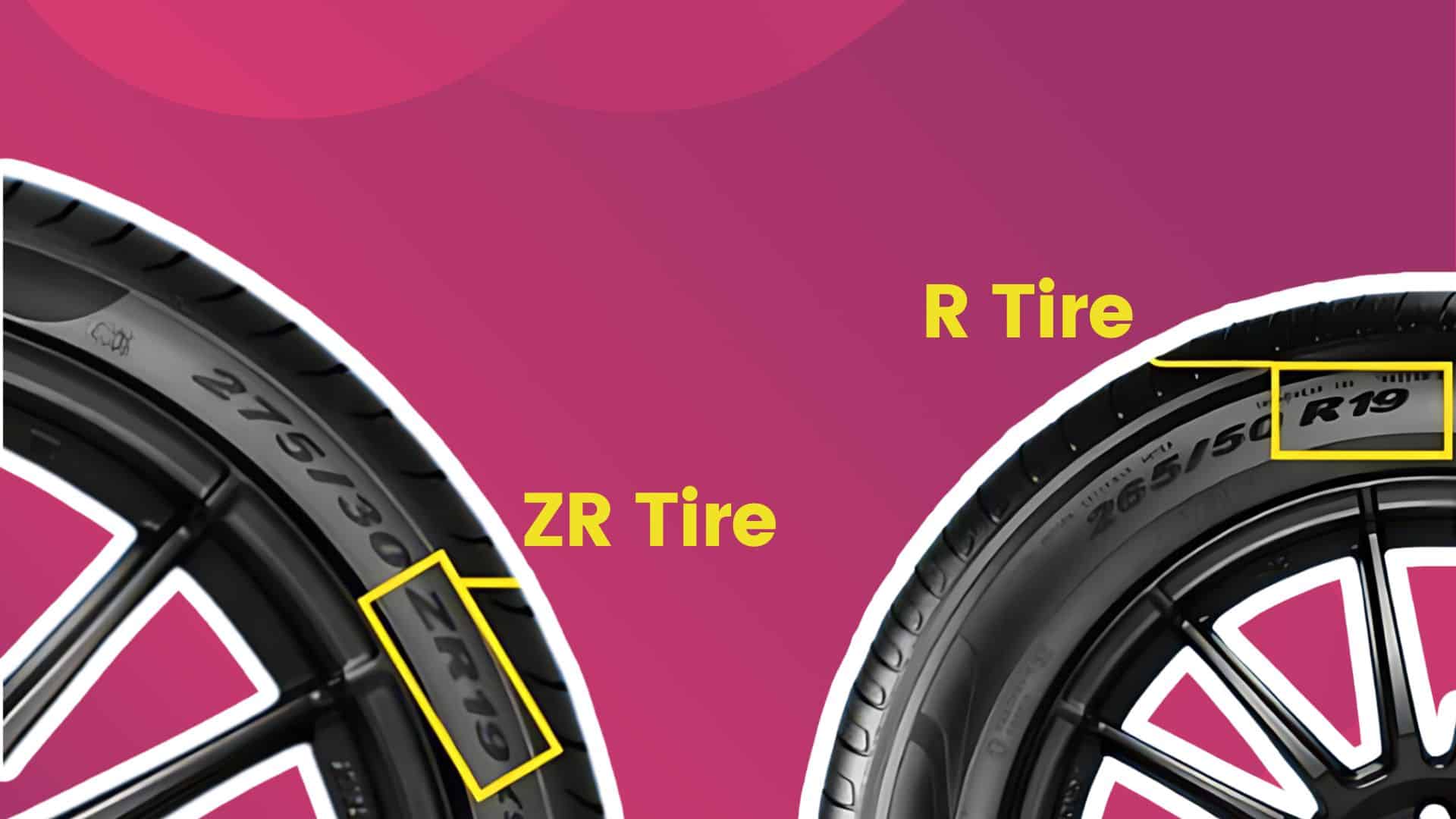
How to read a complete tire size
A full tire size contains several parts. Each part describes a different feature of the tire.
| Marking | Meaning | Example |
|---|---|---|
| P | Passenger vehicle tire | P225/70R16 |
| 225 | Section width in millimeters | 225 mm |
| 70 | Aspect ratio | Sidewall is 70% of width |
| R | Radial construction | Radial tire |
| 16 | Wheel diameter | 16 inches |
| 102 | Load index | Maximum load shown by a standard chart |
| H | Speed symbol | Approved speed category |
A common U.S. tire size may look like P225/70R16 102H.
The last two parts are important:
- 102 is the load index.
- H is the speed symbol.
Do not confuse the R in the middle with the speed symbol at the end. The R describes construction. The final letter describes the tire’s speed category.
What does P225/70R16 mean?
P225/70R16 means:
- P: designed for passenger-vehicle use
- 225: About 225 mm wide
- 70: Sidewall height is 70% of the width
- R: Radial construction
- 16: Fits a 16-inch wheel
This size may be used on certain cars, crossovers, minivans, and SUVs. The correct size depends on the vehicle maker’s specifications.
What does 225/70R16 102H mean?
The added 102H gives load and speed information:
- 102: Load index, which must be checked against the official load-index table
- H: Speed symbol for the tire’s certified speed category under specified test conditions
The load index is not the same as the tire’s actual carrying capacity in pounds unless you look it up in the proper reference table. Never guess from the number.

How does a 70-series tire affect driving?
A 70-series tire generally has a taller sidewall than a tire with a lower aspect ratio, such as a 55-series tire of the same width.
A taller sidewall may offer:
- More cushioning over rough pavement
- More protection from sharp road impacts
- A softer steering response
- More sidewall flex during hard cornering


A lower aspect ratio often gives quicker steering response and a firmer feel. However, aspect ratio alone does not determine handling. Tire construction, tread design, inflation pressure, wheel width, suspension settings, and vehicle weight also matter.
70-series versus 60-series tires
Compare two tires with the same 225 mm width:
- 225/70R16 sidewall: 225 × 0.70 = 157.5 mm
- 225/60R16 sidewall: 225 × 0.60 = 135 mm
The 70-series tire has a sidewall about 22.5 mm taller on each side. That changes the tire’s overall diameter and may affect speedometer readings, clearance, gearing, and vehicle systems.
This is why you should not change from a 70-series tire to a 60-series tire just because both fit the wheel.
Can you replace a 70R tire with another size?
Only if the replacement size is approved for the vehicle or confirmed by a qualified tire professional.
The safest starting point is the vehicle’s tire information placard. In the United States, the placard is usually found:
- On the driver-side doorjamb
- Inside the driver’s door
- On the fuel-door area
- In the owner’s manual
The placard lists the original tire size and the recommended cold inflation pressure.
Check these details before changing size
Compare the proposed tire with the vehicle specification:
- Overall diameter
- Load index
- Speed symbol
- Wheel diameter
- Wheel width compatibility
- Clearance from suspension parts
- Clearance from the fender and body
- Compatibility with the spare tire
- Effect on the vehicle’s speedometer and safety systems
A tire that physically fits the wheel may still be wrong for the vehicle.
Why overall diameter matters
A major change in tire diameter can affect:
- Speedometer accuracy
- Odometer readings
- Anti-lock braking systems
- Traction control
- Electronic stability control
- Gear ratios and engine speed
- Fender and suspension clearance
For vehicles with all-wheel drive or four-wheel drive, tire circumference differences can also place stress on the drivetrain. Follow the vehicle manufacturer’s guidance.


Is a 70R tire good for your vehicle?
A 70R tire can be a good choice when it matches the vehicle’s approved size, load rating, and speed rating.
The number 70 is not a quality grade. It only describes the sidewall proportion. A tire’s performance also depends on:
- Tread design
- Tire type
- Rubber compound
- Load rating
- Speed rating
- Wet traction
- Winter performance
- Noise level
- Inflation pressure
- Vehicle alignment
A 70-series tire may suit drivers who want a comfortable ride and useful sidewall cushioning. It may not provide the same steering feel as a lower-profile tire, especially during quick cornering.
What is the difference between 70R and 70-series?
These terms are related but are not identical.
70-series
“70-series” refers to the aspect ratio. The sidewall height equals 70% of the tire width.
70R
In a marking such as 225/70R16, the 70 is the aspect ratio and the R identifies radial construction.
The complete code must be read as a sequence. Looking at “70R” by itself does not tell you the full tire size, load capacity, or wheel diameter.
Does R mean the tire is rated for racing?
No. The R in a standard tire size means radial, not racing.
For example, P235/65R17 is a normal radial tire size. It does not automatically indicate a racing tire or high-performance tire.
A tire may have additional markings, such as:
- Z or ZR in some performance tire designations
- A speed symbol such as W or Y
- Manufacturer-specific original-equipment markings
- Mud-and-snow or severe-snow-service symbols
These markings have separate meanings. Use the complete tire code and the vehicle manufacturer’s specifications.
Where can you find the correct tire size?
The vehicle manufacturer’s tire placard is the best place to begin. You can also check the owner’s manual and the existing tire sidewall.
The sidewall may show a size such as:


P225/70R16 102H
But the tire currently installed may not be the size originally specified for the vehicle. A previous owner, shop, or tire retailer may have changed it.
Before ordering tires, compare:
- The door-jamb placard
- The owner’s manual
- The current tire size
- The vehicle identification information used by the tire shop
If these sources do not agree, ask a qualified tire professional to verify the correct fitment.
What mistakes should you avoid?
Avoid treating the aspect-ratio number as a complete tire specification.
Common mistakes include:
- Assuming “70” means 70 millimeters
- Thinking “R” means racing
- Confusing R with the speed rating
- Choosing a tire by wheel diameter alone
- Ignoring the load index
- Using the maximum pressure printed on the sidewall as the vehicle’s normal pressure
- Mixing tire sizes on an all-wheel-drive vehicle
- Replacing only one tire without checking tread-depth and drivetrain requirements
- Assuming a tire will fit because it mounts on the wheel
The pressure listed on the tire sidewall is generally the tire’s maximum permitted cold inflation pressure, not necessarily the vehicle’s recommended everyday pressure. Use the pressure on the vehicle placard unless the vehicle manufacturer gives different instructions.
What should you do before buying a 70R tire?
Use this quick checklist:
- Read the tire placard on the driver-side doorjamb.
- Confirm the full size, not just “70R.”
- Match or exceed the required load index only when permitted by the vehicle maker.
- Match the required speed symbol.
- Confirm the wheel diameter.
- Check whether the vehicle requires matching tire sizes.
- Verify cold inflation pressure after installation.
- Inspect the new tire for the correct date and markings.
- Have the tire mounted and balanced by a qualified professional.
- Recheck pressure when the tires are cold.
If the vehicle has uneven wear, steering pull, vibration, or repeated air loss, correct the underlying problem before installing new tires.
Key takeaways
- 70 means the tire’s sidewall height is 70% of its width.
- R means radial construction.
- In 225/70R16, the tire is about 225 mm wide and fits a 16-inch wheel.
- The 70 is not a speed rating or a measurement in millimeters.
- The full tire size also includes load and speed information.
- Always follow the vehicle’s tire placard and owner’s manual.
- Do not change tire size without checking diameter, load, clearance, and vehicle-system compatibility.
Frequently asked questions
Is a 70R tire a 70-inch tire?
No. The 70 is an aspect ratio, not a measurement in inches. It means the sidewall height is 70% of the tire’s width.
Is R the speed rating?
No. R means radial construction when it appears between the aspect ratio and wheel diameter. The speed symbol is usually the final letter in a marking such as 102H.
Does 70R fit any 16-inch wheel?
No. A 70R marking is incomplete. You need the full size, such as P225/70R16, plus the correct load and speed ratings. Wheel width and vehicle clearance also matter.
Can I use a 70-series tire instead of a 65-series tire?
Not automatically. The change may alter overall diameter, vehicle clearance, speedometer accuracy, handling, and electronic safety-system operation. Use only a size approved for the vehicle.
How do I know what tire pressure to use?
Check the tire information placard on the driver-side doorjamb or the owner’s manual. Check pressure when the tires are cold. Do not use the tire sidewall’s maximum pressure as the default vehicle setting unless the manufacturer specifically says so.


Conclusion
On a tire marked 225/70R16, the 70 describes the sidewall height as a percentage of tire width, while the R means radial construction. The number and letter work together as part of a larger tire-size code, but neither one tells you whether the tire is correct for your vehicle.
Before replacing a tire, verify the complete size, load index, speed symbol, wheel diameter, and recommended pressure on the vehicle’s door-jamb placard. When the markings or fitment are unclear, consult a qualified tire professional rather than relying on the “70R” label alone.
