
VSA means Vehicle Stability Assist, a safety system that helps your car maintain grip and control.
If you see VSA on a car, you are usually looking at a Honda or Acura dashboard message. As a vehicle safety specialist would explain, Vehicle Stability Assist uses sensors, brakes, and engine control to reduce wheel spin and help prevent skids. This guide explains what the VSA light means, why it turns on, whether you can drive with it, and how to fix the problem safely.

What Does VSA Mean on a Car?
VSA stands for Vehicle Stability Assist. It is Honda and Acura’s name for an electronic stability control system. In simple terms, VSA helps keep your car moving in the direction you steer.
The system compares several signals many times per second, including:
• Steering wheel angle
• Wheel speed
• Vehicle speed
• Engine torque
• Side-to-side movement
• Turning rate
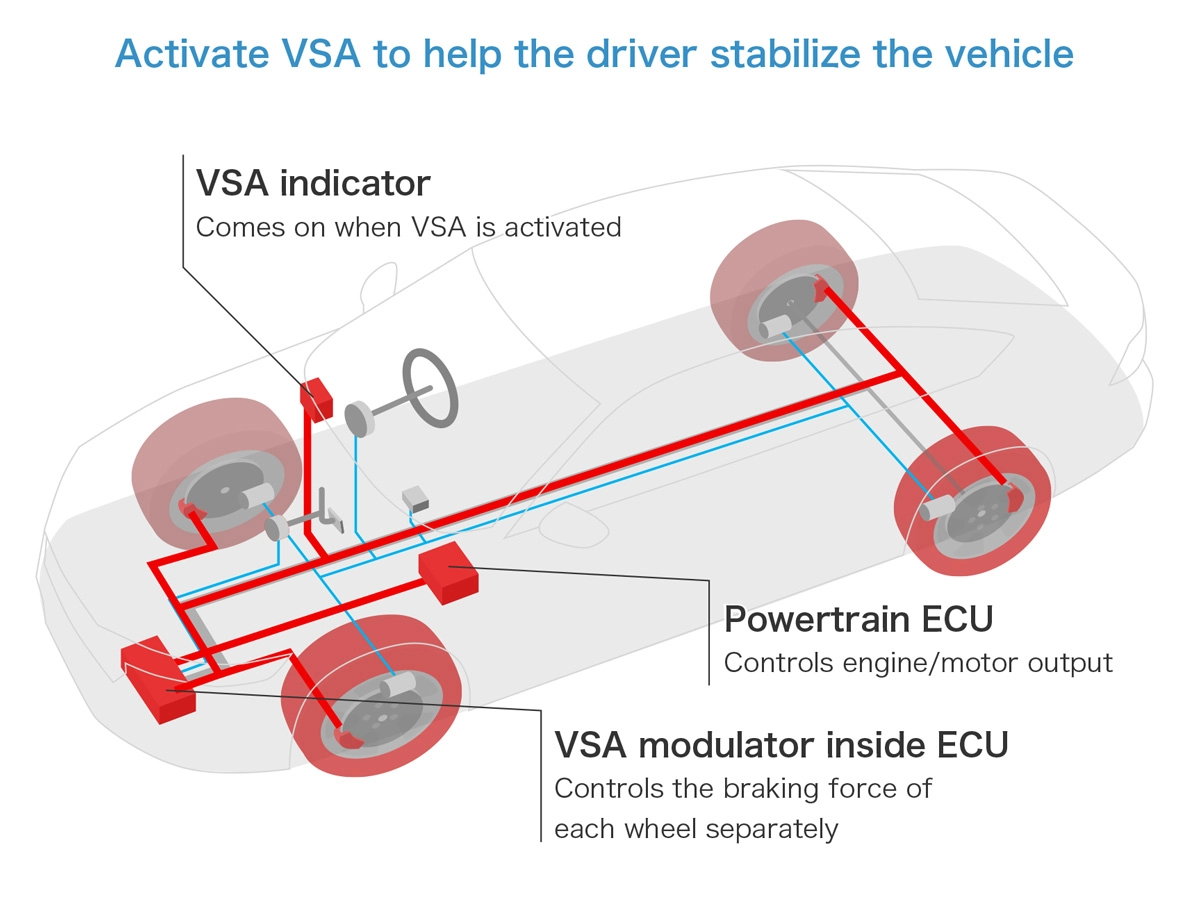
If the car starts to slide, the VSA system can reduce engine power and apply the brakes to one or more wheels. This can help the driver regain control.
The meaning of VSA on a car is similar to electronic stability control, or ESC, used by many other vehicle brands. The name changes, but the basic safety goal is much the same.
For example, imagine turning on a wet road. If the front tires lose grip, the car may not turn as much as you expect. If the rear tires slide, the back of the car may move outward. VSA can step in before a small loss of grip becomes a serious skid.
How Vehicle Stability Assist Works
VSA works with the anti-lock braking system, or ABS, and the traction control system. These systems share information, but they do different jobs.
ABS helps keep the wheels from locking during hard braking. Traction control limits wheel spin during acceleration. VSA focuses on keeping the vehicle on its intended path during a turn or sudden maneuver.
Here is a simple example:
- You turn the steering wheel to the left.
- Sensors detect that the car is moving more toward the right.
- The VSA computer identifies possible understeer.
- The system may reduce engine power and brake selected wheels.
- The car may move closer to the path chosen by the driver.
VSA cannot defeat the laws of physics. It cannot create grip when tires are worn, roads are flooded, or speed is too high. Think of it as a careful helper, not a replacement for good tires and safe driving.
VSA and traction control
Traction control mainly controls wheel spin during acceleration. If one drive wheel spins on snow, the system can reduce power or brake that wheel.
VSA can also manage wheel spin, but its wider role is directional control. This is why the VSA light may appear during a sharp turn, not only when accelerating.
VSA and ABS
ABS works when you brake hard. It rapidly adjusts brake pressure so the tires continue rotating instead of locking.
VSA uses ABS hardware to brake individual wheels. However, a VSA warning may also point to a problem with a wheel speed sensor, steering angle sensor, or another shared component.
What Does the VSA Light Mean?
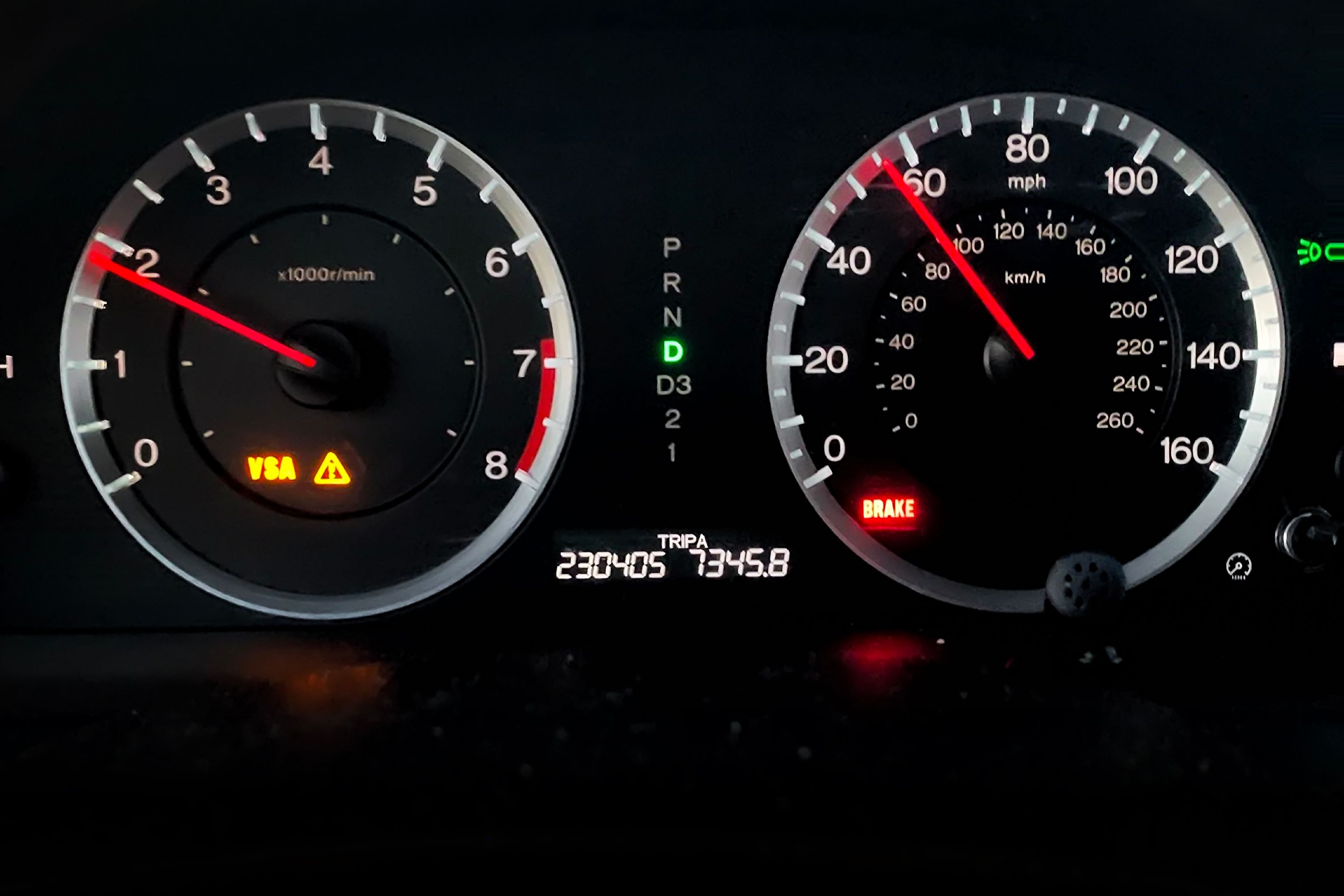
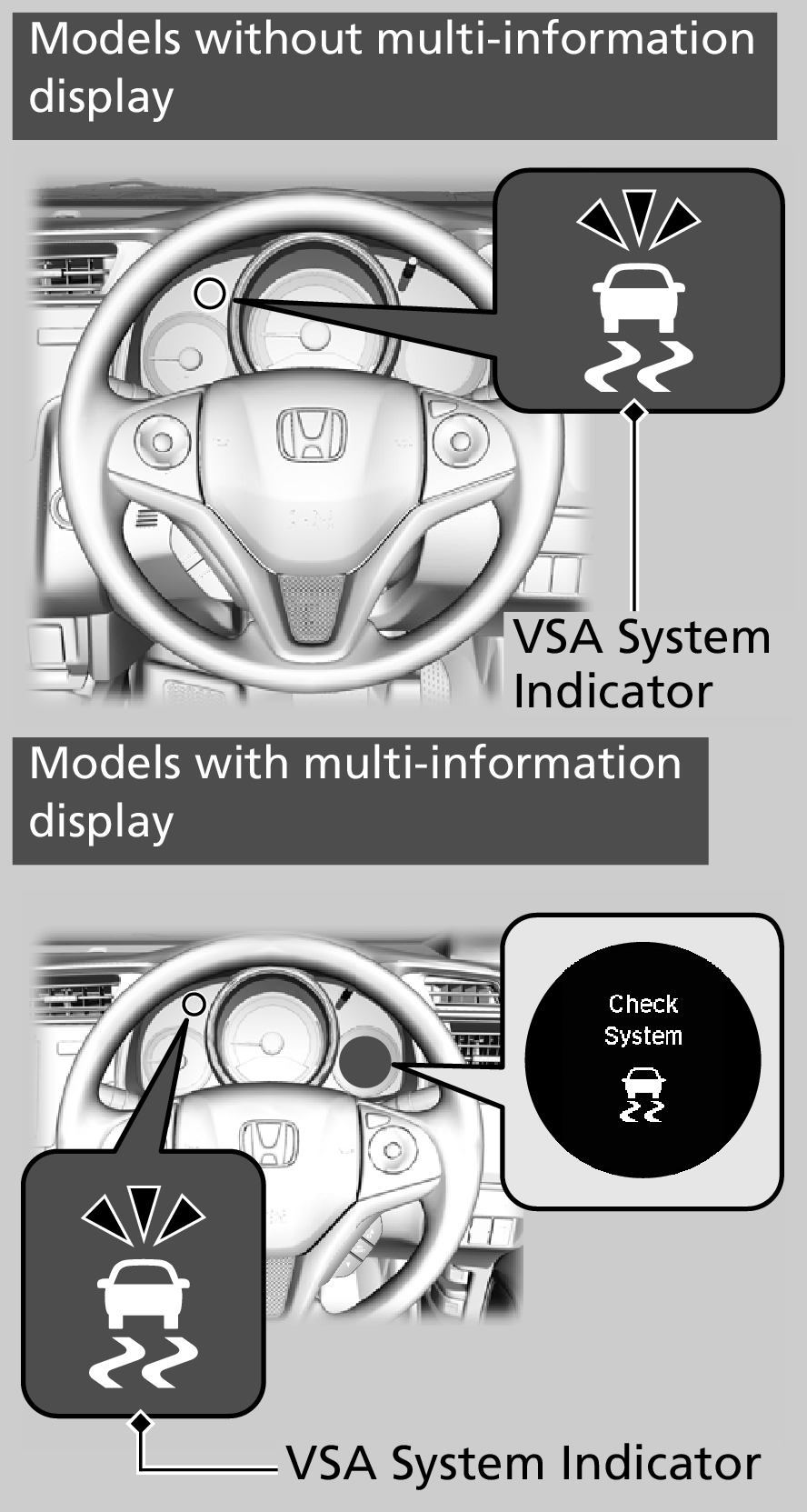
The VSA light can mean different things based on how it behaves. A flashing light, a steady light, and a VSA light with another warning symbol do not always point to the same issue.
A flashing VSA light
A flashing VSA light often means the system is working. You may see it when:
• A tire slips on rain, snow, gravel, or ice
• You accelerate too hard
• You make a quick turn
• One wheel loses grip
• The traction control system reduces wheel spin
A brief flashing light is usually normal. Reduce speed and steer smoothly. If the road is slippery, leave more space between your car and other vehicles.
A steady VSA light
A steady VSA light usually means the system has been turned off or detected a fault. The car may still drive, but the stability and traction features may not work as designed.
A solid VSA light does not always mean the car will stop. It does mean you should treat the warning with care, especially in rain, snow, or sharp turns.
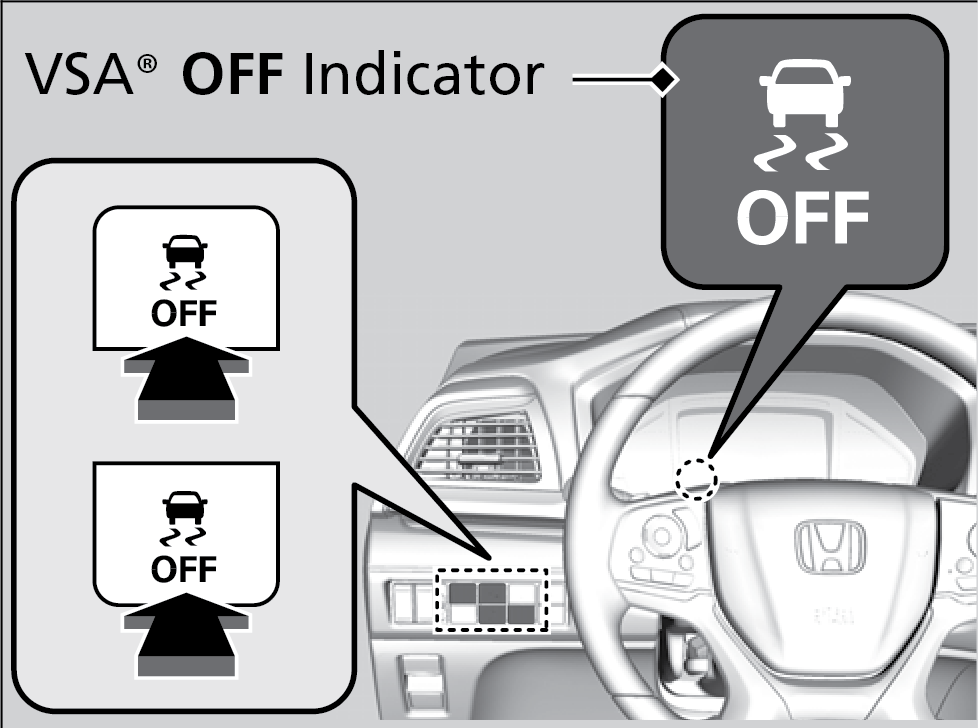
VSA OFF light
If the VSA OFF light is on, someone may have pressed the VSA OFF button. Some vehicles also turn VSA off when a fault affects the system.
Pressing the button again may restore the system. If the light stays on, check the owner’s manual and arrange a diagnostic scan.
Triangle warning light
Some Honda and Acura vehicles use a triangle with an exclamation point. This symbol may relate to VSA, traction control, or a general vehicle warning.
The exact meaning depends on the model year. Always read the dashboard message and consult the vehicle manual before assuming the cause.

What Causes the VSA Light to Come On?
Several faults can trigger the VSA light. Some are simple, while others need professional testing.
Low tire pressure
Incorrect tire pressure can confuse the wheel speed system. A tire with low pressure may rotate at a different speed than the other tires.
Check all four tires when they are cold. Set them to the pressure listed on the driver’s door label, not the number printed on the tire sidewall.
Different tire sizes
VSA expects the tires to have matching rolling sizes. A temporary spare tire, badly worn tire, or incorrect tire size can cause a warning.
Using four matching tires with similar tread depth helps the system work correctly. This is especially important on vehicles with all-wheel drive.
Faulty wheel speed sensor
Wheel speed sensors monitor how fast each wheel turns. Dirt, rust, wiring damage, or a failed sensor can create false readings.
A failed wheel speed sensor may also turn on the ABS light or traction control light. A scan tool can often identify which wheel has a problem.
Steering angle sensor issue
The steering angle sensor tells the VSA system where the driver wants the car to go. If the sensor loses calibration, the system may not understand the steering command.
This can happen after a wheel alignment, battery replacement, suspension repair, or steering work. The sensor may need calibration with a professional scan tool.
Bad wheel alignment
A strong impact with a pothole or curb can alter wheel alignment. If the steering wheel is off-center, the VSA system may see movement that does not match the steering input.
Alignment problems can also cause uneven tire wear. Fixing the alignment may solve the warning if no sensor is damaged.
Brake system problem
Because VSA uses the braking system, low brake fluid, a bad brake switch, or an ABS fault may trigger the light.
Do not ignore a brake warning. If the brake pedal feels soft, sinks toward the floor, or requires more distance to stop, stop driving and seek immediate help.
Engine or transmission fault
Some Honda and Acura models disable VSA when the check engine light appears. The system may do this because engine torque control is no longer fully available.
In this case, the VSA light may be a secondary warning. The check engine code may provide the main clue.
Weak battery or low voltage
A failing battery or alternator can cause several warning lights to appear at once. Modern vehicle computers need stable voltage to operate correctly.
If the VSA light appears after a jump-start, battery replacement, or very cold morning, test the battery and charging system.
VSA system switch
A pressed VSA OFF button is one of the easiest causes to correct. Check whether the button was touched accidentally.
If the light returns after switching the system back on, the car may have a stored fault that needs diagnosis.

Is It Safe to Drive With the VSA Light On?
A steady VSA light does not always mean the vehicle is unsafe to move. However, it means a safety feature may be unavailable.
You may be able to drive a short distance if:
• The brake pedal feels normal
• No red brake warning light is on
• The tires have proper pressure
• The steering feels normal
• The vehicle is not overheating
• The road is dry and traffic is light
Drive slowly and avoid sudden braking, fast turns, and hard acceleration. The car may not have the same ability to control a skid.
Stop driving and get help if you notice:
• A red brake warning light
• A soft or sinking brake pedal
• Severe steering vibration
• Loss of engine power
• Several warning lights at once
• Smoke, burning smells, or unusual noises
• Difficulty keeping the car straight
The VSA meaning on a car becomes more serious when it appears with ABS, brake, or steering warnings. In that case, do not rely on the VSA system to protect you.

How to Reset the VSA Light
Resetting the light without finding the cause is not a real repair. The warning may return as soon as the system detects the same fault.
Try these basic steps:
- Park safely and turn off the engine.
- Check the tire pressure on all four tires.
- Confirm that the VSA OFF button was not pressed.
- Restart the vehicle.
- Drive slowly and see whether the light returns.
- Read any dashboard message.
- Scan the vehicle if the light remains on.
Disconnecting the battery may erase some warning lights for a short time, but it can also erase useful diagnostic information. It may also create new issues, such as lost radio settings or the need to relearn certain systems.
A professional repair shop can use a scan tool that reads ABS and VSA codes. A basic engine code reader may not access these systems.
How Much Does a VSA Repair Cost?
The cost depends on the failed part and the vehicle model. A tire pressure correction may cost nothing if you have access to an air pump. A damaged wheel speed sensor or steering sensor may cost much more.
Typical repair possibilities include:
• Tire inflation: free to about $5
• Wheel alignment: about $100 to $250
• Battery replacement: about $120 to $300
• Wheel speed sensor: about $150 to $500
• Steering angle sensor calibration: about $100 to $250
• ABS or VSA module repair: several hundred to more than $1,000
These are broad estimates, not guaranteed prices. Labor rates, parts quality, vehicle age, and location all affect the final bill.
Ask the repair shop for the diagnostic code and an explanation of the test results. Do not approve an expensive module replacement based only on the presence of a VSA light.
What Drivers Commonly Get Wrong About VSA
One common mistake is assuming that the VSA light always means the system is broken. A flashing light can simply show that the system is helping during a loss of traction.
Another mistake is replacing parts before checking the basics. Tire pressure, tire size, battery voltage, and the VSA OFF button should be checked first.
Drivers also sometimes believe VSA allows faster driving in bad weather. It does not. Electronic safety systems help reduce risk, but they cannot overcome bald tires, standing water, ice, or excessive speed.
A useful lesson from real-world vehicle troubleshooting is to look at the warning pattern. Note when the light appears, whether it flashes or stays on, and which other lights are present. That information can save time during diagnosis.
How to Prevent VSA Problems
Good maintenance reduces the chance of unwanted VSA warnings. It also helps the system work properly when you need it.
Use these habits:
• Check tire pressure at least once a month.
• Rotate tires according to the maintenance schedule.
• Replace tires as a complete matching set when possible.
• Inspect tires after hitting a pothole or curb.
• Keep the battery and charging system in good condition.
• Repair ABS or brake warnings without delay.
• Maintain correct wheel alignment.
• Avoid fitting a mismatched spare for longer than necessary.
• Follow the service schedule in the owner’s manual.
Take warning lights seriously, but do not panic. A careful inspection often finds a simple cause.
VSA Compared With Other Car Safety Systems
Vehicle safety systems often overlap, which can make dashboard warnings confusing. Knowing the basic differences helps you understand what the car is telling you.
VSA versus traction control
Traction control limits wheel spin during acceleration. VSA includes traction control but also helps correct unwanted changes in direction.
VSA versus electronic stability control
Electronic stability control is the general industry term for a system like VSA. Honda and Acura use the VSA name for their version.
VSA versus ABS
ABS helps prevent wheel lock during braking. VSA uses some ABS parts but has a broader role in stability and traction management.
VSA versus hill start assist
Hill start assist helps prevent the vehicle from rolling backward when moving away from a stop on a slope. It does not provide the same function as VSA.
Understanding these differences makes the VSA meaning on a car much easier to identify.
When to Visit a Mechanic
Visit a qualified mechanic when the VSA light stays on after a restart or appears repeatedly. A scan is especially important if the ABS light, check engine light, or brake warning light also appears.
Choose a shop that can access Honda or Acura chassis systems. Ask whether the technician will inspect live wheel speed data, sensor wiring, tire condition, and battery voltage.
Avoid clearing the code before the inspection. A stored fault can provide valuable evidence, much like a footprint at a scene. Erasing it may make the problem harder to find.
If your vehicle is under warranty, check with an authorized dealer before paying for repairs. Some safety-system faults may be covered under a vehicle or emissions warranty, depending on the cause and location.
Frequently Asked Questions About What Does VSA Mean on a Car
What does VSA mean on a car?
VSA means Vehicle Stability Assist. It is a Honda and Acura safety system that helps control wheel spin and reduce skidding.
Can I drive with the VSA light on?
You may be able to drive carefully if the brakes and steering feel normal and no serious warning light is present. Reduce speed and have the vehicle checked soon because stability and traction assistance may not work.
Why is my VSA light on with the check engine light?
Some vehicles disable VSA when an engine fault affects torque control. The check engine code may identify the main problem, so scan both systems rather than replacing VSA parts immediately.
How do I turn the VSA light off?
If VSA was switched off manually, press the VSA button again and restart the vehicle. If the light remains on, the car likely needs a diagnostic scan and repair.
Does VSA help on ice and snow?
VSA can reduce wheel spin and help control a slide, but it cannot create traction on ice. Drive slowly, use suitable tires, and leave extra stopping distance.
Is VSA the same as traction control?
Not exactly. Traction control limits wheel spin, while VSA also helps keep the vehicle pointed in the direction selected by the driver.
Can low tire pressure cause the VSA light?
Yes. Low pressure or mismatched tire sizes can change wheel speed readings and trigger the VSA system. Check all tire pressures and inspect the tires for damage.
Conclusion
VSA means Vehicle Stability Assist, a system designed to help Honda and Acura vehicles maintain traction and directional control. A flashing light often means the system is working, while a steady light may indicate that VSA is off or has detected a fault.
Start with simple checks such as tire pressure, the VSA button, battery condition, and dashboard messages. If the light stays on or appears with ABS, brake, or check engine warnings, arrange a proper diagnostic scan instead of guessing.
Drive with care, keep your tires and brakes maintained, and use the owner’s manual for model-specific details. If this guide helped you understand the VSA meaning on a car, explore more vehicle safety resources and share your experience in the comments.