

The difference between 60R and 65R tires is the sidewall height. The number is the tire’s aspect ratio, while the letter R means radial construction.
A 65R tire has a sidewall that is 65% as tall as its width. A 60R tire has a sidewall that is 60% as tall as its width. If both tires have the same width and wheel diameter, the 65R tire will usually be taller, provide a softer ride, and slightly increase ground clearance. The 60R tire will usually have a shorter sidewall and quicker steering response.
For example, compare 215/60R16 with 215/65R16:


- Both tires are 215 millimeters wide.
- Both fit a 16-inch wheel.
- The 65R tire has a taller sidewall.
- The 65R tire is about 21.5 millimeters larger in overall diameter.
- The speedometer, handling, clearance, and vehicle systems may be affected.
Do not replace one size with the other unless the size is approved for your vehicle.

What Do 60R and 65R Mean on a Tire?
The number before the letter R is the tire’s aspect ratio. It compares the sidewall height with the tire width.
A tire marked 215/60R16 breaks down as follows:
| Marking | Meaning |
|---|---|
| 215 | Tire width in millimeters |
| 60 | Sidewall height is 60% of the tire width |
| R | Radial tire construction |
| 16 | Wheel diameter in inches |
A tire marked 215/65R16 has the same width and wheel diameter. Its sidewall is taller because 65% is greater than 60%.
The letter R does not mean “60 radial” or “65 radial.” The number and letter describe different parts of the tire:
- 60 or 65: Aspect ratio
- R: Radial construction
Most passenger tires sold in the United States use radial construction. The complete tire size also includes the width, wheel diameter, load index, and speed rating.
Sidewall height formula
Use this formula to estimate sidewall height:
Sidewall height = tire width × aspect ratio
For a 215/60R16 tire:
215 × 0.60 = 129 millimeters
For a 215/65R16 tire:


215 × 0.65 = 139.75 millimeters
The 65R tire has a sidewall about 10.75 millimeters taller on each side. Because the tire has a sidewall above and below the wheel, the total diameter grows by about 21.5 millimeters.
These calculations are estimates. The actual mounted diameter can vary slightly by tire model and tread design.
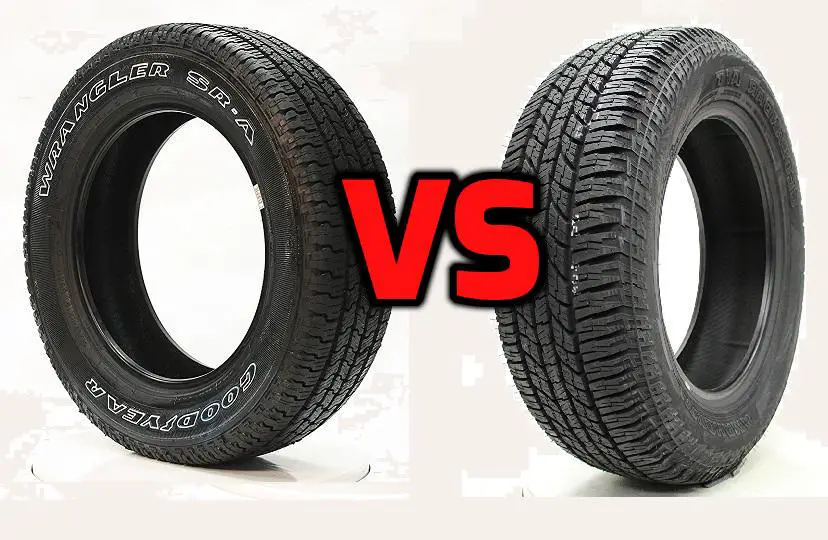
60R vs. 65R Tires: Main Differences
A 65R tire is taller than a 60R tire when the width and wheel size stay the same. That size change affects ride quality, steering feel, vehicle height, and speedometer accuracy.
| Feature | 60R tire | 65R tire |
|---|---|---|
| Sidewall | Shorter | Taller |
| Ride feel | Firmer | Softer in many cases |
| Steering response | Often quicker | Often less immediate |
| Wheel protection | Less air cushion | More sidewall cushion |
| Overall diameter | Smaller | Larger |
| Ground clearance | Lower | Slightly higher |
| Speedometer effect | Usually closer to the original if factory size | May read differently if oversized |
| Clearance risk | Usually lower | May be higher |
| Appearance | More wheel, less sidewall | More sidewall, less wheel |
The table assumes that the tire width and wheel diameter remain the same. If those values also change, the result will be different.
Ride comfort
The taller sidewall of a 65R tire can flex more over potholes, broken pavement, and road joints. That extra flex may make the ride feel smoother.
A 60R tire has less sidewall between the wheel and the road. It may transmit more bumps into the vehicle. The result depends on the tire’s rubber compound, construction, air pressure, suspension, and vehicle weight.
A taller sidewall does not guarantee a comfortable ride. Tire design still matters.
Steering and handling
A shorter 60R sidewall often feels more direct during steering. It may respond faster to small steering inputs because there is less sidewall movement.
A 65R tire may feel a little softer or slower when the vehicle changes direction. This is not always a problem. Many drivers prefer that feel for daily driving, especially on rough streets.
The vehicle manufacturer’s original tire size remains the best reference. Changing aspect ratio can change the handling balance that the suspension and electronic systems were designed around.
Wheel and tire protection
The taller sidewall of a 65R tire provides more rubber between the wheel and the road. It may offer more protection from pothole edges and rough pavement.
That does not make the tire immune to damage. Underinflation, high speed, heavy loads, and severe potholes can damage either tire. Correct pressure and the correct load rating matter more than aspect ratio alone.
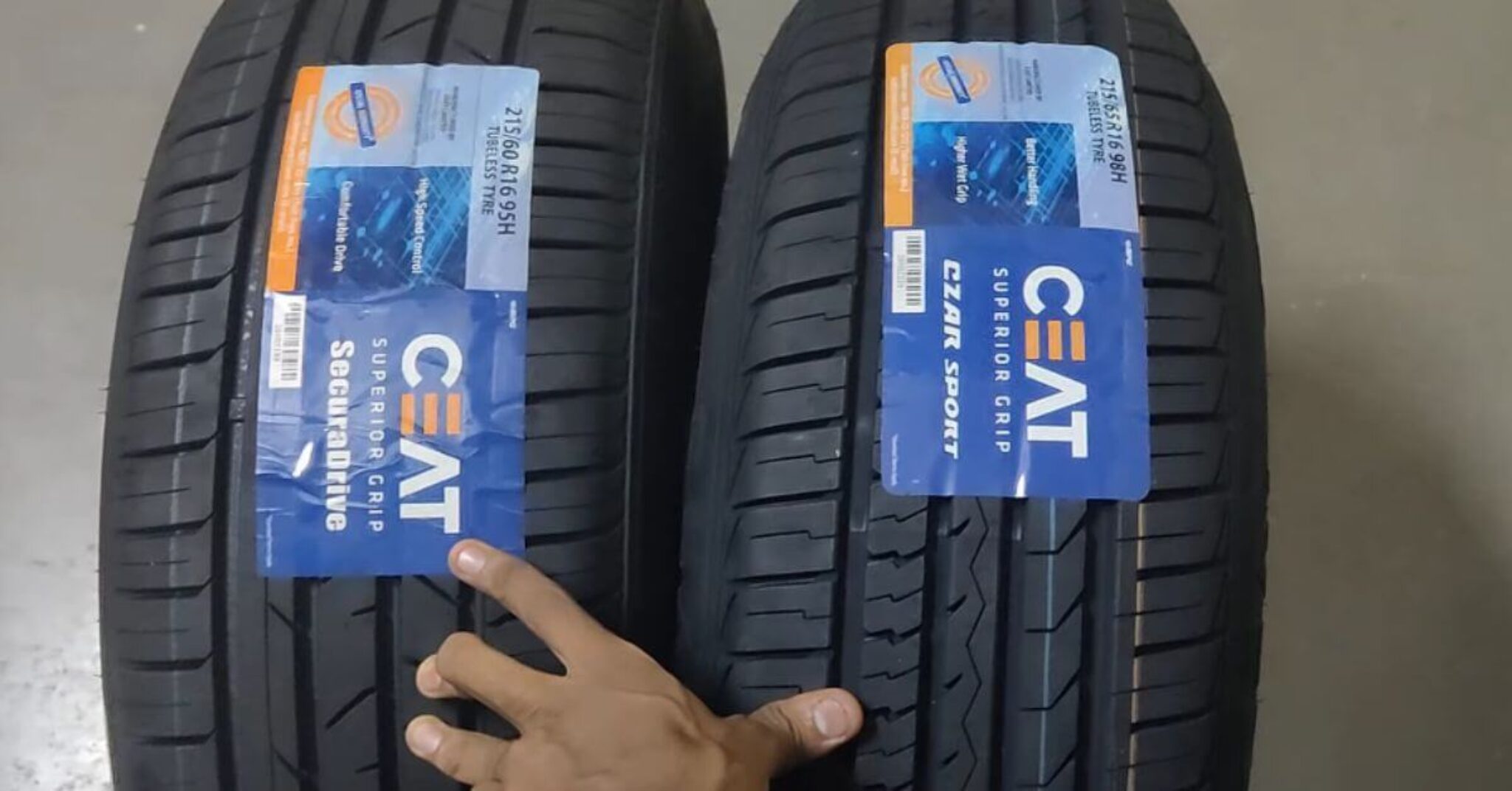
How Much Taller Is a 65R Tire?
The difference depends on tire width. A five-point change in aspect ratio does not add a fixed amount of height to every tire.
Here are sample calculations for tires with the same width:
| Tire sizes compared | Sidewall increase on each side | Approximate diameter increase |
|---|---|---|
| 195/60R15 vs. 195/65R15 | 9.75 mm | 19.5 mm |
| 205/60R16 vs. 205/65R16 | 10.25 mm | 20.5 mm |
| 215/60R16 vs. 215/65R16 | 10.75 mm | 21.5 mm |
| 225/60R17 vs. 225/65R17 | 11.25 mm | 22.5 mm |
| 235/60R18 vs. 235/65R18 | 11.75 mm | 23.5 mm |
The tire’s radius increases by about half of the diameter change. For a 215/60R16 and 215/65R16 comparison, the taller tire raises the vehicle by roughly 10.75 millimeters, assuming it fits without compression or suspension changes.


The overall diameter also affects tire circumference. A larger tire travels farther with each revolution.
Example speedometer calculation
Assume the original tire is 215/60R16 and the replacement is 215/65R16.
Approximate diameters:
- 215/60R16: about 664.4 mm
- 215/65R16: about 685.9 mm
The diameter difference is about 3.2%.
If the speedometer shows 60 mph with the larger tire, the vehicle may actually be traveling near 61.9 mph, depending on the vehicle and tire’s actual dimensions. The speedometer may not be perfectly accurate before the change, so this is only a calculation.
A size change can also affect:
- Odometer readings
- Automatic transmission shift points
- Traction control
- Anti-lock braking performance
- Electronic stability control
- Fuel-use calculations
Modern vehicles may require calibration or a manufacturer-approved size.
Can You Put 65R Tires on a Vehicle That Uses 60R Tires?
You may be able to use a 65R tire, but the full tire size must be approved for the vehicle. The aspect ratio alone does not answer the fitment question.
Check these sources in order:
- Driver-door tire and loading information label
- Owner’s manual
- Vehicle manufacturer fitment information
- Tire manufacturer fitment data
- A qualified tire professional
The door label usually lists the original tire size, recommended cold inflation pressure, and vehicle load limits. It may also list optional sizes.
Check the complete tire size
For example, these are not interchangeable by default:
- 215/60R16 95H
- 215/65R16 98H
The second tire has a different diameter and load index. The load index must meet or exceed the vehicle’s requirement. The speed rating should also meet the vehicle manufacturer’s specification.
Other fitment checks include:
- Wheel width
- Brake and suspension clearance
- Inner-fender clearance
- Steering clearance at full lock
- Clearance under full suspension compression
- Front-to-rear size matching
- Four-wheel-drive or all-wheel-drive requirements
A tire can fit the wheel and still rub the vehicle. A tire can also clear the fender while creating problems for an electronic system.
Why all-wheel-drive vehicles need extra care
All-wheel-drive systems can be sensitive to tire circumference differences. Some vehicles require all four tires to remain very close in rolling circumference, even if the tires are the same labeled size.


Do not install a different aspect ratio on only one axle unless the vehicle manufacturer specifically allows it. For many AWD vehicles, replacing all four tires with the same approved size is the safer approach.
Which Is Better: 60R or 65R?
Neither size is always better. The correct choice depends on the vehicle and the approved tire sizes.
Choose the 65R option when it is factory-approved and you value:
- A softer ride
- More sidewall cushion
- Slightly greater ground clearance
- Better comfort on rough city roads
- A fuller tire appearance
Choose the 60R option when it is factory-approved and you value:
- More immediate steering response
- A firmer road feel
- Less change from the vehicle’s original setup
- Lower risk of rubbing compared with a taller tire
- A shorter sidewall appearance
The most useful decision is not “60 or 65.” It is:
Which complete tire size, load rating, speed rating, and wheel fitment does the vehicle manufacturer approve?
A taller tire may improve comfort but reduce clearance. A shorter tire may improve steering feel but provide less sidewall cushioning. The trade-off is small only when the replacement size is properly approved.
Does a 65R Tire Improve Fuel Economy?
A 65R tire does not automatically improve fuel economy. Fuel use depends on many factors, including tire weight, tread design, rolling resistance, inflation pressure, vehicle load, speed, temperature, and driving style.
A larger tire may reduce engine speed slightly at a given road speed. However, it may also weigh more or have greater rolling resistance. The result can vary by tire model and vehicle.
Use the recommended cold tire pressure shown on the vehicle label. Do not lower or raise pressure to compensate for a different aspect ratio unless the vehicle or tire manufacturer provides that guidance.
The tire’s rolling resistance is not determined by the 60 or 65 number alone.
Common Mistakes When Comparing 60R and 65R Tires
The most common mistake is comparing only the aspect ratio. The complete tire marking must be checked.
Mistake 1: Treating 60R and 65R as complete tire sizes
“60R” and “65R” are incomplete descriptions. You also need the:
- Tire width
- Wheel diameter
- Load index
- Speed rating


For example, 205/60R16 and 235/60R16 both use a 60 aspect ratio, but their sidewall heights are not the same.
Mistake 2: Assuming the tire will fit because the wheel size matches
A 215/65R16 may fit a 16-inch wheel, but that does not prove it will fit the vehicle. The tire may rub the suspension, fender, or body.
Mistake 3: Ignoring the load index
A replacement tire must carry the required vehicle load. A taller tire with an inadequate load index is not a safe upgrade.
Mistake 4: Changing only two tires
On some vehicles, especially AWD models, different rolling circumferences can stress the drivetrain or affect traction-control systems. Follow the vehicle manufacturer’s replacement instructions.
Mistake 5: Using the door-label pressure from memory
Inflation pressure is vehicle-specific. Use the pressure on the vehicle’s tire information label, not the maximum pressure molded into the tire sidewall. The sidewall number is not the vehicle’s normal recommended pressure.
How to Compare Two Tire Sizes Yourself
Use this process before buying a different aspect ratio.
Step 1: Read the original tire size
Find the full marking on the tire sidewall or the vehicle information label. Write down every part, such as:
215/60R16 95H
Step 2: Compare the width
If the new tire has a different width, its sidewall and overall diameter will change even if the aspect ratio stays the same.
Step 3: Calculate the sidewall height
Multiply the width by the aspect ratio as a decimal.
Example:
215 × 0.60 = 129 mm
215 × 0.65 = 139.75 mm
Step 4: Compare the estimated overall diameter
Use:
Overall diameter = 2 × sidewall height + wheel diameter
Convert the wheel diameter from inches to millimeters by multiplying it by 25.4.
Step 5: Check the percentage difference
A small difference may be accepted for some vehicles, but there is no universal safe percentage for every car or truck. Use manufacturer-approved fitment information.
Step 6: Verify load, speed, and clearance
Before installation, confirm the load index, speed rating, wheel width, and physical clearance.
If the new tire is not listed as an approved size, ask a qualified tire professional to verify the fit. Do not rely only on an online tire-size calculator.
Frequently Asked Questions
Are 60R and 65R tires the same width?
Not necessarily. The 60 or 65 is only the aspect ratio. Tire width is the first number in the size, such as 215 in 215/60R16.


Will 65R tires make my vehicle sit higher?
Usually, yes, if the width and wheel diameter stay the same. The taller sidewall increases the tire’s overall diameter. However, the actual height change is about half of the total diameter difference.
Will a 65R tire make the speedometer wrong?
It can. A larger tire travels farther with each revolution, so the speedometer may display a speed slightly lower than the vehicle’s actual speed. The effect depends on the original and replacement tire diameters.
Can I use 65R tires on only the rear axle?
Only if the vehicle manufacturer approves that setup. Some vehicles use different front and rear sizes from the factory. On many AWD vehicles, mismatched tire circumferences can cause drivetrain or traction-control problems.
Is a 60R tire better for highway driving?
Not automatically. A 60R tire may provide a firmer steering feel, but highway performance also depends on the tire’s tread, construction, speed rating, pressure, and condition. Use the vehicle’s approved size and rating.
Do 65R tires last longer than 60R tires?
Aspect ratio alone does not determine tread life. Tire compound, tread depth, alignment, inflation, load, road surface, and driving habits have a larger effect. Compare the tire warranty and treadwear design only when the tires are otherwise suitable for the vehicle.
Bottom Line
A 60R tire has a shorter sidewall than a 65R tire when the tire width is the same. A 65R tire is usually taller, may ride more softly, and can provide more protection from rough roads. A 60R tire may feel more responsive but can transmit more bumps.
The change also affects overall diameter, speedometer accuracy, clearance, and vehicle electronics. Before switching sizes, compare the complete marking and verify the tire with the vehicle door label, owner’s manual, or manufacturer-approved fitment guide.
For the safest choice, install the size, load index, speed rating, and inflation pressure specified for your U.S.-market vehicle.
