

A car tune-up is a set of maintenance and inspection services that helps an engine run well. On older gasoline cars, a tune-up often meant replacing spark plugs, plug wires, the distributor cap, and the rotor. On newer vehicles in the United States, it usually means checking electronic systems, replacing worn maintenance parts, and following the service schedule in the owner’s manual.
A tune-up is not one fixed service. The work depends on the car’s age, engine, mileage, condition, and manufacturer schedule. It may include spark plug replacement, air filter service, diagnostic scans, fluid checks, and inspections of belts, hoses, brakes, and the battery.

What Does a Car Tune-Up Include?
A modern tune-up usually includes routine engine maintenance and a check for problems that can affect fuel use, power, starting, emissions, or reliability. The exact list differs by vehicle.
Common tune-up services include:
- Inspecting or replacing spark plugs
- Checking ignition coils and ignition wiring
- Replacing the engine air filter when needed
- Checking the cabin air filter
- Scanning for diagnostic trouble codes
- Inspecting the battery and charging system
- Checking engine oil and other fluids
- Inspecting belts and hoses
- Checking tire pressure and basic safety items
- Inspecting the throttle body or fuel system when symptoms support it


A shop may also inspect the brakes, suspension, lights, wiper blades, and tires during a larger scheduled service. Those checks are useful, but they are not always part of the engine tune-up itself.
Spark plugs and ignition parts
Spark plugs create the spark that ignites the air-fuel mixture in a gasoline engine. Worn or fouled plugs can cause:
- Rough idling
- Hard starting
- Misfires
- Weak acceleration
- Lower fuel economy
- An illuminated check engine light
Many newer vehicles use one ignition coil per spark plug or one coil for a small group of plugs. They do not use the old distributor and plug-wire system found on many classic cars.
Filters
The engine air filter keeps dust and debris from entering the engine. A clogged filter can restrict airflow, although replacing it does not always produce a large fuel-economy gain.
The cabin air filter cleans air that enters the passenger compartment. It affects air quality and airflow from the heater and air conditioner, but it does not tune the engine.
Computer diagnostics
A scan tool can read diagnostic trouble codes from the car’s onboard diagnostic system, known in the United States as OBD-II. A code is a starting point, not a complete diagnosis.
For example, a misfire code may result from a worn spark plug, failed ignition coil, fuel delivery problem, vacuum leak, or engine compression issue. Replacing parts without testing can waste money and may not fix the cause.

Why Does a Car Need a Tune-Up?
A car needs maintenance because parts wear, fluids degrade, and deposits or faults can affect engine operation. A tune-up can restore normal operation when routine service is due or help find a developing fault.
Regular maintenance may help a vehicle:
- Start more easily
- Run more smoothly
- Maintain proper emissions control
- Avoid preventable breakdowns
- Keep its designed performance
- Meet the service requirements in the owner’s manual


a tune-up cannot repair every engine problem. It will not fix a failed transmission, damaged engine, broken fuel pump, or major electrical fault unless the service includes a separate repair.
Tune-up versus repair
A tune-up is planned maintenance. A repair addresses a known failure or symptom.
For example, replacing spark plugs at the interval listed in the owner’s manual is maintenance. Replacing a failed ignition coil after a misfire is a repair, although the work may happen during the same shop visit.
This distinction matters because a shop may recommend both routine service and repairs. Ask which items are due by schedule and which items respond to a specific test result.
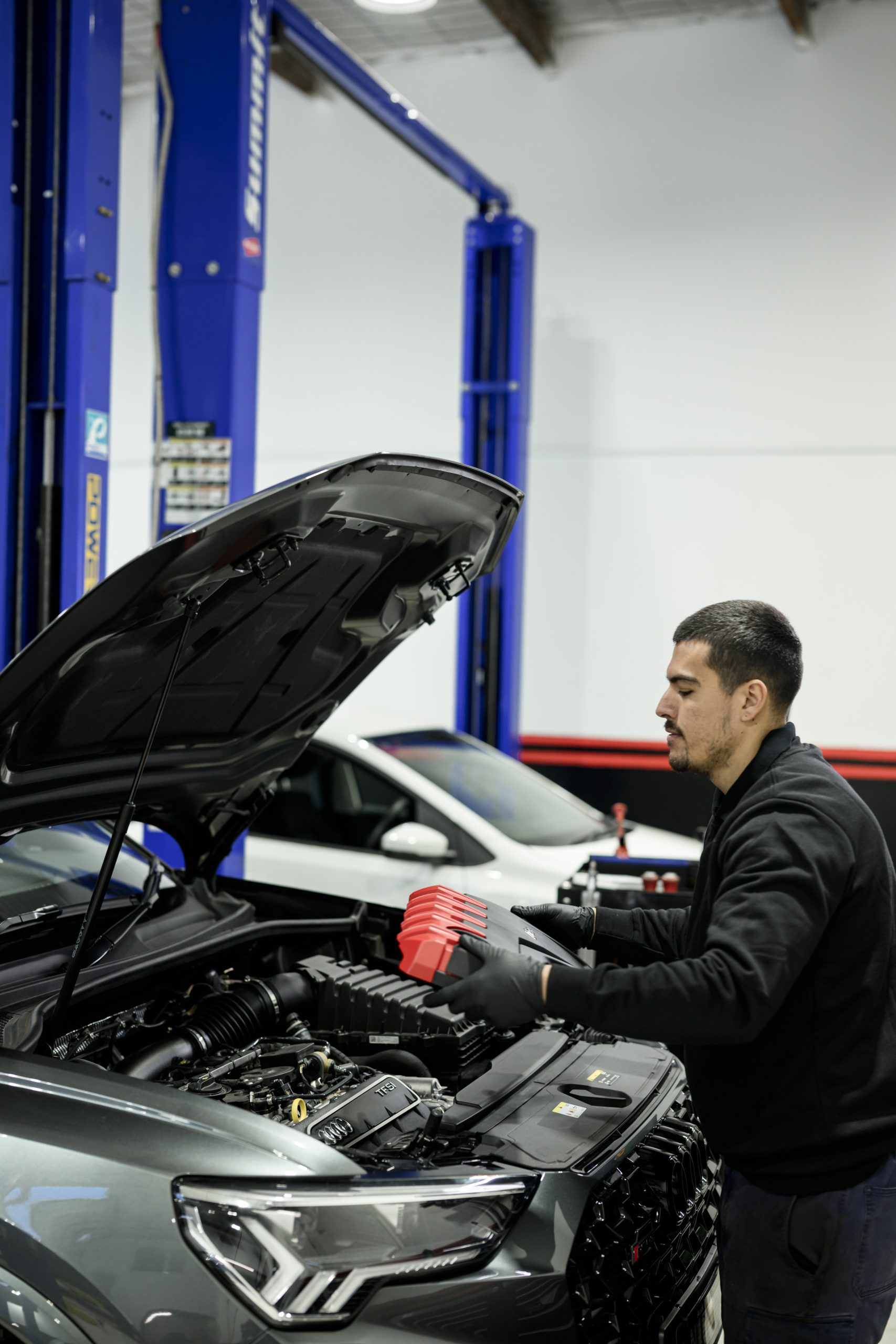
When Should You Get a Tune-Up?
The best time for a tune-up is when the vehicle manufacturer calls for the service or when testing shows that a maintenance part is worn. There is no universal “every 30,000 miles” rule for all vehicles.
Many modern cars use longer service intervals than older cars. Some spark plugs may last tens of thousands of miles, while the correct interval depends on the plug type, engine design, driving conditions, and manufacturer guidance.
Check these sources in order:
- The owner’s manual
- The manufacturer’s official maintenance schedule
- The vehicle’s maintenance reminder system
- A repair shop that can verify the vehicle’s exact service history
Do not rely only on a generic mileage chart. The correct schedule may change for severe use, such as frequent short trips, towing, dusty roads, extreme heat, or heavy stop-and-go driving.
Signs your car may need service
A tune-up or diagnostic inspection may be appropriate if you notice:
- The engine shakes or runs unevenly
- The car hesitates during acceleration
- The engine is hard to start
- Fuel economy drops without another clear reason
- The check engine light turns on
- The engine stalls
- The exhaust smells unusual
- The vehicle has less power than normal
A flashing check engine light needs prompt attention. It can indicate an active misfire that may damage the catalytic converter. Reduce driving and arrange professional diagnosis, especially if the car shakes, loses power, or smells of raw fuel.

How Is a Car Tune-Up Done?
A proper tune-up starts with the vehicle’s service information and a symptom review. A technician should not replace parts simply because a generic package lists them.
A typical process looks like this:
1. Confirm the vehicle and service history
The technician identifies the vehicle’s year, make, model, engine, mileage, and maintenance history. This prevents the use of incorrect parts or service intervals.
2. Check for warning lights and symptoms
The technician asks when the problem began and whether it occurs during starting, idling, acceleration, cold operation, or highway driving. This information helps narrow the diagnosis.


3. Scan the vehicle computer
A scan may reveal stored, pending, or manufacturer-specific codes. The technician may also review live data, such as engine temperature, oxygen sensor readings, fuel trim, or misfire counts.
The scan does not replace mechanical testing. It helps direct the next step.
4. Inspect service parts
The technician checks parts that commonly affect engine operation, including:
- Spark plugs
- Ignition coils
- Air filter
- Battery terminals
- Belts and hoses
- Fluid levels and condition
- Intake ducting
- Vacuum lines
- Fuel and evaporative-emissions components
5. Test before replacing
A good diagnosis may include spark testing, fuel-pressure testing, compression testing, electrical checks, or smoke testing for an intake leak. The test depends on the symptom and diagnostic code.
6. Replace parts that are due or defective
The technician installs parts that match the vehicle’s specifications. Spark plug gap, torque, filter fit, and fluid type can all matter.
7. Clear codes and verify the repair
After repairs, the technician may clear fault codes and run the vehicle through an appropriate test drive. The warning light should stay off, the engine should run normally, and the original symptom should be gone.
Clearing a code without fixing the cause is not a repair. It can also reset emissions monitors, which may affect a state emissions inspection until the vehicle completes its drive cycle.

How Much Does a Tune-Up Cost in the United States?
The cost depends on what the car needs. A basic service with spark plugs and an inspection usually costs less than a tune-up that includes difficult plug access, ignition repairs, filters, fluid service, and diagnostic testing.
The main cost factors are:
| Cost factor | Why it matters |
|---|---|
| Vehicle design | Some engines provide easy access to spark plugs; others require removal of covers or other parts. |
| Parts used | Standard, platinum, and iridium plugs have different prices and specifications. |
| Labor rates | Rates vary by region, shop type, and technician specialization. |
| Diagnostic time | Finding a fault can take longer than replacing a scheduled part. |
| Service history | Missed maintenance may create several needed services at once. |
| Driving conditions | Severe use can shorten some service intervals. |
Ask the shop for a written estimate that separates:
- Scheduled maintenance
- Diagnostic testing
- Required repairs
- Recommended but non-urgent work
- Parts and labor
- Applicable shop fees and taxes
A low advertised tune-up price may cover only a few basic items. Compare the actual parts and services, not just the package name.

Can You Do a Tune-Up Yourself?
You can perform some basic tune-up tasks at home if you have the correct service information, tools, and experience. Common do-it-yourself tasks include checking the air filter, inspecting battery terminals, checking fluid levels, and replacing accessible spark plugs.
Before starting, obtain:
- The owner’s manual
- The correct repair procedure
- Correct replacement parts
- A torque wrench when specified
- Basic hand tools
- Eye protection and gloves
- A cool, well-ventilated work area
Disconnect or handle the battery only as directed by the vehicle maker. Keep sparks and open flames away from fuel vapors. Never work under a vehicle supported only by a jack.


Spark plug work also requires care. Dirt can fall into the cylinder, threads can be damaged, and an incorrect plug or gap can cause a misfire. Some engines have tightly packed components or special procedures. If access is difficult or the engine is still under warranty, professional service may be the safer choice.
Do not attempt to diagnose a fuel leak, high-voltage ignition fault, hybrid system, or electrical problem without the proper training and equipment.

Common Car Tune-Up Mistakes
Several common mistakes can make a tune-up costly or ineffective.
Replacing every part in a package
A package may include parts that are not due or related to the symptom. Use the manufacturer schedule and diagnostic results to decide what the car needs.
Treating a trouble code as a failed part
A code identifies a system or condition. It does not always identify the failed component. Confirm the cause before buying parts.
Using the wrong spark plugs
Spark plugs are not interchangeable just because they fit the threads. Heat range, reach, electrode design, and gap must match the engine.
Ignoring the check engine light
A small drivability issue can become a larger repair if ignored. A flashing light is more urgent than a steady light, but both deserve attention.
Expecting a tune-up to improve every car
If the vehicle already runs correctly and its maintenance is current, new plugs or additives may produce little noticeable change. Maintenance preserves proper operation; it does not guarantee extra power or fuel savings.
Forgetting related maintenance
A tune-up does not automatically include oil changes, transmission service, brake work, tire service, timing-belt replacement, or coolant service. Check each item separately against the owner’s manual.

Do Electric Cars Need a Tune-Up?
A fully electric vehicle does not need a traditional engine tune-up because it has no gasoline engine, spark plugs, engine air filter, or oil-filled combustion system.
An EV still needs regular maintenance. Depending on the model, this may include:
- Tire rotation and inspection
- Brake inspection
- Brake-fluid checks
- Cabin air filter replacement
- Wiper blade replacement
- Battery cooling-system service
- Software updates
- High-voltage system inspections
- Suspension and steering checks
Hybrid vehicles need a different service plan. A hybrid may have a gasoline engine that requires spark plugs, filters, oil, and other engine maintenance. Follow the vehicle’s specific schedule rather than treating it like either a standard gasoline car or a fully electric car.

What Is the Difference Between a Tune-Up and Routine Maintenance?
Routine maintenance is the larger category. A tune-up is one part of that category, focused mainly on engine operation and ignition-related service.


Routine maintenance may include:
- Oil and filter changes
- Tire rotation
- Brake inspections
- Coolant service
- Transmission-fluid service
- Air-filter replacement
- Battery testing
- Wiper replacement
- Timing-belt inspection or replacement
- Manufacturer-scheduled inspections
The terms are not used consistently by every repair shop. Before approving work, ask the service advisor to list each task and explain why it is due.

Frequently Asked Questions
Is a tune-up the same as an oil change?
No. An oil change replaces engine oil and usually the oil filter. A tune-up focuses on engine operation and may include spark plugs, filters, diagnostics, and inspections. Both may be part of a scheduled service visit, but one does not replace the other.
How long does a car tune-up take?
A simple scheduled service may take a short shop visit. More complex work can take longer, especially when spark plugs are difficult to reach or the technician must diagnose a warning light. Ask for an estimated completion time after the shop confirms the required work.
Will a tune-up improve gas mileage?
It may restore fuel economy if worn spark plugs, a restricted filter, a misfire, or another maintenance issue caused the loss. A tune-up will not create a guaranteed increase when the vehicle is already operating correctly. Tire pressure, driving habits, cargo, weather, traffic, and mechanical condition also affect fuel use.
Can a tune-up fix a check engine light?
Sometimes, but not always. If the light relates to a worn spark plug or ignition problem, the needed repair may be part of tune-up work. If it results from an oxygen sensor, catalytic converter, fuel system, vacuum leak, or another fault, the vehicle needs a separate diagnosis and repair.
Do newer cars still need tune-ups?
Yes, but the service is usually less frequent and more specific than on older cars. Newer vehicles still need scheduled maintenance, spark plug replacement when specified, inspections, and diagnosis of warning lights. The owner’s manual is the best guide.
Bottom Line
A car tune-up is not a universal package. In the United States, it usually means checking and servicing the engine systems that support reliable starting, smooth operation, fuel control, and emissions performance.
Use the owner’s manual as the starting point. Ask the repair shop to separate scheduled maintenance from diagnostic repairs, and approve parts based on the vehicle’s needs rather than the word “tune-up” alone. If the check engine light flashes, the engine loses power, or the car smells strongly of fuel, stop treating the issue as routine maintenance and seek prompt professional help.
Sources and further reading
- Federal Trade Commission: Auto Repair Basics
- National Highway Traffic Safety Administration: Vehicle Safety Recalls
- U.S. Environmental Protection Agency: Vehicle and Engine Regulations
- U.S. Department of Energy: Fuel Economy
- Your vehicle manufacturer’s official owner’s manual and maintenance schedule
