

The 2-hour car seat rule does not end at a specific age. In the United States, it is best understood as practical safety guidance: avoid keeping a baby or child in a car seat for longer than about two hours at one time without a break.
The rule is not a U.S. federal law, and the American Academy of Pediatrics (AAP) does not set one age when parents can stop following it. The need for breaks continues whenever a child is sitting in a car seat for a long period. However, it is especially important for young babies, particularly newborns and infants under about 4 months old.
Use the car seat for travel, stop regularly, take your child out of the seat, and move a sleeping baby to a firm, flat sleep surface when you arrive.


What the 2-hour car seat rule really means
The 2-hour rule means that a child should not remain in a car seat for more than roughly two hours at a time during a trip. After that period, stop and remove the child from the seat for a real break.
This guidance exists because a young baby may slump forward in a semi-upright position. A chin-to-chest position can make it harder for the baby to breathe. Long periods in a car seat may also place pressure on the back of the head and body.
The rule applies to more than infant carriers. It can also apply to:
- Infant-only car seats
- Convertible car seats used rear-facing
- All-in-one car seats
- Travel systems with a car-seat attachment
- Car seats placed on a stroller
- Booster seats during unusually long travel
A car seat is designed to protect a child during a crash. It is not designed to serve as a crib, bed, or regular resting place.
The AAP advises that children should use the right car seat for their age, size, and developmental stage. The National Highway Traffic Safety Administration also emphasizes following the car seat maker’s instructions and keeping children properly restrained during travel.

Does the 2-hour rule end at 6 months or 1 year?
No. There is no widely accepted U.S. cutoff at 6 months, 1 year, or any other age.
Some parents hear that the rule ends when a baby can sit independently. That is not a reliable safety rule. Sitting alone may improve head and trunk control, but it does not change the fact that a car seat keeps the child in a fixed, semi-reclined position for a long time.
A better way to think about the guidance is:
| Child’s situation | How to apply the rule |
|---|---|
| Newborn or young infant | Be especially careful. Plan frequent breaks and watch for head slump. |
| Baby under about 4 months | Use extra caution because airway control is still developing. |
| Older infant | Continue regular breaks during long trips. |
| Toddler in a convertible seat | The same long-sitting concern remains. Remove the child during stops. |
| Child in a booster seat | Take movement breaks on long journeys, even though the child has better head control. |
| Child who has outgrown the seat | Stop using that seat, but do not switch out of a car seat or booster before the child is ready. |
The age of the child may change the level of concern, but it does not create a clear “end date.” The practical rule is to limit long, uninterrupted periods in any car seat.

When is it safe to stop using an infant car seat?
You can stop using an infant-only car seat when your child reaches the seat’s height or weight limit, or when the child’s head is too close to the top of the shell according to the manufacturer’s instructions.


That does not mean the child is ready to ride without a car seat. It usually means you should move the child to a larger, rear-facing convertible car seat.
Follow these steps:
- Check the label and manual. Find the maximum height and weight limits for the specific seat.
- Check the harness fit. The straps should sit at or below the shoulders for a rear-facing child, unless the manual says otherwise.
- Check the child’s position. The child’s head should remain within the area allowed by the manufacturer.
- Choose the next seat based on fit. A convertible seat may allow rear-facing use for much longer.
- Keep the child rear-facing as long as possible. The AAP and NHTSA recommend staying rear-facing until the child reaches the seat’s maximum rear-facing height or weight limit.
- Continue taking breaks. Changing to a convertible seat does not remove the need to avoid long, uninterrupted sitting.
Do not turn a child forward-facing just because the infant carrier has been outgrown. The type of seat changes, but the need for proper restraint and sensible travel breaks remains.
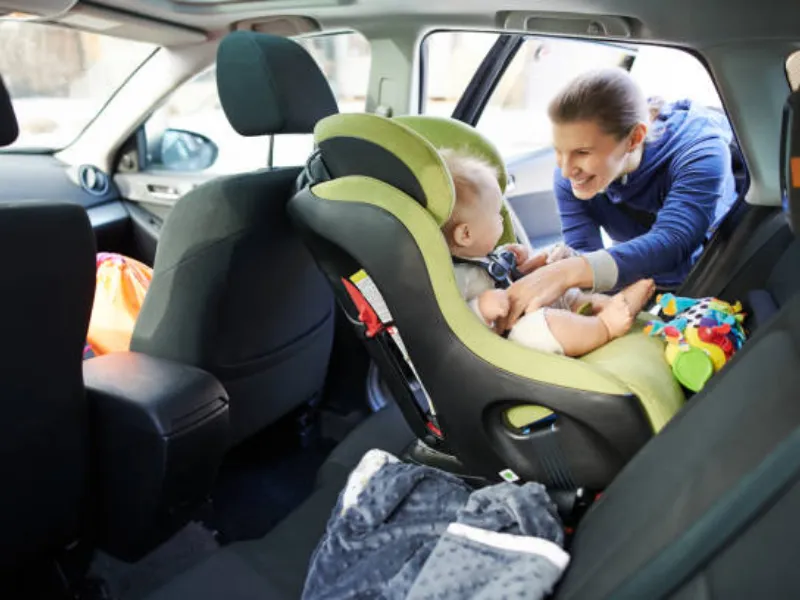
How to follow the 2-hour rule on a long road trip
Plan a stop at least every two hours, and stop sooner if the baby shows signs of discomfort or poor positioning. The two-hour point is a maximum guide, not a target that every child must reach.
During each stop:
- Park in a safe location.
- Remove the child from the car seat.
- Hold the baby or place the child on a safe, flat surface.
- Feed, change, and comfort the child as needed.
- Let the child move and change position.
- Check the child’s skin, temperature, and general condition.
- Recheck the harness and recline angle before driving again.
A second adult can watch the baby during travel, but an adult should not rely on observation alone to make a long period in the seat safe. If the baby’s head falls forward, stop as soon as it is safe and correct the position.
For a long trip, build breaks into the route before leaving. A baby may need to stop more often than every two hours for feeding, diaper changes, motion sickness, or comfort.
What to do if the baby falls asleep
Do not wake a baby solely because the car is moving and the child has briefly fallen asleep. The key concern is the length of the trip, the child’s position, and what happens after arrival.
When you reach your destination:
- Take the baby out of the car seat.
- Move the baby to a firm, flat sleep surface on the back.
- Do not use the car seat as the baby’s routine sleep space.
- Do not leave the baby sleeping in the car seat outside the vehicle.
The AAP’s safe-sleep guidance recommends moving a sleeping infant from a car seat to a firm sleep surface as soon as practical.
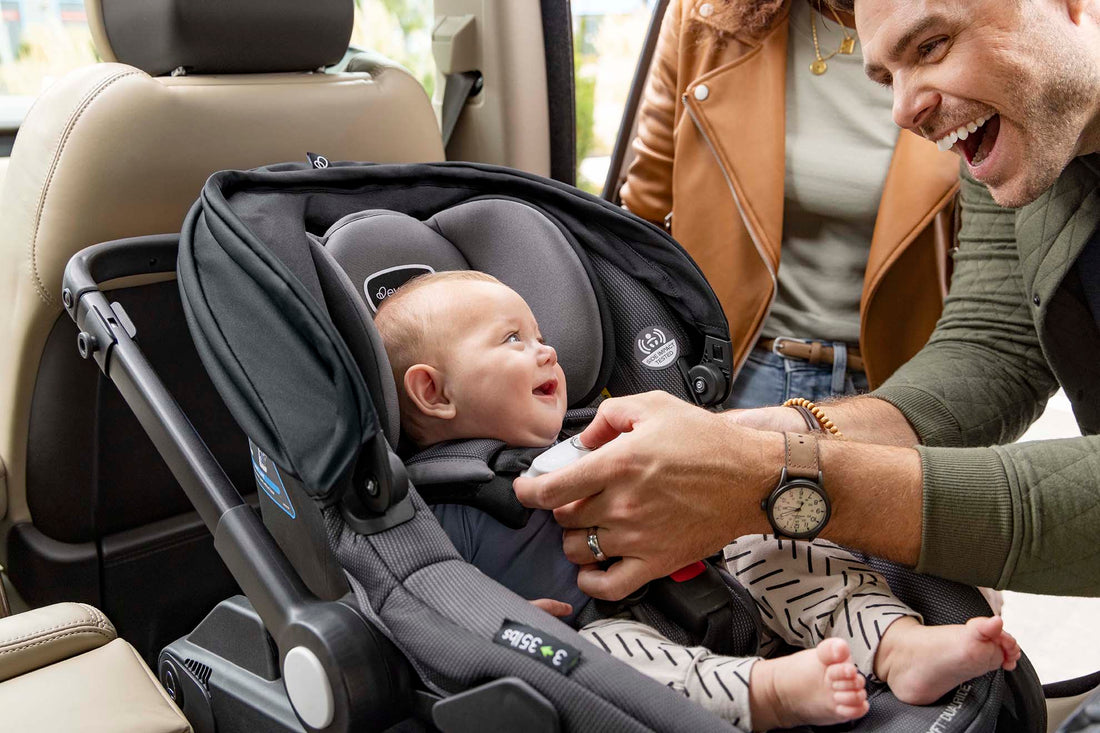
When should you stop the trip sooner?
Stop as soon as it is safe if the child’s head drops forward, the child appears to have trouble breathing, or the harness no longer holds the child in the correct position.
Watch for:
- Chin pressed against the chest
- Head leaning sharply to one side
- Slumped body position
- Pale, blue, gray, or unusually red skin
- Weakness or unusual limpness
- Trouble breathing
- Persistent crying or signs of distress
- Vomiting or repeated coughing
- A loose, twisted, or poorly placed harness
If a child has difficulty breathing, turns blue or gray, becomes unresponsive, or seems seriously ill, call 911. Do not continue driving while trying to observe or correct a serious medical problem.
Some children need more careful planning. Speak with the child’s pediatrician before a long car trip if the child was:
- Born premature
- Born with a low birth weight
- Diagnosed with a breathing or heart condition
- Diagnosed with low muscle tone
- Recently ill
- Dependent on medical equipment
- Prone to vomiting or airway problems


A doctor may recommend a shorter travel period, extra monitoring, or a car-seat challenge before discharge from a hospital. That is different from ordinary travel guidance and should be handled by the child’s medical team.

Common mistakes that make car-seat travel less safe
The most common mistake is treating the two-hour rule as the only safety issue. A child can be unsafe before two hours if the seat is poorly installed, the harness is loose, or the child’s head has fallen forward.
Avoid these errors:
Using the car seat as a routine sleep space
A car seat is safe for transportation when used correctly. It is not a safe replacement for a crib or bassinet.
Leaving the seat on the floor, a bed, or a table
A car seat can tip when placed on an elevated or soft surface. Never use it as a sleep device outside the vehicle.
Adding unapproved padding
Aftermarket head supports, inserts, strap covers, and cushions may change how the harness works. Use only parts approved by the car-seat maker.
Loosening the harness for comfort
The harness should be snug. You should not be able to pinch a fold of webbing at the shoulder. Remove bulky coats before buckling the child, then place a blanket over the harness if needed.
Stopping the 2-hour breaks after switching seats
A convertible seat may provide more room, but it still holds the child in a fixed position. Continue regular movement breaks.
Turning the child forward-facing too soon
Outgrowing an infant carrier does not mean a child has outgrown rear-facing travel. Move to a larger rear-facing seat instead.
Leaving a child alone in a parked vehicle
Never leave a child alone in a vehicle, even for a short time. Vehicle temperatures can rise or fall quickly, and a sleeping child may not show obvious distress.

A simple decision guide
Use this quick guide when deciding what to do:
Is the child currently in the car seat?
If yes, use the seat only for travel and check the child’s position often.Has the trip lasted close to two hours?
Stop at the next safe location and remove the child.Has the child’s head fallen forward?
Stop as soon as possible and correct the position. Check the recline angle and installation.Has the infant-only seat been outgrown?
Move to a correctly fitted convertible seat. Do not move directly to a booster unless the child meets the booster’s requirements.Is the child asleep after arriving?
Move the child to a firm, flat sleep surface.Does the child have a medical condition or a history of prematurity?
Ask the pediatrician for trip-specific advice.
The safest answer is not “the rule ends at age X.” It is: use the car seat for every ride, take breaks during long rides, and follow the seat’s limits and the child’s medical needs.

Frequently asked questions
Does the 2-hour car seat rule apply to toddlers?
Yes. Toddlers should also get regular breaks during long trips. Toddlers usually have better head and trunk control than newborns, but sitting in one position for many hours can still cause discomfort and poor posture.
Can a baby stay in a car seat for 3 hours if the baby looks comfortable?
It is better not to plan for three uninterrupted hours. Stop around the two-hour point, remove the baby, and provide a break. A baby may not show clear signs of airway compression or discomfort.
Does the rule apply when the car is not moving?
The concern about prolonged sitting still exists when a child remains in the seat outside the vehicle. The car seat should not become a routine seat for feeding, lounging, or sleeping.


Can I use a stroller with a car-seat attachment for a whole day?
A stroller attachment may be useful for moving a baby from the car to a nearby destination, but it does not turn the car seat into a regular sleep surface. Remove the baby when practical and follow both the car-seat and stroller instructions.
What if I cannot stop exactly at two hours?
Safety comes first. Do not stop on a highway shoulder unless there is an emergency. Plan ahead, stop at the nearest safe location, and take the break as soon as reasonably possible. If the child is slumped or having trouble breathing, stop at the first safe opportunity and seek emergency help when needed.
Sources and scope
This article uses U.S. safety guidance from:
- National Highway Traffic Safety Administration: Car Seats and Booster Seats
- American Academy of Pediatrics: Car Seats: Information for Families
- American Academy of Pediatrics: Safe Sleep and Car Seats
The “2-hour rule” is commonly used as practical travel guidance. It is not a single U.S. federal rule with a defined age cutoff. Always follow the specific car-seat manual and ask a pediatrician about premature infants or children with medical needs.

Bottom line
The 2-hour car seat rule does not officially end at 6 months, 1 year, or another set age. Continue taking children out of their car seats for breaks during long trips, even after moving from an infant carrier to a convertible seat or booster.
For the next trip, check the seat manual, plan safe stops, keep the harness snug, and move a sleeping baby to a firm, flat sleep surface when you arrive.
