

Neither tire is automatically wider. In a U.S. tire size such as P215/55R17 or P215/60R17, the numbers 55 and 60 describe the tire’s aspect ratio, not its width.
If the first number stays the same, such as 215, both tires have the same stated section width. The 60-series tire has a taller sidewall and a larger overall diameter than the 55-series tire.
For example:
- 215/55R17: about 215 mm wide, with a sidewall about 118 mm tall
- 215/60R17: about 215 mm wide, with a sidewall about 129 mm tall
The 60-series tire may look larger, but the first number—not 55 or 60—determines the tire’s nominal width.


Introduction
For drivers in the United States, tire numbers can look confusing at first. A size such as P225/60R17 contains several measurements, but each part has a different job.
The 55 or 60 is a percentage, not a width measurement. It tells you how tall the sidewall is compared with the tire’s section width. A 60-series tire has a taller sidewall than a 55-series tire when both tires use the same first number.
Before changing tire sizes on a car, SUV, or truck, check the vehicle placard inside the driver’s door, the owner’s manual, and the tire maker’s fitment data. A size that fits the wheel may still change clearance, speedometer accuracy, handling, load capacity, or all-wheel-drive operation.

What Do 55 and 60 Mean on a Tire?
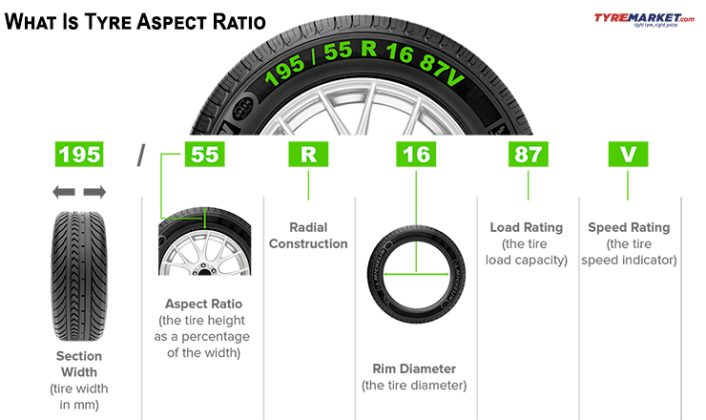
The 55 or 60 is the tire’s aspect ratio. It shows the sidewall height as a percentage of the tire’s section width.
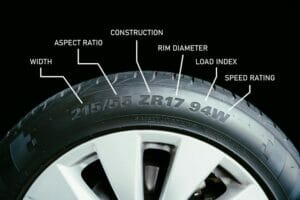
Consider the size P215/55R17:
- P means passenger vehicle tire.
- 215 is the nominal section width in millimeters.
- 55 means the sidewall height is about 55% of 215 mm.
- R means radial construction.
- 17 is the wheel diameter in inches.
The size P215/60R17 uses the same 215 mm nominal width. Its sidewall is taller because 60% is greater than 55%.
Sidewall formula
Use this formula to estimate sidewall height:
Sidewall height = tire width × aspect ratio ÷ 100
For a 215/55 tire:
215 × 0.55 = 118.25 mm
For a 215/60 tire:
215 × 0.60 = 129 mm
The 215/60 tire therefore has a sidewall about 10.75 mm taller on one side. It adds about 21.5 mm to the tire’s total diameter, before accounting for small differences among tire models.
The Tire and Rim Association and major tire manufacturers use standardized size terminology, but the exact measured dimensions can vary by tire model, approved rim width, inflation pressure, and load.


Does a 60-Series Tire Look Wider?
A 60-series tire can look wider or fuller, but that is mainly because it has more sidewall and a larger overall shape. Its aspect ratio alone does not make it wider.
Two tires with the same first number have the same nominal section width:
| Tire size | Nominal width | Aspect ratio | Approximate sidewall |
|---|---|---|---|
| 215/55R17 | 215 mm | 55 | 118 mm |
| 215/60R17 | 215 mm | 60 | 129 mm |
| 225/55R17 | 225 mm | 55 | 124 mm |
This table shows why 225/55R17 is nominally wider than 215/60R17, even though the 225 tire has the lower aspect ratio.
Actual measured width is not always identical to the number printed on the sidewall. A tire’s tread design, shoulder shape, construction, and approved wheel width can change its real-world section width. For an exact comparison, review the manufacturer’s specification sheet for both tires.
Which Tire Has a Taller Sidewall: 55 or 60?
The 60-series tire has the taller sidewall when the tire width is the same.
A taller sidewall can provide:
- More cushioning over potholes and rough pavement
- More protection from wheel damage in some impacts
- A softer steering response
- More sidewall flex during cornering
A shorter 55-series sidewall can provide:
- A quicker steering feel
- Less sidewall movement during hard cornering
- A firmer ride
- A lower overall tire diameter when the width and wheel size remain the same
Neither aspect ratio is automatically better. The right choice depends on the vehicle’s approved sizes and how you use it. A commuter in a region with rough roads may value the extra sidewall. A driver seeking sharper response may prefer a lower profile, but only if that size is approved for the vehicle.

How Much Bigger Is a 215/60R17 Than a 215/55R17?
A 215/60R17 is approximately 0.88 inch taller than a 215/55R17.
Here is the calculation.
215/55R17
- Sidewall: 215 × 0.55 = 118.25 mm
- Two sidewalls: 236.5 mm
- Wheel diameter: 17 × 25.4 = 431.8 mm
- Total diameter: 668.3 mm
- Approximate diameter: 26.31 inches
215/60R17
- Sidewall: 215 × 0.60 = 129 mm
- Two sidewalls: 258 mm
- Wheel diameter: 431.8 mm
- Total diameter: 689.8 mm
- Approximate diameter: 27.16 inches
The difference is about 0.85 inch, or roughly 3.2%. The exact figure may vary slightly because tire manufacturers list measured dimensions differently.
A larger tire can also affect:
- Speedometer and odometer readings
- Fender and suspension clearance
- Steering clearance
- Gear ratio behavior
- Acceleration
- Braking feel
- Traction-control and stability-control operation


A 3% change may seem small, but it is large enough to justify checking the vehicle maker’s fitment guidance before making the switch.
Will a 60 Tire Fit Instead of a 55?
It may fit, but the aspect ratio alone does not answer the fitment question. You must compare the complete tire size and the vehicle’s approved specifications.
Check these items before replacing a 55-series tire with a 60-series tire:
- Tire width: Compare the first number, such as 215 or 225.
- Overall diameter: Confirm that the new tire is close to the original size.
- Wheel diameter: The final number must match the wheel.
- Load index: The replacement must meet or exceed the vehicle’s required load rating.
- Speed rating: Follow the vehicle maker’s requirements.
- Wheel width: Confirm that the tire is approved for the wheel.
- Clearance: Check the strut, spring, fender, liner, and suspension areas.
- Drivetrain requirements: Be especially careful with AWD and 4WD vehicles.
The driver’s door-jamb placard is the best starting point for the original size, pressure, and load information. The U.S. National Highway Traffic Safety Administration also advises drivers to follow the vehicle and tire manufacturer’s guidance and maintain proper inflation.
A tire shop can measure clearance and confirm compatibility. Do not rely only on whether the tire appears to fit while the vehicle is parked. Suspension compression and full steering lock can reveal rubbing that is not visible at rest.

Does a 60-Series Tire Give More Ground Clearance?
Usually, yes, if the 60-series tire has the same width and wheel diameter as the 55-series tire.
Because the 60-series tire has a larger overall diameter, the axle and vehicle body may sit slightly higher. Half of the diameter increase becomes additional clearance under the tire’s centerline.
For the 215/55R17 and 215/60R17 example, the diameter difference is about 0.85 inch. The theoretical increase in ground clearance is about 0.43 inch.
That does not turn a passenger car into an off-road vehicle. The actual result depends on the suspension, tire pressure, vehicle load, and the lowest point under the vehicle. A larger tire can also reduce clearance in the wheel well, so gaining ground clearance may create a rubbing problem.

Does a 55 or 60 Tire Handle Better?
A 55-series tire often feels more responsive, while a 60-series tire often provides more ride comfort. This is a general tendency, not a guarantee.
Handling also depends on:
- Tire compound
- Tread design
- Construction
- Inflation pressure
- Tire width
- Wheel width
- Vehicle suspension
- Alignment
- Load rating
- Road surface
A lower-profile tire has less sidewall flex, which can make steering feel more direct. A taller sidewall can absorb more road shocks but may feel less immediate during quick steering inputs.
Do not select a tire only by aspect ratio. A high-quality 60-series tire can handle better than a poorly matched 55-series tire. The complete tire model and the vehicle’s design matter more than the number alone.

How to Compare Tire Width Correctly
To determine which tire is wider, compare the first number in the tire size.


Example 1: Same width
- 215/55R17
- 215/60R17
Result: Both have a nominal width of 215 mm. The 60-series tire is taller.
Example 2: Different width
- 205/60R16
- 215/55R16
Result: The 215 tire is nominally wider, even though its aspect ratio is lower.
Example 3: Plus-size change
- 215/60R16
- 225/55R17
Result: The 225 tire is nominally wider, while the 17-inch tire uses a shorter sidewall to help keep the overall diameter closer to the original.
Use this order when comparing sizes:
- Compare the first number for width.
- Calculate sidewall height from the aspect ratio.
- Compare the wheel diameter.
- Compare the total tire diameter.
- Check load, speed rating, wheel width, and vehicle clearance.
This method prevents a common mistake: assuming that a larger aspect-ratio number means a wider tire.
Common Mistakes When Comparing 55 and 60 Tires
Mistake 1: Treating 55 and 60 as width measurements
They are percentages. The first number, such as 215 or 225, represents nominal width in millimeters.
Mistake 2: Comparing only the tire’s appearance
A tire can look wider because of its shoulder design or a wider approved rim. Visual inspection does not confirm fitment.
Mistake 3: Ignoring load index
A replacement tire must carry the vehicle’s required load. A tire with the correct dimensions may still be unsuitable if its load index is too low.
Mistake 4: Assuming any size that fits the wheel is safe
The tire may clear the wheel but rub the suspension or fender during turns or when the suspension compresses.
Mistake 5: Changing only one tire
On many vehicles, tires should match closely in size and wear. AWD systems can be sensitive to differences in rolling circumference. Follow the vehicle manufacturer’s instructions.
Mistake 6: Forgetting tire pressure
Use the pressure on the vehicle placard, not the maximum pressure molded into the tire sidewall. The sidewall maximum is not the vehicle’s recommended cold inflation pressure.


Should You Choose a 55 or 60 Tire?
Choose the size listed by the vehicle manufacturer unless a tire professional confirms an alternative size.
A 60-series tire may make sense when:
- It is an approved size for the vehicle.
- You want more sidewall cushioning.
- Your vehicle has enough clearance.
- Its load and speed ratings meet the specification.
- The overall diameter remains within the vehicle’s accepted range.
A 55-series tire may make sense when:
- It is the factory-approved size.
- You want the original steering and speedometer behavior.
- The vehicle requires its shorter sidewall.
- The tire’s load and speed ratings match the placard.
- You want to preserve the original wheel-well clearance.
Do not use aspect ratio alone to choose a tire. The complete size, tire construction, load rating, wheel, and vehicle systems must work together.
Frequently Asked Questions
Is a 60 tire wider than a 55 tire?
Not by definition. If both tires have the same first number, such as 215/55 and 215/60, they have the same nominal width. The 60 tire has a taller sidewall and usually a larger overall diameter.
Does a higher aspect ratio mean a wider tire?
No. A higher aspect ratio means a taller sidewall relative to the tire’s width. The first number in the tire size determines nominal width.
Is 215/60R17 wider than 215/55R17?
No. Both sizes have a nominal width of 215 mm. The 215/60R17 is taller.
Is 225/55R17 wider than 215/60R17?
Yes, nominally. The 225 tire is 10 mm wider by the size designation. However, actual measured width can vary by tire model and approved rim width.
Can I put 60-series tires on wheels that had 55-series tires?
Possibly, but you must confirm complete fitment. Check overall diameter, clearance, load index, speed rating, wheel width, tire pressure requirements, and drivetrain limits. A tire shop or vehicle manufacturer should verify the change.
Will a 60-series tire improve gas mileage?
There is no universal answer. A larger tire can change gearing and engine speed, but tire weight, rolling resistance, inflation pressure, tread design, and driving conditions also affect fuel use. Do not change size solely to seek better mileage.
Conclusion
When comparing tire sizes, 55 and 60 do not tell you which tire is wider. They describe sidewall height as a percentage of the tire’s nominal width.
If the first number is the same, the 60-series tire is generally taller, not wider. To find the wider tire, compare the first number in the size—such as 215 versus 225—then verify the complete size and vehicle fitment.
For a safe replacement, start with the driver’s door placard and owner’s manual. Confirm the load index, speed rating, overall diameter, wheel compatibility, and clearance before buying or installing a different tire size.


