

A fuel smell usually means a fuel leak, evaporative system fault, or rich running engine.
I’ve spent years diagnosing cars and teaching people how to spot real problems versus harmless odors. In this guide I will explain why does my car smell like gas, how to check it safely, common causes, what’s risky, and when to call a professional. Read on for clear, practical steps you can use today to find the source and protect yourself and your car.

Why does my car smell like gas? Overview
When you ask why does my car smell like gas, you are pointing to one of the clearest warning signs a car can give. A gasoline smell inside or near a vehicle can come from a fuel leak, an issue in the evaporative emissions system (EVAP), a rich-running engine, or a simple spill that never evaporated. The smell can be inside the cabin, around the engine bay, or under the car. Each location tells a different story and guides your next steps.
I will break down each reason. You’ll learn how to check safely, what you can fix yourself, and what must go to a mechanic. Expect clear guidance based on direct experience and standard repair practice.
Common causes of a gas smell
Here are the most frequent reasons people ask why does my car smell like gas.
Fuel leak from lines or tank
Fuel lines, hoses, or the fuel tank can corrode or crack. Even small drips cause a strong odor. A leak under the car usually smells stronger when parked.Loose or faulty gas cap
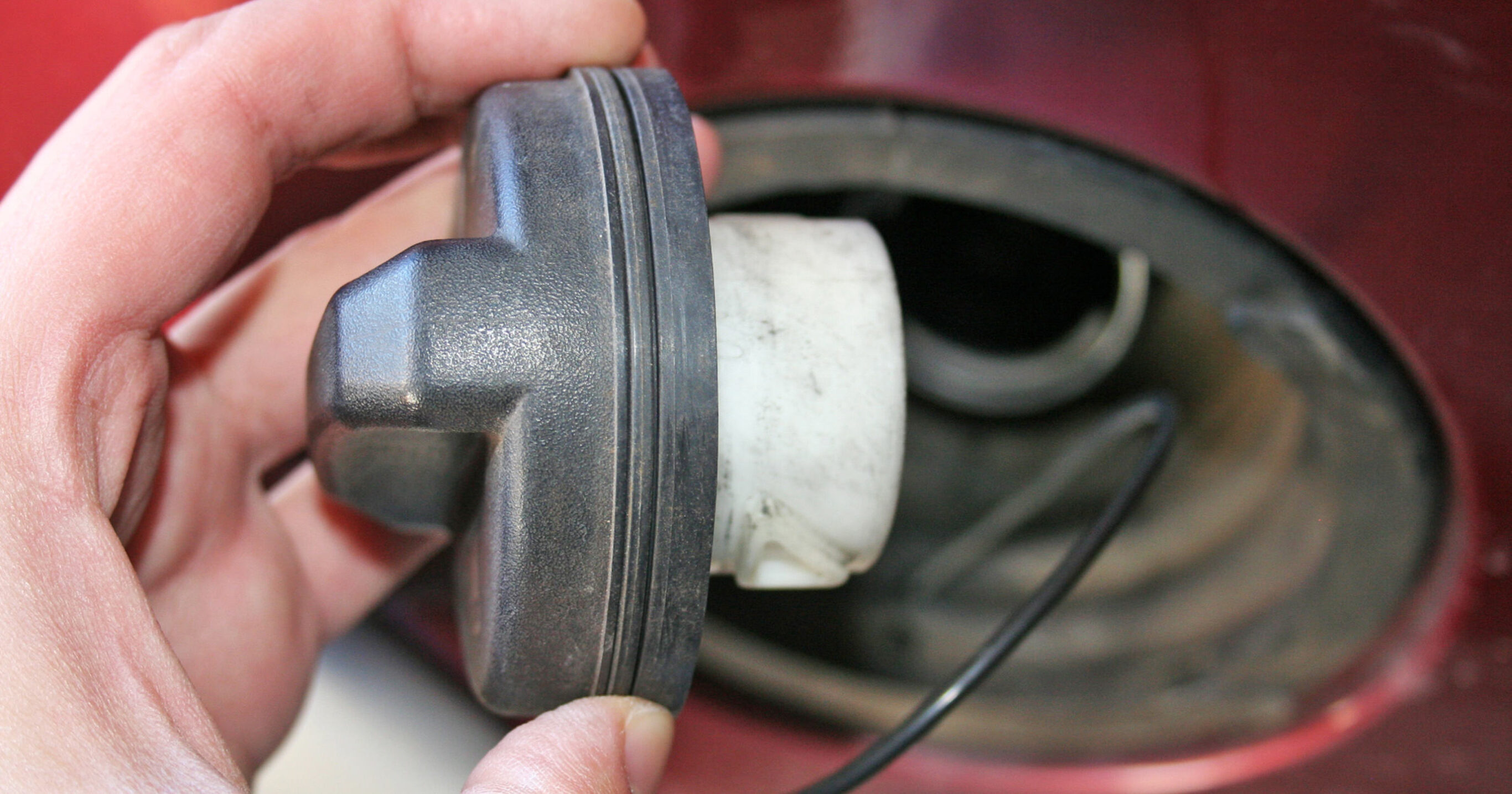
An improperly seated or damaged gas cap lets fuel vapors escape. This is one of the easiest causes to check and fix.EVAP system failure
The EVAP system captures fuel vapors and routes them to the engine. A failed charcoal canister, purge valve, or cracked vacuum lines will let vapors out.Fuel injector or rail leak
Injectors and fuel rails pressurize fuel. A leaking injector can spray fuel into the engine bay and cause a gas smell.Rich fuel mixture or engine flooding
If the engine runs too rich, unburned fuel can exit the exhaust or leak into the intake. This often brings a gasoline scent, especially after idling.Recent refueling or fuel spill
A spill when filling the tank or a full tank that sloshed fuel can leave a lingering smell in the cabin. Floor mats and trunk liners can trap odors.Faulty fuel pressure regulator
A failing regulator can flood the engine with extra fuel and create a persistent smell.
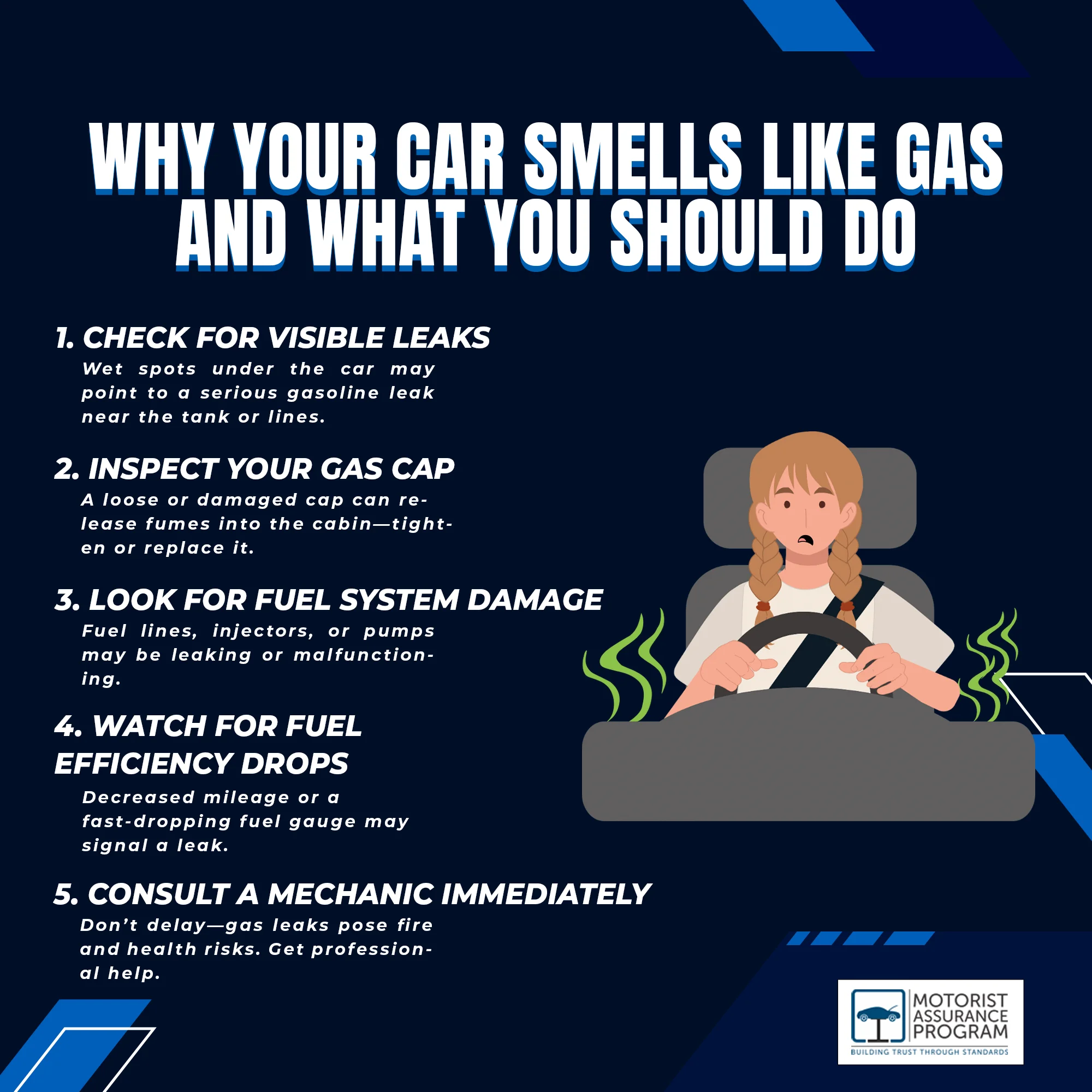
Each cause changes how urgent the repair is. A fuel leak that drips on hot components is a fire risk and needs immediate attention. A loose gas cap is low-risk and easy to fix.
How to safely diagnose a gas smell
Safety first. Fuel vapors are flammable and unhealthy. Follow this step-by-step checklist.
- Park outdoors in a well-ventilated, level area away from flames or sparks.
- Turn off the engine and avoid smoking or using electronics that might spark.
- Smell-test safely: walk around the car and note where the odor is strongest.
- Look for visible signs: wet spots, stains, or vapor around the fuel tank, lines, injectors, and engine bay.
- Check the gas cap: remove and inspect for cracks, worn threads, or dirt. Tighten or replace if needed.
- Inspect under the car: use a flashlight to check fuel lines and the tank area for drips or pooled fuel.
- Start the engine briefly outside to see if the smell appears from the exhaust or cabin vents.
Two quick PAA-style checks
Q: Can a bad gas cap cause the smell?
A: Yes. A loose or damaged gas cap can let vapors escape and trigger the smell. It’s an easy, inexpensive fix.
Q: Is a fuel smell dangerous?
A: Yes. Gas fumes are flammable and can be harmful to breathe. If the smell is strong, get the car checked immediately.
If you suspect a leak but can’t find the source, avoid driving long distances. Towing to a shop is safer than risking fire or inhalation.

Health, fire, and environmental risks
Gasoline vapors are both a health and safety hazard. Short exposure can cause headaches, dizziness, nausea, and eye or throat irritation. Long-term exposure increases risk to the nervous system. Gas vapors are heavier than air and can pool in low areas or inside the cabin.
Fire risk is the most urgent concern. Gasoline ignites easily near hot engine parts, electrical arcs, or open flames. Even a small leak can cause a dangerous situation if it’s allowed to persist.
Environmentally, fuel spills contaminate soil and groundwater. Small leaks add up over time and can cause costly cleanup and fines.
If you smell gas strongly in a closed garage, ventilate immediately and move the car outside. If you see dripping fuel or strong vapors, call for professional help.
DIY fixes and temporary solutions you can try
If the issue seems simple, try these steps. Use caution and stop if you find visible leaks or fuel pooling.
Tighten or replace the gas cap
Screw the cap on until it clicks. Replace if the rubber seal looks damaged.Clean up visible spills
Blot small fuel drips with absorbent cloths and allow the area to air out. Dispose of soaked rags safely.Replace cracked vacuum lines
If you find obvious cracks on small rubber hoses around the engine, replace them with the same size hoses.Inspect and replace the purge valve or charcoal canister if clearly failed
These parts often have simple replacement procedures and are common causes of an EVAP smell.Swap cabin air filter
If the smell is only inside the cabin, a contaminated cabin filter or trapped fuel odor in vents can be the cause.
When to stop DIY
- Any visible leak dripping fuel
- Fuel on hot engine parts
- Pressurized fuel line damage
In these cases, park the car and seek professional service.

When to see a mechanic and common repairs with rough costs
If DIY checks don’t remove the smell or if you find an active leak, see a mechanic. Here are typical repairs and ballpark costs. Prices vary by location and vehicle age.
Gas cap replacement
Cost: $10–$40. Simple and quick.EVAP system repair (hoses, purge valve, or canister)
Cost: $100–$700 depending on part and labor.Fuel line or connector repair
Cost: $150–$500. Corrosion or damage under the car often needs hoisting.Fuel injector replacement or seal repair
Cost: $200–$800 per injector, depending on engine design.Fuel tank repair or replacement
Cost: $500–$1,500 or more for replacement. Corroded tanks can be expensive.Fuel pressure regulator or pump replacement
Cost: $200–$1,000 depending on the part. Fuel pumps are often in-tank and more labor intensive.
Ask the shop for a clear diagnosis and a written estimate. Request parts used and a warranty on the repair. If a check-engine light is present, a scan can narrow down EVAP or injector fault codes.

Prevention and maintenance tips
I’ve fixed many cars with recurring fuel odors. Simple maintenance prevents most cases.
Replace the gas cap when worn
A new cap costs little and prevents EVAP leaks.Keep fuel lines and hoses inspected
Check them at every oil change or at least twice a year.Use quality fuel and avoid overfilling the tank
Overfilling can flood the EVAP canister and release vapors.Change cabin air filter regularly
This reduces trapped smells entering the cabin.Address engine performance issues quickly
Misfires and rich running cause unburned fuel and odors.
Real-life tip from my experience
Once, after a long road trip, I noticed a faint gas smell at idle. It turned out to be a cracked vacuum line to the charcoal canister. A simple hose swap fixed it, and I saved a much more expensive repair. The lesson: small looks pay off.

Frequently Asked Questions of why does my car smell like gas
Can a hot engine make my car smell like gas?
Yes. Heat can vaporize small spills or cause a nearby leak to smell stronger. If the smell appears only after driving, check for drips under the engine.
Will the check engine light come on if there is a fuel leak?
Not always. Some EVAP faults trigger a light, but small mechanical leaks may not. Use a visual inspection and a shop scan for hidden faults.
Is it safe to drive if my car smells like gas faintly?
If the smell is faint and you can’t find fuel pooling, short trips to a repair shop are generally okay. Avoid long drives and high speeds until the cause is found.
Can old fuel cause a gas smell in my car?
Yes. Stale or contaminated fuel can smell and affect engine performance. Draining and refilling with fresh fuel often resolves the odor.
Will cleaning the engine bay remove the gas smell?
Cleaning can remove residue and help you find the leak, but it won’t fix the source. Identify and repair the cause first, then clean up any remaining odor.
Conclusion
A gasoline smell is a clear signal that your car needs attention. Whether it’s a loose gas cap, an EVAP fault, or a dangerous fuel leak, the right steps are simple: identify where the smell is strongest, perform safe checks, and act quickly if you find fuel pooling or pressurized leaks. Regular checks and small repairs prevent most problems and reduce risk.
Take action today: tighten your gas cap, inspect hoses, or book a mechanic if you find any sign of a leak. If this guide helped, consider subscribing for more car-care tips or leave a comment describing your situation and I’ll help you troubleshoot.