

Yes, you can put a car seat in the front seat in some situations, but the back seat is safer for children. A rear-facing car seat must never be placed in front of an active passenger air bag. The air bag can strike the seat with great force and cause serious injury or death.
Before using the front seat, check three things:
- Your car seat manual.
- Your vehicle owner’s manual.
- The child passenger safety law in your state.
If the back seat is available, use it. The National Highway Traffic Safety Administration (NHTSA), the American Academy of Pediatrics (AAP), and the Centers for Disease Control and Prevention (CDC) all recommend that children ride in the back seat until at least age 13.


Is it legal to put a car seat in the front seat?
Federal law does not create one simple rule for every front-seat car seat situation. State laws set many child-restraint requirements, and those rules differ across the United States.
Some states allow a child restraint in the front seat if the child uses the correct seat and the seat is installed as directed. Other states limit front-seat use by age, weight, or seating position. A state may also require a child to sit in the rear when a rear seating position is available.
A legal setup is not always the safest setup. The safest choice is usually:
- Use the rear seat.
- Keep the child in a rear-facing seat as long as the seat allows.
- Use a forward-facing seat with a harness after the rear-facing limits are reached.
- Move to a belt-positioning booster when the child outgrows the harness.
- Use the vehicle seat belt alone only when the child fits it correctly.
Check your state’s current rules through your state highway safety office or the Governors Highway Safety Association. Also check the exact wording in your vehicle and car seat manuals.
Situations that may require front-seat use
A front-seat installation may be considered when:
- The vehicle has no rear seat, such as a pickup truck.
- The rear seats are occupied by other children in car seats.
- The vehicle has small rear seats that cannot accept the car seat.
- The rear seat belts or lower anchors do not work.
- The vehicle manual permits the installation and gives instructions for it.
These situations do not make the front seat equally safe. They mean you must use the safest available setup and follow the instructions closely.
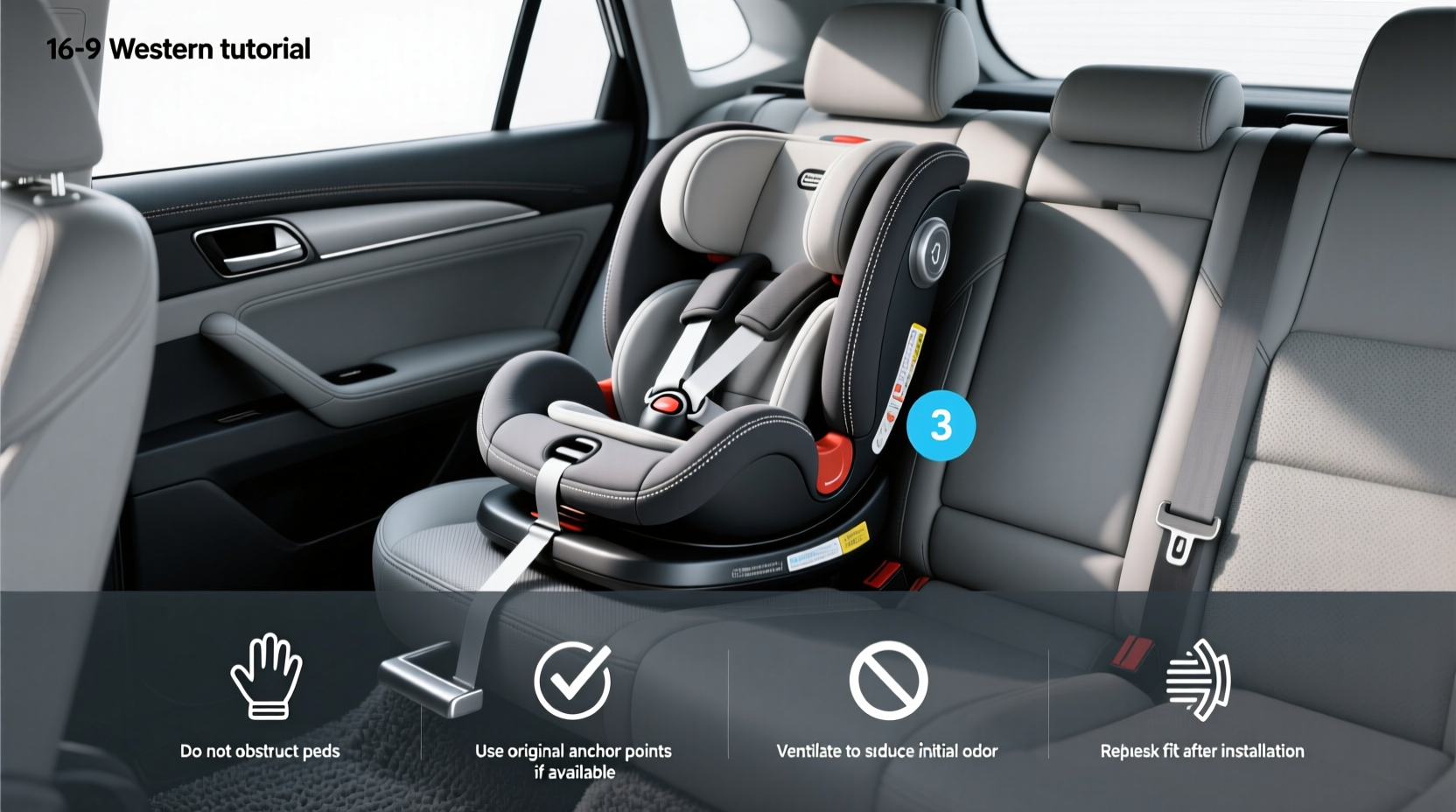
Can a rear-facing car seat go in the front seat?
A rear-facing car seat should not be used in front of an active passenger air bag. This rule applies to infant seats, rear-facing convertible seats, and rear-facing all-in-one seats.
The back of a rear-facing car seat faces the dashboard. During a crash, an active air bag can hit the back of the seat. The force can push the seat into the child.
If you must use a rear-facing seat in front, the passenger air bag must be turned off in a way approved by the vehicle maker. Some vehicles have a manual air-bag switch. Some use an automatic system.
Others do not allow the air bag to be turned off by the driver.

Do not remove a fuse, unplug wiring, or use an unofficial device to disable an air bag. If the air bag cannot be turned off correctly, do not place a rear-facing car seat in that position.
How to check the air bag
Look for:
- An “ON/OFF” air-bag switch.
- A dashboard light that shows passenger air-bag status.
- A weight-sensing system described in the owner’s manual.
- A warning label on the sun visor or dashboard.
- Specific instructions for child restraints.
The air-bag indicator must show that the passenger air bag is off before the child rides there. If you are unsure, ask the vehicle maker or a certified child passenger safety technician.

Can a forward-facing car seat go in the front seat?
A forward-facing car seat may be allowed in the front seat in some vehicles and states, but the back seat remains safer. A forward-facing seat places the child closer to the dashboard, steering wheel, and front air bag.
If a forward-facing seat must go in front:
- Read the vehicle manual for front-seat child-restraint rules.
- Read the car seat manual for front-seat use.
- Move the passenger seat as far back as the vehicle manual permits.
- Keep the child seat upright at the angle required by its manual.
- Install the seat with the seat belt or lower anchors, but not both unless the manufacturer allows both.
- Attach the top tether when the car seat and vehicle provide an approved tether anchor.
- Check that the car seat does not press against the dashboard.
- Confirm that the passenger air bag setting matches the vehicle instructions.
Moving the seat back can increase the distance between the child and the dashboard. However, do not place a seat in a position that prevents the vehicle seat belt from locking or that changes the approved installation angle.
Why the top tether matters
The top tether helps reduce the forward movement of a forward-facing car seat during a crash. It is not the same as the lower anchors.
Use the tether only with a marked tether anchor. Do not attach it to a headrest post, luggage hook, cargo tie-down, or another part that the manual does not identify as a tether anchor.
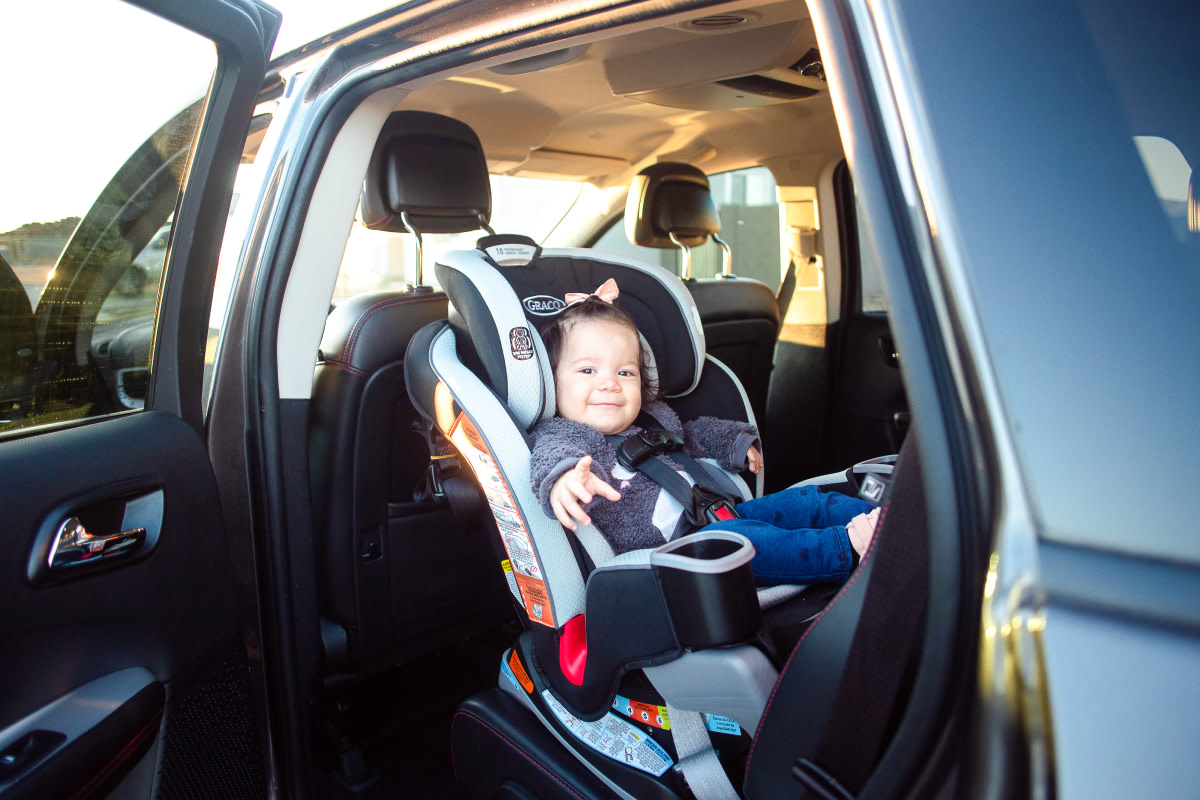
What is the safest place for a child car seat?
The safest general location is the rear seat, installed in a position that gives a tight and correct fit. The center rear seat is not automatically safest if the car seat cannot be installed correctly there.
A good installation matters more than choosing the center by habit. The best position is one where:
- The car seat fits the vehicle seat.
- The seat belt or lower anchors are approved for that position.
- The seat can be tightened without excess movement.
- The child can be buckled correctly.
- The vehicle manual allows the installation.
- Other passengers can still use their restraints.
A rear-facing car seat can often be installed in either side of the back seat. A forward-facing seat should use the top tether when required or recommended by the car seat and vehicle instructions.
Rear seat position comparison
| Position | General safety value | Main concern |
|---|---|---|
| Rear center | Can place the child farther from side impacts | May not allow a firm installation |
| Rear outboard | Often gives a simpler installation | Closer to a side door |
| Front passenger | Usually less protective than the rear | Air bag and dashboard hazards |
The table gives general guidance, not a universal ranking for every vehicle. A correct installation in a rear outboard position is better than a loose or incorrect installation in the rear center.


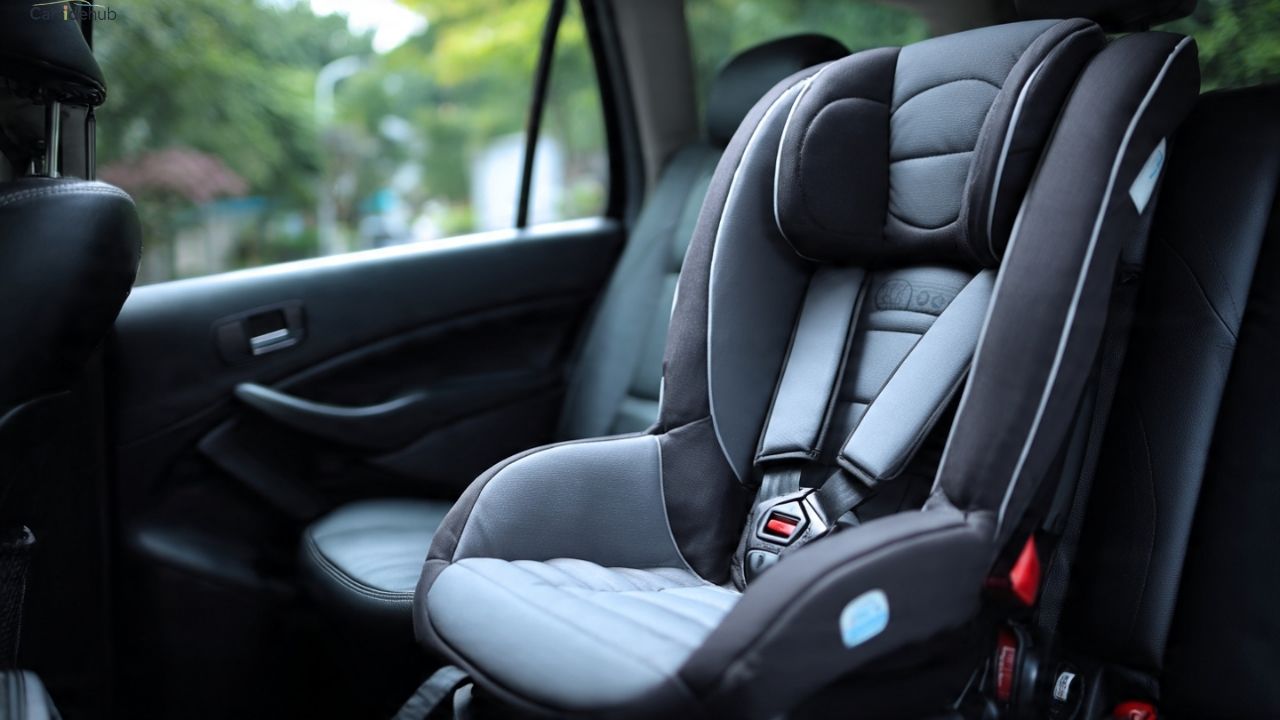
How to install a car seat in the front seat
Use the following process only when the front seat is permitted by the vehicle manual, car seat manual, and applicable state law.
1. Confirm the child’s seat type
Use the seat based on the child’s height, weight, age, and development. Do not move a child forward-facing just because the child’s legs touch the vehicle seat or because the child seems large.
Keep a child rear-facing until the child reaches the car seat’s rear-facing height or weight limit. Then use the forward-facing harness until the child reaches that seat’s forward-facing limit.
2. Read both manuals
The car seat manual explains:
- Approved installation methods.
- Belt routing.
- Recline settings.
- Harness height.
- Top-tether use.
- Air-bag warnings.
The vehicle manual explains:
- Which seating positions may be used.
- Whether lower anchors are available.
- Where tether anchors are located.
- How to manage the passenger air bag.
- Whether a child restraint is allowed in front.
If the manuals conflict, contact the car seat maker and vehicle maker before installing the seat.
3. Prepare the passenger seat
Place the vehicle seat in the position required by the manuals. In many cases, this means moving it back from the dashboard. Keep the vehicle seat upright enough to support the car seat as directed.
Do not use a rear-facing car seat with an active air bag. Do not rely on a dashboard light alone if the manual gives a different procedure.
4. Install the car seat
Route the seat belt through the correct belt path. Lock the belt as described in the vehicle manual and car seat manual.
If the installation uses lower anchors, use only the approved anchor points. Lower anchors have a weight limit that includes the child and the car seat. When that limit is reached, switch to the vehicle seat belt if the car seat manual allows it.
5. Attach the top tether
For a forward-facing car seat, connect the top tether to the correct tether anchor. Tighten it according to the manual.
A tether anchor may be behind the seat, on the rear shelf, on the vehicle floor, or in another marked location. It is not always the same as a cargo hook.
6. Test the installation
Hold the car seat near the belt path. Pull it side to side and front to back.
The seat should move no more than 1 inch in any direction at the belt path. This check comes from common installation guidance, but follow the car seat maker’s instructions if they differ.


Do not judge the installation by movement at the top of the seat. A seat can move at the top while remaining securely installed at the belt path.
7. Buckle the child
Place the harness straps at the height required for the seat’s direction of travel. Remove bulky coats before buckling. The harness should lie flat and pass the pinch test described by the car seat maker.
The chest clip should sit at armpit level when the seat includes one. Never add aftermarket padding, toys, strap covers, or inserts unless the car seat maker approved that item for the specific seat.

What should you do if the car has no back seat?
A pickup truck, two-seat sports car, or single-row work vehicle may have no rear seating position. In that case, the front passenger seat may be the only option, but the setup requires extra care.
For a rear-facing seat:
- Confirm that the vehicle allows a child restraint in the passenger seat.
- Turn off the passenger air bag only through an approved method.
- Follow the vehicle’s instructions for air-bag status.
- Install the seat exactly as directed.
For a forward-facing seat:
- Move the passenger seat back as allowed.
- Use the top tether if an approved anchor is available.
- Keep the child in the harness until the seat’s forward-facing limits are reached.
- Follow any restrictions for pickup trucks or active air bags.
Some vehicles do not permit children in the front seat at all, even when the vehicle has no rear seat. State law may also impose a special rule. Check before driving.

Common front-seat car seat mistakes
The most serious errors usually involve air bags, incorrect belt paths, or failure to follow the manuals.
Using a rear-facing seat with an active air bag
This is the most dangerous mistake. A rear-facing seat must not be placed in front of an active passenger air bag.
Assuming the air bag turns off automatically
Some vehicles use passenger detection systems, but the result can depend on the seat, the child’s weight, and how the system operates. Confirm the status using the vehicle instructions.
Placing the car seat too close to the dashboard
A front seat that is too far forward leaves less space between the child restraint and the dashboard. Use the position specified by the vehicle and car seat makers.
Using the wrong belt path
Many car seats have separate belt paths for rear-facing and forward-facing use. Using the wrong path can make the seat loose or change how it works in a crash.
Skipping the top tether
A top tether is a key part of many forward-facing installations. Use it when the vehicle and car seat provide an approved tether location.
Adding unapproved accessories
Aftermarket inserts and strap covers can change how the harness fits. Use only parts supplied with the seat or approved in writing by the manufacturer.
Moving the child to a booster too soon
A booster does not restrain a young child like a harness. Use a booster only after the child outgrows the forward-facing harness and meets the booster’s requirements.


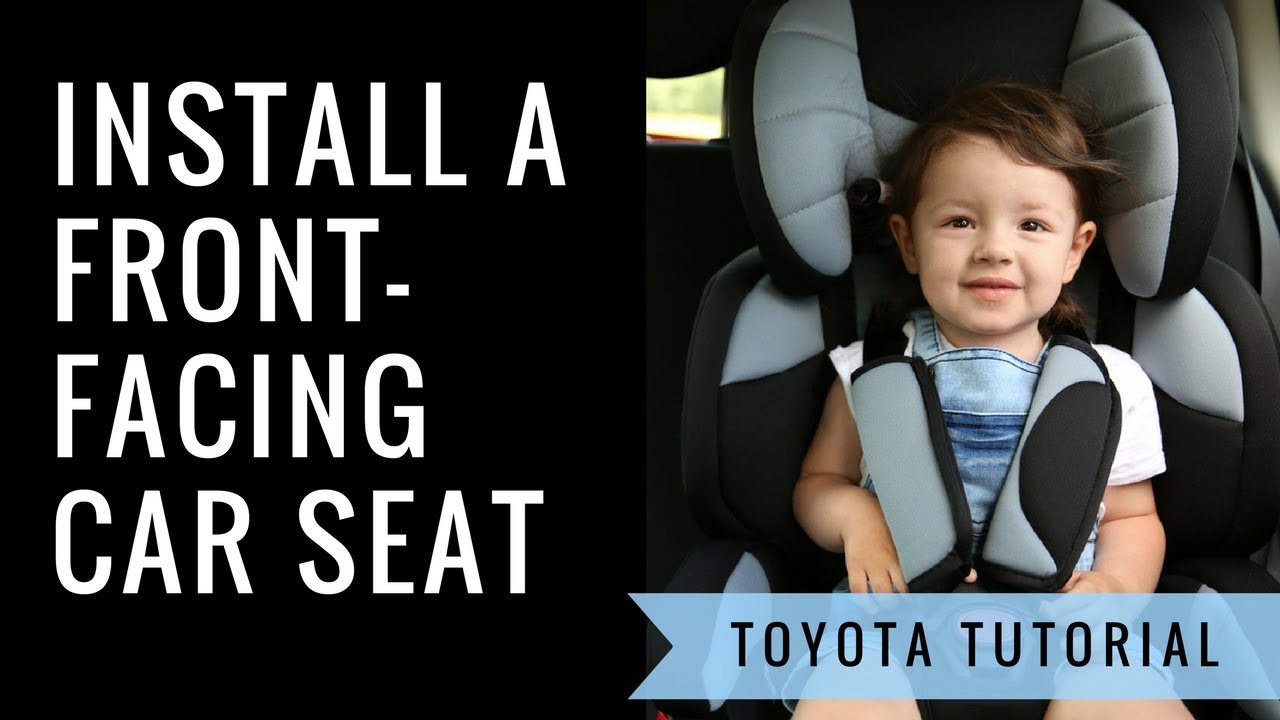
When should you get a car seat check?
Get help if the seat moves more than 1 inch at the belt path, the belt will not lock, the air-bag status is unclear, or the manuals do not explain the setup.
A certified Child Passenger Safety Technician (CPST) can check the installation and show you how to use the seat. Many inspection stations offer this service at no cost, although services vary by location. Find one through the National Highway Traffic Safety Administration inspection station directory.
Bring:
- The vehicle.
- The car seat.
- The child, if possible.
- Both manuals.
- Any information about the vehicle’s air-bag system.
A CPST can help with installation. They cannot replace the vehicle maker’s instructions or change state law.

Front-seat car seat decision guide
Use this quick guide before placing any car seat in the front:
| Question | If yes | If no |
|---|---|---|
| Is a usable rear seat available? | Use the rear seat | Check the vehicle manual |
| Is the child rear-facing? | The passenger air bag must be off | Continue to the next question |
| Does the vehicle manual allow a car seat in front? | Follow its placement rules | Do not use the front seat |
| Does the car seat manual allow front-seat use? | Follow its installation rules | Do not use the front seat |
| Is the state-law requirement met? | Continue only if all other checks pass | Do not use the front seat |
| Is the installation tight and complete? | Have the child ride only after the final check | Reinstall or get help |
The deciding rule is simple: use the rear seat whenever possible. Use the front seat only when every applicable instruction and legal requirement allows it.
Frequently asked questions
Can a newborn ride in the front seat?
A newborn should ride in a rear-facing infant or convertible car seat. The rear seat is preferred. Never place a rear-facing newborn seat in front of an active passenger air bag.
Can I put a baby car seat in the front of a truck?
It depends on the truck, the car seat, and state law. If the truck has no back seat, check whether the passenger air bag can be turned off through an approved method. If it cannot be turned off, do not use a rear-facing baby seat in that position.
Can a child sit in the front seat with a booster?
The back seat is safer. Some states and vehicles allow a booster in front, but the passenger air-bag instructions still apply. A booster must position the lap belt low across the upper thighs and the shoulder belt across the chest and shoulder.
Can I use the middle front seat for a car seat?
Only if the vehicle has an approved seating position there and the vehicle and car seat manuals allow it. Many vehicles do not have a suitable center front position.
When can a child sit in the front seat?
There is no single age that makes the front seat safe in every vehicle. NHTSA and the AAP recommend that children ride in the back seat until at least age 13. State law, vehicle design, air-bag settings, and the child’s restraint type also matter.
Should I use lower anchors or the seat belt in the front seat?
Use the method approved for that vehicle position and car seat. Lower anchors have weight limits. Once the child and car seat exceed the stated limit, use the vehicle seat belt if allowed.
Bottom line
You can put a car seat in the front seat only when the vehicle manual, car seat manual, and state law allow it. The back seat is the safer choice for children, and a rear-facing seat must never face an active passenger air bag.
If front-seat use is unavoidable, turn off the air bag only through an approved method, move the seat as directed, use the correct belt path, attach the top tether when required, and have the installation checked by a certified technician.
Sources and further reading
- National Highway Traffic Safety Administration: Car Seats and Booster Seats
- Centers for Disease Control and Prevention: Child Passenger Safety
- American Academy of Pediatrics: Car Seats and Booster Seats
- Governors Highway Safety Association: Child Passenger Safety Laws
- NHTSA: Find a Child Passenger Safety Inspection Station


