

Introduction
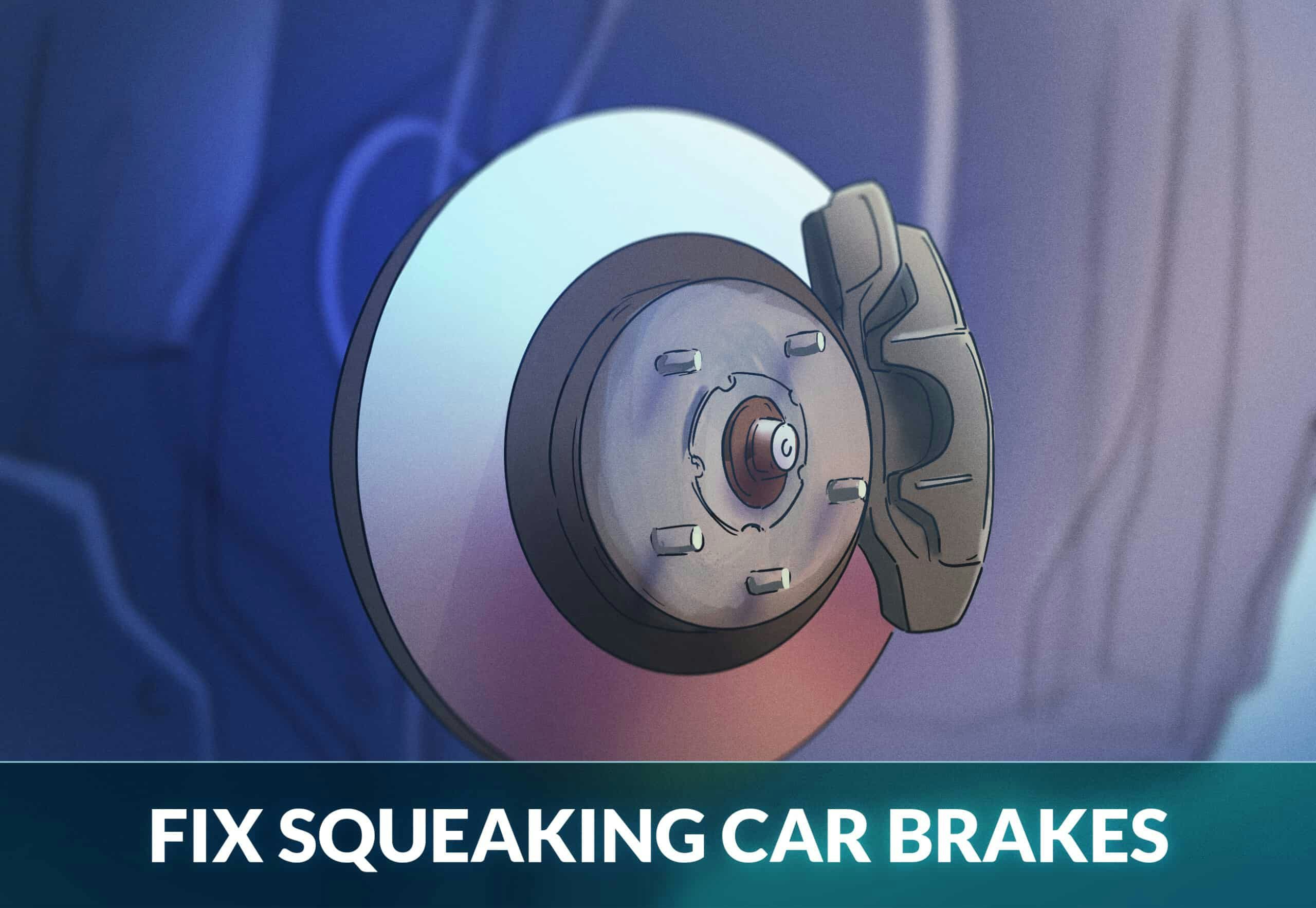
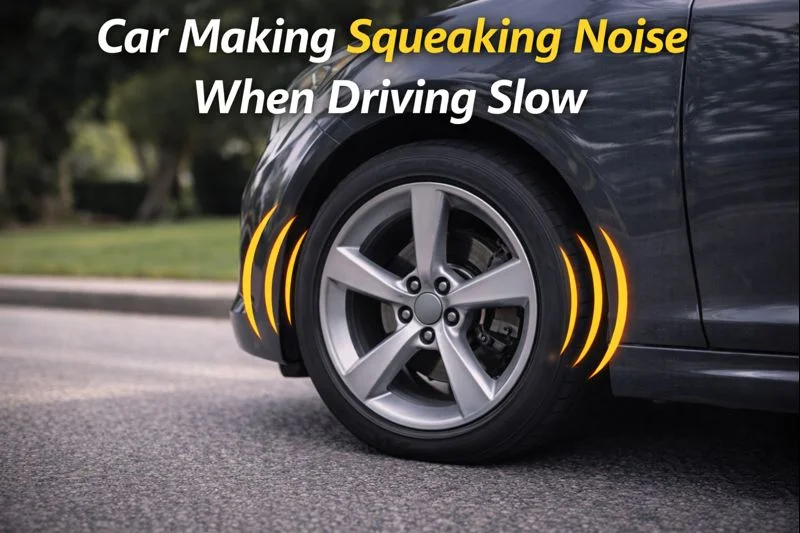
A car can squeak while driving because of worn brake parts, a loose or aging belt, dry suspension joints, debris near a wheel, or a tire problem. The sound’s timing gives the best clue: squeaking during braking points to the brake system, while squeaking over bumps often points to the suspension.
If you drive in the United States, road salt, dust, rain, potholes, and wide temperature swings can all make squeaks more common. A short squeak after a wet night may be harmless surface rust. A loud squeal that gets worse, follows wheel speed, or comes with pulling, vibration, or weak braking needs prompt inspection.
Do not ignore a new sound just because the car still drives. Some causes are minor. Others can affect steering, braking, or wheel control.
What the Sound Is Telling You
The most useful clues are when the squeak happens, where it seems to come from, and whether it changes with speed or road conditions.


Before checking anything, notice these details:
- Does the squeak happen only when you press the brake pedal?
- Does it occur when you turn the steering wheel?
- Does it happen over bumps, dips, or rough pavement?
- Does the pitch rise as the vehicle goes faster?
- Does it stop when you lightly apply the brakes?
- Does it occur only during the first few minutes of driving?
- Did it begin after rain, snow, road salt, tire work, or brake work?
- Do you also feel vibration, pulling, grinding, or looseness?
A squeak that follows vehicle speed often comes from a rotating part, such as a brake rotor, brake shield, wheel bearing area, or tire. A squeak that follows body movement often comes from the suspension, steering, or a loose underbody panel.
Squeak, squeal, grind, and hum are different clues
- Squeak: Often linked to rubber, light metal contact, dry bushings, or brake vibration.
- High-pitched squeal: Common with brake wear indicators, brake pad vibration, or belt slip.
- Grinding: Can mean serious brake or bearing damage. Stop driving unless a qualified technician says it is safe.
- Clicking while turning: May point to a worn constant-velocity, or CV, joint.
- ** humming or growling:** May come from a wheel bearing or tire problem.
Sound alone cannot confirm a failed part. It helps narrow the search.

Common Reasons a Car Squeaks While Driving
1. Worn brake pads or brake hardware
Brake pads often have a small metal wear indicator. When the friction material becomes thin, the indicator can touch the rotor and create a high-pitched squeal. Some vehicles also squeak because the brake pad, shim, clip, or caliper hardware vibrates.
A brake squeak may occur:
- Only when you press the brake pedal
- During slow stops
- After the brakes warm up
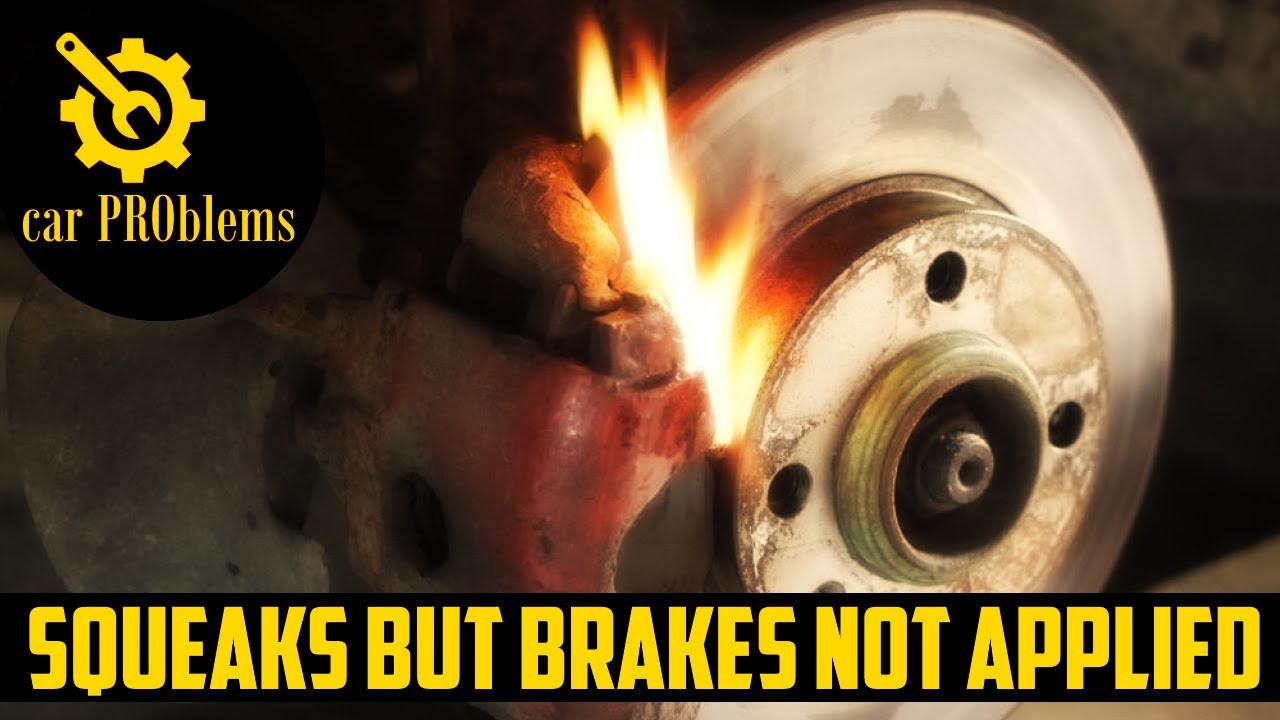
- Even when you are not braking, if a pad is dragging
If the sound changes when you lightly apply the brakes, the brake system should be near the top of the list.
A brake inspection should check the pad thickness, rotor surface, caliper movement, clips, shims, and parking brake. Do not spray lubricant on brake pads, rotors, or calipers. Oil or grease on the friction surface can reduce braking power.
2. Surface rust or moisture on the brake rotors
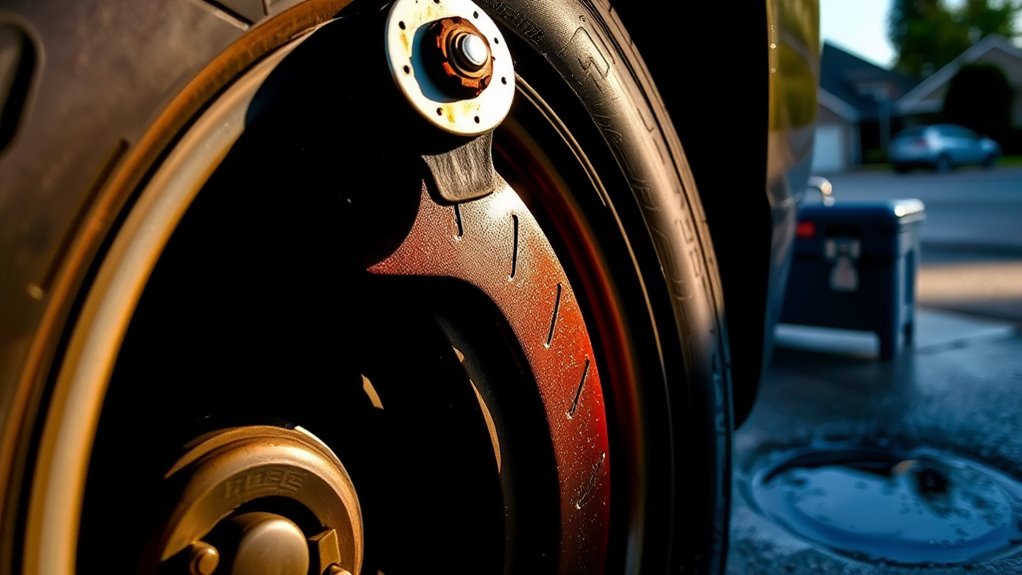
A thin layer of rust can form on brake rotors after rain, washing, or overnight parking. The first few brake applications may produce a light scraping or squeaking sound.
This often goes away after normal braking. It is more common in humid areas and in parts of the United States where roads are treated with salt during winter.


Surface rust is usually less concerning when:
- The sound is brief
- The brake pedal feels normal
- The car does not pull
- The noise fades after several normal stops
Persistent noise, deep grooves, blue spots, heavy rust, or grinding needs an inspection.
3. A loose or worn serpentine belt
The serpentine belt drives parts such as the alternator, air-conditioning compressor, and sometimes the water pump. A worn belt, weak tensioner, or seized pulley can cause a squeal from the front of the engine.
Belt noise often changes when:
- You start the engine
- You turn on the air conditioner
- Electrical loads increase
- The engine is cold
- The engine speed rises
Do not reach into the engine bay while the engine is running. Do not use belt dressing unless the vehicle maker specifically allows it. Belt dressing can hide the real problem and may damage some belt materials.
If the belt breaks, several systems may stop working. On some vehicles, the water pump may also stop, which can cause engine overheating.
4. Dry suspension bushings or ball joints
Suspension parts move every time the car goes over a bump or leans in a turn. Rubber bushings can dry out, crack, or lose their proper movement. Ball joints and other pivot points can also wear.
Suspension squeaks usually happen:
- Over speed bumps
- On rough roads
- When entering a driveway
- When the car rocks up and down
- During low-speed turns
A worn ball joint is more serious than a dry bushing because it can affect wheel control. A technician may need to lift the vehicle and check for looseness. Do not crawl under a car supported only by a jack. Use properly rated jack stands on solid ground, or leave the inspection to a shop.
5. A brake dust shield or other metal part touching the rotor
A thin metal shield sits behind many brake rotors. It helps protect the brake assembly from water and debris. If the shield bends, a small stone becomes trapped, or a clip comes loose, the shield can touch the rotor and squeak as the wheel turns.
This sound often follows wheel speed. It may change when you turn left or right.
A technician can inspect the space around the rotor and shield. Do not bend parts near the brake assembly unless you know the design and can work safely. A small mistake can create a new rubbing problem.
6. A worn wheel bearing
Wheel bearings more often make a hum, growl, or rumble than a squeak. Still, a damaged seal or dry bearing can create other sounds.


A bearing-related noise may change when the vehicle turns. It may become louder as speed rises. Loose wheel bearings can also cause play, vibration, or uneven tire wear.
Because a wheel bearing supports the wheel hub, suspected bearing damage deserves prompt service. Do not rely on sound alone to diagnose it.
7. Tire or wheel problems
A tire can squeak if it rubs against the inner fender, suspension, or a loose splash shield. A misaligned wheel, incorrect tire size, damaged tread, or low tire pressure can contribute to rubbing.
Check for:
- Fresh scuff marks on the tire sidewall
- Plastic rubbed smooth inside the wheel well
- Uneven tread wear
- A tire that loses air
- A loose fender liner
- Contact during turns or over bumps
Use the tire pressure listed on the driver-door label, not the maximum pressure printed on the tire sidewall.
8. Loose plastic panels or underbody shields
Modern vehicles use plastic liners and shields under the engine and inside the wheel wells. A missing fastener can let a panel flex, rub, or vibrate in the airflow.
This problem may appear after:
- An oil change
- Tire replacement
- Collision repair
- Driving through deep snow
- Hitting road debris
A loose panel is usually less urgent than a brake or steering fault, but it should still be secured before it contacts a tire or falls onto the road.
Use This Quick Troubleshooting Sequence
Start with safe observations. Do not remove wheels or crawl under the vehicle unless you have the right tools, support equipment, and experience.
Step 1: Identify the exact trigger
On a quiet road or empty parking area, observe whether the sound occurs during:
- Straight driving
- Light braking
- Harder braking
- Left turns
- Right turns
- Bumps or driveway entrances
- Acceleration
- Air-conditioner use
- Cold starts
Do not perform tests that require speeding, sudden swerving, or unsafe traffic behavior.
Step 2: Check the warning signs
Stop driving and arrange professional help if you notice:
- Grinding during braking
- A soft or sinking brake pedal
- A brake warning light
- Pulling to one side
- Steering looseness
- Strong vibration
- Smoke or a burning smell
- A hot wheel
- A damaged or bulging tire
- A loud noise that suddenly gets worse
- Loss of power steering or signs of overheating
If the car is difficult to control, have it towed.


Step 3: Inspect only what you can see safely
With the vehicle parked and the engine off, look through the wheel openings for obvious problems. Check for a damaged tire, loose plastic, hanging parts, or fresh metal dust.
Do not touch brake components right after driving. They may be hot. Do not place any part of your body beneath a vehicle held up only by a portable jack.
Step 4: Review recent work
A squeak that starts soon after service may relate to:
- Brake pad or rotor replacement
- Tire installation
- Wheel alignment
- Suspension work
- An oil change
- Underbody panel removal
- A collision repair
That does not prove the shop caused the noise. It does give the technician a useful starting point.
Step 5: Record the sound
A short phone recording can help, but sound recordings often change the pitch and hide the source. Tell the repair shop:
- When the noise starts
- How long it lasts
- Which side seems louder
- Whether braking changes it
- Whether the car has any warning lights
- What work happened recently
A clear description can reduce diagnostic time.

Squeaking by Driving Situation
| When the squeak occurs | More likely causes | Urgency |
|---|---|---|
| Only while braking | Brake wear indicator, pad vibration, rotor rust, caliper hardware | Inspect soon; urgent if braking feels different |
| At low speed without braking | Brake shield, dragging pad, debris, tire rub | Inspect soon |
| Over bumps | Suspension bushing, ball joint, sway-bar link, loose panel | Inspect soon; urgent if steering feels loose |
| During turns | Suspension joint, tire rub, CV joint, wheel bearing | Prompt inspection |
| During acceleration | Serpentine belt, pulley, engine mount, tire slip | Inspect soon |
| At cold start | Belt, tensioner, pulley, moisture | Inspect if persistent |
| At highway speed | Tire, wheel bearing, loose trim, underbody panel | Prompt inspection |
| After rain or washing | Surface rust, moisture, belt slip | Often temporary, but monitor |
| After winter driving | Salt, rust, trapped debris, brake hardware | Inspect if it continues |
This table helps rank possibilities. It is not a substitute for a physical inspection.
What You Can Check at Home—and What to Avoid
You can safely perform a few basic checks without removing parts.
Safe checks
- Confirm tire pressures when the tires are cold.
- Look for visible tire damage or rubbing.
- Check whether a plastic splash shield is hanging.
- Listen for a change when the air conditioner is turned on.
- Note whether the sound changes with gentle braking.
- Look for warning lights and fluid leaks.
- Review the vehicle owner’s manual for warning messages and service guidance.
Avoid these common mistakes
Do not spray lubricant on brakes.
This can contaminate the pads and rotors.
Do not spray belt dressing as a first fix.
It may mask belt or pulley failure.
Do not keep driving to “see if it gets worse” when braking is affected.
Brake problems can worsen quickly.
Do not jack up the car on an uneven surface.
A vehicle can fall if the jack shifts.


Do not assume a squeak is harmless because it is quiet.
Small noises can be early signs of wear.
Do not replace parts based only on a sound.
For example, a wheel-bearing noise can be confused with tire noise, and a brake shield can sound like a failing bearing.

When Should You Take the Car to a Mechanic?
Have the vehicle inspected soon if the squeak lasts more than a short drive, returns often, or comes from a wheel, brake, steering, or suspension area.
Seek same-day help when the noise comes with a warning sign such as pulling, vibration, a hot wheel, weak braking, or a soft pedal. A repair shop may inspect the brakes, spin the wheels, check suspension joints, examine belt tension, and look for tire or panel contact.
Ask for the diagnosis in clear terms:
- Which part is making the noise?
- Is it unsafe to drive?
- What happens if the repair is delayed?
- Is the part worn, damaged, loose, or merely dirty?
- Are both sides normally replaced together?
- Will the repair correct the cause or only reduce the sound?
A trustworthy diagnosis should connect the sound to a visible or measurable condition. Be cautious of a repair recommendation that has no explanation, especially when the proposed part is expensive.
For recalls or safety campaigns, use the vehicle identification number, or VIN, at the official NHTSA recall lookup. A recall search does not diagnose a squeak, but it can identify unresolved safety repairs.
How Much Does It Cost to Fix a Squeak?
The cost depends on the failed part, vehicle design, labor rates, and whether other components are damaged. A loose plastic panel may need only a fastener. Brake or suspension work can cost more, especially if rotors, calipers, joints, or related hardware also need replacement.
Before approving work, request:
- The inspection or diagnostic charge
- A written estimate
- The parts included
- Labor and shop fees
- Any warranty on the repair
- The safety reason for urgent work
Prices vary widely across the United States, so a national average would not reliably predict your bill. Your vehicle’s make, model, location, and repair scope matter more than a generic online estimate.
Frequently Asked Questions
Is it safe to drive a car that squeaks?
Sometimes, but not always. A brief squeak after rain may be minor, while a squeak linked to braking, steering, a hot wheel, or vibration may signal a safety problem. Stop driving if the car does not brake or steer normally.
Why does my car squeak when I brake but stop when I release the pedal?
The brake pads, wear indicators, shims, clips, rotors, or caliper may be vibrating or rubbing. The brakes need inspection, particularly if the sound is new or becomes louder.
Why does my car squeak over bumps?
Dry or worn suspension bushings, sway-bar links, ball joints, strut mounts, or loose body panels can squeak when the vehicle moves up and down. A shop should check for looseness as well as noise.
Can low tire pressure cause squeaking?
Low pressure does not usually create a squeak by itself. It can change tire flex and increase rubbing or handling problems. Check pressure using the driver-door label and inspect the tire for damage.


Why does my car squeak only when turning?
Possible causes include tire or fender contact, a suspension joint, a wheel bearing, a CV joint, or brake hardware shifting as the wheel loads up. Turning-related noise should be checked if it is persistent or paired with vibration or steering looseness.
Can rain make a car squeak?
Yes. Moisture can cause temporary rotor rust, belt slip, or movement in rubber parts. If the sound disappears after normal driving and the car operates normally, it may be minor. Repeated or worsening noise still needs diagnosis.
Conclusion
The fastest way to find the cause of a car squeak is to match the noise with its trigger. Braking points toward the brake system. Bumps point toward suspension parts. Acceleration or air-conditioning use points toward the serpentine belt and pulleys. A sound that follows speed may come from a wheel, tire, rotor, or bearing.
Check simple, visible issues first, but do not risk working around hot brakes, moving belts, or an unsupported vehicle. If the sound comes with poor braking, steering changes, vibration, heat, or grinding, stop driving and arrange a professional inspection.
