

In the United States, a child should ride rear-facing until they reach the highest height or weight limit allowed by their car seat. The American Academy of Pediatrics (AAP) does not set one age for every child. Instead, it advises parents to keep children rear-facing as long as possible, often until age 2 or longer, depending on the seat.
A rear-facing seat supports a child’s head, neck, and spine during a crash. When the child outgrows the rear-facing limits, turn the seat forward-facing and continue using its harness. Always follow the car seat manual and your vehicle owner’s manual.

The Short Answer: How Long Is Rear-Facing Recommended?
Keep your child rear-facing until they reach the seat’s rear-facing height or weight limit. Do not turn the seat around only because the child has reached age 1 or age 2.
Many infant and convertible car seats allow rear-facing use to at least 40 pounds. Some allow more. Height limits vary by model and may depend on the child’s head position, seated height, or the location of the harness straps.
The AAP recommends that children ride rear-facing for as long as possible. This guidance is based on the protection that a rear-facing seat provides to the body areas most at risk in a crash.
General age guide
| Child’s stage | Usual car seat direction | What decides the change? |
|---|---|---|
| Newborn and infant | Rear-facing | Seat’s minimum size rules |
| Toddler | Rear-facing | Use rear-facing until the seat is outgrown |
| Older toddler or preschooler | Rear-facing if possible | Rear-facing height or weight limit |
| After rear-facing limit is reached | Forward-facing with harness | Seat’s forward-facing limits |
| After harness limits are reached | Booster seat | Child’s size and belt fit |
These ages are only general examples. A small 3-year-old may still fit rear-facing, while a larger child may outgrow a particular seat sooner. The seat limits, not age alone, should guide the decision.

Why Rear-Facing Seats Offer More Protection
A rear-facing car seat spreads crash forces across the child’s back. The seat also helps support the head, neck, and spine as one unit.
Young children have larger heads and less mature bones than adults. Their necks and spines are still developing. In a serious frontal crash, a forward-facing child moves toward the harness while the head continues moving forward. A rear-facing seat better cradles the child during that motion.
This does not make any car seat risk-free. Correct installation, proper harness use, and the right seat for the child still matter.
The National Highway Traffic Safety Administration recommends keeping children rear-facing as long as possible, within the seat’s height and weight limits. The American Academy of Pediatrics gives similar advice.
Rear-facing protection is not limited to infants. The same basic reason applies to toddlers: a rear-facing seat can support more of the child’s body in a crash than a forward-facing harness alone.
When Should You Turn a Car Seat Forward-Facing?
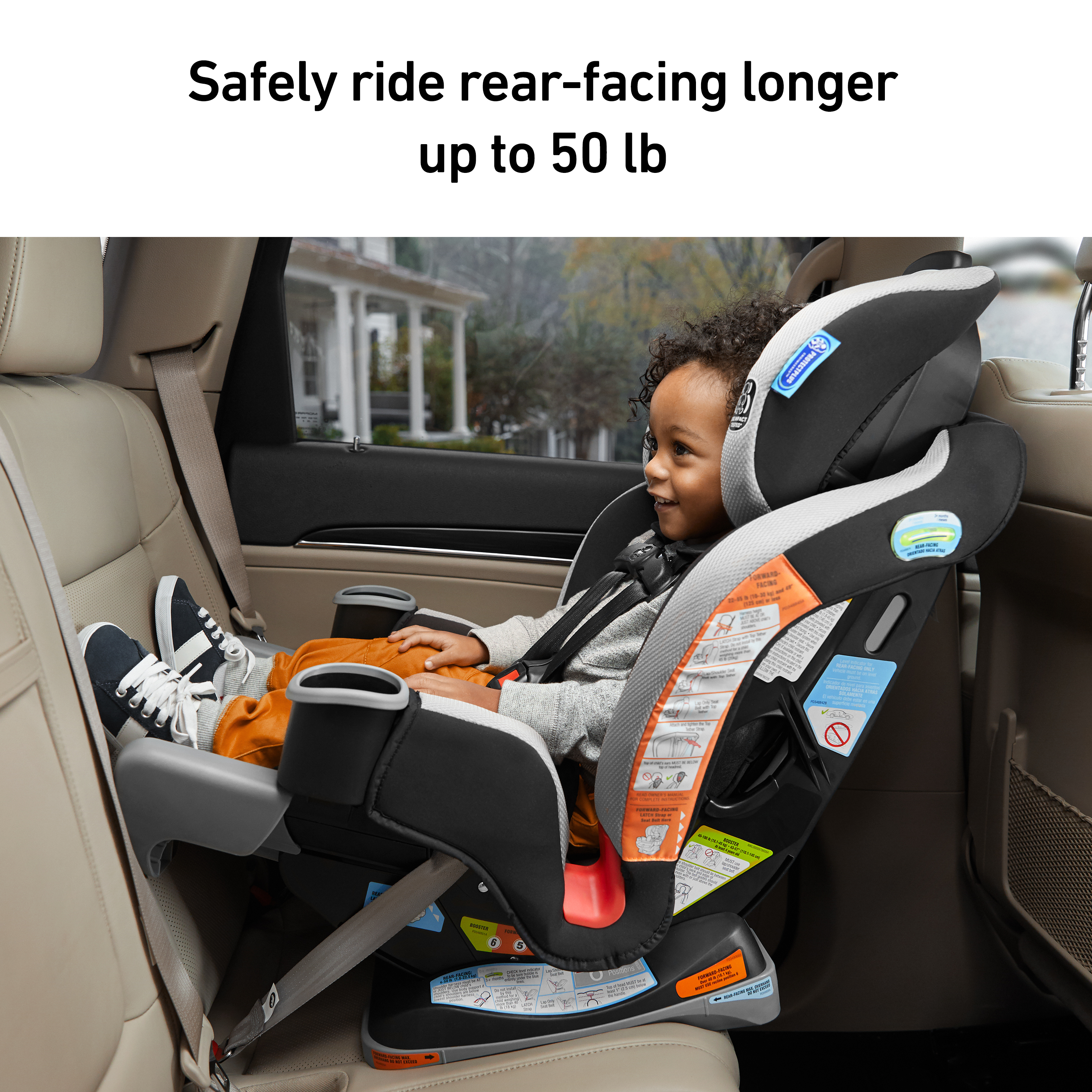
Turn the car seat forward-facing only after the child exceeds the rear-facing height or weight limit, or when the seat’s instructions otherwise say rear-facing use has ended.
Check both limits. A child must fit within the lower limit of the two.
For example:
- The seat allows rear-facing use to 40 pounds.
- The child weighs 35 pounds.
- The child’s head is above the allowed position for rear-facing use.
In this case, the child has outgrown the rear-facing mode because of height, even though the child is below the weight limit.
Do not turn the seat forward-facing because:
- The child’s legs touch the vehicle seat.
- The child sits cross-legged.
- The child’s feet reach the back of the vehicle seat.
- The child dislikes facing the rear.
- The child has reached age 1.
- The child wants to see a sibling.
- The child looks cramped but still fits the seat rules.
A child’s legs touching the vehicle seat back is usually not a reason to switch directions. Children can bend their legs, cross them, or rest them on the seat back. The car seat manual remains the final authority for that model.
Signs that a child may have outgrown rear-facing use
Check the manual for the exact rule. Common signs include:
- The child exceeds the rear-facing weight limit.
- The child exceeds the rear-facing height limit.
- The child’s head is above the position allowed by the manufacturer.
- The seat no longer fits the child according to its instructions.
- The seat has reached its expiration date or has been damaged.
Do not guess when the limit is unclear. Contact the seat manufacturer or have the installation checked by a certified child passenger safety technician.
Rear-Facing Car Seat Rules by Age
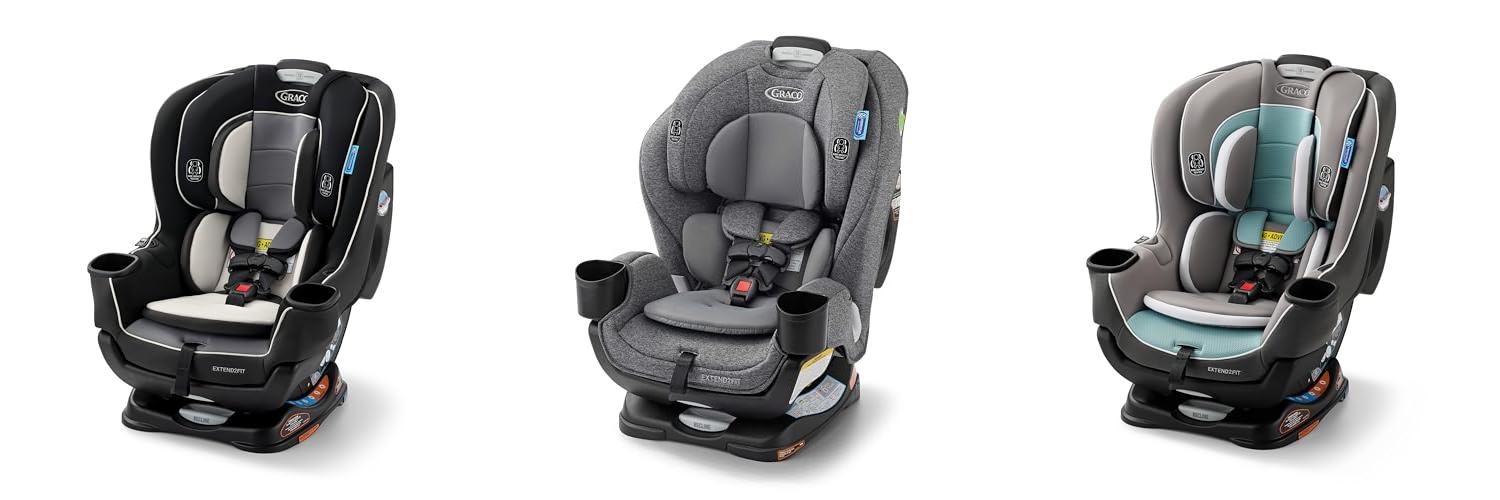
Age can help explain the stages, but it does not replace the seat’s limits or state law.
Birth to 1 year
Newborns and infants should ride rear-facing. Use a seat approved for the child’s size and keep the harness snug.
A newborn may need a specific recline angle. Many infant seats include angle indicators. Follow the manual closely because an incorrect angle can affect both fit and breathing position.
Never place a rear-facing car seat in front of an active passenger air bag. The safest location is usually the back seat, when one is available.
Age 1 to 2 years
A child should generally remain rear-facing during this stage. Turning the seat forward-facing at the first birthday is an outdated practice.
Some state laws allow forward-facing use after age 1. Legal permission is not the same as the safest practice. The AAP and NHTSA recommend continuing rear-facing until the child reaches the seat’s rear-facing limits.
Age 2 to 4 years
Many children can remain rear-facing during part or all of this period. The answer depends on the car seat.
A convertible seat may offer more rear-facing room than an infant-only seat. If the child has outgrown an infant seat but still fits within the convertible seat’s rear-facing limits, move the child to the convertible seat rear-facing.
Age 4 and older
Some children still fit rear-facing at age 4. Others have reached the seat’s limits. Once a child outgrows rear-facing use, use the seat forward-facing with its internal harness.
Keep using the forward-facing harness until the child reaches that mode’s height or weight limit. After that, the child will usually need a belt-positioning booster.
How to Tell Whether Your Child Still Fits Rear-Facing
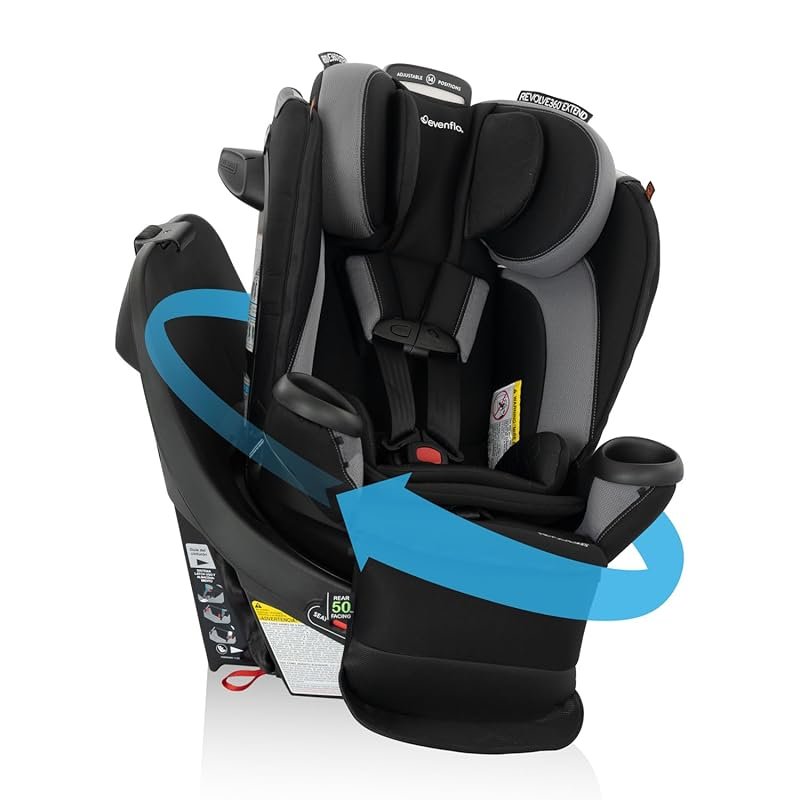
Use the car seat manual, not a general age chart, to check fit. The manual explains the exact height, weight, head-position, recline, and harness rules.
Follow this process:
- Find the rear-facing limits. Look for the weight and height limits printed on the seat label or listed in the manual.
- Weigh the child. Use the same unit listed by the manufacturer.
- Measure height if required. Some seats use standing height; others use seated torso height.
- Check the child’s head position. The manual may require the head to remain a certain distance below the top of the shell.
- Check the harness position. Rear-facing harness straps usually need to come from at or below the child’s shoulders, but the exact rule varies.
- Check the recline angle. Use the angle indicator and the instructions for the child’s size.
- Confirm the seat is not expired or damaged.
Do not rely on a child’s knees, feet, or comfort alone. Those details may look concerning, but they usually do not determine whether a child has outgrown rear-facing mode.
Example
Imagine a convertible seat with these rear-facing limits:
- Maximum weight: 40 pounds
- Maximum standing height: 40 inches
- Head must remain at least 1 inch below the shell’s top
A child who weighs 34 pounds and measures 38 inches may still fit. However, if the child’s head is above the allowed point, the child has outgrown rear-facing use.
The limit that comes first controls the decision.

Rear-Facing Installation and Harness Safety
A child can remain rear-facing for years, but the seat must still be installed and used correctly.
Install the seat tightly
After installation, the car seat should not move more than 1 inch from side to side or front to back when tested at the belt path. This is the common “inch test” described in many manufacturer instructions and child passenger safety resources.
Test the seat at the belt path, not by pulling on the top of the shell. A seat may move more at the top while still being installed correctly.
Use either:
- The vehicle seat belt, or
- The lower anchors, when allowed by both manuals.
Do not use both systems unless the car seat manufacturer specifically allows it. Lower-anchor weight limits also apply in many vehicles and seats.
Keep the harness snug
The harness should pass through the rear-facing harness slots required by the seat manual. It should lie flat and pass over the child’s shoulders.
A snug harness should not allow you to pinch extra webbing at the child’s shoulder. Place the chest clip at armpit level if the seat includes one.
Remove bulky coats before buckling the child. A thick coat can compress in a crash and leave the harness too loose. Use thin layers, or place a blanket over the secured harness.
Avoid added products unless approved
Do not add head supports, strap covers, cushions, mirrors, toys, or aftermarket inserts unless the car seat manufacturer permits them. An accessory can change the harness fit or interfere with the seat’s performance.
Never use a car seat that has been in a moderate or severe crash unless the manufacturer says it is safe to continue using. NHTSA advises replacing a car seat after a moderate or severe crash.
Can a Child’s Legs Touch the Vehicle Seat?
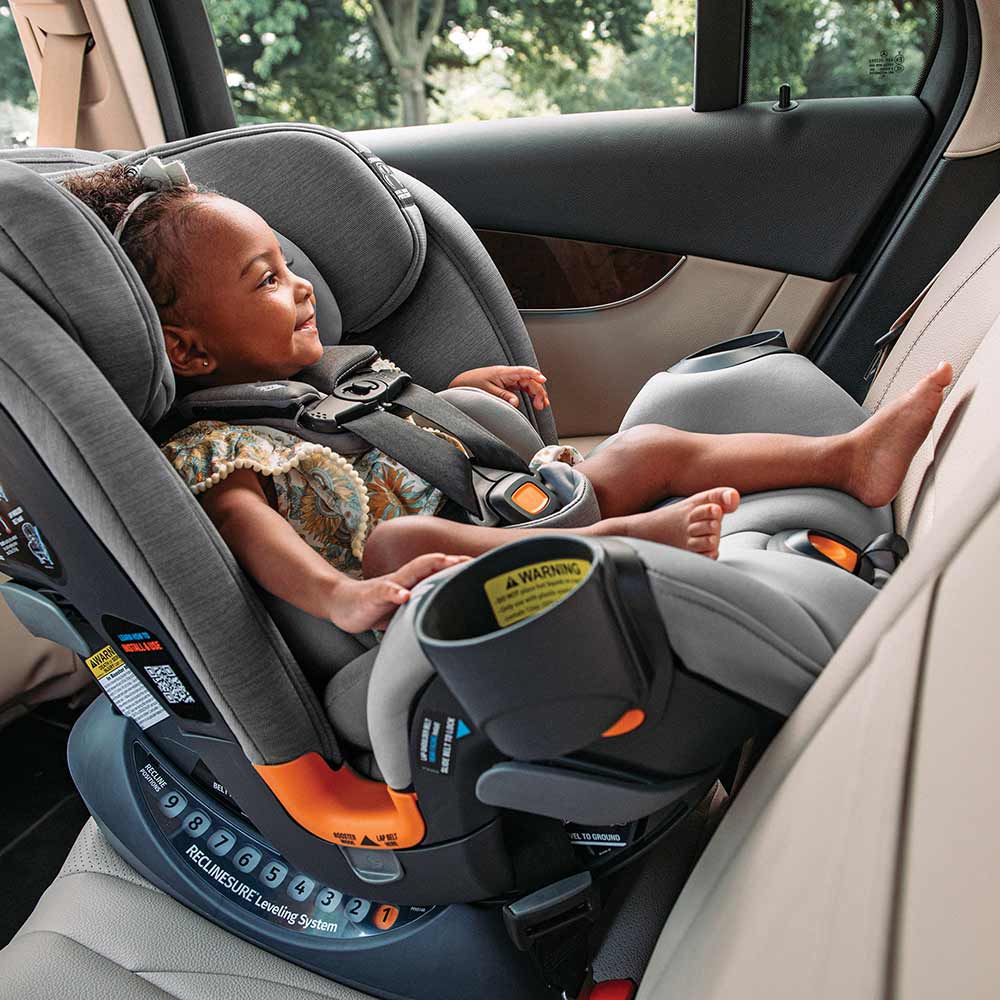
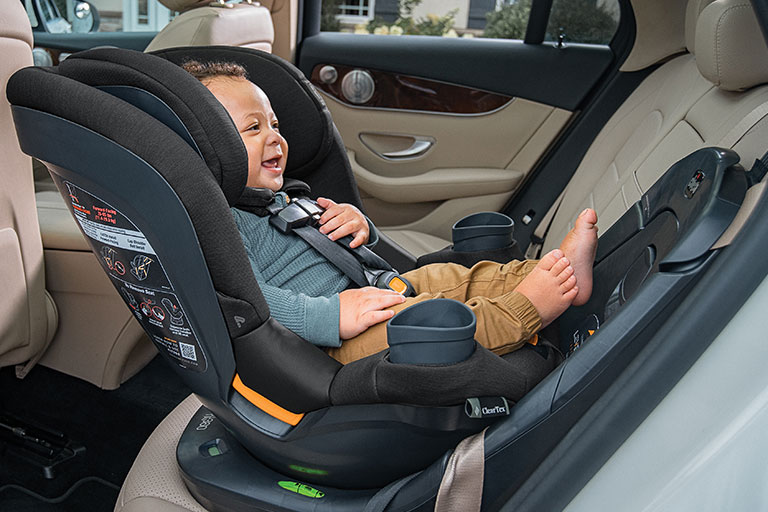
Yes, a child’s legs can touch the vehicle seat while riding rear-facing. This is usually normal and does not mean the child is too tall.
Children may:
- Bend their knees.
- Sit cross-legged.
- Rest their feet on the vehicle seat.
- Place their legs over the sides of the car seat.
There is no general rule that a child must have a certain amount of space between the feet and the vehicle seat. What matters is whether the child remains within the car seat’s stated limits and the harness fits correctly.
A child’s legs may be more vulnerable to injury when forward-facing because they can contact the vehicle interior during a crash. Turning forward-facing does not automatically reduce that risk.
Check the manual if the child’s feet are pushing against the vehicle seat, the child is trying to climb out, or the seat’s recline position has changed. The concern is proper fit and safe use, not appearance.
What to Do After a Child Outgrows Rear-Facing Use
When the child reaches the rear-facing limit, change the same seat to forward-facing if the seat allows that mode. Use the top tether whenever the manufacturer and vehicle instructions require or permit it.
The top tether can help limit forward movement of a forward-facing car seat in a crash. Install it according to the vehicle and car seat manuals.
Keep the child in the forward-facing harness until the child reaches the forward-facing height or weight limit. Do not move directly to a booster just because the child has turned 4 or wants to use the vehicle belt.
A child is ready for a booster only when:
- The child has outgrown the forward-facing harness.
- The child can sit correctly for the entire ride.
- The vehicle lap and shoulder belt fit properly with the booster.
- The child can keep the belt in place without leaning or slipping.
The lap belt should lie low across the upper thighs, not the stomach. The shoulder belt should cross the chest and shoulder, not the neck or face.

Rear-Facing Car Seat Laws in the United States
Car seat laws differ by state. Most states require children to use a rear-facing seat for at least a minimum period, but that minimum may be shorter than the safety recommendation from the AAP or NHTSA.
State laws may address:
- A child’s age.
- Weight or height.
- Rear-facing use.
- Forward-facing harness use.
- Booster seats.
- The vehicle seating position.
- Special rules for taxis, school buses, or other vehicles.
Check your state’s official highway safety or transportation website for the current law. The Governors Highway Safety Association provides a state-by-state overview, but state agencies are the best source for legal details.
A law sets a minimum requirement. It does not always identify the safest time to change car seat modes. For safety decisions, follow the child’s seat manual and current guidance from AAP and NHTSA.

Common Mistakes Parents Make
The most common mistake is changing to forward-facing based on age alone. A child may legally fit a forward-facing seat but still have room to ride rear-facing.
Other frequent errors include:
- Ignoring the rear-facing height limit.
- Using a seat without reading its manual.
- Installing the seat too loosely.
- Leaving a winter coat under the harness.
- Placing the chest clip too low.
- Using an expired, recalled, or damaged seat.
- Adding unapproved inserts or accessories.
- Placing a rear-facing seat in front of an active air bag.
- Moving to a booster before the child is ready.
- Forgetting the lower-anchor weight limit.
- Using lower anchors and the seat belt together without approval.
- Assuming a used seat is safe without knowing its crash and storage history.
If you are unsure, stop and check the instructions before driving. A certified Child Passenger Safety Technician can help you inspect the seat and show you how to use it.
Use the NHTSA Child Passenger Safety Technician search tool to find help in the United States. Some inspection events are free, but services vary by location.

When to Replace a Rear-Facing Car Seat
Replace the seat if it has expired, been damaged, been recalled, or been involved in a crash that meets the manufacturer’s replacement guidance.
Car seats usually have an expiration date printed on the shell, label, or manual. The exact service life varies by manufacturer and model. Do not assume that an older seat is safe because it looks clean.
Check for recalls through:
- The manufacturer’s website.
- The seat registration card or online registration.
- The NHTSA recall database.
If you buy a used seat, make sure you know:
- The exact model and manufacture date.
- Whether it has been in a crash.
- Whether all parts and instructions are present.
- Whether it has been recalled.
- How it was stored and cared for.
If any of this information is missing, a new seat is usually the safer choice.
Frequently Asked Questions
Is rear-facing safer than forward-facing?
Rear-facing can provide better support for a young child’s head, neck, and spine in a crash. That is why AAP and NHTSA recommend keeping children rear-facing until they reach the seat’s rear-facing limits.
Should a 2-year-old be rear-facing?
Usually, yes, if the child still fits within the seat’s rear-facing height and weight limits. Age 2 is not an automatic reason to turn the seat forward-facing.
Can a child sleep in a rear-facing car seat?
A child may sleep while properly secured in a car seat during travel. The seat should be installed at the correct angle, and the harness should remain snug. Move the child to a firm, flat sleep surface when you reach your destination rather than using the car seat as a routine sleep space outside the vehicle.
What if my child hates facing backward?
Check the fit, recline angle, temperature, and harness adjustment. Offer calm distractions that do not become loose objects in the car. Do not turn the seat forward-facing before the child reaches the rear-facing limit solely because the child is unhappy.
Is a convertible car seat better than an infant car seat?
Neither type is automatically better for every family. An infant-only seat can be convenient for carrying a sleeping baby, while a convertible seat may allow rear-facing use for longer. Compare the actual rear-facing limits, fit, installation, and instructions for your vehicle.
Key Takeaways
- Keep a child rear-facing until they reach the car seat’s rear-facing height or weight limit.
- Age 1 or age 2 alone does not require a forward-facing change.
- A child’s feet touching the vehicle seat usually does not mean the child is too tall.
- Check the seat manual for head position, harness, recline, and height rules.
- Use the correct installation method and keep the harness snug.
- After rear-facing use ends, continue with a forward-facing harness before moving to a booster.
- Follow your state’s law, but remember that legal minimums may not equal the safest timing.
- Have the seat checked by a certified Child Passenger Safety Technician when in doubt.
Conclusion
For most children in the United States, the safest answer to “how long rear facing car seat” is simple: as long as the child fits within the seat’s rear-facing limits. That may be past age 2 and, for some children and seats, into the preschool years.
Read the car seat manual, check the child’s height and weight, and inspect the harness and installation. If the decision is unclear, contact the manufacturer or a certified Child Passenger Safety Technician before changing the seat’s direction.
