

For most drivers in the United States, the General Grabber A/TX is one of the best all-terrain tires for the money. It offers strong road manners, useful traction on gravel and dirt, and a severe-snow rating on many sizes without reaching the price of premium tires such as the BFGoodrich All-Terrain T/A KO3.
That said, the “best” tire depends on your truck or SUV, climate, load, and how often you leave the pavement. A tire for a Ford F-150 that sees snowy Michigan roads needs a different balance than one for a Toyota 4Runner used on dry Texas trails.
The right value tire should provide:
- Safe wet and dry road grip
- Good tread life
- Stable handling at highway speed
- Traction on gravel, sand, mud, or light snow
- A load rating that matches the vehicle
- A price that fits the expected mileage and use
This guide compares the strongest value choices and explains how to select the right size, rating, and tread design in the U.S. market.

Quick answer: The best all-terrain tire for the money
The General Grabber A/TX is the best overall value for many U.S. pickup and SUV owners. It combines all-terrain traction with reasonable highway comfort and, in available sizes, the Three-Peak Mountain Snowflake (3PMSF) symbol for severe snow service.
It is not the cheapest tire in every size. However, a very low purchase price can be misleading if the tire wears quickly, rides poorly, or lacks the snow performance you need. The General Grabber A/TX earns its value by covering several jobs well.
Best value choices by driver
| Driver or use | Strong value choice | Why it fits |
|---|---|---|
| Best overall balance | General Grabber A/TX | Good mix of road use, trail use, and snow capability |
| Mostly highway with light off-road use | Cooper Discoverer Road Trail AT | More road-focused design and daily-driver comfort |
| Snow, rocks, and rough trails | Falken Wildpeak A/T4W | Strong winter and off-road focus |
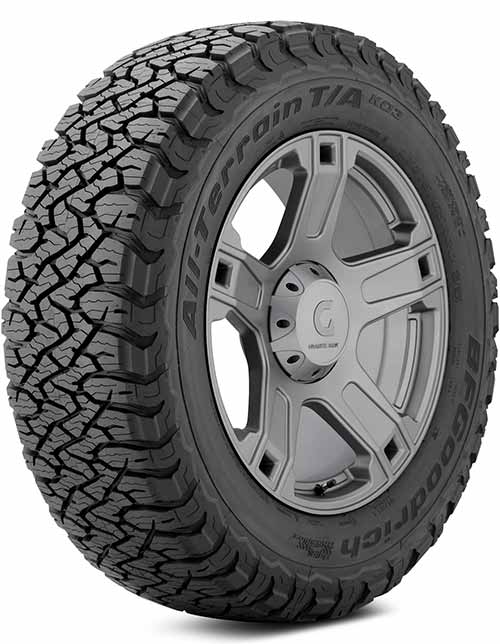
| Heavy-duty truck use | BFGoodrich All-Terrain T/A KO3 | Tough construction and broad size range, but often costs more |
| Lowest upfront cost | Kumho Road Venture AT52 | Often priced below premium rivals, depending on size |
| Mostly dirt roads and gravel | Yokohama Geolandar A/T XD or similar road-oriented A/T | Stable road behavior with useful unpaved-road grip |
These are category recommendations, not guarantees. Tire performance can change by size, load range, vehicle, air pressure, and road surface.

What makes an all-terrain tire a good value?
A good-value all-terrain tire does more than offer a low price. It must provide a reasonable balance between purchase cost, service life, safety, noise, and traction.
All-terrain tires use tread blocks with wider gaps than highway tires. Those gaps help the tire find grip on loose surfaces. The same open tread can create more road noise and rolling resistance.
A tire with very large blocks may work well in mud and rocks but feel less precise on the highway. A tire with a closed tread may be quiet and efficient but offer less grip in deep dirt. The best value depends on where the tire will spend most of its time.
Key features to compare
1. Tread life
A tire that costs less but wears out much sooner may have a higher cost per mile. Check the manufacturer’s mileage warranty when one applies, but treat it as a limited promise rather than a guaranteed service life.
Actual tread life depends on:
- Alignment
- Tire rotation
- Inflation pressure
- Vehicle weight
- Driving speed
- Road surface
- Towing and hauling
- Acceleration and braking habits
A simple cost-per-mile estimate can help:
Cost per mile = tire purchase price ÷ expected usable miles
For example, a $900 set expected to last 50,000 miles costs about 1.8 cents per mile before mounting, balancing, taxes, and repairs. A $760 set that lasts 35,000 miles costs about 2.2 cents per mile.
This is only a planning tool. Do not extend tire use past the legal or safe tread limit to improve the calculation.
2. Severe-snow certification
The 3PMSF symbol shows that the tire met a defined snow-traction test for severe-snow service. It does not make the tire equal to a dedicated winter tire.
An all-terrain tire with 3PMSF certification can be a useful choice for drivers who face occasional or moderate winter conditions. A dedicated winter tire remains the better tool for frequent ice, packed snow, and very low temperatures.
The U.S. Tire Manufacturers Association explains the difference between the M+S marking and the 3PMSF symbol in its tire safety information.
3. Load range and load index
The tire must carry the weight placed on it. Light Truck tires may use load-range letters such as C, D, or E. Passenger-rated tires may use a load index instead.
Do not select a tire only because it looks tough. A heavier load range can improve durability under work use, but it may also make the ride firmer and increase weight. Always follow the vehicle placard and owner’s manual unless a qualified tire professional confirms a suitable alternative.
4. Sidewall protection
Reinforced sidewalls and protective ribs can reduce the chance of damage from sharp rocks and deep ruts. They do not make a tire puncture-proof.
A stronger sidewall may also add weight. That can affect ride comfort, fuel economy, steering feel, and replacement cost.
5. Road manners
Most American drivers use their trucks and SUVs on pavement every day. Highway noise, wet braking, steering response, and ride comfort therefore matter more than many buyers expect.
A tire with a dramatic tread pattern may look ready for a trail but still perform poorly for a daily commute. Choose the surface you use most often, not the surface shown in an advertisement.
General Grabber A/TX: best overall value for most drivers
The General Grabber A/TX is a strong all-around pick for drivers who want one tire for commuting, road trips, gravel roads, and moderate off-road use.
General Tire positions the Grabber A/TX as an all-terrain tire with off-road traction, durability features, and severe-snow capability in applicable sizes. The tire’s design includes an open tread pattern and sidewall protection intended to help on loose and uneven surfaces. See the manufacturer’s Grabber A/TX product page.
Why it offers good value
- It covers more use cases than a highway tire.
- Many sizes carry the 3PMSF symbol.
- It is generally less expensive than some premium off-road tires.
- It is available for many popular pickups and SUVs.
- It provides a practical middle ground between quiet road tires and aggressive mud-terrain tires.
Where it may not be the best choice
The Grabber A/TX is not the ideal option for every driver. A highway tire may be quieter and more efficient for a truck that never leaves pavement. A mud-terrain tire will usually provide better grip in deep mud, though with more noise and weaker highway manners.
Also, check the exact size before buying. Features, load ranges, speed ratings, and warranty terms can vary by size.

Best alternatives to the General Grabber A/TX
The best alternative depends on the trade-off you want to make. No single all-terrain tread is best for every road.
Cooper Discoverer Road Trail AT: best for road-heavy use
The Cooper Discoverer Road Trail AT is aimed at drivers who spend most of their time on pavement but still need traction on gravel, dirt, and occasional trails.
Its more road-focused approach may suit a family SUV or half-ton pickup used for commuting and towing. It can be a better fit than an aggressive all-terrain tire when low noise and stable highway handling matter most.
Choose it when:
- At least 70% to 80% of your driving is on pavement
- You want an all-terrain appearance without a very open tread
- You drive on gravel roads and mild trails
- You value road comfort over maximum mud traction
It may be less suitable for frequent rock crawling, deep mud, or severe trail damage.
Falken Wildpeak A/T4W: best for snow and demanding trail use
The Falken Wildpeak A/T4W is a popular choice for drivers who want stronger off-road and winter capability. Falken lists the tire with features aimed at snow traction, rugged use, and heavy vehicle applications. Details vary by size and load range. The official specifications are available on the Falken Wildpeak A/T4W page.
It is often a strong choice for:
- Snow-prone states
- Full-size pickups
- Overlanding and remote travel
- Gravel, rock, and rough forest roads
- Drivers who prefer a firm, durable tire
The trade-off is weight and cost. A heavier, more reinforced tire may ride more firmly and may not be the best value for a vehicle used only on paved roads.
BFGoodrich All-Terrain T/A KO3: best for buyers who prioritize toughness
The BFGoodrich All-Terrain T/A KO3 is designed for drivers who place a high value on off-road durability and all-terrain traction. It can be a good fit for work trucks, trail vehicles, and drivers who regularly encounter sharp rocks or rough tracks.
The KO3 often costs more than value-focused options. It makes the most sense when its construction and available fitments solve a real problem. Paying extra for a rugged tire that spends all of its life on smooth pavement may not be economical.
See the current specifications on the BFGoodrich All-Terrain T/A KO3 page.
Kumho Road Venture AT52: best budget-oriented option
The Kumho Road Venture AT52 is worth considering when the upfront price is the main concern but you still want an all-terrain pattern for light off-road use.
It can make sense for older pickups, second vehicles, and drivers who use dirt roads but do not need the highest level of rock or mud performance. Compare the exact size, load index, warranty, and local price before deciding.
A budget tire is only a good deal if it meets the vehicle’s requirements. Never use a cheaper tire with a lower load rating or unsuitable speed rating.

How to choose the right all-terrain tire for your vehicle
Follow this order when shopping. It prevents a common mistake: choosing a tread pattern first and checking fitment later.
1. Read the vehicle tire placard
The placard is usually on the driver’s doorjamb. It lists the original tire size and recommended cold inflation pressures.
Record:
- Tire size
- Load index
- Speed rating
- Recommended inflation pressure
- Front and rear pressure if they differ
The owner’s manual may list approved alternatives. If the vehicle has aftermarket wheels, suspension changes, or a lift kit, ask a qualified tire shop to check clearance.
2. Decide how much off-road traction you actually need
Use this simple guide:
- Mostly highway: Choose a road-oriented all-terrain or highway-terrain tire.
- Highway plus gravel: Choose a mild all-terrain tire with a closed center tread.
- Snow and dirt roads: Prioritize a 3PMSF-rated model in the correct size.
- Rough trails: Look for stronger sidewalls and suitable load capacity.
- Deep mud: Consider a mud-terrain tire, but accept more noise and weaker wet-road behavior.
Do not buy a mud tire for occasional dirt roads unless you accept its daily-driving compromises.
3. Choose the correct construction
Passenger-rated tires may provide a softer ride and lower weight. LT tires can offer higher load capacity and stronger construction.
An LT tire is not automatically safer for every vehicle. It must still match the wheel, suspension, axle limits, and vehicle maker’s requirements.
For towing or hauling, check the truck’s payload and axle limits. Tire capacity alone does not increase the vehicle’s legal or mechanical payload.
4. Confirm clearance
Larger or wider tires can contact:
- Fender liners
- Suspension parts
- Sway bars
- Frame components
- Mud flaps
- Body panels
Clearance can change when the suspension compresses or the steering is turned. A tire that fits while parked may rub under load.
5. Compare the full installed cost
Ask for the total price, including:
- Mounting
- Balancing
- Valve stems or tire-pressure sensors
- Disposal fees
- Sales tax
- Road-hazard coverage
- Alignment, if needed
A lower online tire price may not remain lower after installation and service.

All-terrain tire comparison: what matters most
The table below gives a practical way to compare the main tire types. It is a general guide, not a substitute for the specifications of a particular size.
| Tire type | Highway noise | Snow ability | Mud ability | Fuel efficiency | Best use |
|---|---|---|---|---|---|
| Highway-terrain | Low | Fair | Poor to fair | Best | Daily road driving |
| Mild all-terrain | Low to moderate | Fair to good | Fair | Good | Road and gravel |
| Aggressive all-terrain | Moderate to high | Good | Good | Fair | Mixed road and trail use |
| Mud-terrain | High | Often poor on packed snow | Best | Lowest | Deep mud and rough trails |
| Dedicated winter tire | Moderate | Best in winter conditions | Poor | Fair | Snow and ice season |
The most important point is that all-terrain does not mean “best at everything.” It means the tread is designed to balance several surfaces.
Wet roads deserve special attention
Open tread helps clear water, but tread design alone does not guarantee short wet braking distances. Compound, temperature, tire age, inflation, vehicle weight, and road surface all affect grip.
The National Highway Traffic Safety Administration advises drivers to check tire condition and pressure regularly. Its tire safety guidance covers tread, inflation, aging, and recalls.
Noise is not a safety rating
A louder tire is not necessarily stronger or safer. Noise is mainly a comfort issue, though a harsh ride can make a vehicle less pleasant and may reduce driver comfort on long trips.
If you commute several hours each week, a quieter tire may deliver more value than a highly aggressive tread that you rarely use.
What size and rating should you buy?
Buy the exact size recommended for the vehicle unless a qualified professional confirms a safe alternative.
A tire size such as 265/70R17 contains useful information:
- 265 is the approximate section width in millimeters.
- 70 is the sidewall height as a percentage of width.
- R means radial construction.
- 17 is the wheel diameter in inches.
The sidewall also shows the load index and speed rating. The letters LT indicate a Light Truck tire. A size that looks close may still differ in load capacity, diameter, clearance, and speed rating.
Can you use a larger tire?
Sometimes, but larger tires can create problems:
- Speedometer error
- Reduced acceleration
- More steering effort
- Lower fuel economy
- Rubbing
- Extra stress on brakes and suspension
- Reduced clearance in snow or mud
A larger tire is not automatically an upgrade. It should be selected as part of a complete fitment plan.
Should you choose an E-load tire?
An E-load tire may be useful for heavy hauling, towing, or rough work. It may be unnecessary for a lightly loaded SUV.
Compared with a lighter construction, an E-load tire can:
- Weigh more
- Ride more firmly
- Cost more
- Reduce fuel economy
- Provide added load capacity
Use the vehicle’s axle, payload, and tire requirements as the starting point.

How to get the longest life from an all-terrain tire
Proper care often saves more money than switching between similar tire models.
Check pressure when the tires are cold
Use the pressure on the vehicle placard, not the maximum pressure molded into the tire sidewall. The sidewall number is the tire’s maximum rated pressure under specified conditions, not the normal vehicle setting.
Check pressure at least monthly and before long trips. Temperature changes can alter readings.
Rotate on schedule
Follow the vehicle maker’s rotation interval. Many vehicles need rotation at roughly 5,000 to 8,000 miles, but the correct interval depends on the vehicle and tire wear pattern.
Four-wheel-drive and all-wheel-drive vehicles can be sensitive to differences in tire circumference. Replace tires in the correct configuration for the vehicle.
Check alignment when wear looks uneven
Look for:
- Wear on one shoulder
- Cupping or scalloped tread
- A center strip worn more than the edges
- Steering pull
- A crooked steering wheel
These signs may point to pressure, alignment, suspension, balance, or rotation problems. New tires will not fix the cause.
Inspect after off-road driving
Check for:
- Cuts
- Bulges
- Missing tread blocks
- Embedded stones
- Sidewall damage
- Slow air loss
Do not use a tire with a bulge or exposed cords. Have a tire professional inspect punctures near the sidewall or shoulder.

Common mistakes when buying all-terrain tires
Buying by appearance
A rugged tread can look appealing, but appearance does not reveal wet braking, noise, winter certification, or tread life.
Ignoring the exact size
A product name may cover several versions. Two tires with the same model name can have different load ranges, speed ratings, tread depths, and winter markings.
Assuming 3PMSF means an ice tire
The severe-snow symbol is useful, but it does not replace a dedicated winter tire in severe ice and snow conditions.
Mixing tire types without checking the vehicle
Mixing brands, tread patterns, or tire sizes can affect handling. Some all-wheel-drive systems require closely matched rolling diameters.
Check the owner’s manual before replacing only one or two tires.
Using lower pressure for highway travel
Lower pressure may improve traction briefly on soft sand, but it can increase heat, sidewall flex, and tire damage on pavement. Reinflate to the placard pressure before returning to normal road speeds.
Extending worn tires because the tread still looks deep
Tires also age and can suffer internal damage. Inspect them regularly and check the date code. The DOT tire identification number includes the week and year of manufacture in its final four digits.

Is an all-terrain tire worth it for a daily driver?
An all-terrain tire can be worth the cost when you regularly drive on gravel, dirt, snow, construction roads, or poorly maintained roads.
It may not be worth it if the vehicle never leaves pavement. A highway-terrain tire will often provide lower noise, better comfort, and lower rolling resistance.
A useful rule is simple:
- If your off-pavement driving is rare and mild, choose a road-focused tire.
- If you use gravel or dirt every week, choose a mild all-terrain tire.
- If you travel on snow-covered roads or rough trails, choose a more capable all-terrain tire.
- If you drive deep mud often, evaluate a mud-terrain tire instead.
The best value comes from matching the tire to real use. More capability costs money, and unused capability is not free.
Frequently asked questions
What is the best cheap all-terrain tire?
The Kumho Road Venture AT52 and similar mid-priced models can be good budget choices, depending on size and local pricing. The cheapest tire is not always the least expensive over its life. Compare load rating, warranty, expected wear, road noise, and installed cost.
Are all-terrain tires good in snow?
Some are good in light and moderate snow, especially models with the 3PMSF symbol. They are not equal to dedicated winter tires on ice or very cold, packed snow. Check the exact tire size because winter markings can vary by version.
Do all-terrain tires reduce gas mileage?
They can. All-terrain tires may weigh more and have greater rolling resistance than highway tires. The effect varies with tire size, pressure, vehicle, tread design, and driving conditions.
How long do all-terrain tires last?
There is no universal mileage number. Properly maintained tires may last several years and many thousands of miles, but towing, heavy loads, poor alignment, heat, rough roads, and aggressive driving can shorten life. Replace tires when they reach the legal tread limit, show damage, age-related cracking, or unsafe wear.
Should I buy all-terrain or highway tires?
Choose all-terrain tires for regular gravel, dirt, snow, or trail use. Choose highway tires for mostly paved driving where quiet operation, comfort, and fuel economy matter more than loose-surface traction.
Can all-terrain tires be used year-round?
In much of the United States, yes, if they have the correct load rating and perform adequately in the local climate. Drivers in regions with frequent ice, deep snow, or sustained freezing temperatures may benefit from dedicated winter tires.
Do I need an alignment after installing new tires?
Not every tire installation requires an alignment. However, alignment is wise when the old tires show uneven wear, the vehicle pulls, the steering wheel is off-center, or suspension parts were changed. Fixing alignment problems helps protect the new tires.
Final recommendation
For the average U.S. pickup or SUV owner, the General Grabber A/TX is a sensible answer to the question, “What is the best all-terrain tire for the money?” It offers a useful blend of road comfort, loose-surface traction, winter capability in applicable sizes, and price.
Choose the Cooper Discoverer Road Trail AT if your driving is mostly on pavement. Choose the Falken Wildpeak A/T4W if snow, rough trails, or heavy use matter more than weight and cost. Consider the BFGoodrich KO3 when you need a tougher premium option and accept its higher price.
Before buying, confirm the exact size, load index, speed rating, 3PMSF marking, clearance, and installed price. Then maintain the tires with correct pressure, regular rotation, and prompt inspection. That process will do more for value and safety than choosing a tire by tread appearance alone.
