

Yes, you can usually jumpstart a car with a bad alternator—but only as a temporary measure. A jumpstart uses another battery to provide enough power to crank the engine. Once the engine runs, the alternator should recharge the battery and power the car’s electrical systems. If the alternator has failed, that second step does not happen.
For drivers in the United States, this means a jumpstart may get you off a driveway, parking lot, or roadside shoulder. It usually will not make the car reliable for a normal trip. The engine may shut off again when the battery runs down, sometimes within minutes.
Introduction: What a Bad Alternator Means
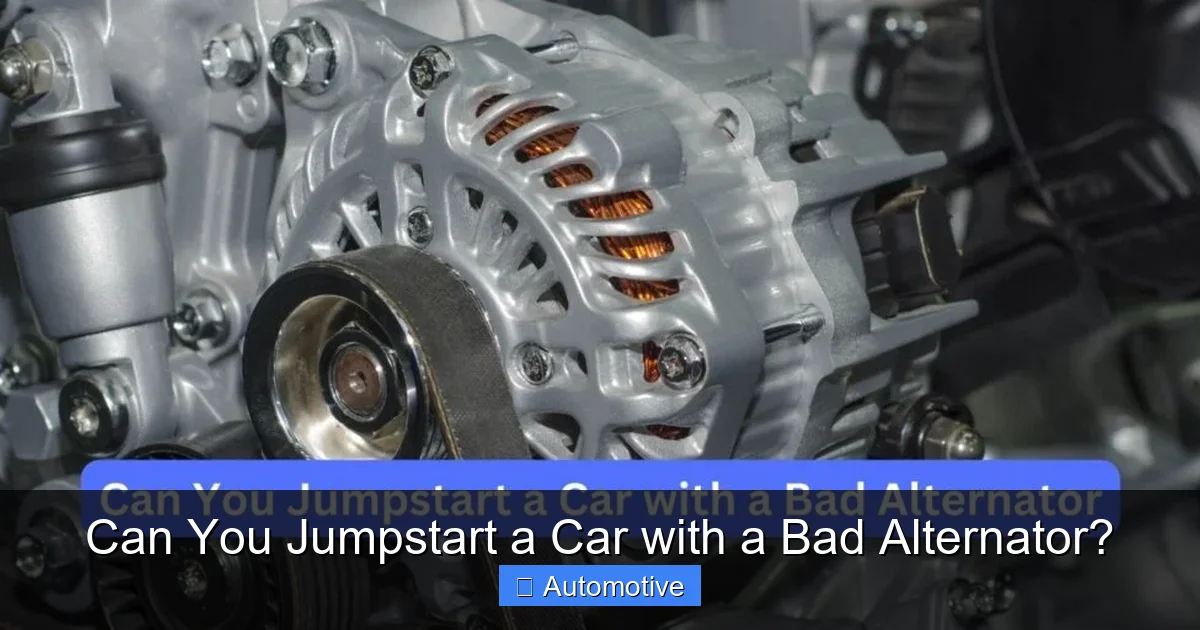
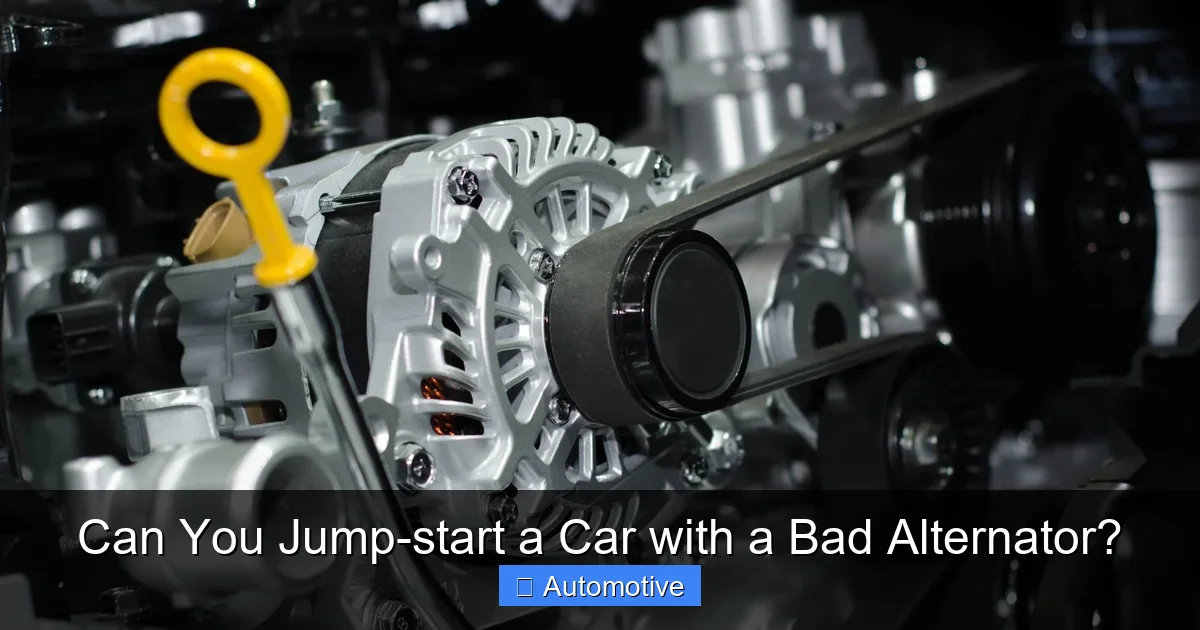
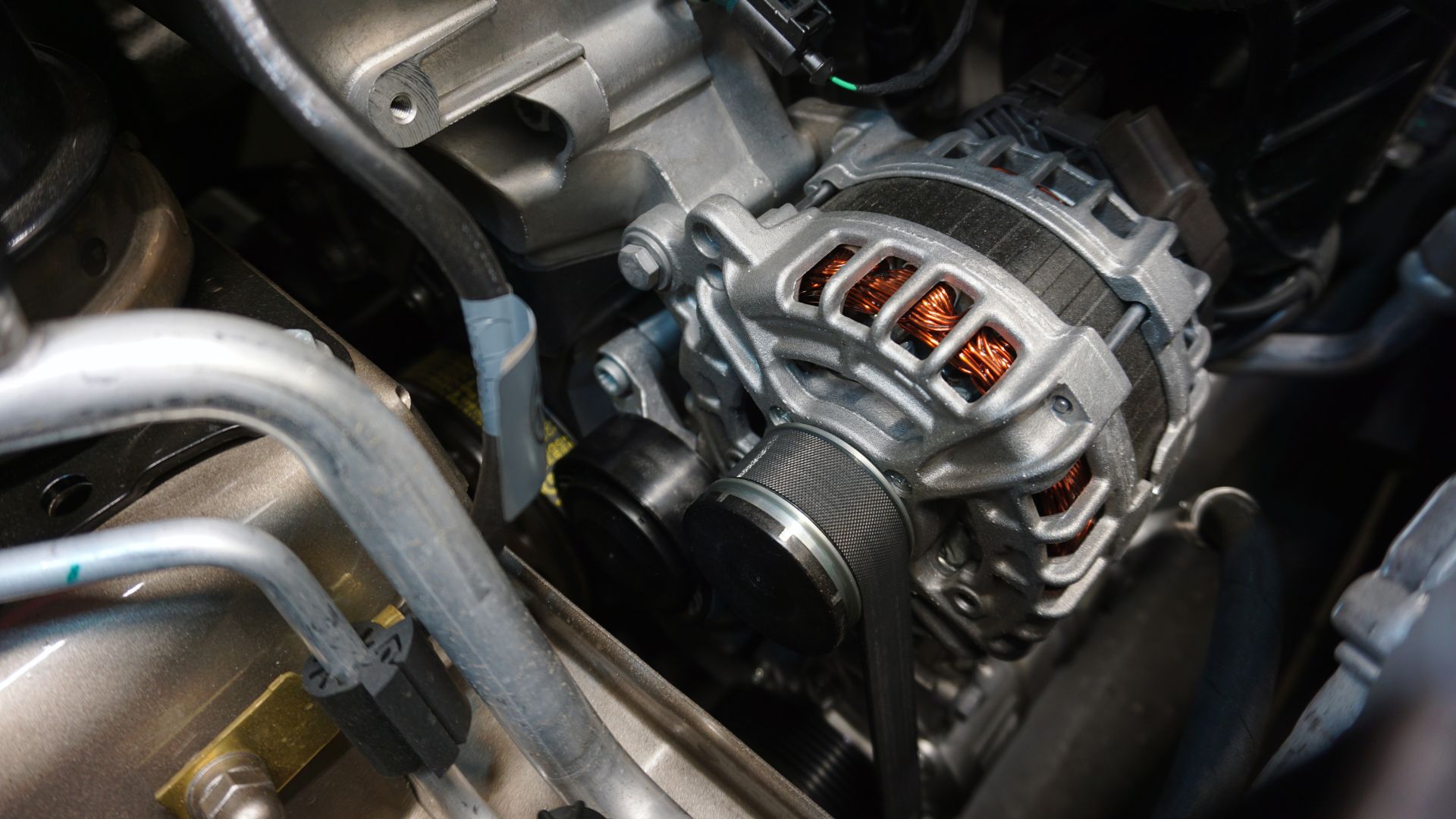
The alternator is the part that makes electrical power while the engine runs. It also recharges the 12-volt battery after starting. A bad alternator may stop charging, charge too little, or cause unstable voltage.
A jumpstart can still work if the battery, starter, cables, and engine are in usable condition. However, the car will be running only on stored battery power. The safe choice is often to jump the car only long enough to move it to a safe place or load it onto a tow truck.

Can a Jumpstart Work if the Alternator Is Bad?
A jumpstart can work with a failed alternator if the battery has enough capacity to keep the engine and essential systems running. The donor battery or jump pack supplies the high current needed to start the engine. After that, the car draws power from its own battery.
The result depends on the type of alternator problem:
| Alternator condition | Will a jumpstart likely work? | Main concern |
|---|---|---|
| Alternator is not charging | Often, if the battery and starter are good | The car may die after the battery drains |
| Alternator belt is broken | Sometimes | Some vehicles may also lose water-pump or power-steering function |
| Alternator has seized | Maybe not safely | A seized pulley can damage or throw the drive belt |
| Alternator has an internal short | Uncertain | It may drain the battery or create excess heat |
| Battery is also dead or damaged | Possibly, but not reliably | The battery may not accept or hold the charge |
| Starter is bad | No | A jumpstart cannot repair a failed starter |
A jumpstart does not repair the alternator. It only supplies temporary starting power.
How long will the car run?
There is no dependable time estimate. A healthy, fully charged battery may power a vehicle for a short trip, but the result changes with:
- Battery age and condition
- Outside temperature
- Headlights and other electrical loads
- Vehicle size and electrical demand
- Whether the battery was deeply discharged
- Whether the alternator has a short or mechanical fault
A car with a weak battery may stop almost at once. A car with a strong battery may run longer, but driving farther is still a gamble.
How to Jumpstart a Car With a Bad Alternator
If the car is in an unsafe location, call roadside assistance or a tow service instead of trying to drive it. If you must start it, turn off as many electrical loads as possible and use the correct connection order.
Before you connect the cables
Check these conditions first:
- Park both vehicles away from traffic.
- Set both parking brakes.
- Turn both vehicles off.
- Confirm both vehicles use compatible 12-volt systems.
- Keep the vehicles from touching.
- Inspect the battery for cracks, leaks, bulges, or heavy corrosion.
- Do not jump a frozen, damaged, or leaking battery.
- Keep sparks, cigarettes, and open flames away from the battery.
Most standard U.S. passenger cars, pickups, and SUVs use 12-volt systems. Do not use a 24-volt source on a 12-volt vehicle.
Cable connection order
Use heavy-duty jumper cables or a suitable jump starter. Connect the cables in this order:
- Attach the red clamp to the dead car’s positive terminal.
- Attach the other red clamp to the donor battery’s positive terminal.
- Attach the black clamp to the donor battery’s negative terminal.
- Attach the other black clamp to an unpainted metal ground on the disabled vehicle, away from the battery.
Many vehicle manuals identify a specific positive post and ground point. Use those points when provided. Some vehicles have a battery in the trunk or under a seat but include remote jump terminals under the hood.
Start the vehicles
- Start the donor vehicle, if you are using another car.
- Let it run for a few minutes.
- Try to start the disabled vehicle.
- Do not crank for more than about 10 seconds at a time.
- Wait briefly between attempts to prevent excess heat in the starter and cables.
If the engine starts, do not assume the problem is fixed. Turn off the donor vehicle before removing the cables if that is what both vehicle manuals require. Then remove the clamps in reverse order:
- Black clamp from the disabled vehicle’s metal ground
- Black clamp from the donor battery
- Red clamp from the donor battery
- Red clamp from the disabled vehicle
Avoid letting the clamps touch each other or any metal part of the vehicle.
After the engine starts
Turn off nonessential loads, such as:
- Air conditioning
- Heated seats
- Rear defroster
- Stereo
- Phone chargers
- Interior lights
- Extra exterior lights
Keep only the equipment needed for safe operation. Do not turn off headlights if visibility or the law requires them.
If the engine runs smoothly, move the vehicle only to a nearby safe location or repair shop. A tow is safer than driving through traffic with a failing charging system.
Why the Car May Die After a Jumpstart
A running engine needs power for fuel injection, the engine computer, ignition, safety systems, lights, and other equipment. In a healthy vehicle, the alternator supplies most of that power. With a bad alternator, the battery supplies it instead.
As battery voltage falls, the vehicle may show warning signs:
- Battery or charging warning light
- Dim headlights
- Flickering dashboard lights
- Slow electric windows
- Loss of climate-control function
- Hard shifting in some electronically controlled vehicles
- Warning messages from multiple vehicle systems
- Engine stalling
- A no-start condition after the engine is turned off
The battery light does not usually mean that the battery itself is the only problem. It often means the charging system has detected low or abnormal alternator output.
Do not disconnect the battery while the engine runs
Never remove a battery cable to “test” the alternator on a modern vehicle. That old test can create voltage spikes and damage electronic control modules, sensors, or other equipment.
Use a multimeter or a professional charging-system tester instead. A repair shop can also test the alternator under load and check for excessive AC ripple.
How to Tell Whether the Alternator Is Bad
A dead battery does not prove that the alternator failed. The battery may be old, a cable may be loose, or a light may have been left on.
Use the following checks in a safe order.
Check the warning signs
Common alternator symptoms include:
- The battery warning light appears while driving.
- The headlights become dim or pulse.
- The engine stalls after a jumpstart.
- The battery repeatedly goes dead after charging.
- Electrical accessories work poorly at idle.
- You hear belt squealing or grinding.
- You smell hot rubber or burning electrical insulation.
These symptoms can also come from a worn belt, poor battery connection, damaged wiring, or a failing battery.
Inspect the belt and battery connections
With the engine off, look for:
- A missing or loose serpentine belt
- Frayed belt edges
- Severe belt cracking
- Loose battery terminals
- White, blue, or green corrosion
- Damaged alternator wiring
- A swollen battery case
Do not reach near belts, pulleys, or fans while the engine is running. A broken serpentine belt may stop the alternator, but on some vehicles it also drives the water pump. Driving could then cause overheating and serious engine damage.
Test battery voltage
A digital multimeter can provide a useful first check:
- About 12.6 volts with the engine off often indicates a fully charged battery.
- Around 12.4 volts suggests a partial charge.
- Around 12.0 volts or lower indicates a deeply discharged battery.
- A running voltage near the mid-13- to mid-14-volt range is common on many vehicles, but it is not universal.
Modern vehicles may use smart charging systems. Their voltage can change with battery temperature, load, state of charge, and driving conditions. Therefore, one voltage reading alone cannot confirm that an alternator is bad.
Test at the battery posts, not only at the cable ends. A large difference can point to a poor connection or cable problem.
Separate the likely causes
| Symptom | Possible cause |
|---|---|
| Battery is dead after the car sits | Weak battery, parasitic drain, or charging problem |
| Battery dies while driving | Alternator, belt, wiring, or battery fault |
| Car starts with a jump but dies quickly | Alternator not charging, severe battery failure, or loose connection |
| Battery light stays on | Charging-system fault |
| Grinding near the belt | Alternator bearing, idler pulley, tensioner, or another accessory |
| No crank after a jump | Bad starter, poor cable connection, or severely damaged battery |
| Repeated belt failure | Misaligned pulley, seized accessory, or incorrect belt |
A proper diagnosis should include the battery, alternator output, belt, cables, grounds, fuses, and parasitic draw when needed.
Should You Drive a Car With a Bad Alternator?
You should avoid driving it unless moving a very short distance is necessary for safety. A failed alternator can cause the engine to stop without much warning. That can leave you without normal power steering assistance, climate control, lights, or other electrical functions.
Do not drive the vehicle if:
- The battery warning light is on and the car is losing power.
- The serpentine belt is broken.
- The engine temperature is rising.
- The headlights are very dim.
- The vehicle is stalling.
- You smell burning rubber or electrical insulation.
- The battery is leaking, cracked, swollen, or hot.
- Traffic, weather, or distance makes failure especially dangerous.
A tow truck is usually cheaper than repairing damage caused by overheating, a stalled vehicle, or a collision.
Can a Jump Pack Start a Car With a Bad Alternator?
Yes, a jump pack may start the car if it has enough power and the vehicle’s starter and battery connections are functional. A jump pack does not make the alternator charge. Once the pack is disconnected, the car still depends on its battery.
A jump pack is useful when:
- The vehicle needs to be moved a few feet.
- You need to get out of a dangerous spot.
- You plan to load the vehicle onto a trailer.
- A tow operator needs the engine running briefly.
Follow the jump pack’s instructions. Use the correct polarity, connect to the recommended terminals, and remove the pack as directed. Some smart jump packs will not activate if they detect very low voltage or a connection problem.
Can You Charge the Battery and Drive Without an Alternator?
You may be able to drive a short distance after fully charging the battery, but charging the battery does not solve the underlying fault. The battery acts as a limited power reserve.
A fully charged battery may last longer than one that was only jumpstarted. Even so, electrical demand can rise quickly at night, in rain, or when the heater, defroster, wipers, and lights are running.
If you charge the battery, check the alternator and wiring before driving normally. Do not use a household battery charger while the battery is connected to the vehicle unless the charger instructions and vehicle manual allow it.
Common Mistakes to Avoid
Jumping a damaged battery
A cracked, swollen, leaking, or frozen battery can be dangerous. Do not connect a charger or jumper cables to it. Replace it or have it handled by a qualified technician.
Connecting the cables backward
Reverse polarity can damage fuses, computers, alternator diodes, and other electrical parts. Stop if you are unsure which terminal is positive. Look for the plus sign or consult the owner’s manual.
Letting the donor car run at high speed
High engine speed is not required. A normal idle is generally enough. Revving the donor vehicle can increase risk without solving a poor connection or a failed starter.
Continuing to drive after a warning light
A jumpstart can create a false sense of security. If the charging warning remains on, treat it as a temporary start only.
Replacing only the battery
A new battery may start the car, but a bad alternator can discharge it again. Test the complete charging system before buying parts.
Using the wrong ground point
Painted metal, thin brackets, or moving parts are poor choices. Use a solid, unpainted engine or chassis ground recommended by the vehicle manufacturer.

When to Call a Mechanic or Tow Service
Call for professional help when the vehicle will not stay running, the belt is damaged, the battery is unsafe, or the alternator may have an internal short. A technician can test the charging system without relying on guesswork.
Ask for a check of:
- Battery state of charge and health
- Alternator output under electrical load
- Serpentine belt and tensioner
- Battery cables and engine grounds
- Alternator fuse and wiring
- Parasitic electrical draw
- Computer fault codes, when relevant
If you are on a U.S. highway or shoulder, move away from traffic if possible, turn on hazard lights, and contact roadside assistance. Do not stand between your car and passing traffic while waiting.
Quick Decision Guide
Use this simple guide:
- The car will not crank: Try a safe jumpstart if the battery is not damaged.
- The car starts but the battery light stays on: Plan for a tow or a very short move to safety.
- The belt is broken: Do not drive until the belt and related systems are inspected.
- The car starts and quickly dies: Suspect the alternator, battery, cable connection, or a serious charging fault.
- The battery is swollen, cracked, leaking, or hot: Do not jump it.
- The car runs normally after a jump: Still test the charging system before regular driving.
Frequently Asked Questions
Will a bad alternator prevent a car from starting?
It can. A bad alternator may drain the battery until the starter no longer has enough power to crank the engine. The alternator itself does not normally start the engine, so a jumpstart may still work if the battery and starter are usable.
Can a bad alternator ruin a new battery?
Yes. If the alternator does not recharge the battery, the new battery can become deeply discharged. An alternator with an internal fault may also overcharge or damage the battery. Test the charging system before installing a replacement battery.
How far can I drive after jumpstarting a car with a bad alternator?
There is no safe, universal distance. The car may run for a few minutes or longer, depending on battery health and electrical load. Treat the jumpstart as a way to reach safety, not as permission to complete a normal trip.
Can a car run with the alternator belt removed?
Some engines may continue to run briefly, but driving is unsafe on vehicles where the belt also drives the water pump. The engine can overheat quickly. A missing or broken belt should be repaired before driving.
Can I jumpstart a car with another vehicle if both batteries are different sizes?
A normal 12-volt passenger vehicle can often jump another 12-volt vehicle, but size and manufacturer instructions matter. Do not use a 24-volt truck system or connect incompatible systems. Check both owner’s manuals first.
Conclusion
You can jumpstart a car with a bad alternator if the battery, starter, cables, and engine are still functional. The jumpstart provides temporary power; it does not restore charging. Once the car starts, reduce electrical use, avoid unnecessary driving, and arrange a charging-system test or tow.
The safest next step is to confirm whether the fault is the alternator, battery, belt, wiring, or starter. That diagnosis prevents a temporary jump from becoming a repeat breakdown or a costly electrical repair.
