

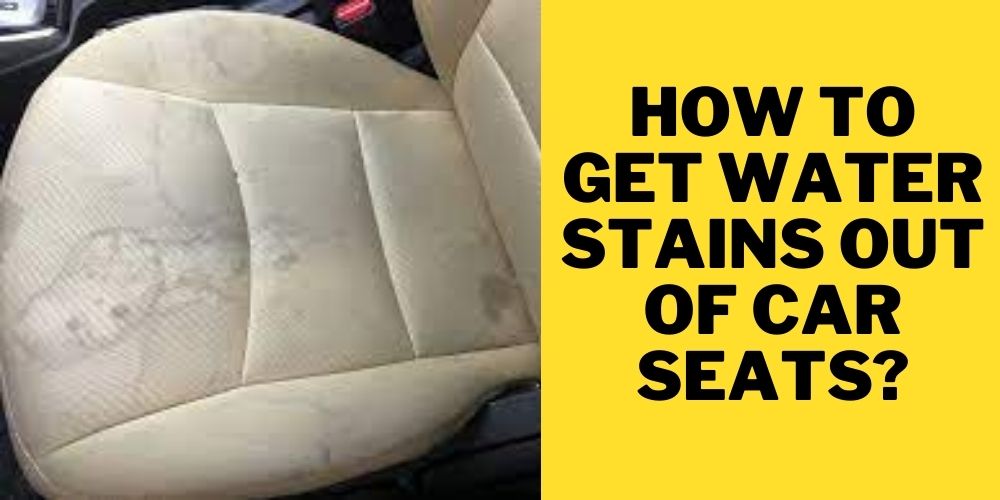
Water stains on car seats often come from rain, spilled drinks, wet clothing, or a damp car interior. The good news is that most fresh stains can be removed with gentle cleaning, a small amount of water, and slow drying.
For cloth seats, vacuum first, lightly clean the whole seat panel with a fabric-safe solution, then dry it fully. For leather or vinyl, wipe the area with a damp microfiber cloth and use the correct conditioner if the material allows it. Do not soak the seat, use bleach, or spray liquid near electrical parts and airbags.
Introduction: Why Water Leaves Stains on Car Seats
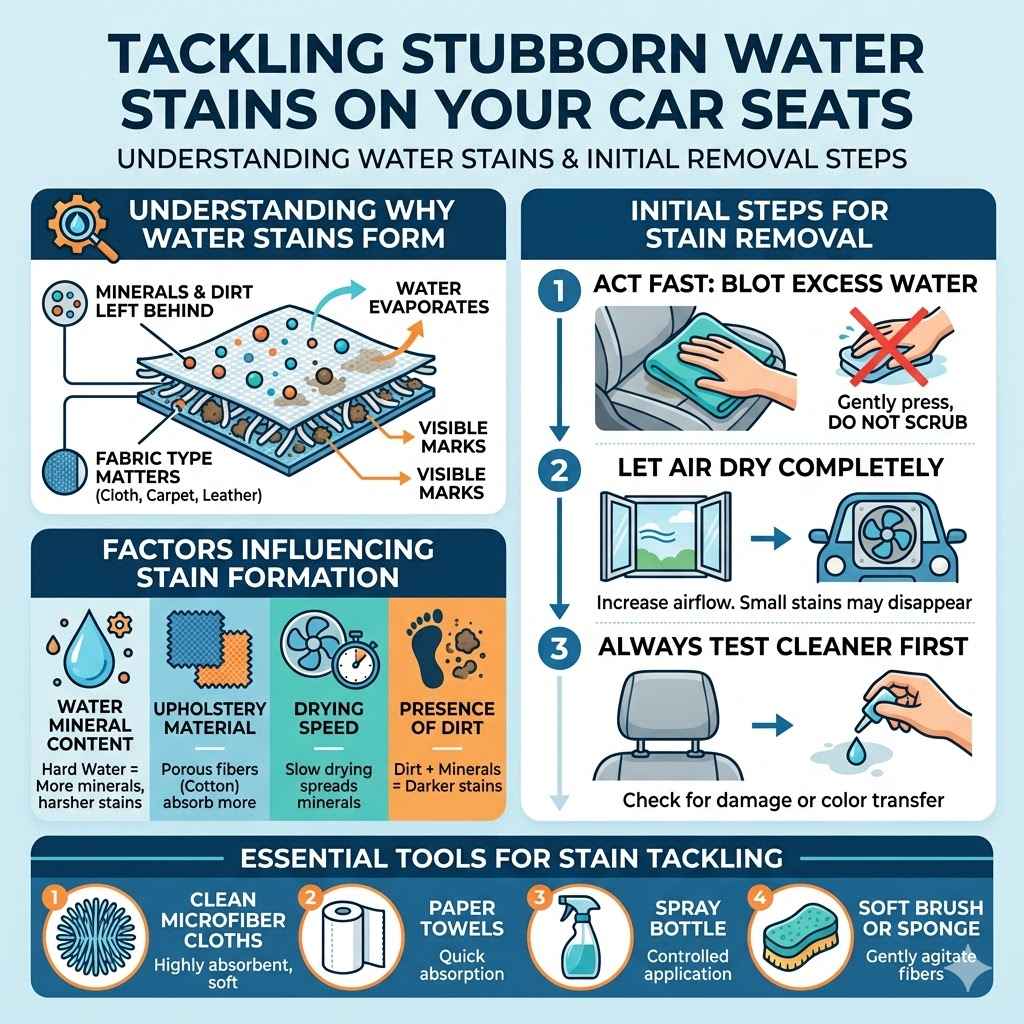
A water mark is often not caused by water alone. As water dries, it can leave behind dirt, body oils, detergent residue, or minerals. This creates a dark edge or a pale ring around the wet area.
In the United States, this issue is common after rain, snow, beach trips, sports, and accidental spills. Road salt and hard-water minerals can make the marks more visible, especially on dark fabric.
The safest cleaning method depends on the seat material:
- Cloth and fabric: Use a low-moisture fabric-cleaning method.
- Leather: Use a barely damp cloth and a leather cleaner made for automotive interiors.
- Vinyl or synthetic leather: Use mild soap or an approved interior cleaner.
- Heated or powered seats: Keep liquid away from switches, wiring, and seat controls.
Check the vehicle owner’s manual before cleaning. Some seats contain side airbags, pressure sensors, heating elements, or ventilation systems that can be damaged by excess moisture.

What You Need Before Cleaning
Gather the supplies before you begin. A simple setup is usually safer than a strong chemical product.
You may need:
- A vacuum with a soft brush attachment
- Two or three clean microfiber towels
- Distilled water
- A small bowl
- Mild dish soap or automotive upholstery cleaner
- A soft upholstery brush
- A dry towel
- A fan, if available
- Leather cleaner and conditioner for leather seats
Use distilled water when possible. Tap water can contain minerals that may leave another ring as it dries. This matters most on black, gray, and dark blue fabric.
Before applying any cleaner, read the product label. Confirm that it is safe for the seat material. Test it on a hidden area, such as the lower rear edge of the seat, and wait until it dries.
Before you start
- Park the car in a dry, shaded place.
- Open the doors or windows for airflow.
- Remove loose items from the seats.
- Turn off the vehicle.
- Avoid spraying near seat controls, seat-belt buckles, speakers, and airbag seams.
- Do not work on a hot seat or in direct, strong sunlight.
Never mix cleaning products. In particular, do not combine bleach, ammonia, vinegar, or other household chemicals.

How to Get Water Stains Out of Cloth Car Seats
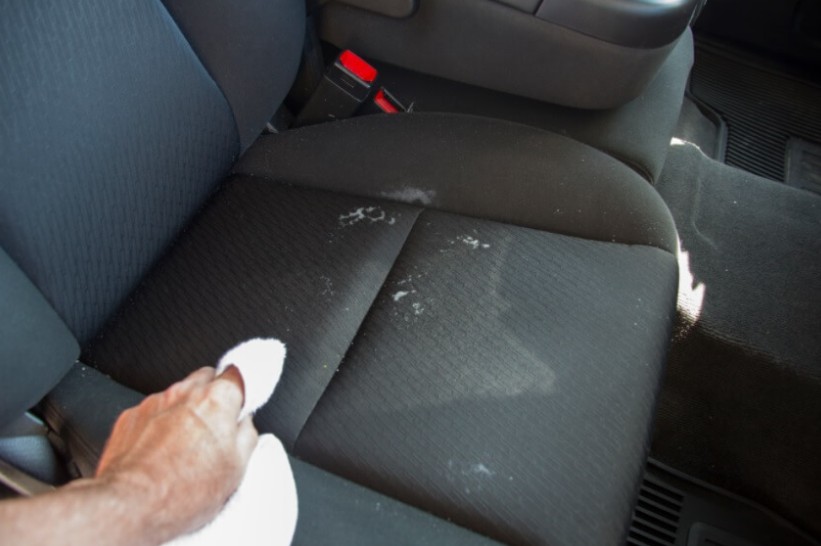
The best way to remove a water stain from a cloth car seat is to clean the entire affected panel, not just the center of the mark. Spot cleaning alone can leave a new ring.
Step 1: Vacuum the seat
Use a vacuum with a soft brush attachment. Remove dust, sand, crumbs, and dried soil from the seat and seams.
Do not scrub a dry stain first. Rubbing can push grit deeper into the fabric and may spread the mark.
Step 2: Make a mild cleaning solution
For a light stain, mix:
- About 2 cups of distilled water
- A few drops of mild dish soap
The solution should feel lightly soapy, not thick or sudsy. Too much soap can leave a sticky film that attracts more dirt.
You can also use an automotive upholstery cleaner. Follow the product’s dilution and use instructions.
Step 3: Dampen the whole seat section
Dip a microfiber cloth into the solution and wring it out well. The cloth should be damp, not dripping.
Wipe the complete fabric panel from seam to seam. Move in one direction, then use light overlapping strokes. Treating only the visible ring may cause a second edge to form as the damp spot dries.
Do not pour the solution onto the seat. Do not flood the foam underneath the fabric.
Step 4: Gently brush the fabric
If the seat still looks uneven, use a soft upholstery brush. Work with light strokes in one direction.
Avoid hard scrubbing. Strong pressure can roughen the fabric, spread dirt, or damage the seat’s surface.
Step 5: Remove soap residue
Use a second microfiber cloth dampened with plain distilled water. Wring it out well, then wipe the cleaned area to lift leftover soap.
This step helps prevent a dull or stiff patch after drying.
Step 6: Blot and dry
Press a dry towel over the seat. Lift the towel and repeat with a dry section until the fabric feels only slightly damp.
Leave the doors or windows open and use a fan to move air across the seat. Allow the seat to dry completely before sitting on it.
Do not use high heat from a hair dryer. Heat can damage fabric, adhesives, foam, plastic trim, or leather-like surfaces.
If the stain remains
Repeat the process once after the seat is fully dry. A second gentle cleaning is safer than one aggressive cleaning.
If the mark remains after two careful attempts, the stain may contain body oil, food, dye, road salt, mold, or another substance that water alone cannot remove. At that point, a professional detailer may be able to extract the seat with the right equipment.
How to Remove Water Marks From Leather Car Seats
Leather seats need less water than cloth seats. A water mark on leather may be caused by moisture, dirt, old conditioner, or a change in the leather’s finish.
Start by wiping the whole affected section with a clean, dry microfiber cloth. If the mark is fresh, this may be enough.
If it remains, follow these steps:
- Vacuum loose dirt with a soft brush attachment.
- Put a small amount of automotive leather cleaner on a cloth.
- Test the cleaner in a hidden area.
- Wipe the full leather panel with light, even strokes.
- Remove residue with a separate slightly damp cloth.
- Dry the surface with a clean towel.
- Apply a compatible leather conditioner only if the vehicle maker or product directions allow it.
Do not use saddle soap, furniture polish, alcohol, acetone, or household disinfectant unless the leather manufacturer specifically approves it. These products may change the finish or make the surface sticky.
Perforated leather needs extra care. Keep liquid out of the small holes, because moisture can reach the foam or heating and ventilation parts below.
Some seats marketed as “leather” contain coated leather, vinyl, or synthetic leather. Their care needs can differ. Use the owner’s manual as the final guide.
How to Clean Water Stains From Vinyl or Synthetic Leather Seats
Vinyl and synthetic leather are often easier to clean than cloth or natural leather. Still, excess water can collect in seams and cause problems.
Mix warm distilled water with a small amount of mild soap. Dampen a microfiber cloth, wring it out, and wipe the affected section. Use a soft brush only on textured vinyl.
Wipe away soap with a second damp cloth, then dry the surface. Do not leave standing water along the seams.
Avoid products that contain:
- Bleach
- Strong solvents
- Petroleum distillates
- Abrasive powders
- Undiluted alcohol
- Ammonia
These ingredients may dry, fade, crack, or soften the surface. Do not use a magic eraser unless the vehicle maker or material maker approves it. Melamine foam is mildly abrasive and can remove the surface coating.

How to Remove Hard-Water Rings and Salt Marks
Hard-water rings often look white, gray, or chalky. Salt marks may have a similar appearance, especially after snow or winter road spray.
First vacuum the dry residue. Then use a clean cloth dampened with distilled water. Wipe the whole affected fabric panel rather than rubbing only the white edge.
For cloth seats, a mild upholstery cleaner may help remove the remaining soil. For leather or vinyl, use the correct material cleaner instead.
Do not assume that vinegar is safe for every car seat. A weak vinegar solution is sometimes used for mineral residue on household surfaces, but automotive upholstery, leather coatings, dyes, and adhesives vary. A product approved for the specific material is the lower-risk choice.
If salt residue keeps returning, check the source of the moisture. A leak around a door seal, windshield, sunroof, trunk, or floor may need repair. Cleaning will not solve a leak that continues to wet the seat.
How to Dry Car Seats Without Causing Damage
Drying is part of stain removal. A seat that looks clean but stays damp can develop a musty odor or, in serious cases, microbial growth.
Use this drying process:
- Blot the seat with dry towels.
- Open the doors or windows when weather permits.
- Aim a fan at the seat.
- Move the seat forward or backward to expose damp areas.
- Check the seams and gaps.
- Wait until the seat feels dry before closing the car.
Do not use a heat gun or place a portable heater close to the seat. High heat can damage upholstery, plastic, foam, wiring, and trim.
If the seat was heavily soaked, drying the surface may not be enough. Water can remain inside the foam. A professional detailer may need to use an extractor or remove the seat for deeper drying.

What Not to Do When Cleaning Water Stains
Several common cleaning mistakes can make the mark worse.
Do not clean only the center of the stain
A small wet spot can dry with a new outline. Clean the full panel or cushion section so the fabric dries more evenly.
Do not oversaturate the seat
Excess water can reach seat wiring, heating elements, pressure sensors, or foam. It can also create a deeper odor.
Do not use bleach
Bleach can discolor fabric and damage leather or vinyl. It can also weaken some materials.
Do not scrub hard
Aggressive scrubbing may spread the stain and damage the fibers or surface coating.
Do not use a steam cleaner without checking the manual
Steam can be unsuitable for some fabrics, adhesives, leather finishes, and seats with electrical components. Use it only when the vehicle and equipment instructions permit it.
Do not ignore a musty smell
A persistent odor may mean moisture remains below the surface. Continued dampness can cause a larger interior problem than the original water mark.
Do not clean over a damaged seat
If the fabric is torn, the foam is exposed, or an airbag seam is damaged, avoid aggressive cleaning. Have the seat inspected by a qualified automotive repair professional.

When to Call a Professional Detailer or Repair Shop
Professional help makes sense when the seat is heavily soaked, the stain keeps returning, or the odor remains after full drying.
Contact a detailer when:
- Water reached deep into the foam.
- The seat has a strong musty odor.
- The stain covers most of the cushion.
- A drink with sugar, milk, oil, or dye caused the mark.
- Home cleaning leaves rings or discoloration.
- The seat has delicate leather or unusual upholstery.
Contact an automotive repair shop when:
- A powered seat stops working.
- A seat heater or ventilation system behaves unusually.
- The airbag warning light turns on.
- Water came from a broken sunroof, windshield, door seal, or body leak.
- Moisture reached wiring or connectors under the seat.
Do not remove a seat or disconnect airbag wiring unless the vehicle service information gives the correct procedure and you understand the safety risks. A trained technician is the safer choice for airbag and electrical work.

How to Prevent New Water Stains
Prevention is easier than repeated cleaning.
- Dry wet clothing before sitting in the car.
- Use a clean towel under wet sports gear or beach items.
- Wipe rainwater from umbrellas before placing them on the seat.
- Keep windows and sunroofs fully closed during rain.
- Check door, trunk, windshield, and sunroof seals if water appears repeatedly.
- Clean spills soon after they happen.
- Vacuum seats before using a damp cleaner.
- Keep a small microfiber towel in the vehicle.
- Avoid leaving damp floor mats or towels inside overnight.
If a stain appears in the same place after every rain, treat it as a leak problem rather than a cleaning problem.

Quick Decision Guide
| Seat material or problem | First method | Main caution |
|---|---|---|
| Cloth fabric | Vacuum, lightly clean the full panel, blot, and air-dry | Do not soak the foam |
| Leather | Dry wipe, then use automotive leather cleaner | Avoid household solvents |
| Vinyl or synthetic leather | Mild soap solution and microfiber cloth | Keep liquid out of seams |
| White mineral ring | Distilled water and material-safe cleaner | Tap water may leave more minerals |
| Road salt residue | Vacuum dry salt, then lightly wipe | Find the source of moisture |
| Deep soaking | Blot and ventilate, then consider professional extraction | Water may remain inside the foam |
| Recurring stain | Inspect seals and roof or door areas | Cleaning alone will not stop a leak |
The safest general rule is simple: use the mildest product that can solve the problem, apply very little liquid, and dry the seat fully.

FAQs About Water Stains on Car Seats
Will water stains come out of car seats?
Most fresh water marks on cloth, vinyl, and coated leather can improve with gentle cleaning. Older stains may include dirt, salt, body oil, or dye, so they may need more than water.
Can I use baking soda on a water stain?
Baking soda may help absorb odor when used sparingly on dry fabric, but it does not remove every water ring. Vacuum it fully before using a damp cleaner. Avoid using powders on leather or vinyl unless the material maker approves them.
Can I use vinegar to remove water marks?
Vinegar is not the safest universal choice for car seats. It may affect dyes, leather coatings, adhesives, or odor. Use a material-approved automotive cleaner instead.
Why does my car seat look worse after cleaning?
A larger ring can appear when only part of the fabric is wet or when soap residue remains. Lightly clean the full panel, rinse with a barely damp cloth, blot well, and dry it evenly.
How long should a car seat take to dry?
A lightly damp surface may dry within several hours with good airflow. A heavily wet seat can take much longer. Do not close the car or use the seat until the upholstery and seams are fully dry.
How do I know whether the seat has mold?
A persistent musty odor, recurring dampness, fuzzy growth, or dark spreading spots may indicate a moisture problem. Do not simply cover the smell with fragrance. Dry the area, find the leak, and consider professional cleaning or inspection.
Conclusion
To get water stains out of car seats, first identify the material. Vacuum cloth seats, clean the full affected panel with a mild solution, blot away moisture, and dry the seat with airflow. For leather and vinyl, use much less liquid and a cleaner made for that surface.
Avoid bleach, heavy scrubbing, excess water, and high heat. If the stain returns, the seat stays damp, or water has reached wiring or airbag components, stop cleaning and address the underlying leak or safety issue first.
