

Introduction
In the United States, independent tire shops, mobile tire services, auto repair shops, dealerships, and some national tire chains may install tires bought from another seller. The shop sets its own policy, so always call before you arrive.
Some installers accept new tires from online stores, private sellers, or another tire shop. Others install only tires they sell. Many will refuse used, damaged, mismatched, or incorrectly sized tires because of safety, liability, equipment, or warranty concerns.
This guide explains who may install customer-supplied tires, what the service may cost, what to ask, and how to check that the tires are safe for your vehicle.
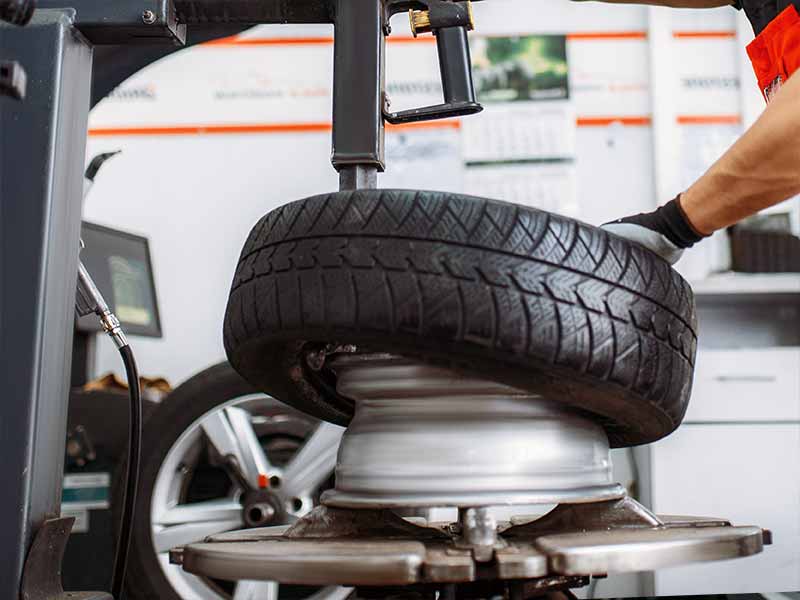
The best places to install tires bought elsewhere
The most likely installers are independent tire shops and full-service auto repair shops. These businesses often have tire machines, wheel balancers, and technicians who can mount and balance tires supplied by the customer. Their policies vary by location.


Independent tire shops
Independent shops are often the first place to call. Many will install tires bought online or from another seller if:
- The tires are new.
- The size and load rating match the vehicle.
- The tires are not damaged.
- The wheels are compatible.
- The shop has the right equipment.
- You agree to pay mounting, balancing, valve stem, disposal, and related fees.
Ask whether the shop charges a customer-supplied tire fee. Some shops charge more when they did not sell the tires because they lose the tire sale and still take on labor and liability.
Mobile tire installers
Mobile tire services come to your home, workplace, or another legal parking location. Many offer installation for tires bought elsewhere, but not all do.
Before booking, confirm that the service includes:
- Tire removal from the vehicle.
- Removal of the old tire from the wheel.
- Mounting of the new tire.
- Wheel balancing.
- New valve stems when needed.
- Torqueing of the lug nuts.
- Disposal of the old tires.
Mobile service may be useful when the vehicle cannot safely reach a shop. However, some mobile providers have limits on run-flat tires, large wheels, specialty wheels, commercial vehicles, or tire pressure monitoring system work.
Dealership service departments
A vehicle dealership may install tires bought elsewhere, especially if the tires meet the vehicle maker’s specifications. Some dealers focus on tires sold through their parts department, while others accept customer-supplied tires for a labor charge.
A dealership can be a useful choice when:
- The vehicle uses a special tire size.
- The vehicle has a complex all-wheel-drive system.
- The wheels use unusual sensors or lug hardware.
- You want the dealer to inspect suspension or alignment parts.
- The vehicle is still under a service plan or warranty.
A dealership may cost more than an independent tire shop. Still, the technicians may know the vehicle’s factory requirements well.


National tire chains
National chains do not all follow the same policy. Some locations install outside tires for a fee. Some install only tires purchased through the chain. Others may accept customer-supplied tires but exclude road-hazard coverage or workmanship benefits.
The policy may differ between two stores under the same brand. Call the exact location, not just the national customer service line.
Auto parts stores
Most auto parts stores sell tires through a separate service network or do not provide full tire installation in their retail stores. A parts store may recommend a local installer, but do not assume that buying tires from the store includes mounting and balancing.
Tire retailers and online sellers
Many online tire retailers offer an installer network. During checkout, you may be able to send the tires to a local partner or ship them to your home and choose an installer later.
Before ordering, check:
- The installer’s name and address.
- Whether the shop accepts customer shipments.
- How long it will hold the tires.
- The complete installation price.
- Whether the shop handles tire pressure monitoring sensors.
- Whether the installer will inspect tires before mounting.

Why a shop may refuse outside tires
A shop can decline the job for reasons beyond price. Tire installation affects vehicle safety, and the shop must be able to verify that the tire and wheel combination is suitable.
Common reasons for refusal include:
- The tire is used or has an unknown history.
- The tire has a cut, bulge, crack, flat spot, or exposed cord.
- The tire is too old or has been stored poorly.
- The tire size does not match the vehicle.
- The load index or speed rating is too low.
- The tire is marked for a different use, such as temporary spare use.
- The tire is designed for a different wheel diameter.
- The wheel is bent, cracked, or badly corroded.
- The tire is subject to a recall.
- The shop lacks the equipment needed for run-flat or specialty tires.
- The tire is a different type from the other tires in a way that could affect handling.
- The vehicle has an all-wheel-drive system with strict circumference limits.
A refusal does not always mean the tire is defective. It may mean the shop cannot confirm its history or does not want to accept the related risk.
Used tires need extra care
Many U.S. shops will not install used tires bought from a private seller. A used tire can look fine from the outside while having internal damage from an impact, underinflation, overloading, or long-term storage.
The U.S. Tire Manufacturers Association warns consumers to inspect used tires carefully. The National Highway Traffic Safety Administration also advises checking tire age, condition, inflation, and damage.
Before buying a used tire, check:
- The complete tread surface. Look for uneven wear, exposed cords, cuts, or punctures.
- Both sidewalls. Look for bulges, cracks, repairs, and abrasions.
- The bead area. Damage near the part that seals against the wheel can make the tire unsafe.
- The DOT Tire Identification Number. The last four digits show the week and year of manufacture. For example, “2323” means the 23rd week of 2023.
- The repair history. A proper repair in the tread may be acceptable in some cases, but sidewall and shoulder repairs are generally not considered safe.
- The recall status. Search the tire brand and model through the NHTSA recall database.
The date code does not tell you the tire’s full history. A tire stored outdoors, exposed to heat, or driven while underinflated may have damage that a date code cannot reveal.

What the tire installation service should include
A basic tire installation normally involves more than putting the tire on the wheel. Ask the shop to list each service before you approve the work.
| Service | What it does | Is it always included? |
|---|---|---|
| Tire removal | Removes the old tire from the vehicle | Usually |
| Demounting | Removes the old tire from the wheel | Usually |
| Mounting | Installs the new tire on the wheel | Usually |
| Balancing | Adds weights to reduce vibration | Usually |
| Valve stem replacement | Replaces the rubber air valve | Varies |
| TPMS service | Checks or replaces tire pressure sensors | Varies |
| Wheel inspection | Looks for cracks, bends, and corrosion | Varies |
| Alignment check | Checks steering and suspension angles | Usually extra |
| Old tire disposal | Sends old tires for proper recycling or disposal | Usually extra |
| Road-hazard coverage | Covers some punctures or damage later | Often unavailable for outside tires |
Mounting and balancing are not the same as wheel alignment. Mounting puts the tire on the wheel. Balancing corrects weight differences in the tire and wheel assembly.


Ask whether the quote is:
- Per tire or for the full set.
- Before or after taxes and fees.
- Inclusive of disposal charges.
- Inclusive of new valve stems.
- Inclusive of TPMS diagnosis.
- Inclusive of lug nut retorque.
- Inclusive of a final pressure check.

How much does installation cost?
The price depends on the tire size, wheel type, location, and service level. A shop may charge a flat installation fee per tire or create a package for four tires.
Customer-supplied tires can cost more to install than tires purchased from the shop. The price may include a lost-sales fee, outside-tire fee, or customer-provided-parts fee.
A quote may include these separate charges:
- Mounting and balancing.
- Valve stems.
- TPMS service.
- Disposal of old tires.
- Tire rotation or inspection.
- Oversize or specialty tire fees.
- Run-flat tire fees.
- Mobile travel fees.
- Taxes.
Do not compare only the advertised installation price. A low base price may not include balancing, disposal, valve stems, or TPMS work.
A simple price comparison
Suppose one shop quotes $25 per tire for mounting and balancing, plus $5 per tire for disposal and $4 per tire for valve stems.
For four tires:
- Mounting and balancing: 4 × $25 = $100
- Disposal: 4 × $5 = $20
- Valve stems: 4 × $4 = $16
- Estimated service total: $136 before tax
This is only a sample calculation, not a national price. Ask for a written or texted quote because local prices change.

What to ask before booking
A short phone call can prevent a wasted trip. Use this script:
“I have four new tires that I bought elsewhere. They are size [tire size] and will go on a [year, make, model]. Do you install customer-supplied tires? What is the complete out-the-door price for mounting, balancing, valve stems, TPMS service, and disposal?”
Then ask:
- Do you install this tire size and type?
- Do you accept tires shipped directly to your shop?
- Will you inspect the tires before installation?
- Do you install run-flat tires?
- Can you service my tire pressure monitoring system?
- Is an outside-tire fee added?
- Do you provide a workmanship warranty?
- Does your warranty apply to customer-supplied tires?
- Can you dispose of the old tires?
- Will you provide the final cold tire pressure?
- Will you check the wheel torque before I leave?
If the shop refuses the tires, ask why. A clear reason can help you find another qualified installer or identify a problem with the tires.
How to confirm the tires fit your vehicle
Do not rely only on the tire size printed in an online listing. Confirm the full specification.


Check the vehicle’s:
- Driver-side door-jamb tire label.
- Owner’s manual.
- Current tire sidewall.
- Wheel size.
- Recommended tire pressure.
- Load index.
- Speed rating.
- Front and rear tire requirements.
A tire size such as 225/65R17 describes width, aspect ratio, construction, and wheel diameter. It does not, by itself, confirm that the tire has the correct load index, speed rating, tread type, or approval for your vehicle.
For all-wheel-drive vehicles, replacing only one tire may cause a difference in rolling circumference. The vehicle manufacturer may require a specific tread-depth difference or replacement method. Check the owner’s manual or ask a dealer that knows the vehicle.
Never use the maximum pressure printed on the tire sidewall as the normal vehicle setting unless the vehicle manufacturer directs you to do so. The door-jamb label usually gives the recommended cold tire pressure for that vehicle.

What to do after installation
Before leaving, check that the work is complete.
The installer should:
- Set the tire pressure to the vehicle manufacturer’s recommended cold pressure.
- Torque the lug nuts to the vehicle maker’s specification.
- Confirm that the valve stems do not leak.
- Reset or check the tire pressure monitoring system.
- Check for vibration or visible mounting problems.
- Return the old tires if you asked to keep them.
- Explain any warning light or remaining issue.
Drive slowly for the first few miles and pay attention to vibration, pulling, noise, or a tire-pressure warning. Stop in a safe place if the vehicle shakes, pulls sharply, loses air, or makes an unusual sound.
Check the tire pressure again when the tires are cold. A pressure change after installation may indicate a leaking valve, bead seal, puncture, or temperature change.
If the steering wheel shakes at highway speed, contact the installer. Possible causes include an incorrect balance, a bent wheel, a tire uniformity problem, or another suspension issue.

Common mistakes to avoid
Ordering the wrong tire size
Online listings may show several sizes for one vehicle. Verify the size on the door-jamb label and confirm the complete rating.
Assuming every shop accepts outside tires
Policies vary by location. Call before ordering if you are unsure.
Ignoring tire age
A tire with deep tread may still be unsuitable if it is old, cracked, damaged, or poorly stored.
Forgetting TPMS
A tire pressure monitoring sensor may need service, replacement, or relearning. Ask whether that work is included.
Buying only one tire without checking the others
One new tire may handle differently from three worn tires. The vehicle maker may recommend replacing two or four tires, or matching tread depth in a particular way.
Treating installation as an alignment
Mounting and balancing do not correct worn suspension parts or incorrect alignment angles.


Choosing the lowest quote
A quote that excludes disposal, balancing, valve stems, or TPMS work may not be the cheapest final price.

Frequently asked questions
Will Discount Tire install tires bought somewhere else?
Policies can vary by store and tire type. Some locations may install customer-supplied tires for a fee, while others may limit service to tires sold through the company. Contact the exact store and ask about the tire size, condition, and warranty terms.
Will Walmart install tires bought elsewhere?
Service availability and customer-supplied tire policies can vary by Auto Care Center. Ask the specific store whether it will mount and balance outside tires and what services are included.
Can a dealership install tires from Tire Rack or another online seller?
Often, a dealership can install tires bought online, but each service department sets its own policy. Confirm whether it accepts shipped tires and whether the quoted price includes balancing, TPMS work, and disposal.
Can I bring my own tires to a local mechanic?
You can ask, but not every general repair shop installs tires. Choose a shop with tire mounting and balancing equipment, and confirm that it handles your tire type and wheel size.
Do shops install used tires?
Some may, but many refuse used tires because they cannot verify the tire’s history or condition. New tires from a known seller are usually easier to inspect, document, and warranty.
Final recommendation
For most U.S. drivers, an independent tire shop is the best first call when the tires were bought elsewhere. A mobile installer can help when the vehicle cannot move safely, while a dealership may be better for specialty wheels, all-wheel-drive systems, or vehicle-specific concerns.
Before booking, confirm the shop’s policy, the full price, tire compatibility, TPMS service, warranty limits, and disposal fees. If the installer questions the tire’s age, condition, or fit, treat that as a safety issue—not just a sales objection.
