

For drivers in the United States, ESC means Electronic Stability Control. It is a safety system that helps keep a car pointed in the direction the driver intends, especially during a sudden turn, slippery road conditions, or an emergency maneuver.
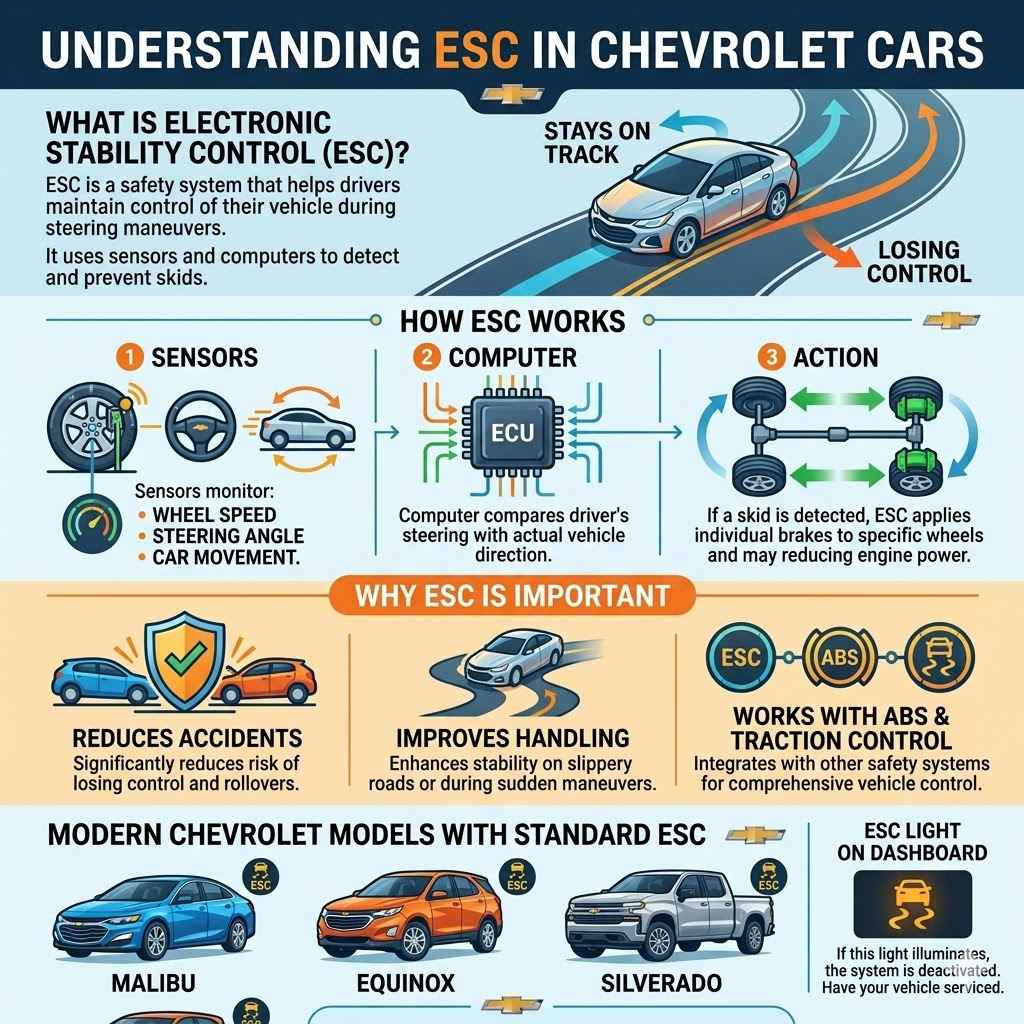
ESC uses wheel-speed sensors, steering input, and other vehicle data to detect when the car may be sliding or losing control. It can then apply the brakes to individual wheels and reduce engine power for a short time.
If the ESC light flashes, the system is usually working. If the light stays on, ESC may be turned off or may have detected a fault that needs attention.
What Is Electronic Stability Control?
Electronic Stability Control is a driver-assistance system that helps prevent a vehicle from skidding. It does not steer the car for you, and it cannot overcome the laws of physics. Instead, it makes small, rapid corrections when the vehicle begins to move away from the intended path.


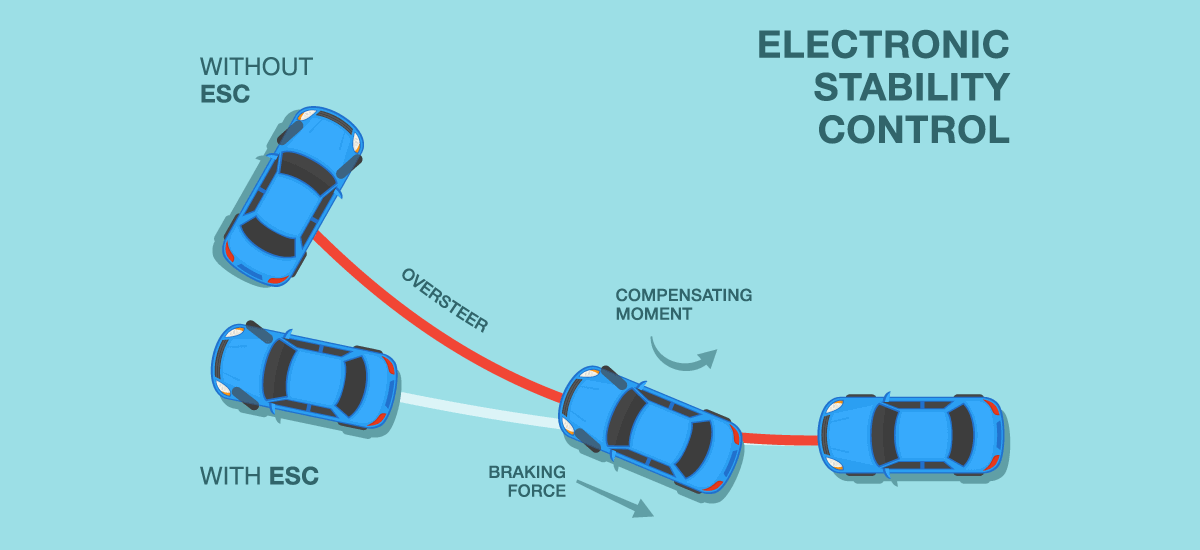
For example, imagine that you turn left to avoid an object. If the rear of the car starts to slide outward, ESC may brake one or more wheels and reduce engine torque. This can help the car follow the turn instead of spinning.
The system may have different names, depending on the automaker:
- Electronic Stability Control, or ESC
- Electronic Stability Program, or ESP
- Vehicle Stability Control, or VSC
- Dynamic Stability Control, or DSC
- StabiliTrak on some General Motors vehicles
- AdvanceTrac on some Ford vehicles
These names refer to similar forms of electronic stability assistance, although the exact programming can vary by vehicle.
The National Highway Traffic Safety Administration requires electronic stability control on most passenger vehicles sold in the United States. The requirement applies to vehicles under Federal Motor Vehicle Safety Standard No. 126, with the phase-in completed for the 2012 model year.

How Does ESC Work?
ESC compares the driver’s steering command with the vehicle’s actual movement. It looks for a mismatch that suggests the car is understeering, oversteering, or beginning to rotate.
The system normally uses data from several parts:
- Wheel-speed sensors: Measure how fast each wheel turns.
- Steering-angle sensor: Shows where the driver is trying to steer.
- Yaw-rate sensor: Measures how quickly the car rotates around its vertical axis.
- Lateral-acceleration sensor: Detects side-to-side movement.
- Brake and engine controls: Let the system slow a wheel or reduce power.
When the system detects a possible loss of control, it may take two actions:
Apply the brake to one or more wheels.
This can help create a corrective turning force.Reduce engine power.
This limits wheel spin and gives the tires a better chance to regain grip.
ESC works in fractions of a second. A driver may feel a brief brake pulse, hear a clicking sound, or notice the accelerator become less responsive. Those sensations can be normal when the system is active.


Understeer and oversteer
ESC mainly helps with two types of handling problems:
- Understeer: The front tires lose grip, so the car turns less than the driver expects. The vehicle tends to move toward the outside of the turn.
- Oversteer: The rear tires lose grip, so the back of the car moves outward. The vehicle may begin to spin.
ESC cannot create traction where none exists. Worn tires, excessive speed, standing water, ice, and poor road conditions can still cause a crash.

What Is the Difference Between ESC, Traction Control, and ABS?
ESC, traction control, and anti-lock brakes work together, but they have different jobs.
| System | Main purpose | What it monitors or controls |
|---|---|---|
| ESC | Helps prevent a skid or spin | Vehicle direction and rotation |
| Traction control | Limits drive-wheel spin | Wheel speed and engine power |
| ABS | Helps prevent wheel lock during braking | Brake pressure and wheel speed |
Traction control focuses on acceleration. If one drive wheel spins on snow or wet pavement, the system may reduce engine power or brake the spinning wheel.
ABS, or anti-lock braking system, focuses on braking. It rapidly releases and reapplies brake pressure when a wheel is about to lock. This helps the driver maintain steering control during hard braking.
ESC combines information from these systems with steering and motion data. It is concerned with the vehicle’s overall path, not just whether a wheel is spinning or locking.
A car may have traction control and ABS but still display a separate ESC warning if the stability-control portion has a problem.

What Does the ESC Light Mean?
The meaning of the ESC light depends on whether it is flashing, steady, or paired with another warning.
A flashing ESC light
A flashing ESC icon usually means the system is actively helping the vehicle. The light may flash during:
- Acceleration on a wet or icy road
- A sharp turn taken too quickly
- Driving over loose gravel
- A sudden lane change
- Wheel spin on snow
Ease off the accelerator and steer smoothly. Avoid abrupt braking or sharp steering inputs.
A steady ESC light
A steady light may mean one of two things:
- ESC has been switched off.
- The system has detected a fault.
Check the dashboard message and the owner’s manual. Some vehicles display ESC OFF, while others show a skidding-car icon or a message such as “Service Stability System.”


If the light stays on after restarting the car, drive more carefully and arrange an inspection. The vehicle may still operate normally, but the stability system may not be available.
ESC light with ABS or brake warning lights
If the ESC light appears with an ABS, red brake, or traction-control warning, treat the combination more seriously. Several systems may be affected, or the vehicle may have a brake or sensor problem.
Stop in a safe place if braking feels weak, the brake pedal feels unusual, or a red brake warning remains on. Have the vehicle checked before continuing unless the owner’s manual gives different instructions.

Can You Drive With the ESC Light On?
You may be able to drive with a steady ESC light, but you should treat the vehicle as if stability assistance is unavailable. The car can still steer and brake in many cases, but it may not correct a skid.
Take these steps:
- Reduce speed, especially on wet, icy, or loose roads.
- Avoid sudden lane changes and hard acceleration.
- Check whether the ESC button was pressed accidentally.
- Turn the vehicle off and restart it once, if safe.
- Read the dashboard message and owner’s manual.
- Schedule a diagnostic inspection if the light remains on.
Do not assume that replacing a battery, clearing a code, or turning the system off will fix the cause. A warning may result from a failed wheel-speed sensor, steering-angle calibration issue, damaged wiring, low tire pressure, or a fault in the ABS system.
Driving with the warning for a short distance to a repair shop may be reasonable when the brakes and steering feel normal. Do not continue driving if the car behaves unpredictably or if other brake warnings appear.

Why Does the ESC Light Come On?
The ESC light can turn on for a simple reason, such as the system being disabled, or for a fault that requires testing.
Common causes include:
The ESC system was turned off
Many cars have an ESC or traction-control button. A short press may reduce traction-control intervention, while a longer press may disable more of the system. The exact function varies by model.
Pressing the button again may restore normal operation. The owner’s manual is the correct source for the button’s meaning.
A wheel-speed sensor problem
ESC depends on accurate wheel-speed data. A damaged sensor, broken wire, or debris near the sensor can cause a warning.
This fault may also turn on the ABS and traction-control lights.
Low or mismatched tire pressure
Tires with very different pressures or sizes can produce wheel-speed readings that do not match. Check all four tires when they are cold and set them to the pressure on the driver’s door-jamb label, not the maximum pressure printed on the tire sidewall.
Steering-angle sensor calibration
The vehicle must know the direction of the steering wheel. Alignment work, a weak battery, or steering-system repairs may require the sensor to be recalibrated.
A weak battery or charging fault
Low voltage can cause temporary warnings or prevent control modules from communicating correctly. A battery replacement may also require system initialization on some vehicles.


Engine or transmission faults
Some cars disable ESC when the powertrain control system detects a related problem. An engine warning light may appear at the same time.
A scan tool that can read ABS and stability-control modules is often needed. A basic code reader may read only engine codes and miss the actual fault.

Should You Turn ESC Off?
In normal driving, leave ESC on. It is designed to help during loss of traction and sudden maneuvers.
Turning ESC off may help when a vehicle is stuck in deep snow, sand, or loose mud. Brief wheel spin can sometimes help the tires move the vehicle forward. Use the setting only as described in the owner’s manual, and turn the system back on as soon as the vehicle is free.
Do not turn ESC off to drive faster on public roads. Disabling it removes a safety aid and can make a skid harder to control.
Some vehicles offer several modes rather than a simple on-or-off setting. A reduced setting may allow more wheel slip, while full ESC remains ready to intervene. The names and functions differ by vehicle.

What Should You Do When ESC Activates?
When ESC activates, stay calm and make smooth inputs. The system works best when the driver also responds correctly.
- Look where you want the vehicle to go.
- Ease off the accelerator.
- Keep both hands on the steering wheel.
- Steer smoothly in the intended direction.
- Avoid pumping the brakes if ABS is active.
- Slow down after the vehicle is stable.
Do not jerk the steering wheel or rapidly press the accelerator. ESC can help correct a developing skid, but it cannot guarantee recovery.
If the vehicle hydroplanes, the safest response is usually to ease off the accelerator and keep the steering pointed in the direction of travel until the tires regain contact. Avoid sudden braking or steering.
Does ESC Work on Snow and Ice?
ESC can help on snow and ice, but it cannot make a slippery road safe. Its sensors may detect a slide and reduce power or brake individual wheels, yet the tires still need some grip to respond.
Winter tires, correct tire pressure, lower speed, and extra following distance remain essential. All-wheel drive may help a vehicle accelerate, but it does not provide the same benefit when turning or braking on ice.
If the ESC light flashes often in poor weather, that means the system is intervening. It is also a warning that available traction is low. Slow down rather than trying to defeat the system.

Common ESC Mistakes to Avoid
Several misunderstandings can lead to unsafe decisions.
Mistake 1: Treating ESC as automatic skid protection
ESC can reduce the risk of losing control, but it cannot prevent every crash. Speed, tire condition, road surface, vehicle load, and driver input still matter.


Mistake 2: Ignoring a steady warning light
A steady ESC light may mean that the system is unavailable. Do not wait for the light to flash before taking action.
Mistake 3: Replacing tires without checking specifications
Different tire sizes, extreme tread differences, or incorrect inflation can affect wheel-speed readings and handling. Follow the vehicle manufacturer’s tire specifications.
Mistake 4: Using a simple code reader
An engine-only scanner may not access the ABS or stability-control module. A repair shop may need a professional scan tool and a road test.
Mistake 5: Assuming ESC is the same as all-wheel drive
ESC is an electronic control system. All-wheel drive is a drivetrain layout. A vehicle can have either system, both systems, or neither.

Key Takeaways
- ESC means Electronic Stability Control.
- It helps keep a car on its intended path during a skid or sudden maneuver.
- ESC can brake individual wheels and reduce engine power.
- A flashing ESC light usually means the system is working.
- A steady ESC or ESC OFF light may indicate that the system is disabled or has a fault.
- Leave ESC on during normal driving.
- Check the owner’s manual for the meaning of your vehicle’s specific warning light.
- Have the car inspected if the light stays on or appears with ABS or brake warnings.
Frequently Asked Questions
Is ESC the same as traction control?
No. Traction control limits drive-wheel spin during acceleration. ESC helps control the vehicle’s direction and can intervene during a skid. Traction control is one part of the broader stability system on many vehicles.
What does ESC OFF mean on a car?
ESC OFF means the electronic stability-control system has been switched off or reduced. The exact function depends on the vehicle. Press the button again or follow the owner’s manual to restore normal operation.
Can bad tires cause the ESC light to come on?
Yes. Low pressure, mismatched tire sizes, very different tread depths, or damaged tires can affect wheel-speed readings and vehicle stability. Check tire pressure first, but have the system scanned if the light remains on.
Will disconnecting the battery reset the ESC light?
It may clear a temporary warning, but it does not repair the underlying problem. The warning may return, and some vehicles may need steering-angle or other system calibration after battery service.
Is it expensive to repair an ESC warning?
The cost depends on the cause. A tire-pressure correction may cost nothing, while a failed sensor, wiring problem, module, or calibration can require parts and diagnostic labor. A proper scan is the best first step.
Does ESC improve braking distance?
ESC is mainly designed to help maintain directional control. It does not always shorten stopping distance. ABS helps prevent wheel lock, while ESC may reduce power or brake individual wheels during a stability event.
Conclusion
ESC stands for Electronic Stability Control, a system that helps a vehicle resist skids and follow the driver’s intended path. It works with ABS and traction control by using sensors to detect unwanted movement, then applying selective braking or reducing engine power.
A flashing light usually shows active intervention. A steady light deserves attention, especially if ABS or brake warnings appear as well. Keep ESC on for normal driving, slow down when it activates, and use the vehicle’s owner’s manual and a qualified repair technician when the warning does not clear.
