

For most U.S. truck and SUV drivers, the Falken Wildpeak A/T4W is the best all-around 10-ply all-terrain tire. It offers a strong mix of road comfort, wet grip, winter traction, towing support, and off-road control.
The BFGoodrich All-Terrain T/A KO3 is a better pick for rocky trails and rough work sites. The Toyo Open Country A/T III is worth a look for drivers who tow often and want firm handling.
The right choice still depends on your truck, tire size, load, road use, climate, and budget. Also, “10-ply” usually means a Load Range E tire, not a tire made with ten physical plies.

What Does “10-Ply” Mean on a Tire?
A 10-ply tire usually has a Load Range E rating. The term describes the tire’s load capacity class, not its actual number of internal layers.
Older bias-ply tires used ply counts to show strength. Modern radial tires use load ranges instead. A Load Range E tire commonly has a maximum cold inflation pressure of 80 psi, but the exact value can vary by tire size and design.
Always check the sidewall and the tire maker’s data before inflating a tire to its maximum pressure.
Load range guide
| Load range | Older ply term | Common use |
|---|---|---|
| C | 6-ply rating | Light trucks and SUVs |
| D | 8-ply rating | Medium truck use |
| E | 10-ply rating | Heavy-duty trucks, towing, work use |
| F | 12-ply rating | Very high load needs |
A Load Range E tire can carry more weight than a lighter tire of the same size. It may also resist cuts and sidewall damage better in hard use.
The trade-off is simple: E-rated tires are often heavier, firmer, and less smooth than C- or D-rated tires. They can also reduce fuel economy because they need more material and may create more rolling resistance.

Best 10-Ply All-Terrain Tires Compared
The table below compares well-known all-terrain tires that are offered in many U.S. truck sizes with Load Range E options. Availability, load index, speed rating, and winter markings vary by size.
| Tire | Best for | Main strength | Main trade-off |
|---|---|---|---|
| Falken Wildpeak A/T4W | Daily driving, snow, towing | Balanced road and off-road behavior | Heavy in many sizes |
| BFGoodrich All-Terrain T/A KO3 | Rocks, trails, work sites | Tough construction and off-road traction | Can be firm and noisy |
| Toyo Open Country A/T III | Towing and highway travel | Stable handling and strong casing | Snow performance depends on conditions |
| Cooper Discoverer AT3 XLT | Work trucks and mixed roads | Firm load support and highway manners | Less aggressive than a mud-terrain tire |
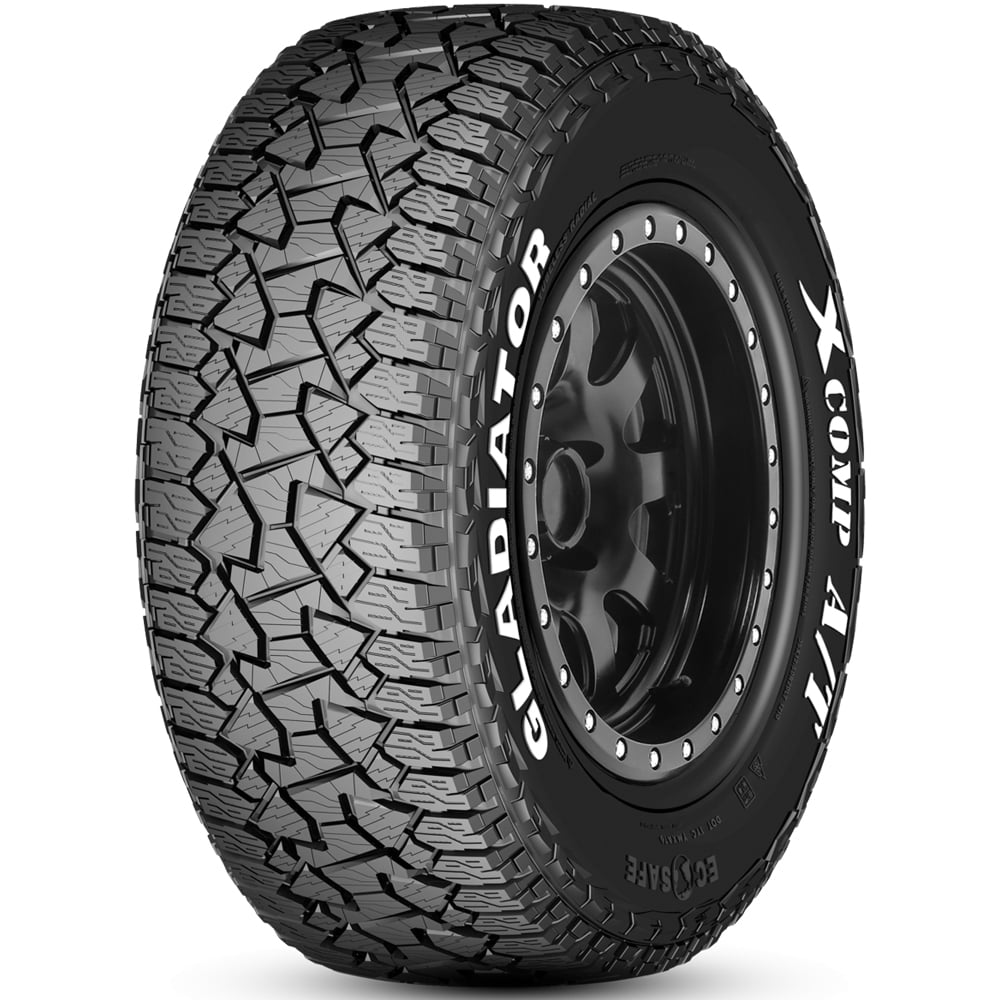
| General Grabber A/TX | Value-focused truck owners | Good mixed-use design | Size range may limit some buyers |
This comparison is based on published manufacturer specifications, tread design, severe-snow markings where offered, and the normal use case for each tire. It is not a controlled tire test.
1. Falken Wildpeak A/T4W: Best Overall
The Falken Wildpeak A/T4W is the strongest general recommendation for many U.S. drivers who need a 10-ply all-terrain tire.
It is designed for highway travel, gravel roads, snow, towing, and moderate trail use. Many sizes carry the Three-Peak Mountain Snowflake, or 3PMSF, symbol. That mark means the tire passed a standard severe-snow traction test. It does not mean the tire performs like a dedicated winter tire on ice.
The A/T4W also uses a rugged sidewall design and a deep all-terrain tread. That helps when a truck moves from pavement to gravel, mud, or uneven ground.
Choose it if you:
- Drive a heavy-duty pickup every day.
- Tow a trailer but still want good road manners.
- See snow but do not want a separate winter tire.
- Use forest roads, farms, campsites, or construction sites.
- Want one tire for several jobs.
Think twice if you:
- Rarely leave paved roads.
- Want the quietest ride possible.
- Need the lowest fuel cost.
- Drive mainly on glare ice.
The A/T4W is not automatically the best tire for every truck. Confirm that the exact size has the needed load range, load index, and 3PMSF marking.
2. BFGoodrich All-Terrain T/A KO3: Best for Tough Off-Road Use
The BFGoodrich All-Terrain T/A KO3 is a strong choice for drivers who place more value on trail durability than soft road comfort.
It builds on the long-running KO all-terrain line. The tire uses an aggressive tread and reinforced construction aimed at gravel, rocks, dirt, and work-site use. Some sizes include the 3PMSF symbol for severe-snow service.
The KO3 may suit a truck that carries tools, reaches remote campsites, or travels on sharp rock. Its casing and sidewall features can provide useful protection against common off-road hazards.
Choose it if you:
- Spend real time on rocky or rough trails.
- Need strong traction on loose ground.
- Work on construction or utility sites.
- Prefer a more rugged tread appearance.
- Accept more road noise and weight.
Think twice if you:
- Want a soft and quiet highway ride.
- Drive almost entirely on pavement.
- Need the best wet-road braking in every size.
- Expect any all-terrain tire to prevent punctures.
No all-terrain tire is puncture-proof. Tire pressure, speed, sharp objects, and vehicle weight still matter.
3. Toyo Open Country A/T III: Best for Towing and Highway Stability
The Toyo Open Country A/T III fits drivers who want an all-terrain tread with stable highway handling.
It is available in many light-truck sizes, including Load Range E versions. Toyo markets the tire for wet roads, snow, gravel, and off-road use. Many sizes have the 3PMSF marking.
The tire’s firm feel can work well under a loaded pickup or travel trailer. It may feel less loose than a softer all-terrain tire when the truck has a heavy tongue load.
Choose it if you:
- Tow often on highways.
- Carry heavy loads in the truck bed.
- Want a firm, stable steering feel.
- Split your time between pavement and gravel.
- Prefer a less extreme tread than a mud tire.
Think twice if you:
- Want maximum deep-mud traction.
- Need a very quiet commuter tire.
- Drive on ice and packed snow without winter tires.
Towing stability also depends on the trailer, hitch setup, axle weight, tire pressure, shocks, alignment, and speed. A tire cannot correct an overloaded or poorly balanced trailer.
4. Cooper Discoverer AT3 XLT: Best for Work Trucks
The Cooper Discoverer AT3 XLT is aimed at pickup owners who carry loads and drive on mixed surfaces.
Its tread is less aggressive than a mud-terrain tire. That can help keep highway noise under control. The XLT version uses a rugged design for hauling and off-road work.
This tire can make sense for a contractor, landscaper, farmer, or owner of a three-quarter-ton pickup who wants a work-focused tire without extreme trail tread.
Choose it if you:
- Carry tools or material.
- Drive on gravel and pavement each week.
- Want load support with reasonable road manners.
- Prefer a traditional all-terrain pattern.
- Need a tire for a work truck.
Think twice if you:
- Regularly drive through deep mud.
- Need the strongest possible snow performance.
- Want a very soft ride.
- Use a tire size that is not offered in the needed load range.
5. General Grabber A/TX: Best Value-Oriented Option
The General Grabber A/TX is a practical option for drivers who want a capable all-terrain tire without moving to the most expensive choices.
It is offered in many truck and SUV sizes. Some versions carry the 3PMSF symbol. The tread is suitable for pavement, gravel, dirt, and light trail use.
The best value is not always the lowest purchase price. Compare the exact tire size, warranty terms, tread depth, local availability, and replacement cost.

How to Choose the Best 10-Ply All-Terrain Tire
Start with the truck maker’s requirements. The tire must match the vehicle’s axle weight, wheel size, speed rating, and approved tire size.
1. Check the door-jamb label
The label on the driver’s door or door frame lists the original tire size and recommended cold inflation pressure.
Use this label as the starting point. Do not use the maximum pressure printed on the tire sidewall as your normal setting unless the vehicle maker or a qualified tire professional says to do so.
The label also lists the vehicle’s combined weight limit. This limit includes:
- People
- Fuel
- Cargo
- Tools
- Accessories
- Trailer tongue weight
2. Match the load index
The load index is a number that shows how much weight one tire can carry at its rated pressure.
A 10-ply label alone does not tell you the full load capacity. Two E-rated tires in different sizes can carry different loads.
For example, a tire marked LT275/70R18 125/122S has:
- LT: Light-truck construction
- 275: Approximate width in millimeters
- 70: Sidewall height as a percentage of width
- R: Radial construction
- 18: Wheel diameter in inches
- 125/122: Single- and dual-wheel load indexes
- S: Speed rating
Always compare the full marking, not just “10-ply.”
3. Choose LT or P-metric construction
An LT tire is built for light trucks and heavier work. A P-metric tire is usually designed for passenger vehicles and lighter duty.
For a three-quarter-ton or one-ton pickup, an LT Load Range E tire is often the correct starting point. For a half-ton truck or SUV, a P-metric or lighter LT tire may provide a smoother ride if the truck does not carry heavy loads.
Do not install a tire with a lower load capacity than the vehicle requires.
4. Decide how much off-road traction you need
All-terrain tires sit between highway tires and mud-terrain tires.
- Highway tires: Quiet and efficient on pavement.
- All-terrain tires: Balanced for pavement, gravel, dirt, and moderate trails.
- Mud-terrain tires: Better in deep mud and loose ground, but louder and less efficient.
If your truck sees pavement 90% of the time, an extremely aggressive tread may cost more than it helps.
5. Consider winter conditions
The 3PMSF symbol is useful if you drive in parts of the United States with regular snow. It shows that the tire passed a standardized snow-traction test.
It does not prove strong ice grip. Rubber compounds in dedicated winter tires remain better suited to very cold roads and ice.
If you drive in the Mountain West, Upper Midwest, Alaska, or the Northeast, consider a separate winter tire when ice and packed snow are common.

What Is the Best 10-Ply All-Terrain Tire for Towing?
For many towing needs, the Falken Wildpeak A/T4W or Toyo Open Country A/T III is a sensible starting point.
The better choice depends on the trailer and the tire size. Look for:
- A sufficient load index.
- Correct single- or dual-wheel rating.
- Strong sidewall construction.
- Suitable speed rating.
- Stable handling under the actual load.
- A tread that fits your road conditions.
Do not choose a tire only because it has an E rating. A tire can have high load capacity and still be a poor match if the size is wrong or the truck is overloaded.
Before towing, weigh the loaded truck and trailer if the setup is near its limits. Compare the scale readings with the truck’s door label, axle ratings, tire ratings, and trailer limits.
Are 10-Ply Tires Better for Daily Driving?
They are better only when their extra load capacity or toughness solves a real need.
A Load Range E all-terrain tire may help a truck that carries heavy cargo, tows often, or drives on sharp gravel. It may be unnecessary for an empty half-ton pickup used for commuting.
Common drawbacks include:
- A firmer ride.
- More steering effort.
- More road noise.
- More unsprung weight.
- Possible fuel-economy loss.
- Higher replacement cost.
Think of an E-rated tire as work boots. They protect well, but running shoes may feel better for a daily walk.

How Much Air Should You Put in a 10-Ply Tire?
Use the vehicle manufacturer’s recommended cold pressure for normal driving.
The correct pressure is printed on the driver’s door label or listed in the owner’s manual. The maximum pressure on the sidewall is not automatically the correct pressure for your truck.
When carrying a heavy load or towing, follow the vehicle maker’s load and pressure chart. Some trucks require different front and rear pressures.
Check pressure when the tires are cold. Driving heats the air and raises the pressure. Do not bleed air from a hot tire just to reach the cold-pressure number.
Check the spare, too. A flat spare will not help during a roadside failure.
Common Mistakes to Avoid
Buying by ply count alone
“10-ply” does not reveal the full load rating, tread compound, road behavior, or winter capability. Compare the complete tire marking.
Using a truck tire below its required pressure
Low pressure can create excess heat, poor handling, irregular wear, and casing damage. Follow the truck maker’s instructions.
Mixing different tire types
Mixing brands, tread patterns, or construction types can affect handling. If you must replace fewer than four tires, ask a tire professional where the new tires should go.
Ignoring tire age
Tread depth is not the only concern. Rubber ages with time, heat, sunlight, and storage. The U.S. Tire Manufacturers Association advises regular inspection and replacement based on condition and manufacturer guidance.
Find the date code on the sidewall. The last four digits show the production week and year. For example, 2324 means the 23rd week of 2024.
Forgetting alignment and rotation
Uneven wear may point to poor alignment, worn suspension parts, incorrect pressure, or a bent wheel. Rotate the tires according to the vehicle and tire maker’s guidance.
Have a professional inspect damage that reaches the cords, causes a bulge, or produces a sudden pressure loss.
Quick Recommendation by Driver Type
- Best overall: Falken Wildpeak A/T4W
- Best for rough trails: BFGoodrich All-Terrain T/A KO3
- Best for towing: Toyo Open Country A/T III
- Best for work trucks: Cooper Discoverer AT3 XLT
- Best value-focused option: General Grabber A/TX
- Best for mostly pavement: Consider a highway tire instead of an aggressive all-terrain tire
- Best for frequent ice: Use a dedicated winter tire when conditions require it
Before buying, confirm the exact size, Load Range E status, load index, speed rating, 3PMSF marking, and warranty for your vehicle.
Frequently Asked Questions
Is a 10-ply tire the same as a Load Range E tire?
Usually, yes in everyday tire-shop language. A 10-ply tire normally means Load Range E. Modern tires are not usually made with ten physical plies, so check the sidewall marking for the actual load range.
Are 10-ply tires safer?
They can provide more load capacity and resistance to damage in demanding use. They are not automatically safer in every condition. Correct size, pressure, tread condition, speed, vehicle load, and road surface matter more than the “10-ply” label alone.
Do 10-ply tires last longer?
They can last well when properly inflated and used within their design limits. Heavy weight, poor alignment, hard braking, low pressure, heat, and rough roads can shorten the life of any tire.
Are all-terrain tires good in snow?
Some are good in snow, especially models with the 3PMSF symbol. They are not the same as dedicated winter tires, which are designed for very cold rubber and ice conditions.
Can I put 10-ply tires on a half-ton truck?
Sometimes, but not always. Check the vehicle maker’s approved sizes, wheel limits, load requirements, and pressure guidance. An E-rated tire may fit physically but create a harsh ride or require a setup that does not suit the truck.
Should I choose a 10-ply tire for a camper or travel trailer?
Look at the trailer’s actual axle load and tire requirements first. Trailer tires often have different design needs than truck tires. Use the size and load range listed on the trailer placard, and replace tires that show damage, aging, or low pressure.
Final Recommendation
For most U.S. truck owners who want one capable 10-ply all-terrain tire, start with the Falken Wildpeak A/T4W. It offers a well-balanced fit for daily driving, towing, snow, gravel, and moderate off-road travel.
Choose the BFGoodrich KO3 when rough trails and casing toughness matter most. Choose the Toyo Open Country A/T III when towing stability and firm highway manners rank higher.
The final decision should come from the exact tire size and your truck’s door-jamb requirements. Match the load index, use the correct cold pressure, and do not treat a 10-ply label as a substitute for checking the whole vehicle.
Sources
- National Highway Traffic Safety Administration: Tires
- U.S. Tire Manufacturers Association: Tire Care and Safety
- Falken Wildpeak A/T4W official product information
- BFGoodrich All-Terrain T/A KO3 official product information
- Toyo Open Country A/T III official product information
- Cooper Discoverer AT3 XLT official product information
- General Tire Grabber A/TX official product information
