What Are The Cheapest All Terrain Tires: Best Budget Guide
The cheapest all-terrain tires in the United States are usually sold by value brands such as Starfire, Cosmo, Thunderer, Venom Power, Prinx, and similar makers. Prices often start near $80 to $120 per tire in small SUV sizes and may reach $150 to $220 or more for large truck sizes.
However, the lowest sticker price is not always the lowest cost. A tire that wears fast, rides poorly, lacks a strong warranty, or does not fit your truck’s load needs can cost more over time.
For most U.S. drivers, the best low-cost choice is a tire that has:
- The correct size and load rating
- A real all-terrain tread pattern
- A suitable speed rating
- A clear warranty
- Good availability from a known tire dealer
- Enough wet-road grip for daily driving
This guide explains how to find cheap all-terrain tires without choosing a tire that is unsafe or poorly suited to your vehicle.

What counts as a cheap all-terrain tire?
A cheap all-terrain tire is normally a tire with a lower purchase price than major-brand models from companies such as Michelin, BFGoodrich, Goodyear, Bridgestone, and Yokohama.
The term can describe several groups:
- Budget-brand tires: Often the lowest upfront price
- Private-label tires: Sold under a retailer or distributor name
- Older model designs: May cost less when a new version arrives
- Passenger-rated SUV tires: Often cheaper than light-truck tires
- Closeout tires: Reduced in price because of stock changes
- Smaller wheel sizes: Usually cost less than 18-, 20-, or 22-inch sizes
A low price does not tell you how well a tire will perform. It only tells you what you pay at checkout.
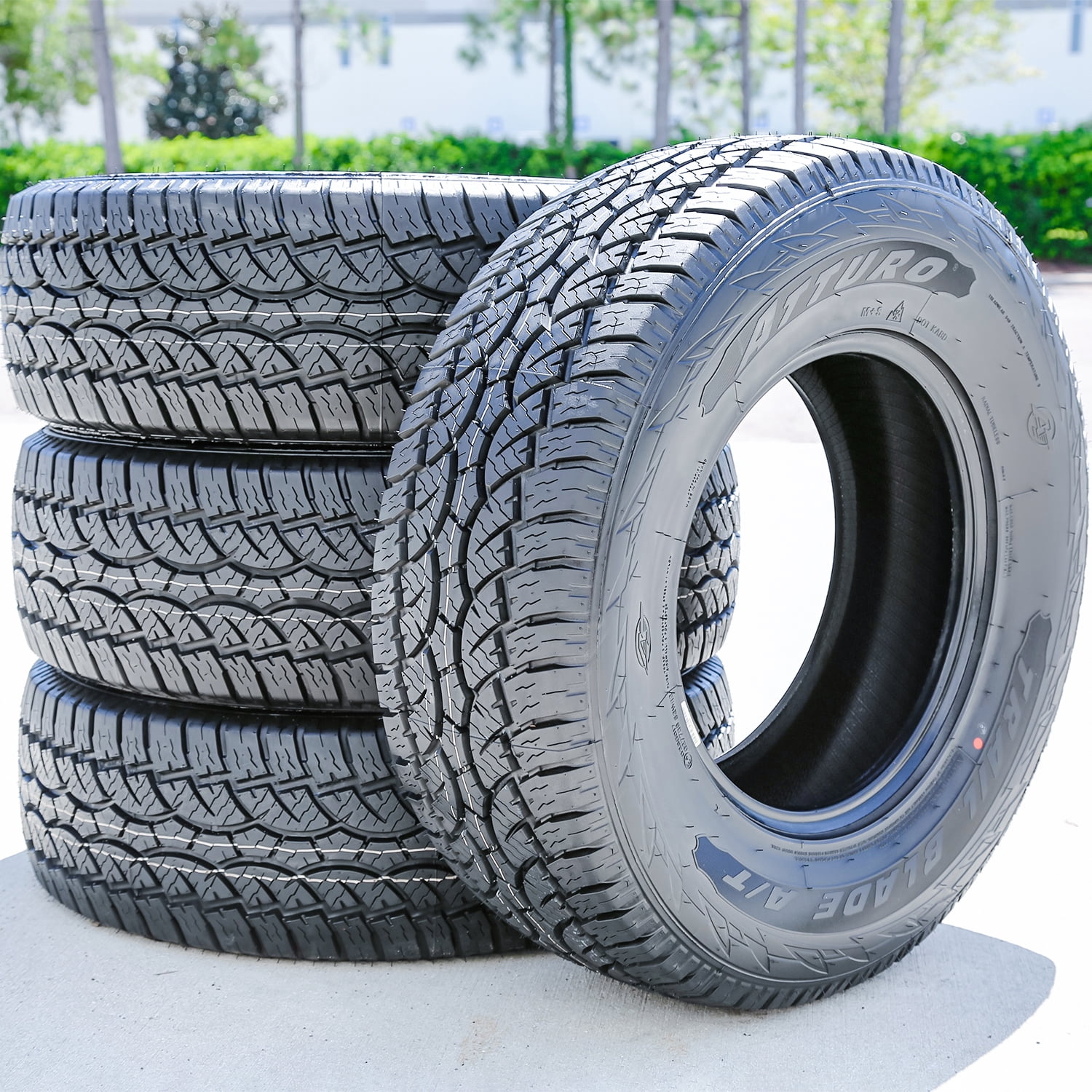
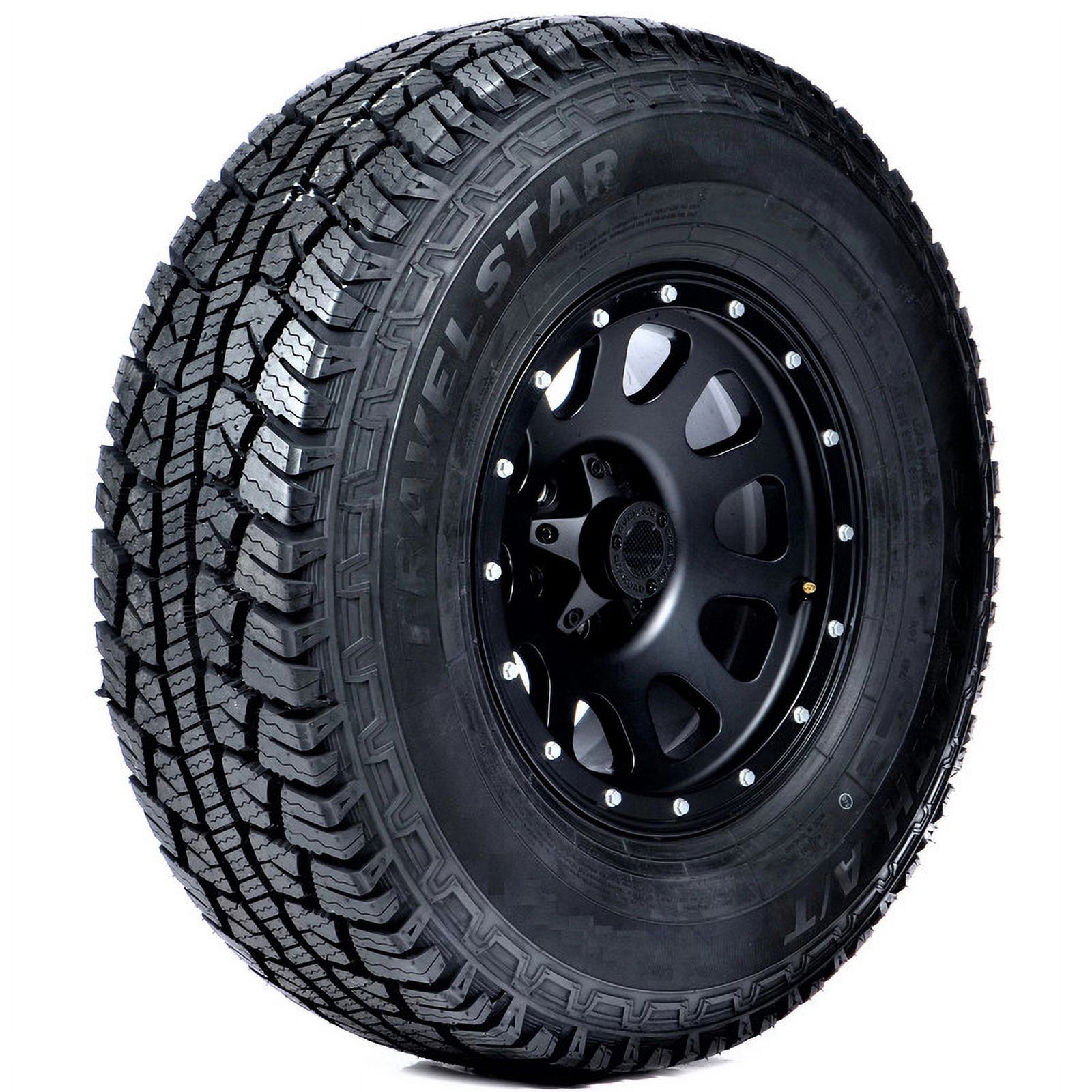
An all-terrain tire should offer a balance between road use and light off-road use. It normally has open tread blocks, wider grooves, and stronger shoulder edges than a standard highway tire. It is not the same as a mud-terrain tire, which uses larger gaps and is usually louder on pavement.
Typical price ranges in the United States
The ranges below are broad estimates. Your vehicle, tire size, season, dealer, shipping cost, and local taxes can change the final price.
| Tire category | Approximate price per tire | Common use |
|---|---|---|
| Basic budget all-terrain | $80–$130 | Light SUV and small pickup use |
| Better-known value brand | $110–$180 | Daily driving and mild trails |
| Mid-range all-terrain | $150–$230 | More mileage and mixed use |
| Premium all-terrain | $200–$350+ | Strong brand support and specialized use |
These are not fixed market prices. Check several U.S. dealers before buying.

Which cheap all-terrain tires are worth considering?
The cheapest suitable tire depends on your tire size and vehicle. A model that costs little in a 16-inch size may be expensive or unavailable in a 20-inch size.
The following brands and model families are examples often found in the U.S. budget or value market. Availability and specifications can change, so confirm the exact tire size before ordering.
Starfire Solarus A/T
Starfire is a value brand sold in many common SUV and pickup sizes. The Solarus A/T line may appeal to drivers who want a low purchase price for normal road use and occasional gravel or dirt roads.
It may fit your needs if:
- You drive mostly on pavement
- You want a traditional all-terrain look
- You use a small SUV or light pickup
- You do not tow heavy loads often
Check the warranty, treadwear rating, and load range. Some sizes may be passenger-rated rather than light-truck-rated.
Cosmo Mud Kicker or similar Cosmo all-terrain models
Cosmo sells low-cost tires in several SUV and pickup sizes. Some models use aggressive tread patterns that look more rugged than a typical highway tire.
A Cosmo tire may make sense when:
- Purchase price is your main concern
- You drive on gravel, farm roads, or light trails
- You accept more road noise
- You have access to a dealer that can handle warranty claims
Do not assume an aggressive tread is better in rain or snow. Tread shape alone does not prove wet-road performance.
Thunderer Ranger A/TR or similar value models
Thunderer offers low-cost all-terrain tires in many truck and SUV sizes. Some versions are passenger-rated, while others are marked with a light-truck load range.
Before buying, compare:
- The exact load index
- The speed rating
- The maximum load
- The tire’s construction
- The warranty terms
- The date code on the tire
A model with the same name may have different specifications in different sizes.
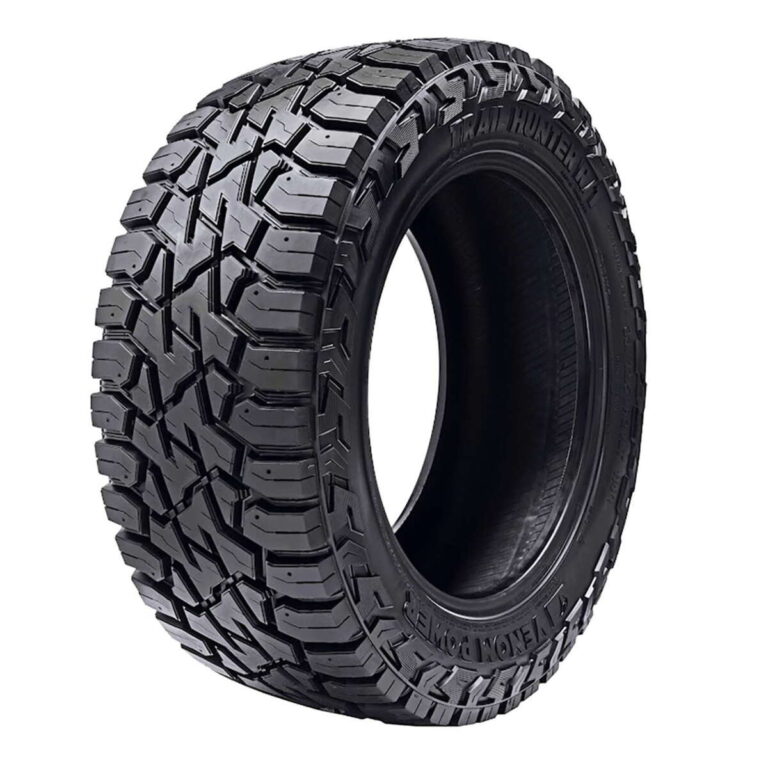
Venom Power Terra Hunter A/T
Venom Power is another budget brand found in the U.S. market. Its all-terrain products often target drivers who want a rugged tread design at a low price.
These tires may work for light use on dirt roads and trails. They are less suitable when you need proven high-mileage performance, strong snow traction, or frequent heavy towing.
Read the product page carefully. Some sellers use similar names for all-terrain and mud-terrain versions.
Prinx HiCountry or similar all-terrain models
Prinx sells tires for SUVs, pickups, and other vehicles. Its all-terrain lines can offer a lower-cost alternative to major brands.
Look for:
- A current warranty document
- A clear U.S. distributor
- A local installer
- The correct load rating for your truck
- Reviews that match your tire size and use
A tire with little dealer support may become difficult to replace if one tire is damaged.
Used or take-off all-terrain tires
Used tires can appear to be the cheapest option, but they require the most care. You must inspect them in person or buy from a seller that provides clear measurements and a return policy.
Avoid a used tire if it has:
- Cracks in the sidewall
- Bulges or impact damage
- Uneven wear
- Exposed cords
- Repairs near the sidewall
- Very low tread depth
- An unknown age
- Different construction from the other tires
The U.S. Tire Manufacturers Association advises consumers to inspect used tires carefully and have them checked by a tire professional. A low price is not worth the risk of hidden damage.

What is the cheapest all-terrain tire for your vehicle?
The cheapest safe tire is the least expensive model that meets your vehicle’s required specifications. Start with the tire information placard, not the price filter.
You can usually find the placard:
- On the driver’s door frame
- Inside the fuel door
- In the owner’s manual
The placard lists the original tire size and recommended cold inflation pressure. It may also list different sizes for the front and rear axles.
Check these five specifications
1. Tire size
A tire marked 265/70R17 has:
- 265: tread width in millimeters
- 70: sidewall height as a percentage of width
- R: radial construction
- 17: wheel diameter in inches
Use the correct size unless a tire professional confirms that a different size will fit safely.
A larger tire can change speedometer readings, steering clearance, braking behavior, fuel use, and suspension clearance.
2. Load index
The load index states how much weight one tire can carry under specified conditions. A replacement tire should meet or exceed the vehicle maker’s requirement.
Do not replace a light-truck tire with a lower-capacity passenger tire simply because it costs less.
3. Speed rating
The speed rating indicates the maximum speed category under controlled test conditions. It does not mean you should drive at that speed.
The replacement should normally meet the vehicle maker’s required rating. A tire professional can explain exceptions for winter tires or special vehicle setups.
4. P-metric or LT construction
A tire with a P marking is designed for passenger vehicles. An LT tire is designed for light trucks and may have stronger construction and a higher load capacity.
LT tires can cost more. They can also ride more firmly, weigh more, and reduce fuel economy. They are not automatically better for every SUV.
5. Three-Peak Mountain Snowflake marking
The Three-Peak Mountain Snowflake, or 3PMSF, symbol means the tire passed a standardized severe-snow traction test.
It does not make the tire a winter tire. It also does not guarantee safe performance on ice. Still, the symbol is useful if you drive in parts of the U.S. with regular snow.
The M+S marking alone is a lower standard. Many all-terrain tires have it, but it does not prove severe-snow performance.

How to compare the real cost of cheap all-terrain tires
Compare the complete installed price, not only the online tire price.
Your final cost may include:
- Tire price
- Shipping
- Mounting
- Balancing
- Valve stems
- Tire disposal fees
- Sales tax
- Road-hazard coverage
- Alignment
- Tire pressure monitoring system service
A $95 tire can cost more than a $115 tire if it has high shipping fees or a poor local installation deal.
A simple cost-per-mile calculation
You can estimate value with this formula:
Total tire cost ÷ expected miles = estimated cost per mile
For example, assume a set of four tires costs $520 after installation:
- Tire set and installation: $520
- Expected service life: 45,000 miles
- Estimated cost: about 1.2 cents per mile
A cheaper set might cost $400 but last only 28,000 miles:
- $400 ÷ 28,000 miles = about 1.4 cents per mile
This is only a comparison tool. Actual tire life depends on alignment, inflation, driving style, vehicle weight, road surface, climate, and rotation.
Do not treat a treadwear warranty as a guaranteed mileage result. Warranty rules often require regular rotation, proof of service, correct inflation, and even wear.

How to find the lowest price without buying the wrong tire
Use this buying process before placing an order.
Step 1: Write down the exact size
Copy the complete size from the sidewall or vehicle placard. Include the load index and speed rating if shown.
Do not search only for “cheap truck tires.” That search can return tires that do not fit your vehicle.
Step 2: Decide how you drive
Choose the tire based on your real use:
- Mostly highways and city roads: Choose a mild all-terrain tread
- Frequent gravel roads: Look for stronger sidewalls and open grooves
- Deep mud: Consider whether an all-terrain tire is enough
- Snowy roads: Look for the 3PMSF symbol
- Heavy towing: Confirm the required load rating
- Long highway trips: Favor road manners and warranty support
Many drivers buy an aggressive tire for its appearance, then dislike the noise and fuel-use penalty.
Step 3: Compare at least three sellers
Check:
- The tire’s full model name
- Tire size
- Load and speed ratings
- Warranty
- DOT date information
- Shipping cost
- Installation price
- Return policy
A local independent tire shop may match an online price after installation costs are included.
Step 4: Ask about tire age
Tires age even when they are not used. The Department of Transportation identification number on the sidewall includes a four-digit date code. The last four digits show the week and year of manufacture.
For example, 3524 means the tire was made in the 35th week of 2024.
A tire’s age is not the only factor in safety, but old inventory deserves closer inspection. The National Highway Traffic Safety Administration recommends regular inspection and replacement when tires show age-related damage or reach the vehicle or tire maker’s stated limit.
Step 5: Get an alignment if wear is uneven
A low-cost tire can wear out quickly if the wheels are out of alignment. Have the vehicle checked if you see:
- Wear on one edge
- Feathered tread blocks
- Steering pull
- A crooked steering wheel
- Repeated tire damage
- Vibration after installation
Alignment does not fix every suspension problem. A shop should inspect worn steering and suspension parts first.
Cheap all-terrain tires versus premium tires
Budget tires can work well for low-mileage drivers and mild off-road use. Premium tires may be a better value for drivers who travel far, tow often, or face severe weather.
Budget tires may be the better choice when:
- You drive fewer miles each year
- Most trips are on dry pavement
- You replace tires before they age out
- The tire meets the vehicle’s load needs
- You have a reliable local warranty outlet
- You do not need the quietest ride
Spend more when:
- You drive long highway distances
- Your truck carries heavy loads
- You tow often
- You drive through frequent rain or snow
- You depend on the vehicle for work
- A tire failure would create a serious problem
- You need strong dealer and warranty support
A premium tire is not automatically best for every driver. A poorly matched premium tire can still perform worse for your use than a suitable value tire.
Common mistakes when buying cheap all-terrain tires
Choosing by appearance
Large tread blocks can make a tire look ready for extreme trails. They may also create more noise and less wet-road contact.
Choose by use, not looks.
Mixing different tires on one axle
Mixing tire brands or tread designs can change grip and handling. Follow the vehicle maker’s guidance. If you replace only two tires, many manufacturers recommend placing the tires with more tread on the rear axle, but confirm the advice for your vehicle.
Ignoring the load range
A tire may fit the wheel but still lack enough load capacity. This matters on pickups, vans, and SUVs that carry cargo or tow trailers.
Assuming “all-terrain” means good in snow
Some all-terrain tires have only an M+S marking. If severe-snow traction matters, check for the 3PMSF symbol and use appropriate driving habits.
Buying tires without checking the return policy
Online tire listings can contain mistakes. Confirm that the seller accepts returns for an incorrect size before installation.
Skipping inflation checks
Use the pressure on the vehicle placard, not the maximum pressure printed on the tire sidewall. Check pressure when the tires are cold.
Underinflation can increase heat buildup, wear, and fuel use. Overinflation can reduce ride comfort and affect the contact patch.

Are cheap all-terrain tires safe?
A budget tire can be safe when it is the correct size, properly installed, properly inflated, and used within its limits.
Price alone does not prove that a tire is unsafe. At the same time, a tire should not be judged only by its tread pattern or online star rating.
Before purchase, confirm that the tire:
- Meets federal motor vehicle safety standards
- Has the correct size and load rating
- Has no recall or serious safety notice
- Comes from a seller with clear contact details
- Can be installed and serviced locally
- Has a current, readable date code
- Is free from visible defects
Use the NHTSA tire safety and recall resources to check for safety information. A tire dealer can also inspect the tire after mounting and balancing.
Stop driving and seek professional help if you notice a bulge, sudden pressure loss, exposed cords, severe vibration, or a tire that comes apart.
Frequently asked questions
What is the cheapest all-terrain tire brand?
There is no single cheapest brand for every size. Value brands such as Starfire, Cosmo, Thunderer, Venom Power, and Prinx often appear at low prices in the U.S. market, but the least expensive option changes by tire size, seller, and promotion.
Are budget all-terrain tires worth it?
They can be worth it for drivers who use their vehicle mostly on pavement and occasionally on gravel or dirt. They are less attractive for heavy towing, long-distance driving, severe snow, or commercial use unless the exact tire has suitable specifications and support.
How long do cheap all-terrain tires last?
Service life varies widely. Alignment, inflation, vehicle weight, climate, road surfaces, and driving style can matter as much as the brand. Treat mileage warranties as conditional estimates, not promises.
Do all-terrain tires use more gas?
They can. All-terrain tires may weigh more and create more rolling resistance than highway tires. The effect depends on tire size, construction, tread design, pressure, and the vehicle.
Can I put all-terrain tires on a 2WD truck?
Yes, if the tires fit the vehicle and meet its load and speed requirements. All-terrain tires do not turn a two-wheel-drive truck into a four-wheel-drive vehicle. Drive carefully on loose, wet, icy, or muddy surfaces.
Should I buy used all-terrain tires?
Only after a careful inspection by a qualified tire professional. Avoid tires with sidewall damage, uneven wear, exposed cords, unknown repairs, or an uncertain age. A new budget tire is often the safer choice when the price difference is small.
What is the best cheap all-terrain tire for snow?
Look for the 3PMSF symbol, the correct size and load rating, and a tire with good local support. Even a 3PMSF all-terrain tire may provide less ice grip than a dedicated winter tire.
Useful U.S. safety and specification resources
For reliable information, check:
- NHTSA Tire Safety
- NHTSA Recalls
- U.S. Tire Manufacturers Association
- Your vehicle owner’s manual
- The tire manufacturer’s warranty and specification sheet
Manufacturer specifications describe the tire’s design and limits. They do not prove that one tire will perform better than another in every road condition.
Bottom line
The cheapest all-terrain tires in the U.S. are often budget models from brands such as Starfire, Cosmo, Thunderer, Venom Power, and Prinx. The right choice is not simply the tire with the lowest price.
Start with the correct size, load rating, and speed rating. Then compare the full installed cost, warranty, tire age, snow rating, and local service. For most drivers, a mild all-terrain tire from a dependable value brand offers a better balance than the most aggressive or lowest-priced tire available.