

Introduction
To get a car dealer license in Texas, you must apply through the Texas Department of Motor Vehicles (TxDMV), choose the correct dealer license type, secure an approved business location, obtain a surety bond, complete required training when applicable, and submit the application with the required fees and documents.
Texas does not issue one universal “car dealer license.” Instead, it issues different licenses based on what you sell and who you sell to. A person selling used cars to the public usually needs an Independent Motor Vehicle Dealer General Distinguishing Number (GDN). A business that sells only to other licensed dealers may need a Wholesale Motor Vehicle Dealer GDN.
The process is manageable, but small errors can delay approval. The safest approach is to confirm your city zoning, prepare your business site, buy the correct bond, and review the current TxDMV checklist before filing.
Choose the Right Texas Dealer License
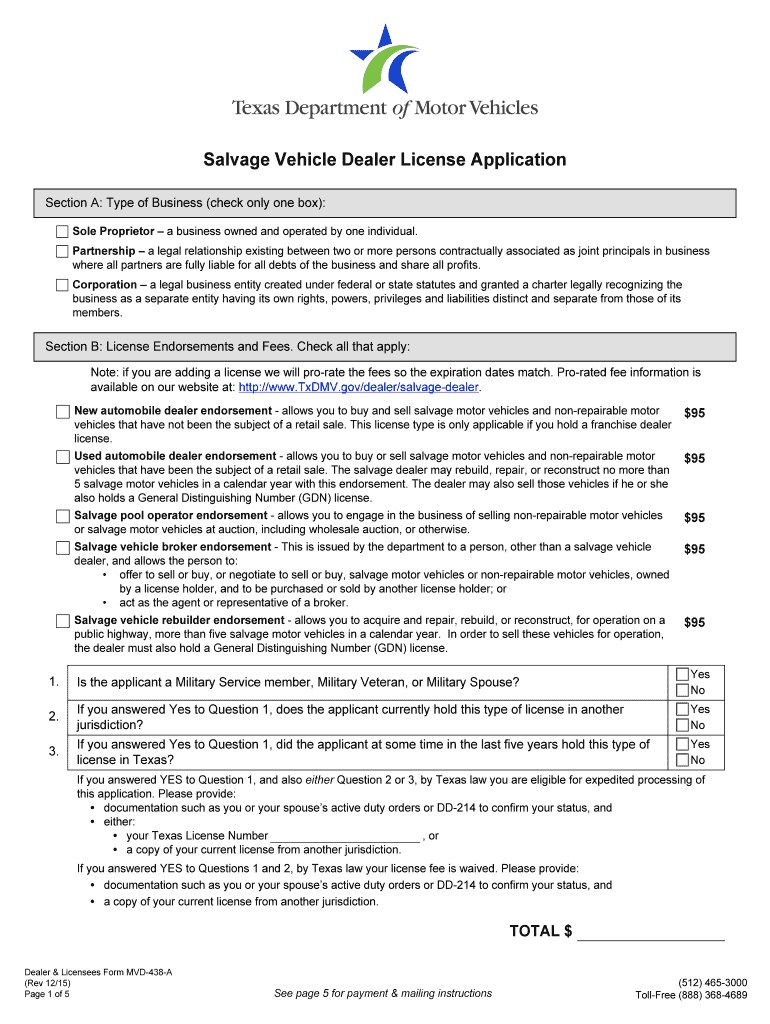
The first step is choosing the license that matches your business model. Texas calls its dealer license a General Distinguishing Number, or GDN.
A GDN authorizes a dealer to buy, sell, or otherwise deal in a certain type of vehicle. You may need more than one GDN if your business handles different vehicle categories.
Common Texas dealer license types
| License type | What it generally allows |
|---|---|
| Independent motor vehicle dealer | Selling used cars and trucks to the public |
| Wholesale motor vehicle dealer | Selling vehicles only to licensed dealers |
| Franchise dealer | Selling new vehicles under a manufacturer franchise agreement |
| Motorcycle dealer | Selling motorcycles and certain related vehicles |
| Trailer or semitrailer dealer | Selling trailers or semitrailers |
| Travel trailer dealer | Selling travel trailers |
| Salvage vehicle dealer | Buying or selling salvage vehicles under salvage rules |
An independent dealer license is the usual choice for a used-car lot that sells vehicles directly to consumers. It does not authorize the sale of new vehicles unless the dealer also meets the requirements for a franchise license.
A wholesale license may cost less to operate in some respects because the business may not need a retail sales lot in the same way. However, a wholesale dealer cannot sell vehicles to ordinary consumers. Selling a vehicle to an unlicensed buyer can create licensing and enforcement problems.
Texas may also require separate credentials or registrations for activities such as:
- Selling salvage vehicles
- Operating as a salvage pool
- Selling vehicles through certain online or auction models
- Issuing temporary tags
- Processing title and registration work
- Selling vehicles outside the license authority
Review the current license categories on the official TxDMV website before choosing a GDN.

Basic Requirements for a Texas Car Dealer License
You must meet several business and site requirements before TxDMV approves an application. The exact requirements can vary by license type, but most retail applicants should prepare for the following.
1. A real business location
Your dealership must operate from an established place of business. A home address, mailbox, virtual office, or temporary parking space usually will not meet the standard for a retail dealer.
Your location generally needs:
- A permanent physical address
- A place where business records can be kept
- An office suitable for dealership operations
- A permanent business sign
- Regular posted business hours
- A working telephone number
- Zoning approval for vehicle sales
- Space to display or store vehicles, when required by the license type
TxDMV may inspect the location. The office and sign should be ready before you apply.
2. Local zoning approval
Texas dealer licensing and local land-use rules are separate issues. TxDMV approval does not override city or county zoning laws.
Before signing a long lease, contact the city or county planning department and ask whether the property allows:
- Used vehicle sales
- Outdoor vehicle display
- Dealer office use
- Customer parking
- Business signage
- Auto repair or vehicle preparation, if you plan to offer those services
Ask for written proof of zoning approval when possible. A landlord’s statement that the property is “commercial” may not be enough.
3. A business entity or individual ownership
You may apply as an individual, partnership, corporation, limited liability company, or another permitted business structure.
Many dealers form an LLC or corporation through the Texas Secretary of State before applying. This can help separate the business from the owner personally, but forming an LLC does not replace the dealer license.
If you operate under a name other than your legal name, you may need an assumed-name filing. The filing location depends on your business structure.
4. A Texas surety bond
Most Texas motor vehicle dealers must obtain a $50,000 surety bond for each applicable GDN. The bond protects certain consumers and other parties from losses caused by violations of dealer laws.
A surety bond is not the same as business insurance.
- Business insurance protects against covered risks such as theft, property damage, or liability.
- A surety bond provides a financial guarantee tied to legal and licensing obligations.
You do not usually pay the full bond amount to the bonding company. Instead, you pay a premium based on factors such as your credit history, business history, and the bond provider’s underwriting rules.
The bond must:
- Use the correct legal name of the applicant
- Match the license type
- Cover the required amount
- Be issued by an approved surety company
- Remain active for the required period
A wrong business name or incorrect GDN category can cause the application to be rejected or delayed.
5. Required education
Texas requires certain independent motor vehicle dealer applicants to complete a pre-licensing education course. The course requirement is tied to state law and may not apply to every license type or applicant.
Before applying, confirm:
- Whether your license category requires the course
- Whether the course provider is approved
- How completion is reported
- How long the certificate remains valid
- Whether an exemption applies to you
Do not assume that experience selling cars, working for a dealer, or holding a license in another state automatically satisfies the Texas education requirement.
Step-by-Step: How to Get a Car Dealer License in Texas
Step 1: Decide what vehicles you will sell
Start with your actual business plan. Ask:
- Will you sell used cars directly to consumers?
- Will you sell only to other dealers?
- Will you sell motorcycles, trailers, or travel trailers?
- Will you sell salvage vehicles?
- Will you sell new vehicles under a manufacturer franchise?
Your answer determines the GDN category, bond, site rules, records, and other obligations.
For most used-car businesses selling to the public, the likely starting point is an Independent Motor Vehicle Dealer GDN.
Step 2: Form and register your business
Choose your ownership structure and register it as needed.
Typical tasks include:
- Form an LLC or corporation with the Texas Secretary of State, if appropriate.
- Obtain an Employer Identification Number from the Internal Revenue Service.
- Register an assumed name if you will use a trade name.
- Apply for a Texas sales tax permit through the Texas Comptroller.
- Open a business bank account.
- Set up bookkeeping and vehicle inventory records.
A sales tax permit is separate from a TxDMV dealer license. You may need both.
Step 3: Find a compliant dealership location
Do not treat the location as an afterthought. It is one of the most common sources of delay.
Before committing to a property:
- Check city or county zoning.
- Confirm that vehicle sales are allowed.
- Verify the property has a usable office.
- Confirm that the lease allows dealership operations.
- Plan the required sign and business hours.
- Confirm access to a working phone.
- Determine whether the site provides adequate vehicle space.
- Check whether local rules require additional permits.
Keep a copy of the lease, deed, zoning letter, or other proof of site control. TxDMV may request these documents.
Step 4: Complete dealer education if required
If your license category requires pre-licensing education, complete the course before submitting the application.
Save the completion certificate. Make sure the name on the certificate matches the applicant name shown on the license application.
Step 5: Purchase the surety bond
Contact a surety bond provider that works with Texas motor vehicle dealers. Give the provider the exact legal name that will appear on the TxDMV application.
Ask the provider to confirm:
- The bond amount
- The covered GDN type
- The effective date
- The bond term
- Renewal requirements
- Cancellation rules
- Delivery method for the original or electronic bond
Do not buy a generic business bond and assume it will work.
Step 6: Prepare the application
TxDMV uses an online licensing system for dealer applications and related transactions. The current application process may require account creation, electronic uploads, and online payment.
Prepare common supporting documents such as:
- Completed dealer license application
- Surety bond
- Proof of business location
- Lease or ownership document
- Zoning evidence, when requested
- Business formation documents
- Assumed-name documentation, if applicable
- Education certificate, if required
- Government-issued identification
- Required photographs or site information
- Fee payment
The exact document list depends on the GDN type and the applicant’s structure.
Step 7: Pay the state fees
Texas charges application and licensing fees. Fees can change, so check the current TxDMV fee schedule before filing.
The total startup cost may include:
- TxDMV application or license fee
- Surety bond premium
- Business formation fees
- Assumed-name filing fees
- Local zoning or permit fees
- Sign costs
- Rent and security deposit
- Insurance
- Dealer software or record systems
- Dealer plates or temporary tag-related costs
- Advertising and vehicle preparation expenses
The state license fee is only one part of the cost of opening a dealership.
Step 8: Submit the application and respond to requests
After submission, TxDMV may review the application and request corrections or additional documents.
Common requests involve:
- A bond with the wrong legal name
- Missing zoning proof
- An incomplete lease
- A location that does not meet requirements
- An education certificate that does not match the applicant
- An incorrect license category
- Missing signatures or uploads
- An unpaid or incorrect fee
Respond promptly and upload clear documents. If the application is denied, read the reason carefully before submitting a new application.
Step 9: Wait for approval before operating
Do not buy vehicles for retail resale, advertise yourself as a licensed dealer, or conduct dealer business before you have the required authority.
Once approved, verify:
- Your license number
- The license category
- The business name
- The physical address
- The expiration date
- Any restrictions or conditions
Keep the license information with your business records and follow the renewal instructions.

How Much Does It Cost to Get a Texas Dealer License?
The total cost depends on the license type, location, bond premium, business structure, and equipment.
A simple planning estimate should include the following categories:
| Cost category | What affects the amount |
|---|---|
| TxDMV license fee | License type and current state fee schedule |
| Surety bond premium | Credit, business history, bond amount, and provider |
| Business formation | Entity type and filing choices |
| Local approvals | City or county permits and zoning requirements |
| Site costs | Rent, deposit, office setup, sign, and display space |
| Insurance | Coverage limits, vehicles, employees, and claims history |
| Operating systems | Accounting, inventory, compliance, and advertising tools |
The $50,000 bond amount is not usually the amount you pay. It is the maximum bond obligation stated in the bond. The premium is a separate amount set by the surety provider.
For a realistic budget, add your first several months of rent, utilities, insurance, payroll, vehicle repairs, taxes, title costs, and advertising. A license alone does not create enough cash flow to operate a dealership.

How Long Does the Texas Dealer License Process Take?
Processing time varies. A complete application with a compliant location and correct bond is usually easier to process than one that requires several corrections.
Delays often come from:
- Zoning problems
- Missing site documents
- Incorrect bond names
- Incomplete applications
- Wrong GDN selection
- Unfinished education requirements
- Slow responses to TxDMV questions
- Local permits that have not been issued
You can reduce delays by preparing the site first, checking every legal name for consistency, and using the current TxDMV application instructions.
TxDMV processing time can change with application volume and staffing. Check the application status through the official system rather than relying on informal estimates.
What You Can Do After Getting Licensed
A Texas dealer license gives you permission to conduct the activities allowed by your GDN. It does not remove other legal duties.
An independent motor vehicle dealer may generally buy and sell used vehicles within the authority of the license. The dealer must still comply with rules involving:
- Vehicle titles
- Odometer disclosures
- Temporary tags
- Dealer plates
- Sales tax
- Advertising
- Vehicle disclosures
- Finance and insurance practices
- Buyer contracts
- Record retention
- Consumer complaints
- Federal used-car rules
A wholesale dealer must limit sales to properly licensed buyers. A wholesale license is not a shortcut for retail sales.
You may also need to follow federal rules. For example, many used-car dealers must comply with the Federal Trade Commission’s Used Car Rule, including the Buyers Guide requirement. Federal requirements can apply even when Texas licensing rules are satisfied.

Texas Dealer License Compliance After Approval
Getting the license is the beginning of compliance, not the end.
Keep accurate vehicle records
Maintain records for vehicles you acquire and sell. Records should support:
- Who sold or bought the vehicle
- The vehicle identification number
- Purchase and sale dates
- Title information
- Odometer information
- Buyer documents
- Taxes and fees
- Advertising and disclosures
Follow the retention period required by Texas and federal rules.
Renew on time
Monitor the expiration date and renew through the required TxDMV system. A late renewal can interrupt your ability to operate and may affect plates, tags, or other dealer services.
Report changes
Notify the appropriate agency when your business changes its:
- Legal name
- Ownership
- Location
- Assumed name
- License type
- Business structure
Moving to a new lot without updating the license can create a serious compliance issue.
Follow advertising rules
Your advertisements should clearly identify the dealership and accurately describe the vehicle.
Avoid claims that could mislead buyers about:
- Price
- Availability
- Financing
- Warranty coverage
- Vehicle history
- Mileage
- Title status
- Down payments
- Required fees
Keep copies of advertisements and sales records.
Use temporary tags correctly
Temporary tags are not a substitute for title and registration compliance. Use them only as allowed by Texas rules and keep the required records.
Because tag systems and procedures can change, review current TxDMV guidance before issuing tags.
Common Mistakes That Delay or Hurt Applications
Choosing the wrong GDN
A retail used-car business cannot use a wholesale license simply because it appears easier. Match the license to the people who will buy your vehicles.
Signing a lease before checking zoning
A signed lease does not guarantee that the city will allow car sales. Check zoning first.
Buying the wrong bond
The bond must match the exact applicant name and license category. Even a small difference in the legal name can cause a correction request.
Using a home or virtual address
A home office, mailbox, or virtual address may not meet the established-place-of-business requirement for the license you want.
Treating the state license as the only permit
You may also need a sales tax permit, local approvals, business filings, insurance, and federal compliance procedures.
Advertising before approval
Do not present yourself as an operating licensed dealer until you have the required license.
Mixing personal and business money
Use a separate business bank account and keep detailed records. Mixing funds makes taxes, audits, refunds, and disputes harder to manage.
Ignoring federal rules
Texas licensing does not replace federal duties. Review the FTC Used Car Rule and other federal requirements that apply to your business model.

Texas Car Dealer License Checklist
Use this checklist before submitting an application:
- Select the correct GDN category.
- Decide whether to operate as an individual, LLC, corporation, or other entity.
- Register the business and assumed name when required.
- Obtain an EIN if needed for the business.
- Apply for a Texas sales tax permit.
- Find a permanent business location.
- Confirm local zoning approval.
- Prepare the office, sign, phone, and business hours.
- Complete required dealer education.
- Purchase the correct surety bond.
- Gather lease, ownership, and zoning documents.
- Complete the current TxDMV application.
- Pay the current state fees.
- Upload clear and matching documents.
- Respond to TxDMV requests.
- Wait for approval before operating.
- Create title, tax, tag, advertising, and recordkeeping procedures.

Key Takeaways
- Most Texas used-car lots that sell to consumers need an Independent Motor Vehicle Dealer GDN.
- A wholesale license is for sales to licensed dealers, not the general public.
- You usually need a compliant physical business location, local zoning approval, a surety bond, and required education.
- A common bond requirement is $50,000, but confirm the current rule for your license category.
- The state dealer license fee is only part of the total startup cost.
- Texas dealer licensing is separate from sales tax registration, business formation, federal rules, and local permits.
- Check current requirements on the official TxDMV website before paying for a property, bond, or application.
Frequently Asked Questions
Can I get a Texas dealer license without a car lot?
It depends on the license type. A retail independent dealer generally needs an established place of business that meets TxDMV and local requirements. A wholesale dealer may have different location requirements, but you still need to confirm the current rules for that GDN.
Can I sell cars from my home in Texas?
A home address usually will not satisfy the requirements for a retail dealership. Local zoning, business-site, office, sign, and display rules may prevent residential operation.
Do I need a license to sell my personal car?
A person may generally sell a personal vehicle without becoming a dealer, but repeated vehicle sales or buying vehicles for resale can be treated as unlicensed dealer activity. The number of vehicles alone may not answer every legal question. If you plan to buy cars for resale, seek guidance before operating.
Can a wholesale dealer sell to the public?
No. A wholesale dealer license is intended for transactions with licensed dealers. Selling directly to consumers may require an independent dealer license.
Is a dealer bond the same as dealer insurance?
No. A surety bond guarantees compliance with certain legal duties. Insurance protects against covered risks under an insurance policy. A dealer may need both.
Do I need an attorney to get a Texas dealer license?
You do not always need an attorney for a routine application. Legal help may be useful if you have ownership issues, prior license problems, zoning disputes, multiple entities, title concerns, or questions about retail financing and consumer law.
Where do I verify the current Texas requirements?
Use the official Texas Department of Motor Vehicles dealer licensing pages and application system. Also check the Texas Comptroller for sales tax requirements, the Texas Secretary of State for business filings, and your city or county for zoning rules.
Conclusion
The practical path to a Texas car dealer license is straightforward: choose the correct GDN, establish a compliant business location, verify zoning, complete required education, obtain the right surety bond, submit the TxDMV application, and wait for approval before selling vehicles.
Before spending money on a lot or bond, confirm the current rules directly with TxDMV and your local zoning office. Requirements, fees, online systems, and forms can change. A careful application protects your time and gives your dealership a stronger start.