

Disconnect the negative terminal first, then the positive; wear gloves and eye protection.
I’ve walked hundreds of people through how to disconnect a car battery safely, clearly, and without drama. This guide gives step-by-step instructions, tips from hands-on experience, and troubleshooting so you can disconnect a car battery with confidence and avoid common mistakes.

Safety first: protect yourself and the car
Start every job by thinking safety. Battery acid can burn skin, and batteries store lots of power. Before you work, wear safety glasses and gloves. Keep sparks, open flames, and metal jewelry away from the battery. Park on level ground, set the parking brake, and turn the ignition off. If your car has an alarm or electronic memory, know that disconnecting the battery may reset settings. Learning how to disconnect a car battery safely avoids injury and protects your vehicle.

What you need before you begin
Gather tools and items to make the job quick and safe. You will need:
- Safety glasses and nitrile or leather gloves to protect eyes and hands.
- A wrench or socket set sized for your battery terminals (usually 8mm, 10mm, or 13mm).
- A terminal puller if connectors are stuck.
- A battery blanket or insulated mat to set the battery on if removing it.
- Baking soda and water in case of acid neutralization, and a wire brush for corrosion.
Having the right gear makes how to disconnect a car battery faster and less risky.
Step-by-step: how to disconnect a car battery
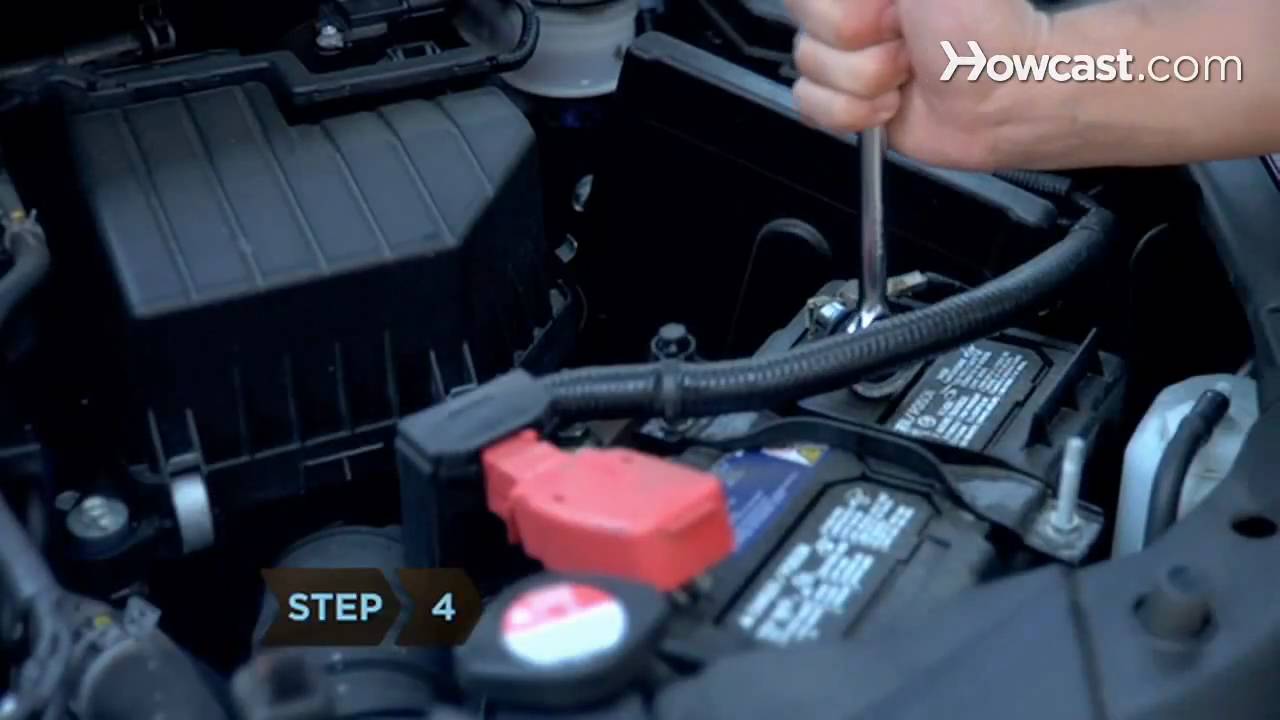
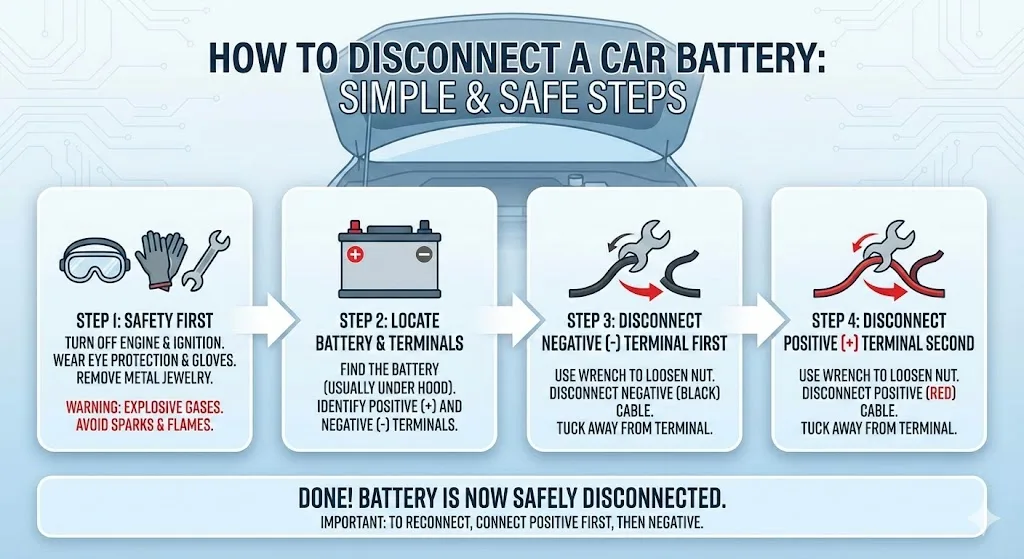
Follow these clear steps to disconnect a car battery. Read all steps first, then do them in order.
- Prepare the car
- Turn off the engine and remove the key. Open the hood and prop it securely.
- If your car has a fuse for memory backup, locate it. That can keep settings if needed.
- Identify terminals
- Find the negative terminal (marked “-” or black) and the positive terminal (marked “+” or red).
- Confirm by the cable color or terminal markings.
- Disconnect the negative terminal first
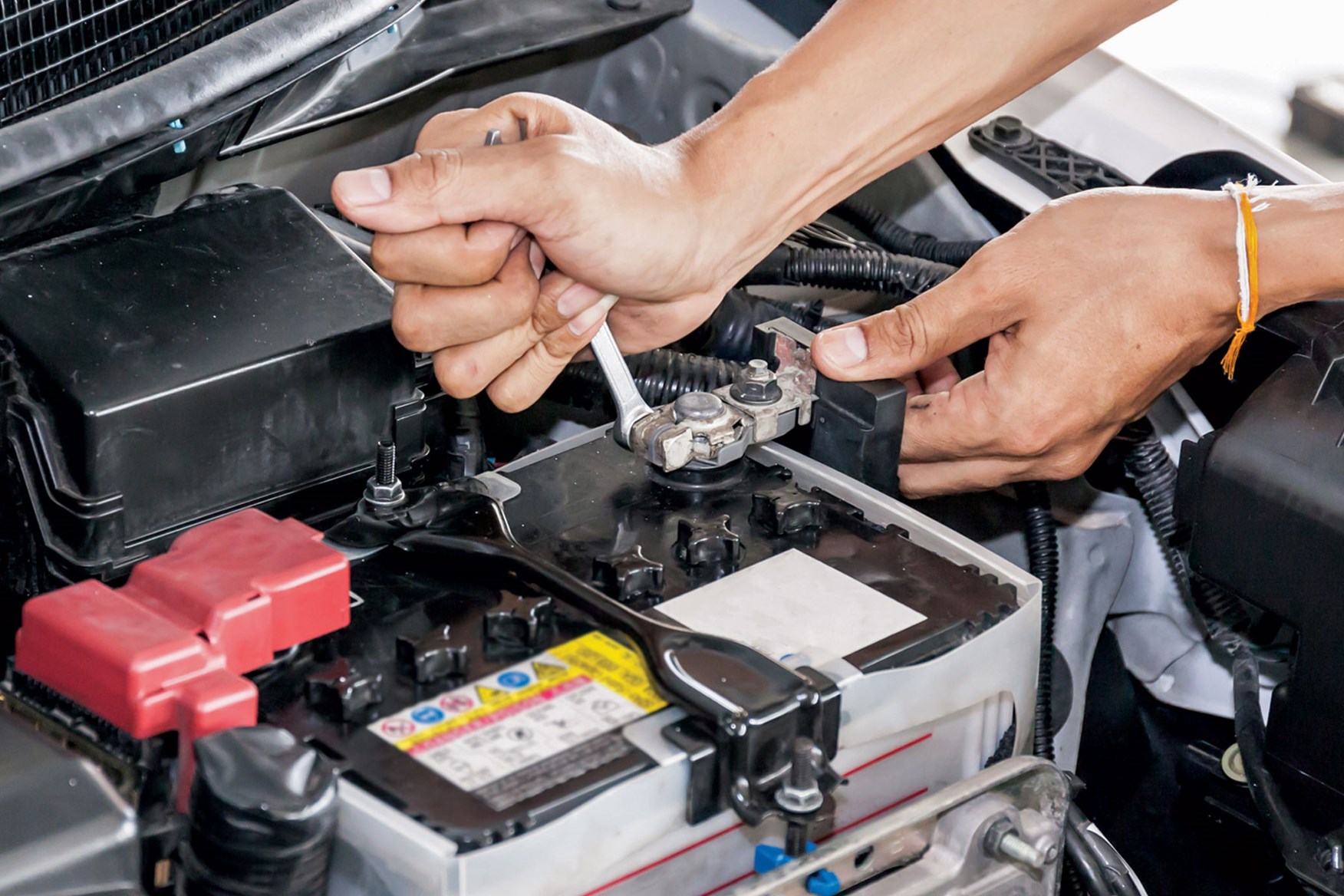
- Loosen the nut on the negative clamp with the correct wrench.
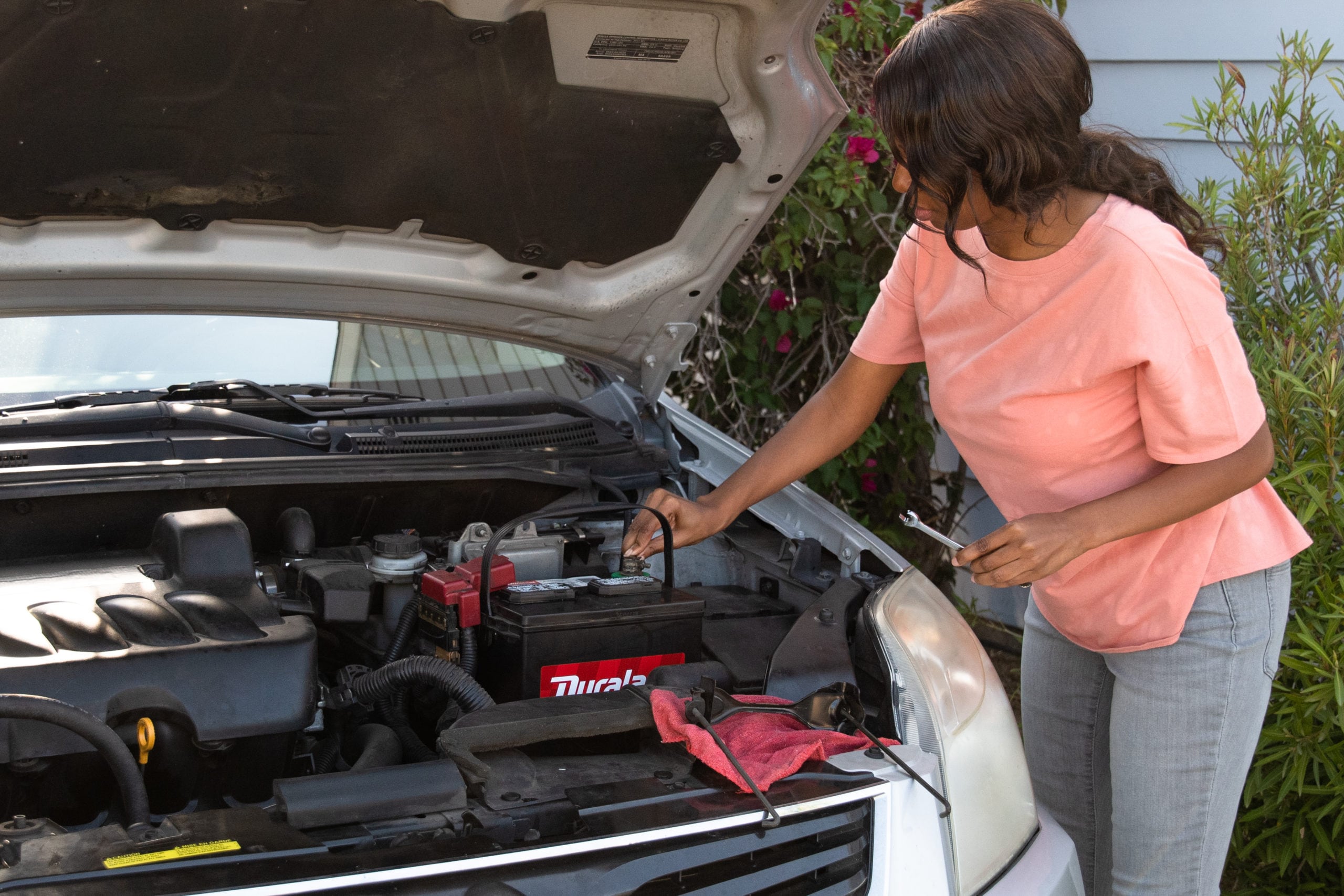
- Twist and lift the negative clamp off the terminal. Tuck the cable away from the battery so it cannot touch the terminal. This prevents short circuits and is the key step in how to disconnect a car battery safely.
- Disconnect the positive terminal
- Loosen the nut on the positive clamp and remove the clamp from the terminal.
- Keep the positive clamp away from metal surfaces and the negative cable.
- Remove hold-downs and lift the battery (if needed)
- Remove any bracket or strap holding the battery in place.
- Lift the battery straight up; batteries are heavy. Use both hands and lift with your legs.
- Place the battery on an insulated mat or battery blanket.
- Clean and inspect
- Check terminals and cables for corrosion. Clean with a wire brush and a baking soda solution if needed.
- Inspect the battery case for cracks or leaks. Dispose of damaged batteries safely at a recycling center.
These steps explain how to disconnect a car battery in a practical and safe order.
After disconnecting: storage, maintenance, and safety notes
Store or work on the battery safely after removal. Keep the battery upright on a stable, non-metal surface. Avoid storing batteries in very hot or freezing conditions. If you plan to leave the battery disconnected for a while, consider using a memory saver to preserve radio presets and electronic codes. If the battery is old, test it with a load tester or multimeter before reinstalling. When reinstalling, attach the positive terminal first and the negative last to reduce risk of shorting.

Common mistakes and troubleshooting
Avoid these mistakes when learning how to disconnect a car battery. They are practical and easy to prevent.
- Removing the positive cable first
- This can cause a short if your wrench touches ground. Always remove negative first.
- Using the wrong tool size
- A slipping wrench can damage the nuts. Use the correct socket or wrench.
- Not securing loose clamps
- A loose clamp can touch the terminal and cause sparks. Tuck cables away securely.
- Ignoring corrosion
- Corrosion reduces contact and can hide cracks. Clean and inspect terminals.
If the car won’t start after reconnecting, check connections, fuses, and any security systems that may need a code reset.
- Corrosion reduces contact and can hide cracks. Clean and inspect terminals.
Will disconnecting the battery erase my car’s memory or settings?
Disconnecting the battery can reset radio presets, clock, and some ECU settings. Some newer cars store settings in nonvolatile memory, so only certain features reset.
Can I disconnect a hybrid or EV battery the same way?
No. Hybrid and electric vehicles have high-voltage systems that require dealer-level procedures. Do not attempt to disconnect those batteries yourself.
How long can I leave a car battery disconnected?
You can leave it disconnected for weeks, but some systems may lose settings. Use a memory saver or reconnect within a few days to avoid issues.
Personal experience and lessons learned
I have disconnected dozens of car batteries during repairs and roadside help. My worst slip was trying to loosen a corroded nut without gloves; I cut my hand and learned to always use gloves. Another lesson: tuck the negative cable under a fender so it cannot fall back onto the battery. A small step like that saved me from a spark and a long tow. Trust simple habits — they make how to disconnect a car battery faster and safer in real life.

Disposal and recycling of old batteries
Handle old batteries responsibly. Car batteries contain lead and acid and must be recycled. Many auto shops accept old batteries for free when you buy a new one. Municipal waste programs often have battery drop-off sites. Do not put a car battery in household trash. Recycling protects the environment and follows the law.
Tools and upgrades that make the job easier
A few small investments save time and reduce stress when you disconnect a car battery. Consider:
- Battery terminal puller for stuck clamps.
- Dielectric grease to protect posts from corrosion.
- A compact memory saver to keep radio and ECU settings.
- A quality socket set with a flexible extension for tight spaces.
These tools help you disconnect a car battery cleanly and quickly.

Frequently Asked Questions of how to disconnect a car battery
What is the safest order to disconnect battery terminals?
Always disconnect the negative terminal first, then the positive. Reconnect in reverse: positive first, negative last.
Can I disconnect the battery while the engine is running?
No. Do not disconnect a battery while the engine runs; it can damage the alternator and electronics.
Do I need a special wrench to disconnect a car battery?
No special wrench is required. Use the correct size standard wrench or socket, commonly 8mm, 10mm, or 13mm.
How do I remove corrosion from battery terminals?
Mix baking soda and water, apply carefully, scrub with a wire brush, then rinse and dry. Wear gloves and eye protection during cleaning.
Is it okay to pull the battery out if it’s leaking?
No. If the battery is leaking acid, avoid direct contact and take it to a recycling center for safe handling.
Conclusion
Knowing how to disconnect a car battery is a basic but vital skill for any car owner. Follow the order of operations, wear protection, use the right tools, and take care when handling the battery. Start by disconnecting the negative terminal, then the positive, and follow simple safety checks to prevent sparks or damage. Take action: try the steps next time you need to perform maintenance, keep the right tools handy, and recycle old batteries responsibly. If this guide helped, leave a comment, subscribe for more car-care tips, or share your experience with disconnecting a car battery.