

Most drivers should tint to 35%–50% visible light transmission for comfort and legality.
I’ve installed and tested window films for years and helped dozens of drivers figure out how much to tint car windows for comfort, privacy, and compliance. This guide explains the numbers, the laws, the pros and cons, and practical steps so you can pick the right tint level with confidence.
Understanding tint percentages and what they mean
Tint percentages refer to Visible Light Transmission (VLT). VLT is the percentage of visible light allowed through a window after tint is applied. A 50% VLT tint lets half the light in. A 5% VLT tint (often called “limo tint”) lets in almost no visible light.
Common VLT points and how they feel:
- 70% VLT — almost clear; minor glare reduction and UV protection.
- 50% VLT — balanced privacy and visibility; comfortable day driving.
- 35% VLT — noticeable shading and privacy; popular choice.
- 20% VLT — dark; good privacy but harder at night.
- 5% VLT — very dark; maximum privacy, often illegal on front windows.
Why VLT matters:
- Safety — too-dark tint reduces night visibility.
- Comfort — lower VLT reduces heat and glare.
- Aesthetics — darker tints change the car’s look.
- Legal compliance — states set VLT limits for each window.
How much to tint car windows depends on your goals: daily driving, privacy, or show-car looks. Aim for a VLT that balances comfort and legality.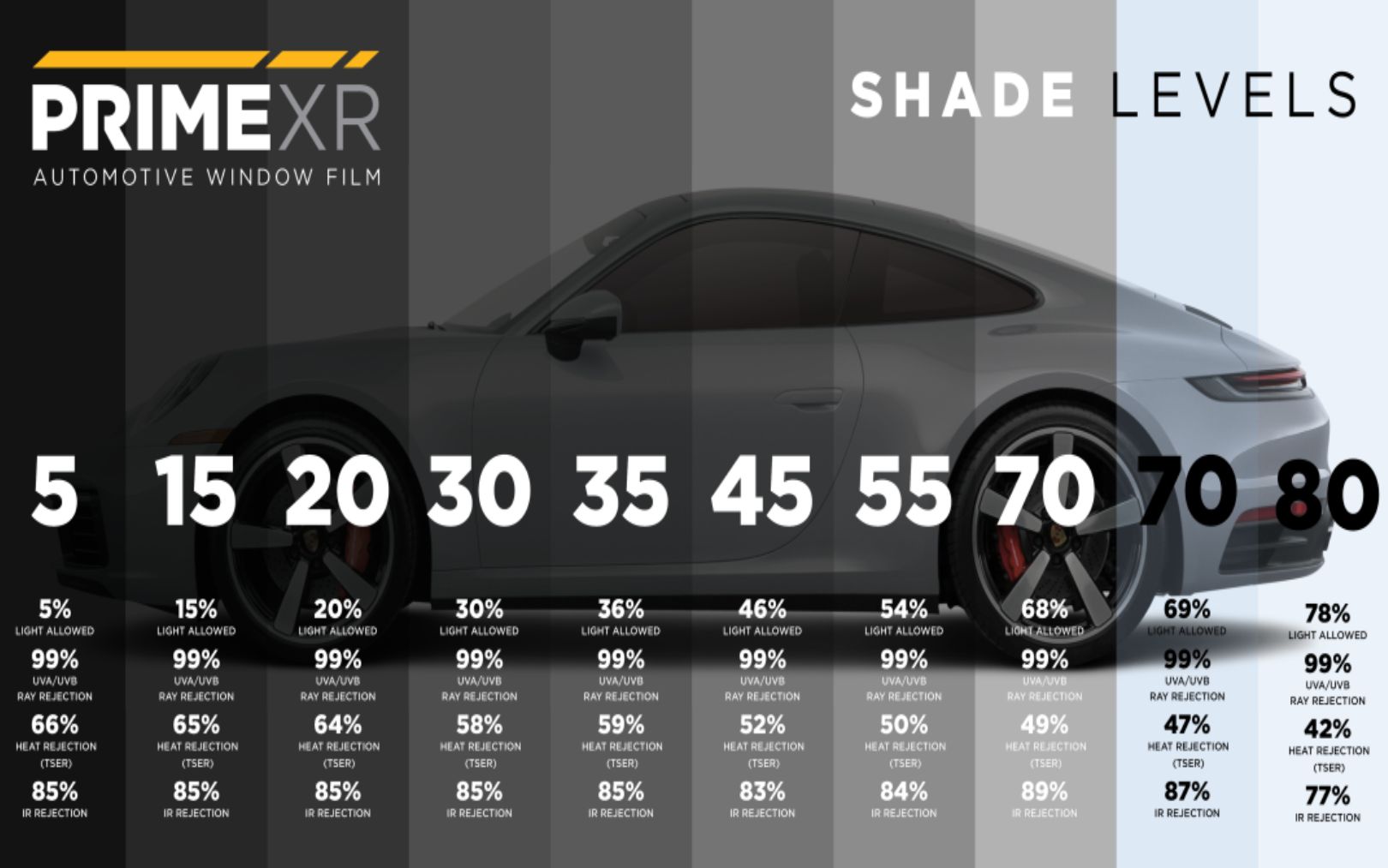
Legal limits and how much to tint car windows legally
Laws vary by state and country. Most places specify different VLT for:
- Front side windows
- Rear side windows
- Rear windshield
- Windshield (often only top strip allowed)
Typical examples:
- Many states allow 70%–50% VLT on front side windows.
- Rear side windows and rear windshield often allow darker tints, sometimes as low as 20% VLT.
- Windshields usually must remain mostly clear; only a non-reflective strip at the top is allowed.
How to check local law:
- Call your local DMV or visit its website.
- Look up state statutes on vehicle equipment and safety.
- Ask a reputable local tint shop — they work with the rules daily.
Always confirm before buying. If you pick how much to tint car windows without checking rules, you risk fines, failed inspections, and forced removal.
Factors to consider when deciding how much to tint car windows
Choose tint based on these practical factors:
- Legal limits where you live and where you drive.
- Night driving needs — darker tint can reduce nighttime visibility.
- Heat and UV reduction — darker and ceramic films help more.
- Privacy and security — darker tints hide belongings from view.
- Insurance and resale — some insurers or buyers prefer legal, quality tint.
Material types that affect choice:
- Dyed film — cheaper, fades over time.
- Metalized film — adds glare reduction, may interfere with signals.
- Ceramic film — best heat rejection, clear view, pricier.
- Carbon film — good color and heat control, mid-range cost.
Personal tip from experience: I recommend ceramic around 35%–50% VLT for daily drivers. It offers heat and UV protection with minimal glare and no interference with electronics.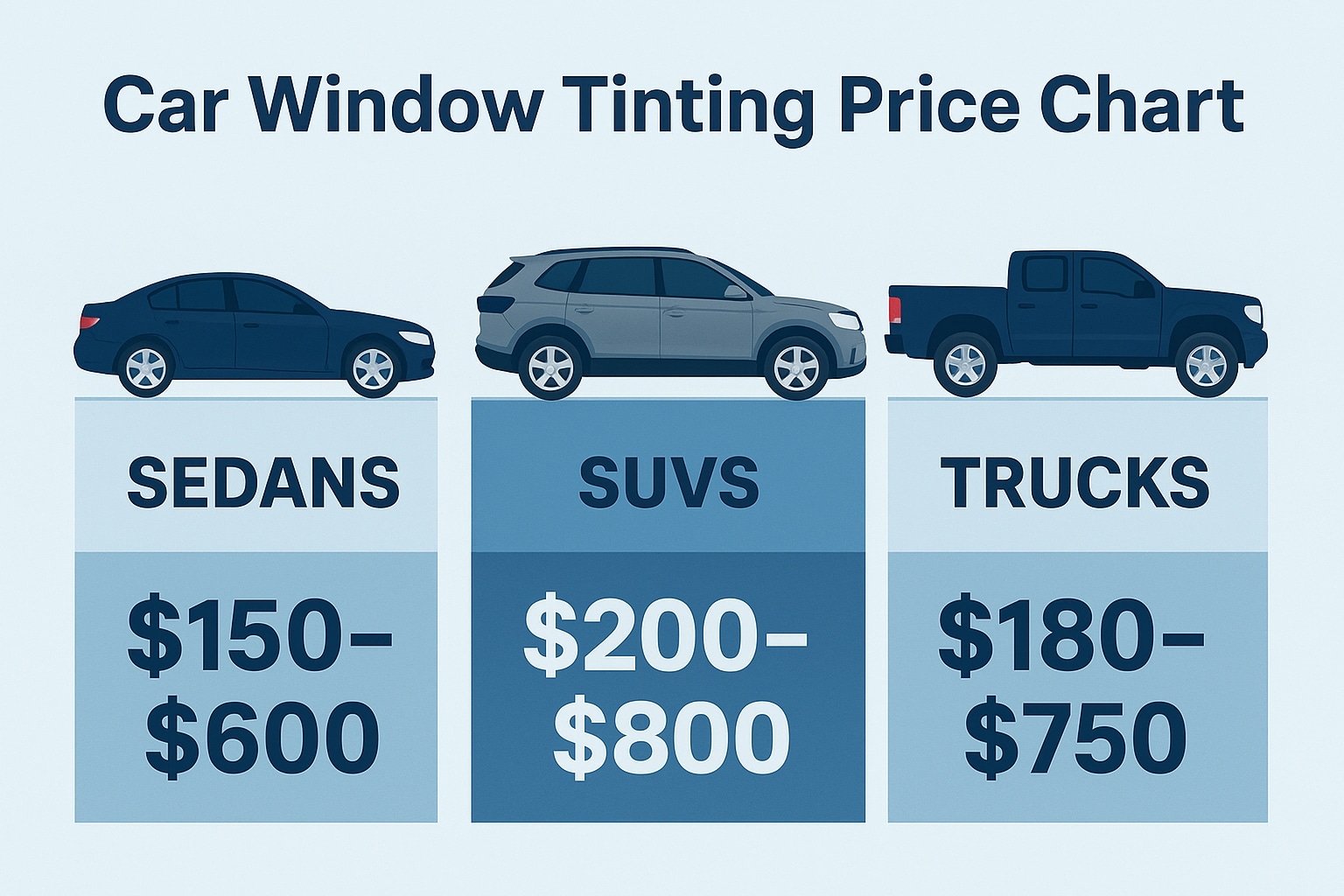
People also ask — quick PAA-style questions
Will darker tint keep my car cooler?
Yes. Darker and high-quality ceramic films reduce solar heat significantly, lowering cabin temperatures and AC load.
Can tint block UV rays?
Most modern films block 99%+ of UV-A and UV-B, protecting skin and interior materials.
Does tint affect electronics or GPS?
Cheap metalized films can cause interference. Ceramic and dyed films rarely do.
Benefits and drawbacks of different tint levels
Benefits of moderate tint (35%–50% VLT):
- Better daytime comfort and lower cabin heat.
- Reduced glare and eye strain.
- Improved privacy without major night visibility loss.
- UV protection that preserves upholstery.
Drawbacks of very dark tint (below 20% VLT):
- Poor night visibility increases risk.
- Higher chance of legal problems and fines.
- Safety concerns for law enforcement stops.
- Potential reduced resale value and inspection failure.
Balance is key. Think of tint like sunglasses for your car: strong enough to protect, not so dark you can’t see.
Cost, warranties, and installation choices
Typical costs vary by film type and car size:
- Basic dyed film: low cost, short warranty.
- Metalized film: moderate cost, medium warranty.
- Ceramic film: higher cost, long warranty.
Estimated price ranges (ballpark):
- Economy: $100–$250 for whole car.
- Mid-range: $250–$500.
- Premium ceramic: $400–$1,000+.
What I look for in installers:
- Clean shop and proper lighting.
- Clear warranty that covers bubbling, peeling, and fading.
- Written proof of film brand and VLT percentage.
- Proper certification and positive local reviews.
Installation tips from experience:
- Get multiple quotes and compare warranties.
- Ask for a demo sticker showing VLT reading when possible.
- Avoid mobile installers who can’t provide a warranty address.

Source: motoshieldpro.com
How to measure, test, and choose the right tint percentage
Step-by-step decision plan:
- Check legal VLT limits for each window in your state.
- Decide priority: visibility, privacy, heat reduction, or resale value.
- Choose film type based on budget and needs (ceramic if budget allows).
- Ask the shop to measure VLT with a meter after installation.
- Test drive at night to confirm visibility is acceptable.
How to test VLT at home:
- Use a VLT meter from a tint shop or trusted app as a rough check.
- Compare inside vs. outside view under varied lighting.
- If unsure, choose a lighter tint and re-evaluate after a week.
Practical example: I once recommended 35% VLT for a client who commuted at night and lived in a sunny region. It cut cabin heat and kept night visibility safe.
Common mistakes and my personal lessons learned
Common mistakes:
- Choosing the darkest tint for looks and ignoring laws.
- Skipping warranty checks and picking the cheapest installer.
- Not testing visibility in low light before finalizing.
Lessons from my experience:
- A friend installed 5% rear and 20% front tint without checking laws. He was ticketed and had to remove the film — expensive lesson.
- I’ve found ceramic films give the best long-term value. They cost more upfront but last and perform better.
- Always get the VLT reading on paper. Verbal claims aren’t enough.
Quick practical tips:
- If you commute at night, choose 35%–50% VLT for front windows.
- If you want strong privacy and only drive daytime, you can go darker on rear windows where legal.
- Maintain tint by hand-washing and avoiding ammonia cleaners.
Source: iseecars.com
Frequently Asked Questions of how much to tint car windows
How much to tint car windows for daily driving?
Aim for 35%–50% VLT on front side windows for a mix of comfort and safety. Rear windows can be darker if local law allows.
Is 5% tint legal?
Often not on front windows; 5% is usually restricted to rear windows in some areas. Check state law before choosing very dark tint.
Will tinting affect my visibility at night?
Yes. Darker tints reduce nighttime visibility and can increase risk. Lighter tints are safer for night drivers.
Does tinting protect against UV rays?
Yes. Quality films typically block 99% or more of harmful UV rays and protect your interior and skin.
How much does professional tint installation cost?
Expect $100–$1,000+ depending on film quality, vehicle size, and shop reputation. Premium ceramic films sit at the higher end.
Can I remove tint myself?
Yes, but it can be time-consuming and may leave adhesive residue. Professional removal avoids damage and speeds the process.
Will tinting interfere with my phone or radio?
Metalized films can cause interference. Ceramic and dyed films generally do not. Ask the installer about film composition.
Conclusion
Choosing how much to tint car windows is a mix of law, safety, comfort, and style. Pick a VLT that fits local rules and your driving habits. For most daily drivers, 35%–50% VLT on front windows strikes the best balance. If you value heat rejection and clarity, invest in quality ceramic film and a reputable installer.
Take action: check your state rules, get two or three quotes, and ask for a written VLT guarantee before you book. If you found this guide helpful, consider sharing your experience or asking a question below — I’ll reply from real shop and install experience.