
Checking your car’s oil level might seem simple, but it’s one of the most important things you can do for your vehicle. I’ve owned several cars over the years, from old sedans to newer SUVs, and I’ve seen what can happen if you skip this step.
Low oil can lead to engine damage, while too much oil can also cause problems. In this guide, I’ll walk you through exactly how to check the oil level in your car, why it matters, and share practical tips from my own experience.
Even if you’re not a car expert, you’ll find this process easy and clear.
Why Checking Oil Level Matters
Oil keeps your engine running smoothly. It reduces friction, cools parts, and cleans the engine. If the oil level drops too low, engine parts can rub together, making your engine overheat or even fail. Too much oil isn’t good either; it can cause leaks or damage seals.
Car manufacturers and mechanics recommend checking your oil every few weeks or before long trips.
According to the Car Care Council, 22% of cars on the road have low or dirty oil. That’s nearly one out of five vehicles! Regular checks help you catch small problems before they become expensive repairs. It’s a simple habit that can save you thousands of dollars and keep your car running for years.
When And How Often Should You Check Oil?
The right time to check your oil depends on your driving habits and your car’s age. If you drive daily, check it every two weeks. For older cars or those with small leaks, check weekly. Before a long drive or road trip, always check.
Newer cars often have oil life monitors on the dashboard. These can help, but it’s still smart to check manually. In my own experience, I once relied only on the dashboard light and missed a slow leak. The oil warning light came on too late, and I had to pay for a costly repair. Manual checks are quick and reliable.
Try to check your oil when the engine is cool or has been off for at least five minutes. This lets the oil settle in the oil pan, giving an accurate reading.
Tools You Need
You don’t need special skills or fancy equipment to check your oil. Here’s what you’ll need:
- Clean paper towel or rag: To wipe the dipstick.
- Gloves (optional): To keep your hands clean.
- Owner’s manual: Helps you find the dipstick and gives details for your car.
That’s all. Some newer cars don’t have a traditional dipstick. For these, you may need to check the oil electronically via the dashboard. Always follow your car’s manual.
Where To Check Oil: Finding The Dipstick
Most cars have a yellow or orange ring near the engine block. That’s the oil dipstick. It’s usually close to the front of the engine, but in some cars, it’s off to the side.
If you’re unsure, look at your owner’s manual. It shows a diagram of your engine. In my first car, the dipstick was hidden under a cover, and I spent 10 minutes searching before finally checking the manual. Don’t be afraid to look it up — it saves time and avoids mistakes.
Step-by-step: How To Check Oil Level
Let’s go through the process together. I’ll break it down into simple steps. This works for most gasoline and diesel cars with a dipstick.
- Park on a Level Surface
- Make sure your car is on flat ground. If it’s on a slope, the reading won’t be accurate.
- Turn Off the Engine and Let It Cool
- Wait at least five minutes after shutting off the engine. Hot oil can give a false reading.
- Open the Hood
- Pull the hood release lever inside your car. Then, open the hood and secure it with the prop rod.
- Find and Pull Out the Dipstick
- Look for the oil dipstick. Pull it out slowly.
- Wipe the Dipstick Clean
- Use a clean paper towel or rag to wipe off all oil. This clears away old oil and grime.
- Reinsert the Dipstick
- Push the dipstick all the way in. Wait a second, then pull it out again.
- Read the Oil Level
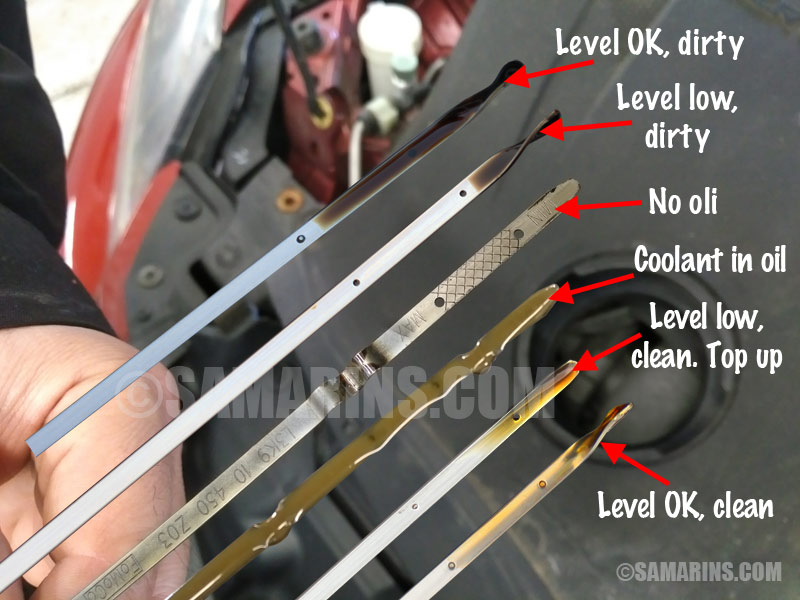
- Hold the dipstick horizontally. Look for the oil line. Most dipsticks have two marks: “MIN” and “MAX,” or “L” and “H.” The oil should be between these lines.
- Check Oil Color and Smell
- Clean oil is amber or light brown. Dark, gritty oil means it’s time for a change. If the oil smells burned, get your car checked.
- Add Oil if Needed
- If the level is below “MIN,” add oil. Use the type recommended in your manual. Add a little at a time, then recheck.
- Close Everything Up
- Reinsert the dipstick, close the oil filler cap, and shut the hood.
I remember teaching my younger brother this process. He was nervous at first, but after following these steps, he realized it’s easier than he thought. The key is to be patient and careful.
Understanding Oil Level Markings
Dipsticks look a little different depending on your car. Here’s a quick comparison of common markings:
| Markings | What It Means | Action Needed |
|---|---|---|
| “MIN” and “MAX” | Oil should be between these lines | Add oil if below “MIN” |
| “L” and “H” | Low and High | Stay in the middle |
| Dot or Crosshatch Area | Safe zone | Oil should cover this area |
If the oil is below the lowest mark, your engine is at risk. If it’s above the highest mark, there may be too much oil, which can also harm your car.
Types Of Engine Oil And Their Impact
Different cars need different types of oil. Your manual will list the right kind, such as 5W-30 or 10W-40. Using the wrong oil can make your engine work harder or not protect it well.
Here’s a quick look at common oil types and their uses:
| Oil Type | Best For | Main Benefit |
|---|---|---|
| 5W-30 | Most modern cars | Good for cold starts |
| 10W-40 | Older engines | Better at higher temps |
| 0W-20 | Newer hybrids | Improves fuel economy |
| Synthetic Oil | High-performance cars | Lasts longer, resists breakdown |
If you’re unsure, always use the oil recommended by your car’s maker. Using the wrong oil can void your warranty.
What Oil Level Means For Your Engine
When the oil is at the right level, your engine stays healthy. If it’s low, you risk:
- Overheating: Not enough oil means more friction and heat.
- Wear and Tear: Parts grind together, causing damage.
- Breakdowns: Severe cases can lead to engine failure.
Too much oil isn’t good either. It can foam up and reduce how well the oil works. Seals and gaskets might leak, and sensors could get damaged.
Most engines burn a little oil over time. Losing up to a quart between changes is usually normal. But sudden drops mean a leak or another problem.
Common Mistakes When Checking Oil
I’ve seen beginners (and even some experienced drivers) make the same mistakes. Here are the big ones to avoid:
- Checking on a Hill: Always check on flat ground.
- Not Waiting After Shutdown: Let the car cool for five minutes before checking.
- Forgetting to Wipe the Dipstick First: This gives a false reading.
- Using the Wrong Oil: Stick to what your manual says.
- Overfilling: Add oil slowly, checking as you go.
Once, I hurried through the process before work, checked on a slight slope, and thought the oil was low. I added more, only to find out later it was overfilled. Draining extra oil is a hassle you want to avoid.
What If Your Oil Is Low?
If you find your oil is below the safe mark, don’t panic — but don’t drive far either. Here’s what to do:
- Add Oil: Pour a little at a time, using a funnel. Check the level after each small addition.
- Check for Leaks: Look under your car for spots or puddles.
- Watch the Dashboard: If the oil light comes on, stop and check again.
- Visit a Mechanic: If you keep losing oil, get it checked soon.
Driving with low oil can destroy your engine in minutes. It’s not worth the risk.

Credit: olezol.com
How Often Should You Change The Oil?
Modern engines and oils last longer than in the past. Still, most experts say to change oil every 5,000 to 7,500 miles. Some synthetics can last up to 10,000 miles. Always check your manual for exact numbers.
Short trips, extreme temperatures, or heavy loads can wear out oil faster. If you drive in these conditions, change oil more often.
Signs Of Oil Problems
Checking the level is important, but you should also watch for other signs:
- Dark or Gritty Oil: Time to change.
- Burned Smell: Possible engine problem.
- Smoke from Tailpipe: May mean oil is leaking into the engine.
- White, Milky Oil: Could signal coolant mixing with oil (serious issue).
If you notice any of these, get your car checked. Small issues can become big ones if ignored.

Credit: www.youtube.com
Oil Monitoring Systems In Modern Cars
Many newer vehicles have electronic sensors that check oil level and quality. These systems show messages like “Oil Level Low” or “Change Oil Soon” on your dashboard.
While handy, these systems are not perfect. Dirt or faulty sensors can give wrong alerts. Manual checking with the dipstick is still the most reliable method.
Some high-end cars have no dipstick at all. For these, follow the instructions in your owner’s manual. Usually, you’ll access a menu on the screen inside your car.
Quick Comparison: Manual Vs. Electronic Oil Check
Here’s a simple comparison of both methods:
| Method | Accuracy | Ease of Use | Common Issues |
|---|---|---|---|
| Manual Dipstick | Very Accurate | Simple, quick | Hands get dirty, need to open hood |
| Electronic Sensor | Good, can fail | Very easy | Sensor errors, can’t check oil quality |
If your car has both, use them together for best results.
Myths About Checking Oil
Let’s clear up a few common myths:
- “You only need to check oil before long trips.” Not true. Regular checks catch leaks and problems early.
- “Synthetic oil never breaks down.” Even the best oils wear out and get dirty.
- “If the oil is black, it’s always bad.” Oil darkens as it works but may still protect your engine. Grit or smell matters more.
How Checking Oil Can Save You Money
A simple oil check can prevent engine repairs that cost $2,000 or more. Skipping checks can mean:
- More frequent repairs
- Lower resale value
- Shorter engine life
In my own life, I once caught a small leak early, just by checking oil before a road trip. A $5 bottle of oil saved me a $1,500 engine bill. Prevention is always cheaper than repair.
Environment And Used Oil
When you change oil, always recycle old oil properly. Many auto shops and recycling centers accept used oil for free. Never pour it down drains or on the ground — it’s harmful to the environment. In the US, recycling one gallon of used oil makes as much new oil as 42 gallons of crude oil refined.
For more on responsible disposal, visit the EPA’s oil recycling page.
Troubleshooting: Oil Is Always Low
If your oil keeps dropping, even after adding more, it’s time to look for bigger problems:
- Leaking oil pan or gasket: Look for drips under the car.
- Faulty oil filter: Check after recent oil changes.
- Burning oil: Blue smoke from exhaust is a sign.
- Internal engine problem: Sometimes, oil is leaking inside the engine.
Don’t ignore frequent low oil. Get a mechanic to check it soon.
Credit: www.samarins.com
Tips For Beginners
If you’re checking oil for the first time, keep these in mind:
- Wear old clothes; oil can stain.
- Take your time; there’s no rush.
- If you’re not sure, ask someone to show you.
- Record your checks with your phone or a notebook.
Most people are surprised how easy it is after doing it once. Start small and build confidence.
Frequently Asked Questions
How Do I Know Which Oil To Use For My Car?
Check your owner’s manual for the exact oil type and grade. Using the wrong oil can hurt performance or void your warranty.
Can I Check Oil Right After Driving?
It’s best to wait five minutes after shutting off your engine. This lets the oil settle and gives a true reading.
What If There’s No Dipstick In My Car?
Some newer cars use electronic sensors. Check your dashboard menu or owner’s manual for instructions.
Why Does My Oil Look Milky Or Foamy?
Milky oil often means coolant is leaking into the oil, which is serious. Get your car checked right away.
How Much Oil Should I Add If It’s Low?
Add half a quart at a time and recheck the level. Don’t overfill, as too much oil can also damage your engine.
Checking your oil is a small step with big rewards. It keeps your engine healthy, saves money, and gives you peace of mind on the road. Whether you’re a new driver or a seasoned pro, this simple habit can make a real difference in your car’s life.
Start today — your car will thank you for it.