

A dead car battery often shows weak lights, clicking when you turn the key, or the engine not cranking.
I’ve tested and repaired dozens of cars over the years, and I’ll walk you through exactly how to check if a car battery is dead. This guide explains simple visual checks, quick tests you can do with basic tools, and step-by-step voltage and load checks for people who want to be sure. Read on to learn safe, clear, and reliable ways to confirm battery health and decide what to do next.

Why it matters to know if a battery is dead
A dead battery can leave you stranded, waste time, and cost more if misdiagnosed. Knowing how to check if a car battery is dead helps you fix the real problem fast. A correct check saves money and prevents jumping to the wrong repair, like replacing the alternator when the battery is the issue. I’ll show low-cost tests anyone can do and explain when to call a pro.

Common signs a battery is dead
Spotting symptoms early is key. Here are the common signs to watch for.
- Dim headlights or dashboard lights when the car is off or while cranking.
- A single click or rapid clicking when you turn the key.
- Very slow engine crank or no crank at all.
- Electronics that won’t power up, like the radio or power windows.
- Corrosion or a swollen battery case.
- Battery age is over 3–5 years, which raises failure risk.
Seeing one sign doesn’t prove the battery is dead. Use these clues as a starting point and then run tests to confirm. The next sections explain tests and tools.
Tools and safety prep before testing
You don’t need a shop to check a battery. Use these tools and safety steps.
- Multimeter set to 20V DC for a quick voltage check.
- A battery load tester or portable jump starter for hands-on testing.
- Safety glasses and gloves to protect from acid or sparks.
- Wire brush or battery terminal cleaner.
- Memory saver for cars with sensitive electronics (optional).
Safety steps: work in a well-ventilated area. Turn off ignition and electronics. Keep metal tools away from both terminals at once. If the battery looks damaged, don’t test it—replace it.

Step-by-step: how to check if a car battery is dead
Follow these steps from easiest to most accurate. Each step narrows down the cause.
- Visual inspection
- Look for cracks, swelling, loose or corroded terminals, and acid leaks.
- Bad terminals or a broken case can mimic a dead battery.
- Headlight or accessory test
- Turn on headlights and try to start the car. If lights dim strongly when cranking, the battery may be weak.
- If lights stay bright but the car won’t start, suspect starter or ignition faults.
- Listen for clicks and cranks
- A single click usually means low voltage or a bad starter solenoid. Rapid clicking is often low battery voltage.
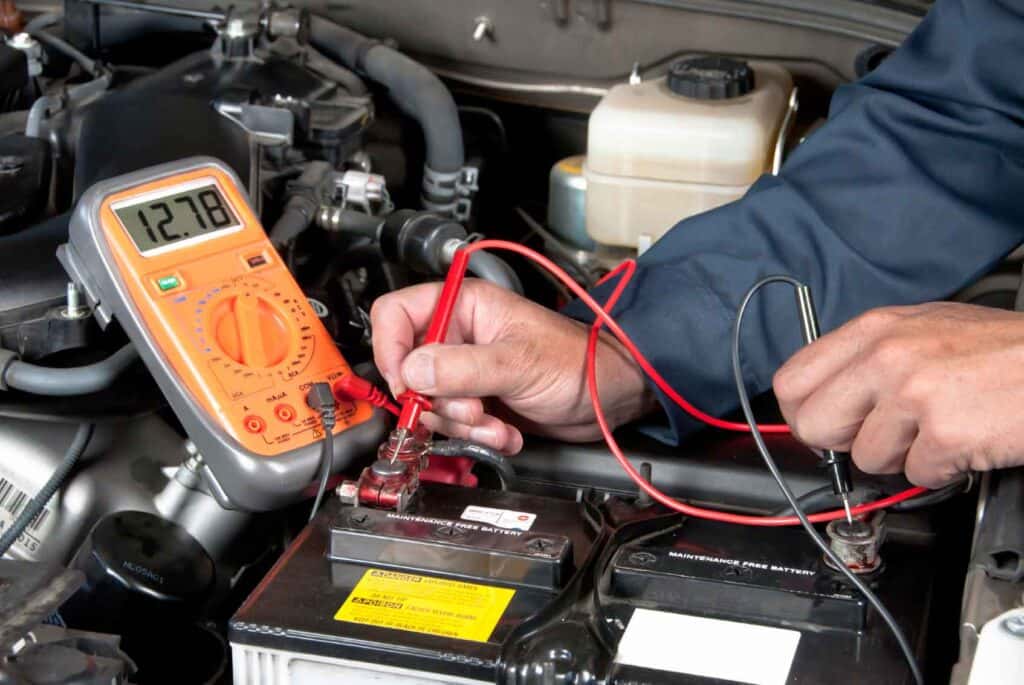
- Voltage test with a multimeter
- At rest, a healthy battery reads about 12.6 volts. Below 12.4V is partially discharged. Below 12.0V is deeply discharged.
- While cranking, voltage should not drop below ~9.6V on most cars. A big drop indicates the battery can’t supply current.
- Load test or use a battery tester
- A load tester applies a heavy draw and checks voltage drop. If voltage falls too far, the battery fails the test.
- Many auto parts stores perform free load tests.
- Try a jump start and retest
- After a successful jump, measure voltage. If the battery doesn’t hold charge, it’s likely bad. If voltage rises but drops again after driving, test the alternator.
Repeat tests if results are mixed. These steps show how to check if a car battery is dead in a clear order, from simple checks to more reliable tests.
Testing methods explained: multimeter, load test, hydrometer, and jump starts
Understanding each method helps you pick the right one.
- Multimeter test
- Quick and accurate for open-circuit voltage. Read resting voltage after the car sits for a few hours. Use the values above to grade health.
- Load test
- Simulates the real draw while starting. A passing battery keeps voltage from collapsing under load. This is the most reliable bench test short of lab equipment.
- Hydrometer test (for non-sealed batteries)
- Measures specific gravity of each cell’s electrolyte. Different readings mean a bad cell. Not possible on sealed or maintenance-free batteries.
- Jump start / charging test
- Good for field repairs. If a jump starts the car but the battery won’t hold charge after being driven or recharged, the battery is defective or the alternator is undercharging.
Each method has limits. For example, a multimeter won’t reveal internal resistance. That’s why I recommend combining tests.
Causes of battery failure and how to prevent it
Batteries fail for many reasons. Preventive care extends life.
Common causes
- Age and natural wear reduce capacity over years.
- Deep discharge from leaving lights on or short trips.
- Heat speeds up chemical breakdown.
- Corrosion and loose connections cause poor charging.
- Parasitic drains from aftermarket electronics.
Prevention tips
- Keep terminals clean and tight.
- Drive regularly to keep battery charged; short trips don’t fully recharge.
- Park in shade or cooler areas in hot climates.
- Disconnect accessories when idle for long periods.
- Replace batteries around 3–5 years before failure risk grows.
My shop routine: clean terminals and check charging at every oil change. That small habit cuts battery problems in half.

When to replace the battery and expected costs
Knowing when to replace saves time and hassle.
When to replace
- Repeated failure to hold charge after proper testing.
- One or more cells show bad hydrometer readings.
- Case is cracked, bulging, or leaking acid.
- Battery is over 5 years old and showing symptoms.
Typical costs
- Most passenger car batteries cost between $70 and $200 depending on size and brand.
- Higher-performance batteries or hybrid-specific units cost more.
- Installation fees may apply if you use a shop.
If you’re unsure, let a pro run a charging system test. That separates battery problems from alternator or starter issues.
Troubleshooting and next steps after tests
If tests point to a weak battery, here’s what to do next.
- Charge the battery with a smart charger and retest. If it holds charge, monitor it for a few days.
- If the battery fails a load test, replace it. Don’t just jump-start repeatedly.
- If voltage is good but the battery drains while parked, check for parasitic draws. Use an ammeter to find the circuit.
- If the battery is fine but charging is low while driving, test the alternator and belt. Poor charging can ruin a good battery.
A real mistake I made early in my career was replacing batteries without checking the alternator. The new battery died quickly. Always test both.
Quick Q&A: common short checks
This mini Q&A answers fast, practical doubts.
How long should a battery hold a charge after charging?
Most healthy batteries hold a full charge for days to weeks if the car isn’t used and there are no drains. If voltage drops fast, the battery likely has an internal fault.
Can a battery test good but still fail while driving?
Yes. A battery can show decent resting voltage but fail under load due to high internal resistance. Load testing catches this problem.
Is it safe to jump-start a battery with visible damage?
No. If the battery case is cracked, swollen, or leaking, do not jump-start. Replace it to avoid acid spills or explosions.
Will cold weather make a battery seem dead?
Cold reduces battery capacity and can make a weak battery fail to start. Warm it and retest; if problems persist, replace it.
Can alternator problems mimic a dead battery?
Yes. A bad alternator can fail to charge, causing battery discharge and starting problems. Test charging voltage while the engine runs to confirm.
Frequently Asked Questions of how to check if a car battery is dead
How can I tell if my car battery is dead without tools?
Try the headlight test and listen when you turn the key. Dim lights plus clicking or no crank usually point to a dead or weak battery.
What voltage means a battery is dead?
A resting voltage under 12.0 volts indicates a deeply discharged or failing battery. Below 11.8 volts is almost certainly unusable without charging.
Can a bad battery damage my alternator?
A severely discharged battery can force the alternator to work harder and may shorten its life. A bad battery also causes voltage swings that stress electronics.
How long does a jump start give you to drive to fix the battery problem?
A jump start gets you running immediately, but drive at least 20–30 minutes to let the alternator charge the battery. If the battery won’t keep charge, replace it.
Should I replace all batteries at once for dual-battery setups?
If one battery in a matched setup fails, check both. Often both are the same age, and replacing only one can cause imbalance. Replace together if performance is critical.
Is a slow crank always a sign of a dead battery?
Not always. Slow crank can be due to a failing battery, bad starter, corroded cables, or cold conditions. Test voltage during crank to confirm.
Can I test a sealed battery with a hydrometer?
No. Sealed and maintenance-free batteries don’t allow hydrometer checks. Use voltage and load tests instead.
Conclusion
You now know clear, practical ways to check if a car battery is dead. Start with a visual check and simple headlight tests, then use a multimeter and load testing for reliable results. Clean terminals, test the charging system, and replace the battery if it won’t hold charge. My advice: test before you replace. It saves money and gets you back on the road faster.
Take one action today: check your battery’s resting voltage or schedule a free load test at a local parts store. If this guide helped, leave a comment about your experience or subscribe for more practical car-care tips.