

Deep cleaning, fresh air, and odor neutralizers remove pot smell from car fabrics, vents, and hidden surfaces.
Pot smell can cling to upholstery, carpets, seat belts, air vents, and even the headliner long after the smoke is gone. The best way to get pot smell out of a car is to remove the odor source, clean every soft surface, refresh the ventilation system, and allow the vehicle to air out. Covering the smell with air freshener rarely works for long.
I have seen many car owners make the same mistake: they spray a strong scent and hope the problem disappears. It usually creates a mix of smoke and perfume. This guide explains how to get pot smell out of a car with safe, practical steps that work for both light odors and stubborn smoke trapped in the interior.

Why Pot Smell Stays in a Car
Pot smoke contains tiny particles and oily compounds. These settle into fabric, foam, plastic, carpet, and the vehicle’s headliner. The smell may also enter the cabin air filter and ventilation ducts.
A closed car acts like a small box. Smoke has nowhere to escape, so the odor becomes more concentrated. Heat can make the smell stronger because warmth releases trapped compounds from fabric and plastic.
Common odor sources include:
• Cloth seats and floor mats
• Carpet under the seats
• Seat belts and door panels
• The headliner above the seats
• The trunk and spare tire area
• Air vents and the cabin air filter
• Ash, plant material, food wrappers, and other trash
Finding the source is a key part of learning how to get pot smell out of a car. If even one strong source remains, the odor may return after cleaning.
What You Need Before Cleaning
Gather your supplies before you begin. This saves time and helps you clean the whole cabin in one session.
You may need:
• A vacuum with a narrow attachment
• Microfiber cloths
• Warm water
• Mild dish soap or automotive interior cleaner
• Baking soda
• An enzyme-based odor cleaner made for fabrics
• White vinegar
• A soft brush
• A spray bottle
• Rubber gloves
• A clean cabin air filter
Avoid mixing cleaning products. Never combine bleach, ammonia, vinegar, or other chemicals. Some mixtures can create harmful fumes or damage interior materials.
Test every cleaner on a small hidden area first. Leather, suede, vinyl, and colored fabric can react in different ways. Follow the product label, and keep windows open while using any cleaner.
How to Get Pot Smell Out of a Car: Step-by-Step
1. Remove the odor source
Take out all trash, ash, packaging, cigarette papers, plant material, cups, and personal items. Check under the seats, inside the center console, in door pockets, and in the trunk.
Do not skip the spare tire well. Odors can hide beneath the trunk floor, especially if smoke or ash was present there.
If you find ash, avoid rubbing it into the carpet. Pick it up gently, then vacuum the area. Use a damp microfiber cloth on hard surfaces.
2. Air out the vehicle
Park the car in a safe, dry place. Open all doors, windows, and the trunk for several hours. If possible, leave the car in fresh air overnight.
Use a fan outside the vehicle to push air through the cabin. Do not run a gasoline engine inside a garage. Carbon monoxide is dangerous and has no reliable smell.
Fresh air will not remove all pot smell by itself, but it lowers the amount of odor trapped in the cabin. It also makes the next cleaning steps more effective.
3. Vacuum every surface
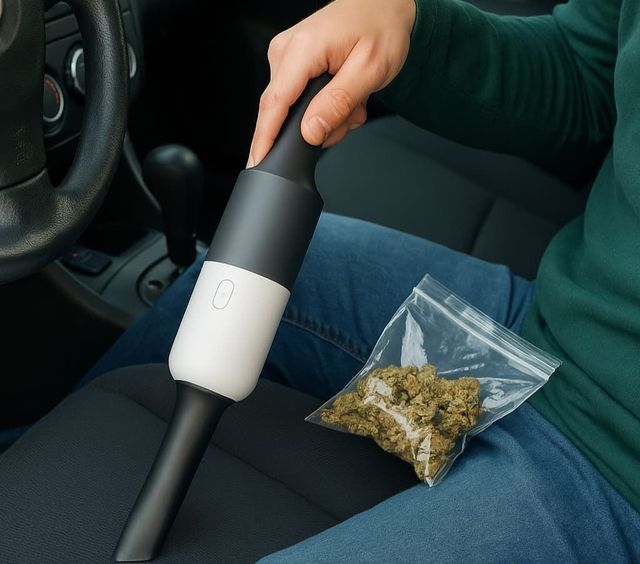
Vacuum the seats, carpet, floor mats, trunk, door pockets, and gaps around the center console. Move the seats forward and backward so you can reach hidden areas.
Use a crevice tool around seat rails and between cushions. Pay close attention to the carpet below the pedals and beneath child safety seats.
Vacuuming removes dry smoke particles and debris before moisture pushes them deeper into the material. This is one of the most important steps when learning how to get pot smell out of a car.
4. Wash removable items
Remove the floor mats and wash them according to their material. Rubber mats can usually be cleaned with warm water and mild soap. Fabric mats may need a fabric cleaner or a careful machine wash if the manufacturer permits it.
Let mats dry fully before putting them back. Damp mats can create a musty smell that makes the original odor harder to identify.
If seat covers, trunk liners, or fabric organizers are washable, clean them outside the car. Never reinstall a wet item.
5. Clean hard surfaces
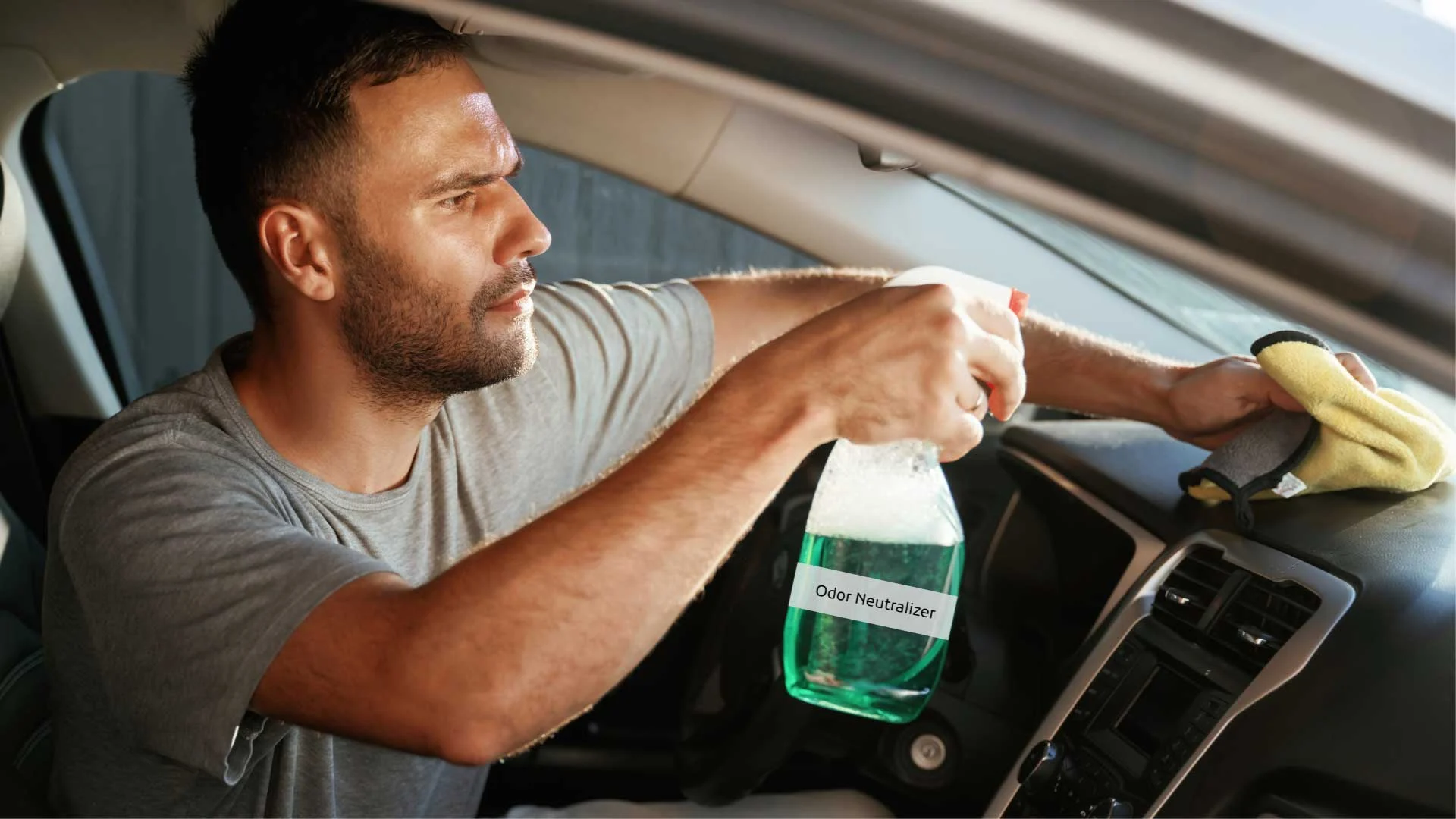
Smoke residue can settle on the dashboard, steering wheel, doors, console, cup holders, and window glass. Wipe these areas with a damp microfiber cloth and a suitable interior cleaner.
Clean both sides of the windows. Glass can hold a thin film that carries odor and makes the cabin feel stale.
Use a soft brush around vents, buttons, seams, and textured plastic. Avoid soaking electrical controls, speakers, seat controls, or air bag panels.
6. Treat fabric and carpet
Sprinkle a thin layer of baking soda over dry fabric seats and carpet. Let it sit for several hours, or overnight if the car is in a dry place. Vacuum it thoroughly afterward.
Baking soda can absorb some odors, but it does not destroy every smoke compound. For stronger pot smell, use an enzyme-based product designed for automotive fabrics.
Apply the product lightly. Too much liquid can soak the seat foam and create mold or mildew. Keep the doors open while the interior dries.
7. Clean the headliner carefully
The headliner often holds smoke because it sits above the entire cabin. However, it is also easy to damage.
Spray cleaner onto a microfiber cloth, not directly onto the headliner. Gently wipe a small section at a time. Do not scrub hard or saturate the fabric, since the adhesive may loosen.
Allow the headliner to dry fully. If it begins to sag, stop cleaning and seek professional help.
8. Refresh the air vents
Set the car’s ventilation system to fresh air rather than recirculation. Turn the fan on at a moderate speed and open the windows.
Run the fan for a few minutes with the air directed toward the floor, dash, and windshield. This helps move stale air from different parts of the duct system.
Do not spray large amounts of cleaner directly into the vents. Liquid can reach electrical parts or the blower motor. A light application of a product labeled for automotive ventilation systems is safer.
9. Replace the cabin air filter
A dirty cabin air filter can hold smoke particles and send the odor back into the car. Check the owner’s manual for the filter location and replacement instructions.
Many cabin air filters sit behind the glove box or below the dashboard. Choose a quality filter that fits the vehicle. Some activated carbon filters can help reduce odors, although they are not a substitute for cleaning.
Replacing the filter is often the missing step when a car still smells after the interior appears clean.
Natural Ways to Neutralize Pot Smell
Several household methods can help reduce pot smell when used correctly.
Baking soda
Baking soda is useful on dry carpet and fabric. It absorbs some odor, is inexpensive, and is easy to remove with a vacuum.
Do not leave loose powder near electronic controls or blow it into the vents. Use a small amount and vacuum carefully.
White vinegar
Place a small bowl of white vinegar in the car for several hours with the windows closed. Vinegar has a strong smell at first, but it may help reduce some odors.
Do not pour vinegar onto seats, carpet, leather, or dashboard surfaces. Its acidity can damage some materials. Remove the bowl before driving.
Activated charcoal
Activated charcoal bags can absorb odors in enclosed spaces. Place them on the floor or seats for several days.
Charcoal works slowly. It is most useful after you remove the source and clean the interior. It cannot replace a deep cleaning if smoke has soaked into the foam.
Coffee grounds
Dry coffee grounds may mask odors, but they do not reliably neutralize smoke. They can also spill, stain fabric, and add a new smell.
For this reason, activated charcoal is usually a cleaner option than coffee grounds.

Products That May Help
An automotive fabric cleaner can remove residue from cloth seats and carpet. Look for a product made for car interiors and follow the label instructions.
Enzyme cleaners can help break down organic odor sources. They work best on fabric and carpet, but they should still be tested first.
An activated carbon cabin filter may reduce odors that pass through the ventilation system. Replace it at the interval listed in the owner’s manual, or sooner if the car was exposed to heavy smoke.
Avoid using perfume sprays as your first solution. They often cover pot smell instead of removing it. Strong fragrance can also trigger headaches or breathing discomfort for some passengers.

Should You Use an Ozone Generator?
Ozone generators are sometimes used by professional detailers for severe odors. Ozone can react with odor compounds, but it is not safe to breathe and may damage rubber, plastics, leather, and some interior materials.
Never use an ozone generator while people, pets, or plants are inside the vehicle. After treatment, the car must be aired out fully. Ozone odor should be gone before anyone enters.
The Environmental Protection Agency has warned that ozone is a lung irritant and is not a safe substitute for source removal. For most cases, cleaning, ventilation, and filter replacement are safer choices.
If the smell remains after several cleaning attempts, a professional detailer can inspect the upholstery, carpeting, vents, and seat foam. Ask what chemicals and equipment they use before approving the service.

Professional Detailing for Severe Odors
Professional detailing may be worth the cost when smoke has soaked into seat foam, carpet padding, or the headliner. A detailer can use hot water extraction, steam, specialized fabric cleaners, and controlled odor treatments.
Ask for an inspection before paying for a full service. A good technician should identify the likely odor source rather than promise a quick spray treatment.
Some odor problems require the removal of seats or interior trim. This takes more time, but it may be needed when smoke entered deep gaps or when the vehicle was exposed repeatedly.
If you are selling the car, remember that a temporary fragrance can make buyers more suspicious. A clean, neutral-smelling interior is better than a strong scent that tries to hide a problem.

Common Mistakes to Avoid
Many failed attempts to remove pot smell come from using too much product or cleaning only the most visible areas.
Avoid these mistakes:
• Spraying air freshener without cleaning the source
• Soaking seats and carpet with water
• Ignoring the cabin air filter
• Forgetting the trunk and spare tire area
• Scrubbing the headliner too hard
• Mixing vinegar with bleach or other chemicals
• Using an ozone generator around people or pets
• Closing the windows before the interior dries
• Repeating smoke exposure after cleaning
One lesson I have seen repeatedly is that odor removal works best in layers. Remove debris first, vacuum next, clean surfaces after that, and finish with ventilation. Skipping the first steps is like mopping a floor while dirt is still falling from the ceiling.

How to Prevent Pot Smell in a Car
The easiest way to get pot smell out of a car is to prevent smoke from entering the cabin. Do not smoke inside the vehicle. Even one session can leave a noticeable smell in cloth and foam.
Keep the windows open when transporting legal products, and store them in a sealed, approved container according to local law. Do not drive while impaired. Cannabis can reduce reaction time, attention, and judgment.
You can also reduce future odors by:
• Emptying trash after every trip
• Vacuuming the cabin often
• Replacing the cabin air filter on schedule
• Washing floor mats regularly
• Keeping food and damp clothing out of the car
• Using a small activated charcoal bag for general odors
Avoid hanging several air fresheners from the mirror. They can obstruct the driver’s view and may violate local traffic rules.
When the Smell May Indicate a Bigger Problem
Pot smell is not always the only odor in a vehicle. A musty smell may point to wet carpet, a clogged drain, or mold. A sweet smell may suggest a coolant leak. A burning plastic smell can indicate an electrical problem.
If the odor returns quickly after cleaning, inspect the cabin filter, carpets, seat foam, and trunk. Look for moisture under the mats and around the doors.
Do not ignore a smell that causes coughing, eye irritation, dizziness, or breathing trouble. Leave the vehicle, get fresh air, and have it inspected. Odor removal should never come before basic safety.
How Long Does It Take to Remove Pot Smell?
A light smell may improve within a few hours after airing out the car and cleaning hard surfaces. A stronger odor can take one to three days, especially if the seats and carpet need to dry.
Severe smoke odor may remain for weeks if it has entered seat foam, carpet padding, or ventilation components. Professional cleaning may be needed in that situation.
The drying time depends on temperature, humidity, fabric type, and the amount of liquid used. Never rush the process by closing a damp car, since moisture can create a second odor problem.
Frequently Asked Questions
How do you get pot smell out of a car fast?
Remove all odor sources, vacuum the interior, wipe hard surfaces, clean fabric, replace the cabin air filter, and air out the car. A fast result is possible with a light odor, but deep smoke may require professional detailing.
Does Febreze remove pot smell from a car?
Fabric fresheners may reduce or mask pot smell for a short time. They work better after vacuuming and cleaning, but they do not remove smoke trapped in seat foam, carpet padding, or vents.
Does leaving baking soda in a car remove pot smell?
Baking soda can absorb some odor from dry carpet and fabric. Leave it for several hours, then vacuum it fully; it will not solve a severe odor by itself.
Will vinegar remove pot smell from a car?
A bowl of white vinegar may help reduce some odors in an enclosed cabin. Do not pour vinegar onto interior materials, and ventilate the car afterward because vinegar has a strong smell.
Can an ozone generator remove pot smell from a car?
Ozone may reduce severe odors, but it is unsafe to breathe and can damage interior materials. Use it only through a trained professional, and never use it around people, pets, or plants.
Why does my car still smell after cleaning?
The odor may remain in the cabin air filter, seat foam, carpet padding, headliner, or ventilation ducts. Check hidden areas and allow all cleaned materials to dry before deciding whether the treatment failed.
Is it safe to smoke in a parked car?
Smoking in a parked car can leave residue and may be illegal in some places, especially when children are present. Never drive under the influence, and check local laws before transporting or using cannabis.
Conclusion
The most reliable way to get pot smell out of a car is to remove the source, vacuum deeply, clean fabric and hard surfaces, refresh the vents, replace the cabin air filter, and dry the interior completely. Baking soda, vinegar, and activated charcoal can help, but strong fragrances only hide the problem.
Start with a careful inspection, work from the cleanest areas to the dirtiest, and avoid soaking delicate materials. If the smell remains after a full cleaning, contact a trusted auto detailer for a deeper treatment. Put these steps to work today, and share your results or explore more vehicle care guides for a cleaner, fresher cabin.