

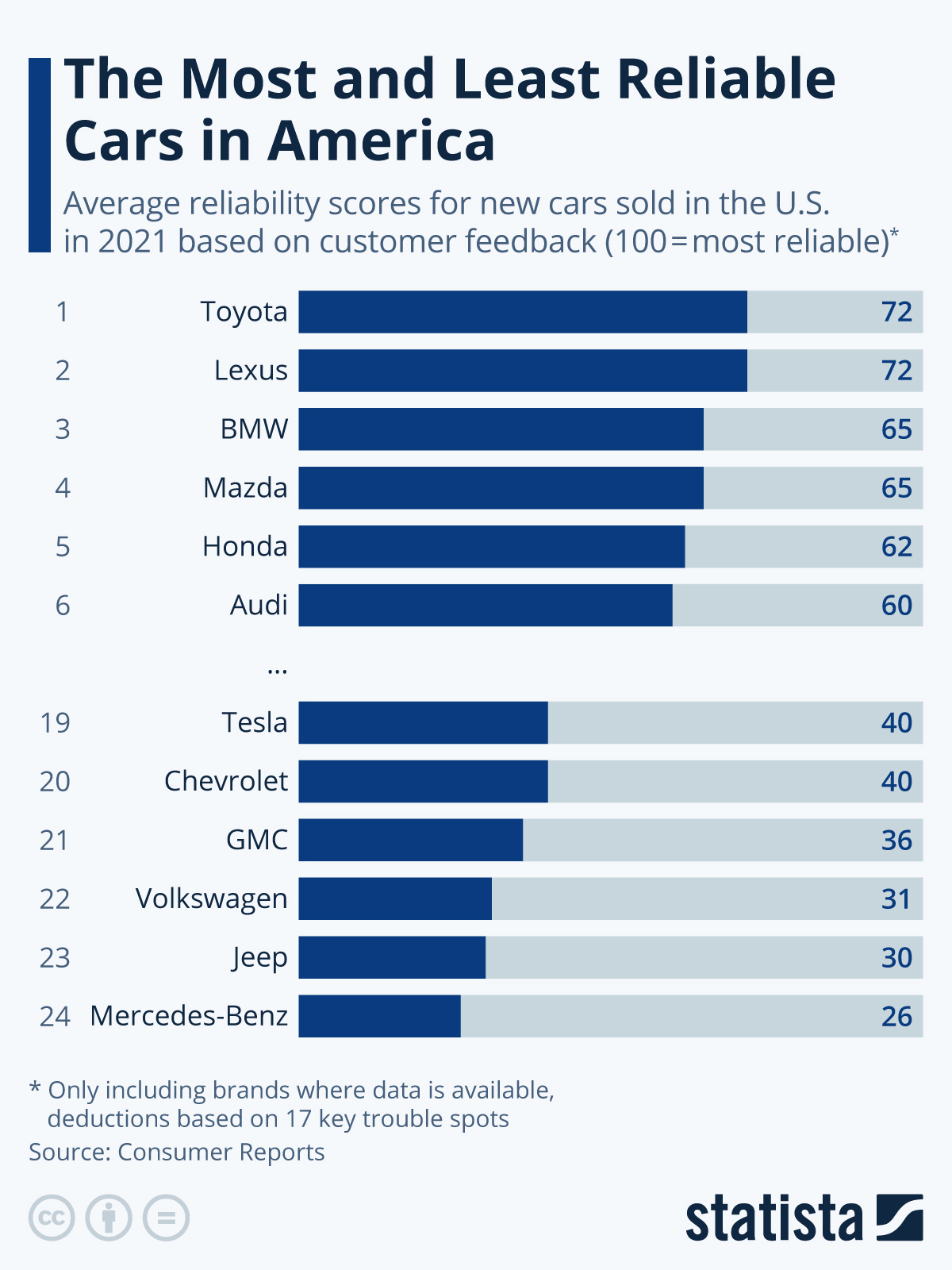
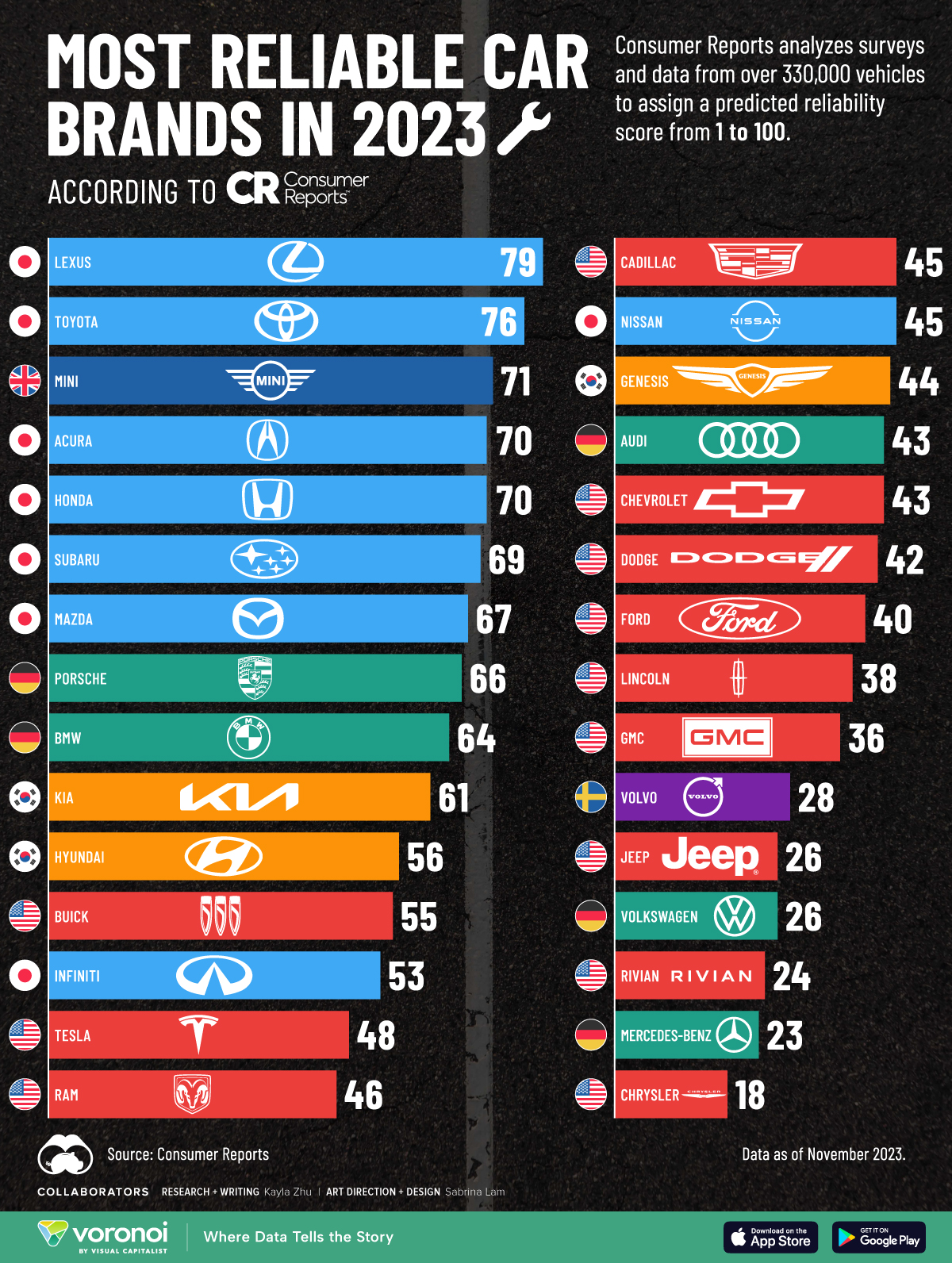
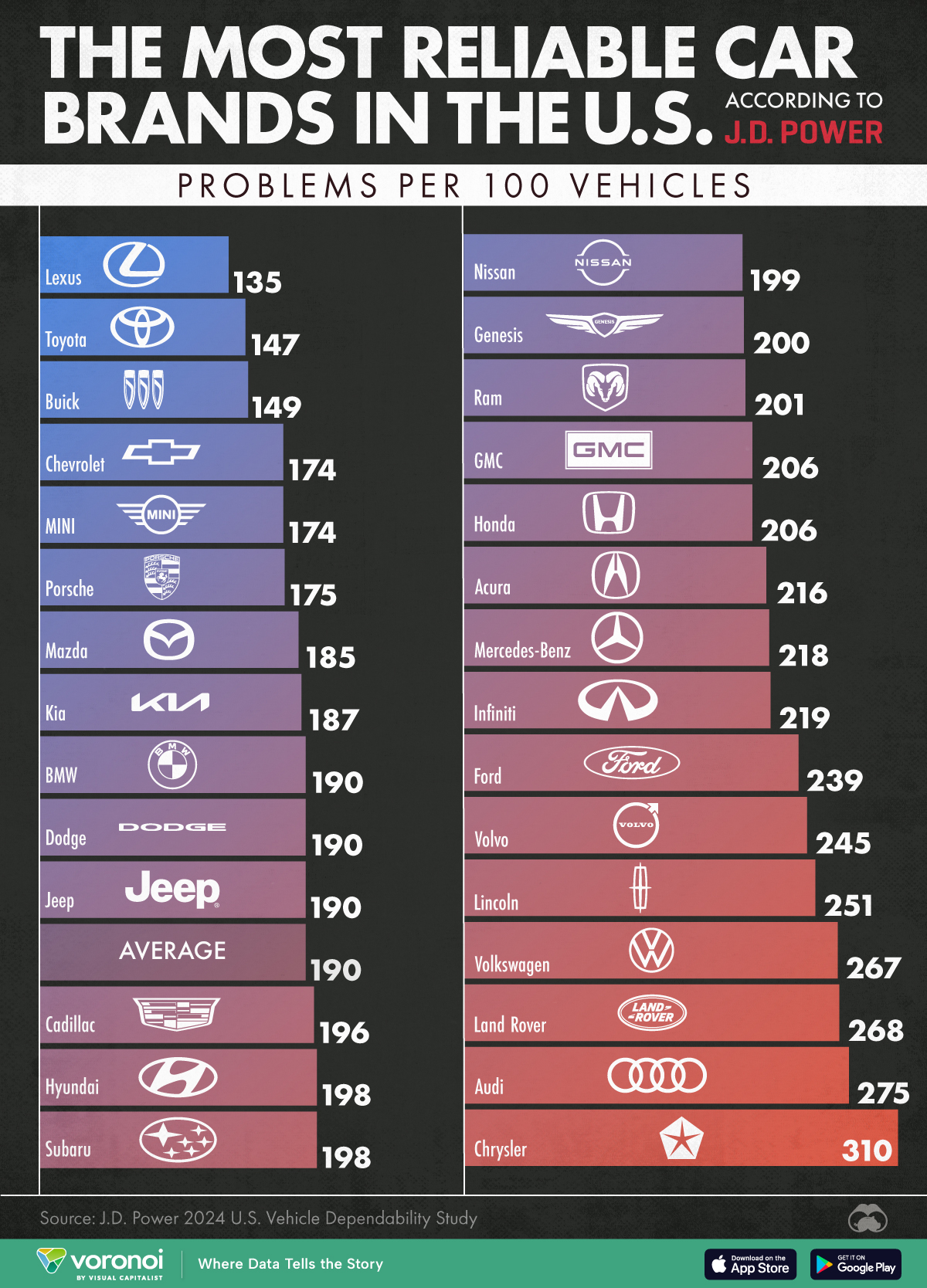
Toyota is widely viewed as the most reliable car brand, while Lexus leads many luxury-car dependability rankings.
Choosing a dependable vehicle is about more than avoiding breakdowns. Reliability affects repair costs, resale value, safety, and daily peace of mind. After comparing long-term ownership data, warranty trends, maintenance records, and major automotive studies, Toyota stands out as the strongest all-around choice for most drivers. Lexus is an excellent option if you want a quieter, more polished luxury vehicle with the same reputation for durability.
What Is the Most Reliable Car Brand?
For most American drivers, Toyota is the most reliable car brand overall. Its models often have simple powertrains, strong resale value, affordable parts, and a long record of lasting well beyond 200,000 miles with proper care.


Lexus is often the most reliable luxury car brand. It shares many engineering ideas and components with Toyota, but adds higher-quality interiors, smoother rides, and more advanced comfort features.
Reliability rankings can change from year to year. A brand may perform well overall while one specific model has transmission, hybrid, or electrical problems. For that reason, the best answer is:
• Toyota is the best overall choice for dependable transportation.
• Lexus is the best luxury choice for long-term dependability.
• Honda, Mazda, and Subaru are also strong choices, depending on the model.
Consumer Reports, J.D. Power, RepairPal, and other automotive research groups measure reliability in different ways. Some study problems reported during the first 90 days. Others examine owner surveys, repair costs, or predicted problems over several years. The results should be viewed as helpful patterns, not absolute guarantees.
Why Toyota Is Considered the Most Reliable Car Brand
Toyota’s reputation did not happen by accident. The company has spent decades refining engines, transmissions, hybrid systems, and manufacturing processes. Many Toyota vehicles use proven parts for years instead of introducing major changes every few seasons.
That conservative approach can feel less exciting than a brand that constantly launches new technology. However, fewer major changes often mean fewer surprises for owners. A car is much like a kitchen appliance: a simple design with fewer weak points is often easier to keep working.
Toyota also benefits from a large dealer and parts network in the United States. This makes service easier to find, even in smaller towns. Independent repair shops are familiar with popular Toyota models, which can help reduce labor costs.
Key reasons Toyota ranks so highly include:


• Proven engines that are used across several models.
• Strong hybrid technology with years of real-world data.
• Widely available replacement parts.
• High resale value.
• Reasonable routine maintenance costs.
• Large numbers of trained technicians.
• Strong owner communities and repair information.
Popular Toyota models with strong reliability reputations include the Corolla, Camry, Prius, RAV4, Highlander, and 4Runner. Still, each model year should be researched separately. A reliable brand can produce an unreliable model year, especially after a major redesign.

How Lexus Compares With Toyota
Lexus is Toyota’s luxury division, and it is often one of the most dependable luxury brands in the market. Lexus vehicles usually offer quiet cabins, comfortable seats, smooth engines, and excellent fit and finish.
The Lexus RX, ES, NX, and GX are frequently considered dependable choices. The ES, in particular, uses a relatively simple front-wheel-drive layout and has a long history of low ownership stress. The RX is popular with families because it combines comfort, space, and a strong reliability record.
Lexus vehicles do cost more to buy and maintain than comparable Toyota models. Luxury parts, specialized service, larger wheels, and advanced electronics can raise repair bills. A Lexus may be very reliable, but a single repair can still cost more than a similar Toyota repair.
Choose Lexus if you value:
• A quieter and more comfortable cabin.
• Better interior materials.
• A smoother driving experience.
• Strong luxury resale value.
• Long-term dependability with premium features.
Choose Toyota if your main goal is low ownership cost. Both brands can last for many years, but Toyota is usually easier on the budget.

The Most Reliable Car Brands Ranked
There is no single ranking that fits every driver. A small sedan, hybrid SUV, pickup truck, and luxury crossover face different mechanical demands. Even so, these brands regularly appear near the top of major reliability studies.


1. Toyota
Toyota is the most reliable car brand for many buyers because it combines durability, simple maintenance, and strong resale value. Its lineup includes economical sedans, family SUVs, trucks, and efficient hybrids.
The Corolla is a practical example. It is not the fastest or most luxurious car, but its straightforward design and low running costs make it a dependable daily driver. The Camry offers more space and comfort while keeping a strong reputation for durability.
2. Lexus
Lexus is often the most reliable car brand in the luxury segment. Its vehicles tend to score well in long-term owner satisfaction and dependability surveys.
The main limitation is cost. A Lexus may need fewer repairs, but tires, brakes, electronics, and dealer labor can still be expensive.
3. Honda
Honda has built a strong reputation for dependable engines, practical interiors, and good resale value. The Civic, Accord, and CR-V are popular examples.
Honda reliability is not perfect. Some model years have experienced problems with automatic transmissions, oil dilution, infotainment systems, or turbocharged engines. Research the exact year before buying.
4. Mazda
Mazda vehicles often combine good reliability with enjoyable handling. The Mazda3 and CX-5 are especially popular with drivers who want a more engaging experience without giving up reasonable ownership costs.
Mazda’s newer turbocharged models may have higher repair costs than its naturally aspirated vehicles. A well-maintained CX-5 can be an excellent choice, but service history matters.
5. Subaru
Subaru is known for standard all-wheel drive, strong safety performance, and loyal owners. The Outback, Forester, and Crosstrek are useful choices for drivers who face snow, rain, or rough roads.
Older Subaru vehicles had well-known head-gasket and oil-consumption concerns. Newer models have improved, but buyers should still check maintenance records and inspect the engine carefully.
6. Buick
Buick can be a good value for buyers who want a comfortable vehicle with lower prices than many luxury brands. Some Buick models use proven General Motors engines and components.
Reliability varies widely by model. A buyer should never assume that every Buick has the same record.
7. Acura
Acura offers Honda-based engineering with more comfort and technology. Models such as the Integra, TLX, and RDX can provide a strong balance of performance and dependability.
Maintenance costs are usually higher than Honda costs. Buyers should also be careful with complex all-wheel-drive systems and expensive optional equipment.
Are Hybrid Cars Reliable?
Modern hybrid cars can be extremely reliable. Toyota’s hybrid systems are a good example. They use regenerative braking, which can reduce brake wear, and their gasoline engines often operate under less stress in city driving.


Many drivers worry about the hybrid battery. That concern is understandable, but hybrid batteries often last much longer than people expect. Battery life depends on climate, use, age, and design. Some manufacturers provide long hybrid-system warranties, often covering key components for eight years or more, depending on the state and vehicle.
A hybrid may be a smart choice if you:
• Drive often in city traffic.
• Want to reduce fuel costs.
• Plan to keep the vehicle for many years.
• Prefer a smooth and quiet driving experience.
A hybrid may not be ideal if you:
• Drive very few miles each year.
• Need a heavy-duty towing vehicle.
• Are buying an older model with limited service records.
• Cannot afford a possible battery replacement later in life.
A hybrid battery replacement can be expensive, but it is not an automatic reason to avoid a hybrid. Ask for a battery health check before buying a used model. Also, check the remaining warranty in your state.

Does Reliability Mean a Car Will Never Break?
No. Reliability means a vehicle is less likely to have serious or frequent problems when compared with similar vehicles. Every car contains parts that wear out, including tires, brake pads, batteries, belts, hoses, and suspension components.
A reliable car still needs oil changes, fluid checks, tire rotations, and inspections. Skipping maintenance can damage even the strongest engine. Poor driving habits, extreme heat, road salt, floods, and neglected repairs can also shorten a vehicle’s life.
It helps to separate routine maintenance from a true reliability failure.
Routine maintenance includes:
• Replacing tires.


• Changing engine oil.
• Replacing brake pads.
• Installing a new battery.
• Changing air filters.
More serious reliability problems include:
• Repeated transmission failure.
• Engine damage before 100,000 miles.
• Major electrical defects.
• Persistent oil or coolant leaks.
• Recurring safety-related failures.
The most reliable car brand can still produce a vehicle with normal wear. The goal is not to find a car that needs nothing. The goal is to find one that gives you fewer expensive surprises.

What Makes a Car Reliable?
Reliability comes from many design and ownership factors. The engine is important, but it is not the only part that matters.
Powertrain design
Naturally aspirated engines often have fewer components than small turbocharged engines. This does not mean every non-turbo engine is better, but a simpler design may reduce long-term risk.
Transmissions matter, too. A well-tested automatic transmission can last for years. New designs, dual-clutch systems, and continuously variable transmissions can also be reliable, but they require careful research.
Manufacturing quality
A brand may use excellent engineering but still suffer from poor quality control at a plant or during a specific production period. Early production vehicles can have more defects than later examples.
Software and electronics
Modern vehicles depend on cameras, sensors, computer modules, touchscreens, and driver-assistance systems. These features improve safety and comfort, but they also create more possible failure points.
Maintenance access
A vehicle is easier to keep reliable when parts are affordable and technicians understand its common problems. This is one reason Toyota and Honda perform well for many owners.
Owner behavior
A driver who follows the service schedule and fixes small problems early will usually enjoy a longer vehicle life. Ignoring a warning light is like ignoring a small roof leak. It may stay small, but it may also become expensive.

How to Choose the Most Reliable Used Car
Buying a reliable brand is a good start, but the specific vehicle’s condition matters more than the badge on the hood. A carefully maintained 10-year-old Honda may be a better purchase than a neglected five-year-old luxury vehicle.


Use this process before buying:
Check the vehicle identification number for accident, title, flood, and odometer history.
Review service records and confirm that major maintenance was completed.
Search for recalls and verify that repairs were performed.
Arrange an independent pre-purchase inspection.
Test the vehicle when the engine is cold and when it is fully warm.
Check for warning lights, unusual noises, fluid leaks, and uneven tire wear.
Compare insurance, fuel, parts, and repair costs.
Research the exact engine, transmission, and model year.
A pre-purchase inspection is one of the best ways to avoid a costly mistake. It may cost around $100 to $250, depending on location and vehicle type, but that fee is small compared with an engine or transmission repair.
One practical lesson is worth remembering: service history is often more valuable than low mileage. A car with 120,000 highway miles and complete records may be safer than a 70,000-mile vehicle that missed oil changes.
Reliable Cars Versus Reliable Brands
A brand reputation can guide your search, but it should never end your research. Reliability often differs between models built by the same company.
For example, a brand may have:
• A highly dependable compact sedan.
• An average midsize SUV.
• A problematic first-generation electric vehicle.
• A strong hybrid system.
• An expensive performance model with higher repair needs.
This is why “What is the most reliable car brand?” is only the first question. The next questions should be:
• Which model is most reliable?
• Which model year should I buy?
• Which engine and transmission are best?
• What are the common repair costs?
• Does this vehicle fit my driving needs?
A small sedan may be more dependable than a large SUV simply because it has fewer systems and carries less weight. A simple vehicle is not always better, but simplicity often helps long-term ownership.

Reliability and Total Cost of Ownership
Reliability can save money in several ways. Fewer major repairs are the most obvious benefit, but there are other savings, too.
A dependable car may offer:
• Lower repair bills.
• Less time in the shop.
• Better resale value.
• Lower rental-car expenses.
• More predictable monthly costs.
• Greater confidence on long trips.
However, purchase price should not be the only factor. A cheap vehicle with poor reliability may cost more over five years than a more expensive car with lower repair needs.
Compare these costs before buying:
• Purchase price.
• Financing interest.
• Insurance.
• Fuel or charging.
• Routine maintenance.
• Tires and brakes.
• Expected repairs.
• Registration and taxes.
• Depreciation.
Toyota and Honda often perform well in total cost comparisons because they combine reasonable maintenance with strong resale values. Lexus can also hold its value well, but its service and insurance costs may be higher.
Common Mistakes That Reduce Car Reliability
Even the most reliable car brand cannot protect an owner from poor maintenance. These mistakes are common and avoidable.
Ignoring dashboard warnings
A warning light may point to a small issue, such as a loose gas cap, or a serious problem, such as low oil pressure. Have the vehicle scanned and inspected instead of guessing.
Using the wrong oil or fluids
Modern engines and transmissions can require specific fluids. Using the wrong product may cause damage or cancel warranty coverage.
Delaying tire replacement
Worn tires reduce braking and handling. They can also put extra stress on all-wheel-drive systems.
Buying without an inspection
A clean exterior does not prove that the engine, transmission, suspension, or electrical system is healthy.
Following only the minimum service schedule
Severe use may require more frequent service. Short trips, towing, extreme heat, dust, and heavy traffic can all count as severe conditions.
Choosing features over durability
More features can improve comfort, but they may also increase long-term repair risk. Buy the technology you will use, not every option available.
How Reliable Is Toyota Compared With Honda?
Toyota and Honda are both known for dependable vehicles. Toyota often has an advantage in hybrid reliability, resale value, and long-term ownership data, while Honda is praised for efficient engines, practical design, and good driving feel.
The better choice depends on the exact model year, powertrain, condition, and service history. A well-maintained Honda can be just as satisfying and durable as a Toyota.
Is Lexus More Reliable Than Toyota?
Lexus is often as reliable as, or slightly more reliable than, Toyota in luxury vehicle rankings. It benefits from Toyota engineering, but its repair and maintenance costs can be higher because of premium parts and features.
Toyota is usually the better value for basic transportation. Lexus is a strong choice when comfort and luxury are worth the added cost.
What Is the Most Reliable Car Brand for an SUV?
Toyota and Lexus are among the strongest choices for reliable SUVs. Models such as the Toyota RAV4, Highlander, 4Runner, Lexus RX, and Lexus GX have built solid reputations, although each model year requires separate research.
The best SUV also depends on towing, fuel economy, passenger space, and weather needs. No single SUV is ideal for every driver.
What Is the Most Reliable Car Brand for a Used Car?
Toyota, Lexus, Honda, and Mazda are often strong used-car choices. Condition and maintenance history matter more than brand alone, especially once a vehicle is more than five years old.
Always get an independent inspection and check for recalls before buying a used car.
Do Reliable Cars Cost More?
A reliable car may cost more at first because it holds its value well. Over time, though, fewer major repairs and stronger resale value can make it less expensive to own.
Calculate total ownership cost instead of focusing only on the purchase price.
Does Toyota Still Make the Most Reliable Cars?
Toyota remains one of the strongest choices for dependability, but reliability varies by model and year. New technology, complex electronics, and major redesigns can change results.
Research the exact vehicle, read long-term owner reports, and check recall information before making a decision.
Conclusion
Toyota is the most reliable car brand for many drivers because it combines proven engineering, reasonable maintenance costs, strong resale value, and a wide range of dependable models. Lexus is the leading luxury alternative, while Honda, Mazda, and Subaru also offer worthwhile choices.
The badge is only the beginning. Compare the specific model year, engine, transmission, maintenance history, repair costs, and inspection results before you buy. Take your time, check the records, and choose the vehicle that fits your real driving needs. If this guide helped, explore more vehicle reliability research and share your own ownership experience in the comments.
