

To register a car in California, gather proof of ownership, valid California auto insurance, a completed registration application, a smog certificate when required, and payment for the DMV fees. You can complete the process online, by mail, or at a California Department of Motor Vehicles (DMV) office, depending on your situation.
The steps change based on whether you bought the car in California, moved to California with an out-of-state vehicle, or purchased a new car from a dealer. This guide explains each path, the documents you need, the deadlines to watch, and what to do if the DMV rejects your application.
Information in this guide is based on California DMV requirements and was reviewed for general accuracy in March 2025. Fees and rules can change, so confirm your details with the California DMV.
When You Must Register a Car in California
You generally must register a vehicle in California when you become a resident, buy a vehicle, or bring a vehicle into the state for use here.


California usually considers you a resident when you intend to live in the state or meet certain activity tests. Examples may include:
- Working in California.
- Renting or buying a home in California.
- Claiming a homeowner’s exemption in California.
- Enrolling children in a California school.
- Registering to vote in California.
- Receiving state benefits.
- Operating a business in California.
A California resident who buys a vehicle from a private seller must transfer ownership and register the vehicle with the DMV within the required time. California DMV commonly gives buyers 10 days to transfer ownership after a private-party purchase.
If you move to California with a vehicle that was registered in another state, you generally have 20 days to register it after becoming a California resident or bringing it into California for use. Late registration can lead to penalties.
A licensed California dealer usually submits the registration paperwork for a vehicle bought from that dealer. Ask the dealer whether it will handle the title and registration. You should receive temporary operating authority while the DMV processes the paperwork.

Documents You Need to Register a Car
The documents depend on the vehicle’s history and where you bought it. Collect the paperwork before you start because missing one item can delay registration.
Basic documents
Most registration applications require some combination of:
- California driver’s license or identification card.
- Proof of California insurance.
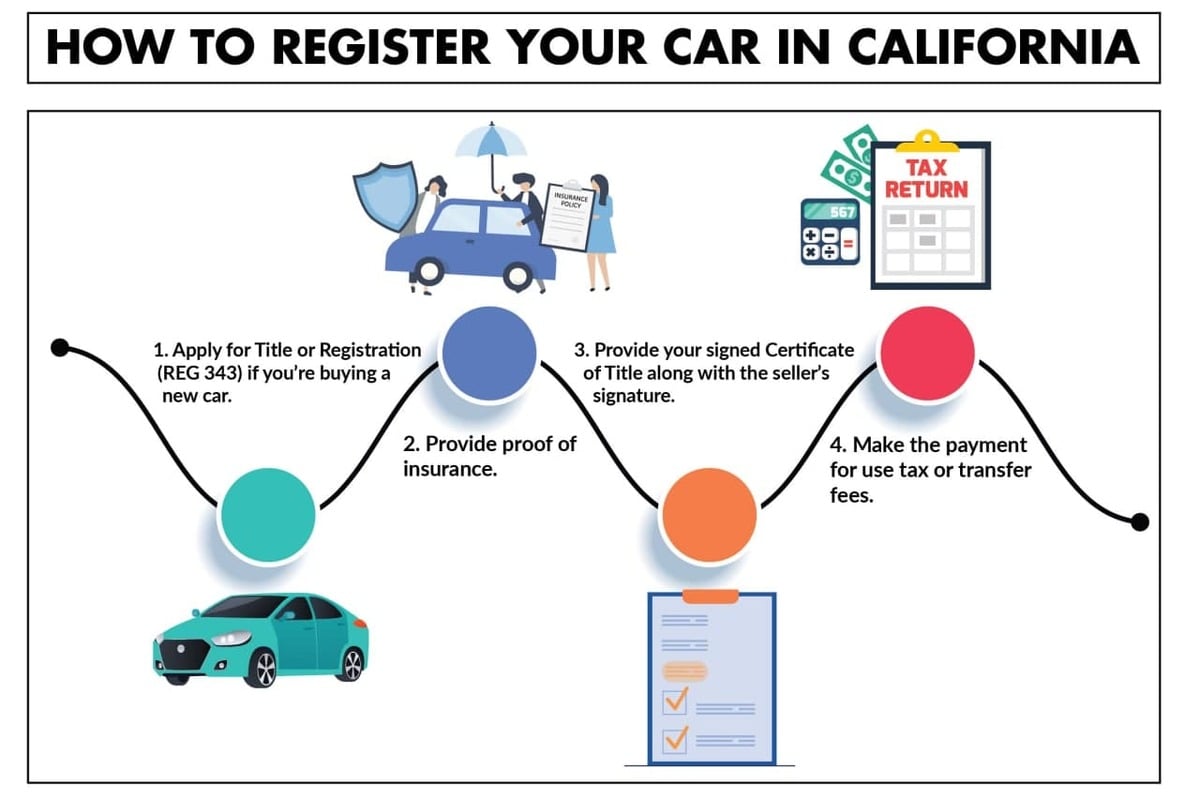
- Application for Title or Registration, Form REG 343.
- Current title or other proof of ownership.
- Bill of sale or purchase agreement.
- Odometer disclosure, when required.
- Smog certification, when required.
- Lienholder information, if the vehicle is financed.
- Payment for registration, title, and local fees.
The DMV may ask for a vehicle identification number (VIN) verification. This is more common for vehicles previously registered outside California, vehicles with missing ownership documents, and vehicles with title or VIN issues.
Documents for an out-of-state vehicle
For a car last registered outside California, prepare:
- The out-of-state title, if available.
- The current out-of-state registration card.
- California registration forms.
- A completed VIN verification.
- A California smog certificate, if required.
- Proof of California insurance.
- Weight certification for certain commercial or heavy vehicles.
- Lienholder details, if the car has a loan.


The DMV may accept a VIN verification from a DMV employee, California Highway Patrol officer, licensed verifier, or other authorized party. The acceptable verifier can depend on the vehicle and the problem being reviewed.
Documents for a private-party purchase
For a used car bought from a private seller, ask the seller for:
- The signed California Certificate of Title.
- A lien release if a lien appears on the title.
- A bill of sale.
- A smog certificate, unless an exemption applies.
- Odometer information when required.
- Any registration card or other ownership documents.
The seller must complete the seller sections on the title and report the sale to the DMV. The buyer remains responsible for transferring ownership and registering the vehicle.
Proof of insurance
California requires registered vehicles to have financial responsibility. Most drivers meet this requirement with liability insurance from an insurer licensed to operate in California.
As of January 1, 2025, California’s basic liability limits are generally:
| Coverage | Minimum amount |
|---|---|
| Bodily injury or death to one person | $30,000 |
| Bodily injury or death to two or more people | $60,000 |
| Property damage | $15,000 |
These are liability limits, not full coverage. If you finance or lease the car, the lender may require collision and comprehensive coverage as well.
Your insurance company usually reports coverage electronically to the DMV. A policy from another state may not satisfy California registration rules after you become a California resident.

How to Register a Car Bought From a California Seller
A private-party purchase requires you to transfer the title and register the vehicle with the DMV.
Step 1: Check the title before paying
Review the title carefully. Confirm that:
- The VIN matches the vehicle.
- The seller’s name matches the ownership record.
- The odometer section is complete when required.
- All listed owners sign correctly.
- Any lien has been released.
- The title has no unexplained alterations.
Do not rely only on a handwritten receipt. A problem with the title can prevent registration even if you paid for the vehicle.
Step 2: Get a smog certificate
Most gasoline-powered vehicles and many other vehicles require a California Smog Check when ownership changes. The seller is generally responsible for providing a valid smog certification unless an exemption applies.
Some vehicles do not need a new smog certificate. Common examples include:
- Vehicles that are four or fewer model years old, although a smog transfer fee may apply.
- Electric vehicles.
- Certain diesel vehicles or special vehicle types covered by an exemption.
- Transfers between certain family members.
- Transfers covered by other specific DMV rules.


Smog rules depend on the vehicle’s fuel type, model year, weight, and transaction. Check the DMV’s Smog Inspections page before assuming an exemption applies.
Step 3: Buy California insurance
Arrange insurance before driving the car regularly. The DMV may suspend registration if it does not receive proof of required insurance.
Step 4: Submit the ownership transfer
Complete the title and registration forms, then submit them with the required fees to the DMV. You can use a DMV office, mail, or an eligible online service. Online options are limited when the title, lien, VIN, or vehicle record needs review.
Step 5: Keep your receipt and temporary documents
After submission, keep the transaction receipt, temporary operating authority, and copies of your documents. These records help if the DMV needs more information or your registration stickers do not arrive.

How to Register an Out-of-State Car in California
An out-of-state vehicle usually needs a California registration, a VIN inspection, and a smog check if the vehicle falls under California’s smog rules.
1. Complete the California registration application
Use the DMV’s Application for Title or Registration, Form REG 343. Provide the vehicle’s VIN, make, model, year, current mileage, ownership information, and lienholder information.
2. Complete a VIN verification
A VIN verification confirms that the vehicle identification number on the car matches the ownership documents. It also helps the DMV identify stolen vehicles, title problems, or incorrect records.
You may be able to complete the verification at a DMV office. Some vehicles require verification by the California Highway Patrol or another authorized verifier.
3. Complete the California smog check
A vehicle that passed emissions testing in another state may still need a California smog inspection. California has its own emissions standards, and an out-of-state inspection is not automatically accepted.
Use a licensed California Smog Check station. If the vehicle fails, the station should provide information about the reason and possible repairs.
4. Submit the out-of-state title and registration
Give the DMV the out-of-state title, registration card, completed forms, VIN verification, smog certificate, insurance information, and payment. If a lender holds the title, the DMV may need lienholder information or an electronic title transfer.
5. Pay California registration fees
The total can include:
- Registration fee.
- California Highway Patrol fee.
- Vehicle license fee.
- County or district fees.
- Use tax.
- Title fee.
- Weight fee for certain vehicles.
- Smog transfer or certificate-related fees.
- Late penalties, if applicable.
Use the California DMV vehicle registration fee calculator for an estimate. The final amount can differ because the DMV calculates fees from the vehicle’s value, location, purchase date, registration history, and other factors.

How to Register a New Car Bought From a Dealer
When you buy a new or used car from a licensed California dealer, the dealer usually submits the title and registration paperwork.


Before leaving the dealership, confirm that you have:
- A purchase contract.
- Temporary operating authority or temporary registration.
- Proof of insurance.
- A copy of the odometer disclosure, if applicable.
- Information about the expected permanent registration documents.
- Contact details for the dealer’s registration department.
The dealer may collect registration, title, use tax, and other government fees as part of the purchase. Review the contract so you can distinguish government charges from dealer documentation or service fees.
If the dealer does not complete the registration on time, contact the dealer first and request a status update. If the issue continues, contact the California DMV or submit a dealer complaint through the appropriate state process.
A dealer purchase does not always mean the registration will appear immediately. Processing time can vary, especially when the vehicle has a lien, an out-of-state title, or incomplete paperwork.

California Car Registration Fees and Taxes
California registration costs do not have one flat price. The DMV calculates the amount using several factors.
The main charge is often the vehicle license fee, which is linked to the vehicle’s value. Other charges may include a base registration fee, county fees, district fees, the California Highway Patrol fee, and use tax.
Common factors that affect the total
| Factor | Why it matters |
|---|---|
| Vehicle value | May affect the vehicle license fee |
| County of residence | Can affect local fees |
| Purchase price | May affect use tax |
| Vehicle weight | Can create extra fees for some vehicles |
| Purchase or move date | Helps determine fees and penalties |
| Late registration | Can add penalties and interest |
| Lienholder | May affect title processing |
| Vehicle type | Commercial, trailer, motorcycle, and special vehicles use different rules |
The registration fee calculator can provide an estimate, but it may not include every issue in your record. A DMV office or official DMV correspondence gives the final amount.
Example of why estimates differ
Two people can own the same model year and model of car but pay different amounts. One person may live in a county with local fees, while the other may owe late penalties or use tax from a recent purchase.
Do not use an online estimate as proof that your payment is final. Keep enough funds available for the DMV’s confirmed total.

How to Register a Car Online, by Mail, or at a DMV Office
The best method depends on the vehicle and transaction.
Online registration
Online service may work when:
- The vehicle is already in the California DMV system.
- The ownership record is clear.
- No VIN inspection is needed.
- No complex title transfer is involved.
- The DMV offers an online service for your transaction.
Online registration may not work for a first-time California registration, an out-of-state title, a missing title, a change of ownership, or a lien problem.
Start with the DMV’s online vehicle registration services.


DMV office visit
Make an appointment when possible. Bring original documents, identification, proof of insurance, and payment.
An office visit is often the better choice when:
- You are registering an out-of-state vehicle.
- The title is missing or damaged.
- The VIN needs verification.
- A lien must be added or removed.
- The vehicle has a salvage or branded title.
- The DMV record has an ownership problem.
- You need immediate help with a rejection notice.
Mail can work for eligible transactions that do not need an inspection or in-person review. Send copies only when the DMV instructions allow them. Use a trackable mailing method and keep a complete copy of everything you send.

What to Do If California DMV Rejects the Registration
A rejected application usually means the DMV needs a document, correction, inspection, or payment adjustment. Read the notice closely before resubmitting anything.
Common causes of rejection
- The title is not signed correctly.
- The VIN on the title does not match the vehicle.
- The smog certificate is missing or expired.
- Insurance information was not reported.
- A lien release is missing.
- The seller’s information is incomplete.
- The odometer disclosure is incomplete.
- The vehicle has unpaid fees or penalties.
- The vehicle needs a VIN inspection.
- The application uses the wrong form.
- The payment was not accepted.
Fix the problem in the right order
- Identify the exact item the DMV says is missing.
- Contact the seller, lender, insurer, or smog station if that party must correct it.
- Do not alter a title yourself.
- Ask the DMV whether an original document, certified copy, or replacement form is required.
- Submit the corrected paperwork with a copy of the rejection notice.
- Keep proof of delivery and copies of all documents.
If the title appears forged, the VIN plate looks altered, or the car may be stolen, do not drive or sell it until the issue is resolved. Contact the DMV Investigations Division or law enforcement when appropriate.
Common California Registration Mistakes
Avoiding a few common errors can save time and money.
Waiting too long after moving
New residents often assume they can keep out-of-state plates indefinitely. California expects residents to register qualifying vehicles within the required deadline.
Buying a car without checking the title
A low price does not solve a title problem. Confirm the owner, VIN, lien status, and transfer signatures before handing over payment.
Assuming another state’s smog test is valid
California emissions rules differ from those in other states. An out-of-state inspection may not satisfy California DMV requirements.
Driving without California insurance
A vehicle can lose its registration if the DMV does not receive proof of required insurance. Update the policy and confirm that the insurer reports coverage to California.
Paying the seller’s registration fees without checking the record
A seller may say the fees are paid, but the DMV record controls. Check for unpaid fees before completing the sale.
Using a registration service without understanding the charges
Private registration services may charge a service fee in addition to DMV fees. They cannot remove legal requirements such as a smog certificate, VIN verification, or valid title.


Letting temporary operating authority expire
If permanent plates or registration documents do not arrive, contact the dealer or DMV before the temporary authority expires. Do not assume that an expired temporary document remains valid.
Quick Takeaways
- Get California insurance before registering the vehicle.
- Transfer a private-party title promptly.
- Register an out-of-state vehicle within the required California deadline.
- Complete a California smog check when required.
- Expect a VIN verification for many out-of-state vehicles.
- Use the DMV fee calculator for an estimate, not a guaranteed final total.
- Keep copies of every form, receipt, title, and inspection record.
- Resolve title, lien, VIN, or insurance problems before driving regularly.
FAQs About Registering a Car in California
Can I register a car in California without a California driver’s license?
You may be able to register a vehicle without a California driver’s license, but you must provide acceptable identification and meet California insurance and ownership requirements. Registration eligibility can depend on your residency and the vehicle record.
Do I need a smog check to register my car in California?
Many vehicles do need a California smog check, especially gasoline-powered vehicles subject to California emissions rules. Exemptions may apply to newer vehicles, electric vehicles, some diesel vehicles, and certain transfers.
Can I register a car in California with an out-of-state title?
Yes, but the DMV may require the out-of-state title, a California VIN verification, a California smog certificate, proof of insurance, and payment of taxes and fees.
How long does California car registration take?
Simple online renewals may process faster than title transfers or first-time California registrations. Out-of-state vehicles, lien records, missing titles, and VIN issues can increase processing time.
Can someone else register my car for me?
Another person may be able to submit paperwork for you, but the DMV may require an authorization form, identification, or additional documents. Check the DMV instructions for your transaction before sending someone to an office.
What happens if I miss the registration deadline?
The DMV may charge late penalties, fees, and interest. The amount depends on how late the registration is and whether the vehicle has unpaid use tax or other charges. Register as soon as possible and ask the DMV for the current total.
Conclusion: Complete the DMV Requirements in the Right Order
The simplest way to register a car in California is to prepare the ownership documents first, obtain California insurance, complete a smog check and VIN verification when required, calculate the fees, and submit the application before the deadline.
For a California dealer purchase, confirm that the dealer submitted the paperwork. For a private-party purchase or an out-of-state vehicle, take responsibility for the title transfer and registration yourself. When a title, lien, VIN, or insurance issue appears, contact the California DMV before driving the vehicle or reselling it.
