

Yes, a car can charge its battery while idling, but the charge may be slow or too weak.
The answer to “does car idle charge battery” depends on the alternator, engine speed, battery condition, and electrical load. A healthy charging system can restore some power at idle, but driving is usually faster and more effective. This guide explains how the system works, when idling helps, and what to do if your battery keeps going dead.
Does car idle charge the battery?
Yes, a running car can charge its battery while idling. The engine turns the alternator through a belt, and the alternator makes electricity for the vehicle’s systems. Any extra power can flow into the battery.
However, an idling engine often turns the alternator more slowly than it does while driving. This means the alternator may produce less power at idle. If the headlights, heater fan, rear defroster, stereo, and seat heaters are on, most of that power may be used right away.
So, does car idle charge battery in every situation? No. It may charge the battery slowly, maintain its charge, or fail to add much power at all. The result depends on the vehicle and its electrical demand.
Modern cars also use smart charging systems. These systems may reduce or change alternator output to improve fuel economy. As a result, battery charging at idle can vary even more from one model to another.

How the alternator charges the battery
The alternator is the main part that charges the battery after the engine starts. It changes mechanical energy from the engine into electrical energy.
Here is the basic process:
- The engine turns the alternator belt.
- The alternator creates electrical current.
- A voltage regulator controls the current.
- The battery stores extra electrical energy.
- The vehicle uses that stored energy when the engine is off or when demand is high.
The battery’s main job is to start the engine. It also powers lights, locks, computers, and other systems when the engine is not running. Once the engine starts, the alternator should supply most of the vehicle’s electrical power.
A typical charging system may show about 13.5 to 14.8 volts while the engine runs. The exact reading varies by vehicle, temperature, battery type, and charging strategy. Some newer vehicles may show lower or changing voltage during normal operation.
A voltage reading alone does not tell the whole story. A battery can show a normal voltage but still have poor capacity. A proper battery and charging system test gives a clearer answer.

Why charging at idle can be slow
Many drivers assume that any running engine will quickly recharge a weak battery. That is not always true. At idle, the alternator may produce less current than it does at higher engine speed.
The alternator must first power the car’s active systems. For example, a vehicle may need electricity for:
• Engine computers
• Fuel injectors and ignition parts
• Cooling fans
• Headlights
• Climate control
• Audio equipment
• Heated seats
• Safety systems
• Phone chargers
If these systems use nearly all the alternator’s output, little power remains for the battery. In some cases, the battery may still lose charge even though the engine is running.
This is why the answer to “does car idle charge battery” is not simply yes or no. The alternator can charge at idle, but the charging rate may be very low. A short idle period may only replace a small amount of the energy used during startup.
A modern vehicle may also lower alternator output at idle to reduce engine load. This can improve fuel use, but it may slow battery charging.
Is driving better than idling for charging?
In most cases, driving is better than idling for charging a car battery. When you drive, the engine runs at a higher speed. That often lets the alternator produce more current.
A steady drive of 20 to 30 minutes may help restore energy after a normal start. Yet this is not a guarantee. Heavy traffic, low engine speed, high electrical demand, and a weak alternator can reduce the benefit.
A longer drive may help when the battery is only slightly low. It will not reliably repair a deeply discharged or damaged battery.
When deciding whether car idle charge battery power is enough, consider these factors:
• A healthy battery charges more easily.
• A warm battery often accepts charge better than a very cold battery.
• A strong alternator provides more current.
• Lower electrical demand leaves more power for charging.
• Higher engine speed may increase alternator output.
• A badly discharged battery may need an external charger.
If you drive, avoid racing the engine. Normal driving is enough. Excessive engine speed can add wear without solving the real problem.
How long should you idle to charge a battery?
There is no single time that works for every car. Idling for 10 to 15 minutes may replace some energy used during startup, but it may not fully recharge a weak battery.
A battery that is only slightly low may improve after a normal drive. A battery that needed a jump-start may require several hours of charging with a battery charger.
As a general guide:
• Ten minutes of idling may provide only a small charge.
• Twenty to 30 minutes of driving may restore some starting power.
• Several hours with a smart charger may be needed for a low battery.
• A fully dead or damaged battery may need replacement.
These are practical estimates, not fixed rules. The battery’s age, size, condition, and temperature all matter.
In my experience, one common mistake is letting a car idle for a few minutes after a jump-start and assuming the problem is solved. The car may start again that day but fail the next morning. A charger and a proper test are safer choices when the battery has been deeply drained.
Can idling damage the car or waste fuel?
Brief idling is not usually harmful to a healthy car. Long periods of idling, however, waste fuel and create unnecessary emissions. The engine also runs without the cooling airflow that comes from driving, although the cooling fan should help control temperature.
Idling may be risky in these situations:
• Inside a garage or enclosed space
• Near open doors or windows
• During very hot weather
• When the cooling system has a problem
• When the oil level is low
• When warning lights are active
Never idle a gasoline or diesel vehicle inside a garage, even with the garage door open. Carbon monoxide is a colorless, odorless gas that can become dangerous quickly.
Idling also may not be the best way to save fuel. If you need to charge a battery, an approved battery charger uses energy more directly and avoids unnecessary engine running.
How to tell if the battery is charging at idle
You can check the charging system with a digital multimeter. Make sure you understand the meter settings before testing, and keep the probes away from moving belts and fans.
Follow these steps:
- Turn the engine off.
- Set the meter to DC voltage.
- Touch the red probe to the positive battery terminal.
- Touch the black probe to the negative terminal.
- Record the battery voltage.
- Start the engine and test again at idle.
- Turn on the headlights and climate fan, then test once more.
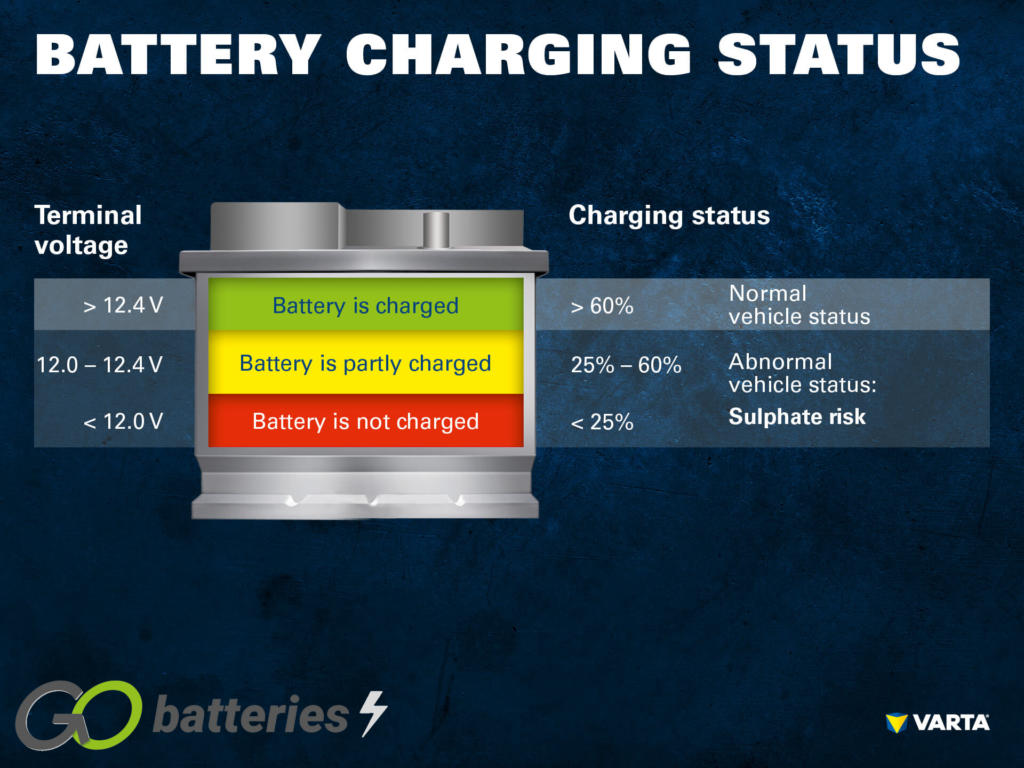
A resting battery near 12.6 volts is often fully charged. Around 12.2 volts suggests a partly discharged battery, while a reading near 12 volts or lower indicates a very low charge. These values can change with temperature and battery age.
With the engine running, many vehicles show roughly 13.5 to 14.8 volts. A much lower reading may point to a charging problem, but newer smart charging systems can produce changing readings by design.
Do not rely on one test alone. If the battery warning light is on, the car cranks slowly, or the voltage stays low, have the battery and alternator tested by a qualified technician.

What prevents a car from charging at idle?
Several faults can stop or limit battery charging. Some problems are simple, while others require professional testing.
Common causes include:
Weak or failing alternator
A worn alternator may not produce enough current at idle. Its brushes, bearings, diodes, or voltage regulator may be failing.
Loose or damaged belt
The alternator belt must turn the alternator at the correct speed. A loose, cracked, or slipping belt can reduce output and may create a squealing sound.
Corroded battery terminals
Corrosion adds resistance between the battery and charging system. Clean, tight connections help current move properly.
Old battery
Most automotive batteries last about three to five years, though climate and use can change that range. Heat, deep discharges, and long periods of inactivity can shorten battery life.
High electrical demand
The alternator may be working correctly but have little extra capacity when many systems are on. This is especially common at idle.
Parasitic drain
A parasitic drain pulls power from the battery while the car is parked. Common causes include a faulty light, alarm, accessory, control module, or aftermarket device.
If the battery goes dead more than once, do not keep asking only “does car idle charge battery?” Find the reason for the drain or charging failure.
Best way to recharge a weak car battery
A smart battery charger is usually the best choice for a weak battery. It can provide a controlled charge and stop or reduce charging when the battery reaches the proper level.
Use this process:
- Check the battery and charger instructions.
- Park in a safe, well-ventilated place.
- Turn the vehicle off.
- Connect the charger as directed.
- Select the correct battery type and charge rate.
- Let the charger complete its cycle.
- Disconnect it in the order listed in the instructions.
- Start the car and test the battery later.
Do not use a damaged, swollen, leaking, or frozen battery. Such a battery may be unsafe and should be inspected by a professional.
A trickle charger or battery maintainer can help a vehicle that sits for long periods. This is useful for seasonal cars, classic cars, motorcycles, and vehicles used only on weekends.
Should you turn off accessories while idling?
Yes. Turning off unnecessary accessories can leave more alternator power for the battery. This does not make idle charging as effective as driving or using a charger, but it can help.
Switch off items such as:
• Heated seats
• Rear window defroster
• High-power audio systems
• Extra interior lights
• Unneeded phone chargers
• Climate control when safe and comfortable
Do not turn off safety systems or anything needed to keep the engine running properly. Also, never compromise personal safety to reduce electrical use.
If the car is cold, the climate system may be necessary for clear windows. Safe visibility always matters more than battery charging speed.
Personal lessons from battery charging problems
One lesson I have seen repeatedly is that a jump-start only solves the starting problem for that moment. It does not prove that the battery, alternator, or wiring is healthy.
Another common mistake is replacing the battery without checking the charging system. If the alternator is overcharging or undercharging, a new battery may fail soon. A basic charging test can prevent wasted money.
I also recommend checking for simple causes first. Loose terminals, a forgotten trunk light, and a car that sits for weeks can create symptoms that look like alternator failure.
When someone asks me, “does car idle charge battery,” I explain that idling is more like slowly filling a cup with a narrow stream. Driving or using a charger usually fills the cup faster. If the cup has a crack, such as a parasitic drain, it may never stay full.
Safety tips when charging or idling a car
Battery and engine work can be safe when done carefully. Small mistakes, however, can cause sparks, burns, belt injuries, or battery damage.
Follow these safety tips:
• Never run a vehicle in an enclosed space.
• Keep hands, clothing, and tools away from belts and fans.
• Avoid smoking near a battery.
• Wear eye protection when cleaning terminals.
• Follow the vehicle and charger instructions.
• Do not connect a charger to a frozen or damaged battery.
• Keep children and pets away from the work area.
• Stop if you smell strong fuel, see smoke, or hear unusual sounds.
If you are unsure about a test, ask a qualified technician. A battery service is usually cheaper than damage caused by a wrong connection.
Frequently Asked Questions About Does Car Idle Charge Battery
Does a car charge the battery faster while driving?
Usually, yes. Driving raises engine speed, which often allows the alternator to produce more current than it does at idle. The actual result depends on the vehicle, battery, alternator, and electrical load.
How long should I let my car idle after a jump-start?
Letting it idle for a few minutes may help, but it may not fully recharge the battery. Driving for about 20 to 30 minutes or using a smart charger is generally more effective.
Can idling charge a completely dead battery?
Idling may not recharge a completely dead battery enough to restart the car later. A deeply discharged battery usually needs a proper charger and may be damaged beyond recovery.
Why does my battery die if the car runs every day?
The battery may have a parasitic drain, weak alternator, poor connection, or internal failure. Short trips can also use more starting power than the alternator replaces.
Should I rev the engine to charge the battery faster?
Do not rev the engine aggressively. Normal driving is safer and usually provides enough alternator speed, while excessive revving adds noise, wear, and risk.
How can I know whether the alternator or battery is bad?
A battery and charging system test can separate these problems. Slow cranking may point to a weak battery, while a battery warning light or low running voltage may suggest alternator trouble.
Conclusion
So, does car idle charge battery? Yes, but usually at a slow and limited rate. The alternator can add power while the engine idles, yet electrical demand, low alternator speed, smart charging systems, and battery condition can reduce the result.
Driving at normal speed is often better than idling, while a smart charger is the best choice for a weak or deeply discharged battery. If the battery keeps dying, test the battery, alternator, belt, terminals, and possible parasitic drain instead of relying on idle time.
Use these tips to protect your battery and avoid surprise starting problems. If you have faced a charging issue, share your experience or ask a trusted technician for a complete battery and alternator test.
